Skip to content

The Moog That Would Not Stay in Tune

Cao Fei

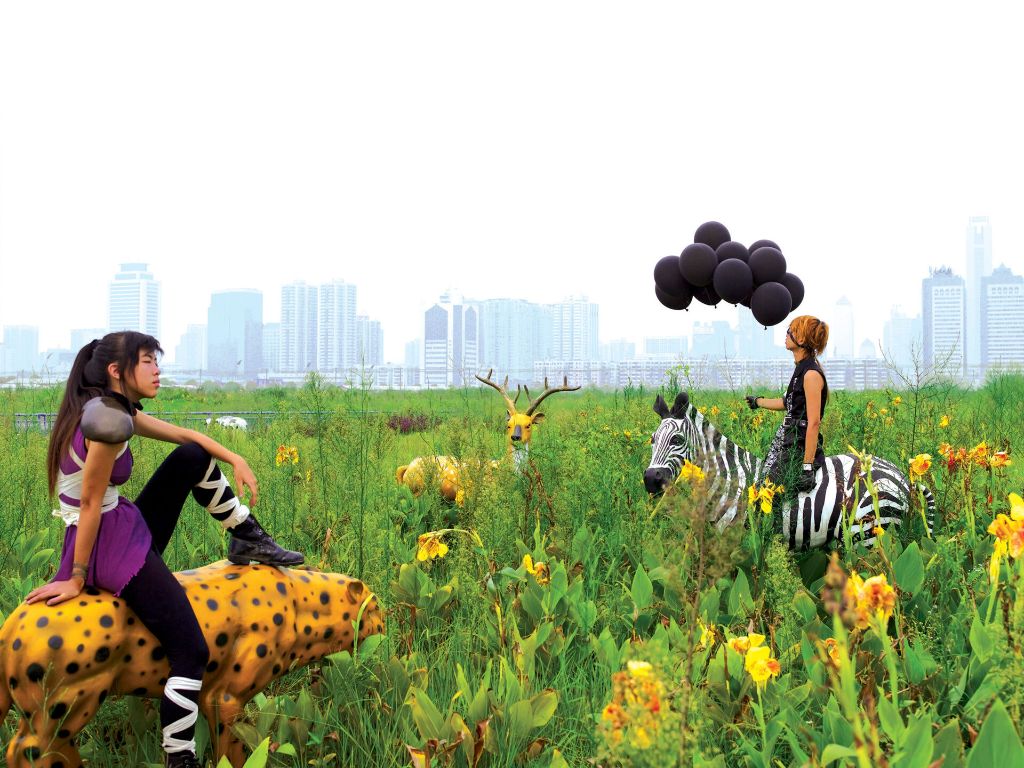
A Digital City Built From Real Change

Cao Fei’s work has repeatedly used moving image, virtual worlds and digital culture to examine the speed of social change in China.

Her major current exhibition Testimonies to the Near Future opened at Kunstmuseum Basel | Gegenwart on 28 August 2026. The museum describes it as her first solo exhibition in Switzerland and her largest retrospective in Europe to date. Videos, digital environments, photography, sculpture and immersive installations are arranged so that the museum itself begins to resemble a city.

That seems particularly appropriate for Cao Fei.

Her moving-image work rarely treats digital space as something separate from ordinary life.

Factories, cosplay, online identities, architecture and imagined cities keep crossing into one another.

What interests me is how quickly work like this changes historically.

A virtual world that once appeared futuristic can become technologically obsolete within a decade.

But the social behaviour recorded inside it may become more recognisable.

That gives contemporary video art a strange double clock.

The technology ages rapidly.

The human desire to escape, perform another identity, build communities and imagine a different city does not.

Perhaps that is why digital art does not always need to remain technologically current.

Sometimes outdated technology becomes the evidence showing how recently our idea of the future looked completely different.

https://www.museenbasel.ch/en/museen/kunstmuseum-basel-gegenwart/cao-fei
#CaoFei #VideoArt #DigitalArt #MovingImage

A Digital City Built From Real Change A Digital City Built From Real Change museenbasel.ch Cao Fei The Chinese artist Cao Fei (born 1978, Guangzhou) is one of the defining voices of her generation. Through videos, digital media, photograph
Facebook LinkedIn WhatsApp Threads
More sharing options
X Reddit Pinterest Telegram Email
Electronic Music

A Trumpet That Forgot It Was a Trumpet

Jon Hassell transformed trumpet playing by combining techniques influenced by Indian classical singing with electronic processing.

On Vernal Equinox, first released in 1977, the trumpet can become difficult to locate inside the music. It bends between pitches, passes through effects and sits among percussion, synthesizer drones, environmental recordings and other textures. Hassell later developed the term “Fourth World” for the broader musical territory he was pursuing.

What I like is that the electronics do not simply decorate the trumpet.

They destabilise its identity.

We still recognise breath and phrasing, but the instrument begins behaving like something between voice, wind instrument and synthesizer.

That seems more interesting than using effects to make an acoustic instrument merely larger.

Hassell used processing to make the source ambiguous.

Contemporary software gives us endless tools for transforming recorded instruments, but the artistic question remains the same.

How much identity should survive?

Process too little and the source remains predictable.

Process too much and its physical origin disappears completely.

Hassell often seems to occupy the unstable space between those extremes.

You hear a human breath entering the system.

What comes out no longer belongs entirely to the trumpet.

Discography

#JonHassell #FourthWorld #Trumpet #ElectronicMusic

A Trumpet That Forgot It Was a Trumpet A Trumpet That Forgot It Was a Trumpet Jon Hassell Discography - Jon Hassell Discography
Facebook LinkedIn WhatsApp Threads
More sharing options
X Reddit Pinterest Telegram Email
Afrofuturism

Detroit Techno Built an Underwater Civilization

Drexciya did more than release electro and techno records.

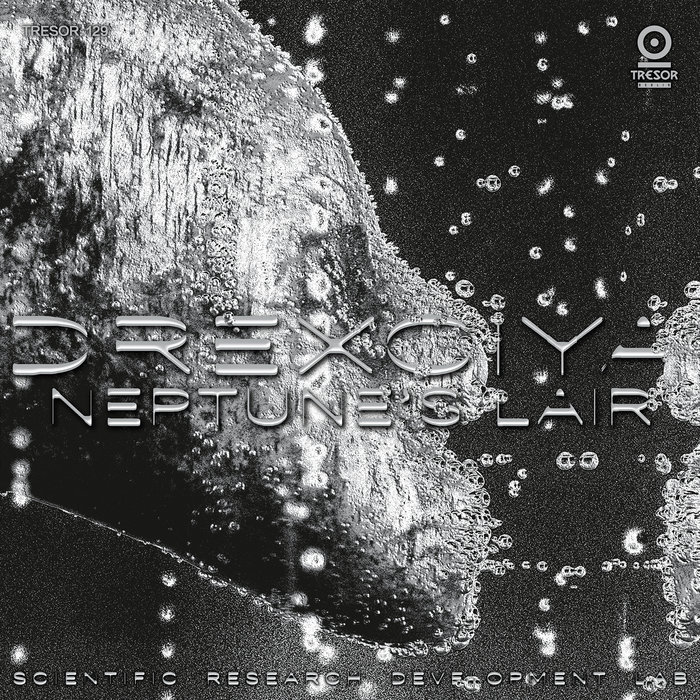
Across titles, sleeve notes and an intentionally mysterious identity, the project constructed an underwater mythology around the descendants of pregnant African women thrown overboard during the transatlantic slave trade. Within the fiction, their unborn children adapted to breathing underwater and founded the civilization of Drexciya.

By Neptune’s Lair in 1999, track titles such as “Hydro Theory,” “Aquatic Bata Particles,” “Lost Vessel” and “Draining of the Tanks” made the album feel almost like an expedition through that invented world. Tresor describes Drexciya’s catalogue as both music and a self-made mythic universe that went on to influence generations.

What fascinates me is how little exposition was necessary.

There is no conventional science-fiction film explaining the story.

The world grows from fragments.

Track names.

Artwork.

Anonymous identities.

Electronic sounds.

That forces the listener to construct much of Drexciya independently.

Electronic music is particularly suited to this kind of world-building because instrumental sounds do not need to describe a place literally.

A filtered sequence can become sonar.

A bassline can suggest pressure.

A metallic percussion hit can become machinery at the bottom of an ocean.

The studio becomes not only a place for producing tracks.

It becomes a place for producing geography.

https://tresorberlin.bandcamp.com/album/neptunes-lair

#Drexciya #DetroitTechno #Electro #Afrofuturism

Detroit Techno Built an Underwater Civilization Detroit Techno Built an Underwater Civilization Tresor Records Neptune's Lair, by Drexciya 21 track album
Facebook LinkedIn WhatsApp Threads
More sharing options
X Reddit Pinterest Telegram Email
Electronic Music

SOPHIE Designed Materials That Never Existed

SOPHIE often talked about synthesis in physical terms.

Rather than asking how to imitate a conventional instrument, the producer thought about materials: bubbles, latex, metal, liquid, plastic. Sounds could behave as though they possessed weight, elasticity, friction or surface.

That approach is part of why tracks such as “BIPP,” “LEMONADE” and “HARD” still sound so distinctive. Much of the percussion does not convincingly resemble acoustic percussion at all. It suggests imaginary objects being squeezed, struck, stretched or shattered.

SOPHIE’s brother and studio engineer Ben Long later described the same way of working: sounds would be discussed in terms such as needing more fizz or more bubbles. He also noted that SOPHIE preferred working deeply with a relatively small set of tools rather than endlessly collecting plug-ins.

That seems important.

Synthesis is often taught as reconstruction.

Here is how to synthesise a kick.

Here is how to synthesise brass.

Here is how to reproduce a bass guitar.

SOPHIE’s work points toward a more interesting question.

What if the object producing the sound has never existed?

Then synthesis becomes almost sculptural.

You are not reproducing reality.

You are deciding what an impossible material would sound like if somebody hit it.

#SOPHIE #SoundDesign #Synthesis #ElectronicMusic

SOPHIE Designed Materials That Never Existed SOPHIE Designed Materials That Never Existed Apple Music - Web Player Product by SOPHIE on Apple Music Album · 2015 · 8 Songs
Facebook LinkedIn WhatsApp Threads
More sharing options
X Reddit Pinterest Telegram Email
Black Origami

Rhythm Folded Like Paper

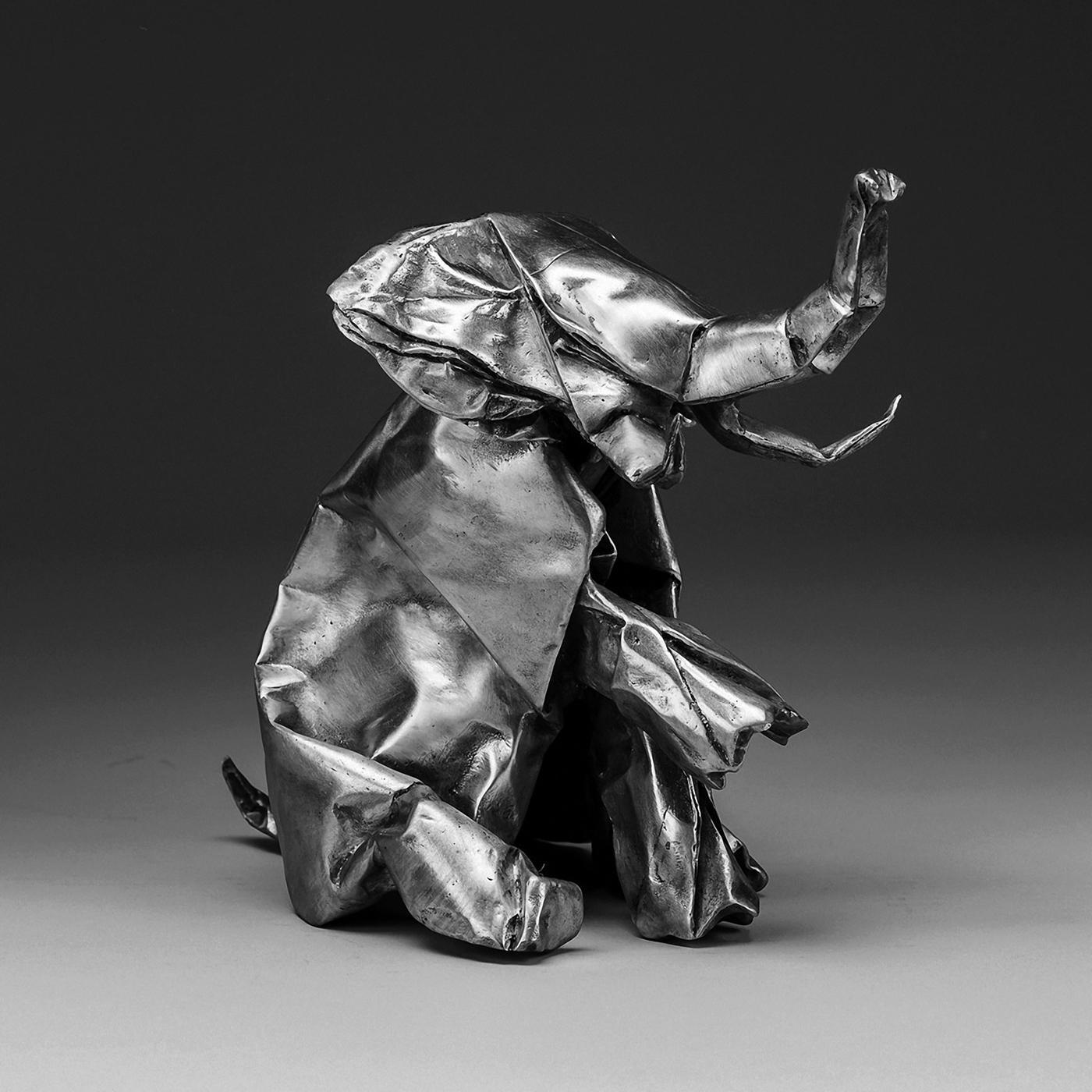
Jlin described the idea behind Black Origami by comparing composition to folding paper into increasingly complex shapes. In her version, sound replaces paper.

That metaphor becomes especially convincing when listening to the rhythms.

Patterns appear to fold into one another. Accents move away from the places where a conventional club groove might put them. Percussion can feel simultaneously organised and unstable.

Movement was not an accidental association. Jlin has explained that her collaboration with Indian dancer Avril Stormy Unger influenced the album directly, including the track “Carbon 7.”

This interests me because rhythm is often visualised horizontally.

A DAW gives us a timeline.

Beats move from left to right.

Jlin’s music makes me imagine rhythm differently, almost as an object being bent and refolded.

A sound that seemed to belong to one pattern suddenly becomes part of another.

That is a useful way to think about complex sequencing.

Instead of asking only where the next drum hit should go, ask what happens if the whole rhythmic shape is folded somewhere unexpected.

Complexity then does not have to mean adding more notes.

It can mean changing the geometry between the notes already there.

Black Origami

#Jlin #BlackOrigami #ElectronicRhythm #Percussion

Rhythm Folded Like Paper Rhythm Folded Like Paper planet.mu planet mu · Black Origami Mu are very excited to announce Jlin's long awaited second album “Black Origami”. A percussion-led tour de force, it's a creation that seals her reputation as a unique producer with an exceptional ability to make riveting rhythmic music.
Facebook LinkedIn WhatsApp Threads
More sharing options
X Reddit Pinterest Telegram Email
Berlin School

The Moog That Would Not Stay in Tune

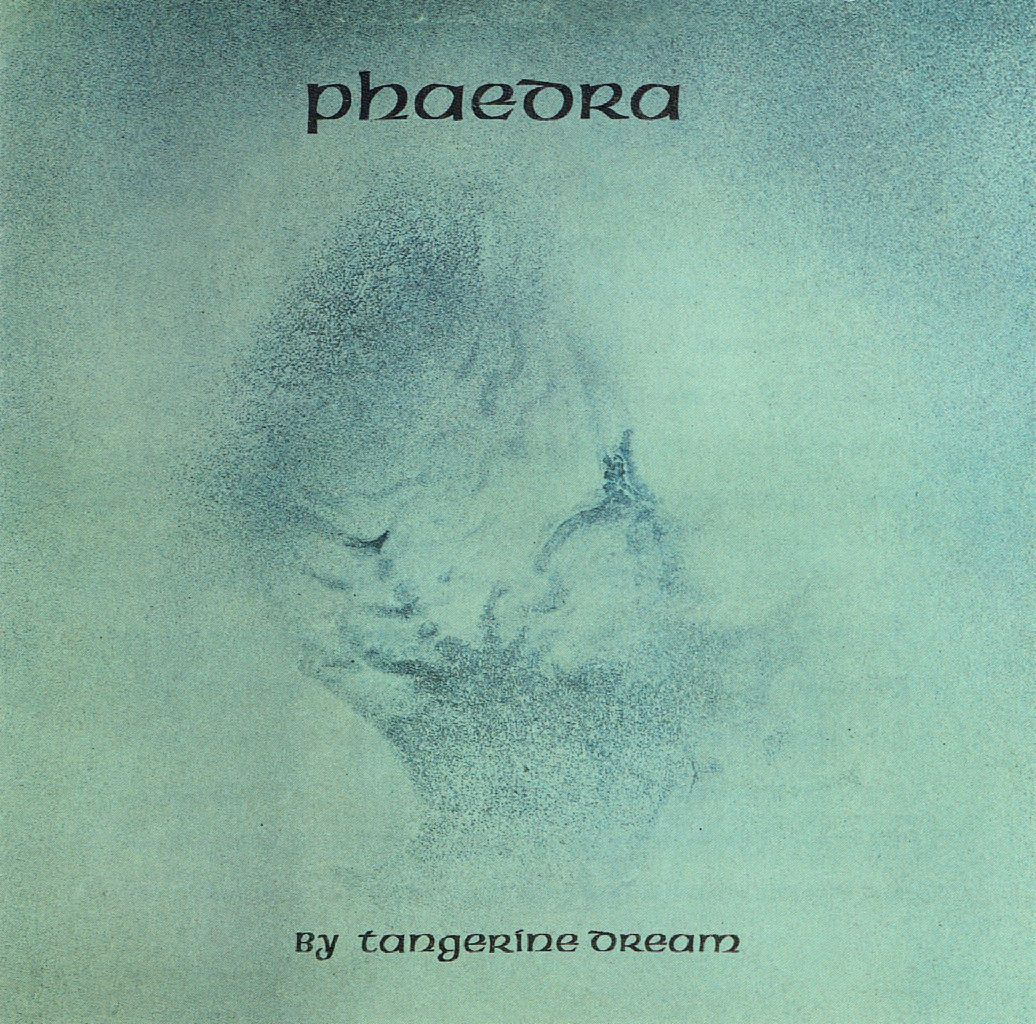
Tangerine Dream’s Phaedra is remembered as one of the records that established the sequencer-driven language later associated with the Berlin School. One of its defining sounds, however, emerged partly because the technology refused to behave.

The group recorded Phaedra at The Manor in England in November 1973, using a recently acquired Moog modular synthesizer. According to Tangerine Dream’s own account, the recording sessions were technically difficult and the musicians were still learning how to use the machine. During the title track, the Moog’s oscillators drifted in pitch as the synthesizer warmed up. Instead of discarding the unstable sequence, they kept it.

That detail changes how I hear the piece.

The sequence seems to move with a strange organic instability. It does not behave like a perfectly repeating digital pattern because it literally cannot remain perfectly stable.

Modern synthesizers solve this problem for us. Oscillators stay in tune. Sessions reopen exactly where we left them. Automation can reproduce every movement.

That reliability is enormously useful, but Phaedra reminds me that technical failure can occasionally produce musical character more interesting than technical perfection.

The synthesizer was supposed to repeat a pattern.

Instead, temperature became a modulation source.

https://www.tangerinedreammusic.com/en/music/detail.asp?id=12&tit=Phaedra

#TangerineDream #Phaedra #Moog #BerlinSchool

The Moog That Would Not Stay in Tune The Moog That Would Not Stay in Tune tangerinedreammusic.com Phaedra This is the first Tangerine Dream album to feature their now classic sequencer-driven sound, which later became known as their trademark and of the ...
Facebook LinkedIn WhatsApp Threads
More sharing options
X Reddit Pinterest Telegram Email
Belgian Art

Sculpture That Refuses to Stay Rigid

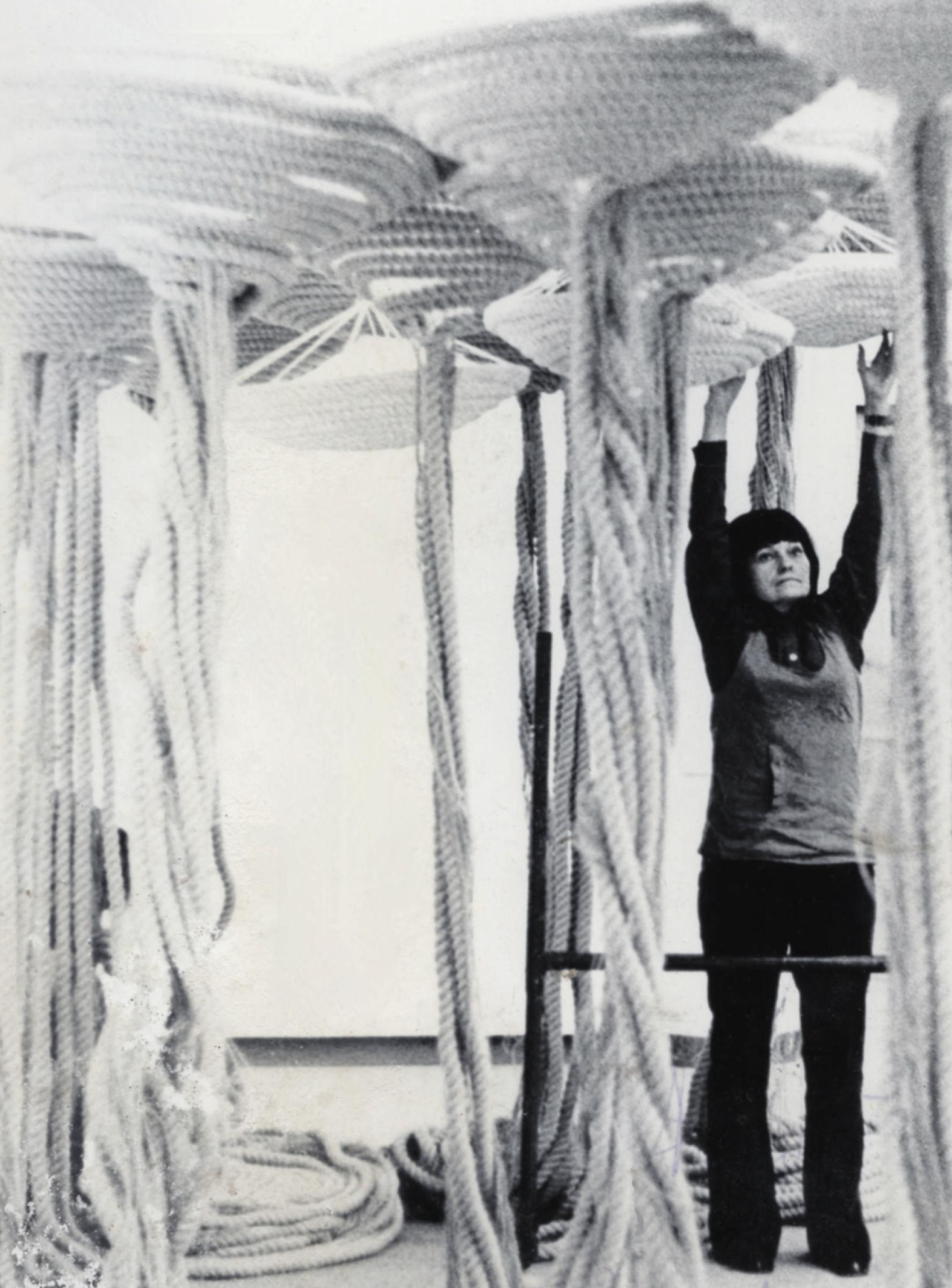
Tapta began in textile art, but gradually pushed weaving away from the wall.

Ropes were twisted, knotted and extended into space. Viewers could move around them and, in some installations, enter the structures themselves. During the 1980s she made an even stranger material shift, replacing woven fibres with neoprene, the synthetic rubber more commonly associated with industrial and protective applications.

Yet the underlying idea remained remarkably consistent.

Tapta called attention to flexible sculpture.

That phrase seems almost contradictory because sculpture has historically been associated with solidity: stone, bronze, wood, objects expected to maintain their shape.

Tapta chose materials that bend.

A neoprene form can sag, curve, lean or respond visually to gravity without pretending to be permanent in the way marble does.

I like that because it changes the relationship between material and authority.

Rigid sculpture often seems to declare exactly what shape it is.

Flexible material leaves open the possibility that another configuration exists.

Tapta spent much of her career teaching in Brussels, yet her international recognition remained more limited than that of many artists exploring related questions of space and material.

Recent exhibitions have started correcting that imbalance.

The work did not become more relevant.

The history around it finally became more flexible.

https://www.luca-arts.be/nl/tapta-flexible-forms

#Tapta #BelgianArt #Sculpture #Neoprene

Sculpture That Refuses to Stay Rigid Sculpture That Refuses to Stay Rigid LUCA Tapta: Flexible Forms | LUCA Tapta: Flexible Forms is the first large-scale retrospective dedicated to the Polish-Belgian artist Tapta (1926–1997) outside of Belgium, the country to which she fled in 1945 and where she developed her artistic career from the 1960s onwards.
Facebook LinkedIn WhatsApp Threads
More sharing options
X Reddit Pinterest Telegram Email
Bell Labs

Computer Animation Before Personal Computers

Lillian Schwartz began working at Bell Laboratories in 1969, decades before computer graphics became ordinary creative tools.

Her 1970 film Pixillation combines computer-generated black-and-white imagery with microscopic structures, oil, water and optical printing. Colour filters add another layer, while Gershon Kingsley’s Moog-generated electronic soundtrack connects the film to the expanding world of electronic music.

What interests me is how hybrid the process already was.

It would be easy to imagine early computer art as a purely digital historical curiosity: primitive graphics generated by enormous machines.

Schwartz did something less predictable.

Computer output became one material among several.

It could be combined with photography, physical liquids, optical techniques and colour added elsewhere in the process.

That feels surprisingly contemporary.

Digital artists still move constantly between systems. Render something in software. Film a physical object. Feed one process into another. Distort it again.

The tools change.

The useful attitude does not.

Schwartz understood that a computer did not have to replace older visual techniques in order to transform them.

It could enter the chain and contaminate everything around it.

The most interesting computer art may begin when the computer stops being the subject.

https://archive.transmediale.de/content/pixillation

#LillianSchwartz #ComputerArt #ExperimentalFilm #BellLabs

Computer Animation Before Personal Computers Computer Animation Before Personal Computers archive.transmediale.de Pixillation | transmediale Lillian Schwartz began working at Bell Laboratories in 1969, decades before computer graphics became ordinary creative tools. Her 1970 film...
Facebook LinkedIn WhatsApp Threads
More sharing options
X Reddit Pinterest Telegram Email
Experimental Electronic

Breaking an Instrument Until a Song Appears

Klara Lewis’s Opening is due for release on 4 September 2026, making it one of the explicitly contemporary subjects in this Art Notes series.

What interests me is not simply that it is a new electronic record.

Descriptions of the album repeatedly return to the way Lewis treats recognisable acoustic sources. Ukulele, piano and field recordings are processed, cut and reconstructed until their identity becomes unstable, yet the results often remain unexpectedly close to song form.

That is a difficult balance.

Experimental processing can easily become an end in itself. Destroy the original sound sufficiently and the technique becomes the subject.

Lewis seems more interested in what can survive destruction.

A piano does not have to remain recognisably a piano.

A field recording does not have to continue documenting its location.

But a trace can remain.

The source becomes something like a memory of itself.

That is increasingly interesting in contemporary electronic production because software now makes extreme transformation effortless. Granular processing, spectral manipulation and time-stretching can erase the origin of almost anything.

The harder decision is knowing when to stop.

Sometimes sound design becomes stronger when enough of the original object survives that we can still feel what has been lost.

https://www.deejay.de/Klara_Lewis_Opening_EMEGO325V_Vinyl__1132778

#KlaraLewis #Opening #ExperimentalElectronic #SoundProcessing

Breaking an Instrument Until a Song Appears Breaking an Instrument Until a Song Appears deejay.de Klara Lewis’s Opening is due for release on 4 September 2026, making it one of the explicitly contemporary subjects in this Art Notes series...
Facebook LinkedIn WhatsApp Threads
More sharing options
X Reddit Pinterest Telegram Email
Acoustics

The Room Became the Loudspeaker

Maryanne Amacher did not simply compose sounds for rooms.

She wanted the rooms themselves to behave acoustically.

In her Music for Sound-Joined Rooms installations, she worked with sound transmitted through architectural structures, using walls, floors, corridors and connected spaces to shape what listeners heard and physically felt.

Her own description is wonderful: rooms, walls and corridors that sing.

That idea changes the normal relationship between music and architecture.

Usually we build a composition somewhere else, bring loudspeakers into a room and then try to minimise whatever the architecture does to the mix.

Amacher did almost the reverse.

The building became part of the signal chain.

Earlier, beginning with City-Links in 1967, she had already experimented with microphones transmitting remote environments over telephone lines, effectively connecting distant places into one listening system.

Decades before networked performances became easy, she was treating telecommunications infrastructure as musical material.

What stays with me is the scale of her thinking.

The instrument could be a room.

Or several rooms.

Or a city connected to another city.

Electronic music is often imagined as something generated inside machines.

Amacher kept asking what would happen if the machine was only one component inside a much larger acoustic system that included architecture, distance and the listener’s own ears.

https://www.foundationforcontemporaryarts.org/recipients/maryanne-amacher/

#MaryanneAmacher #SoundArt #Acoustics #ExperimentalMusic

The Room Became the Loudspeaker The Room Became the Loudspeaker foundationforcontemporaryarts.org Maryanne Amacher | FCA Grant Recipient Maryanne Amacher did not simply compose sounds for rooms. She wanted the rooms themselves to behave acoustically. In her Music for Sound-Joined...
Facebook LinkedIn WhatsApp Threads
More sharing options
X Reddit Pinterest Telegram Email
Annette Peacock

Putting the Voice Through a Moog

Around 1970, Annette Peacock was doing something with synthesizers that still feels surprisingly modern: using a Moog modular system to process her voice in real time.

The Bob Moog Foundation documents how Peacock and pianist Paul Bley toured Europe with an ARP synthesizer and Moog modules, with Peacock using the Moog specifically for vocal modification.

That is quite different from simply singing alongside a synthesizer.

Her voice itself entered the electronic system.

By the time I’m the One appeared in 1972, Peacock had developed a music in which jazz, electronics, rock, improvisation and manipulated vocals refused to settle into a comfortable category.

What interests me is how early this was.

Today a vocalist can open a laptop and choose from pitch correction, spectral processors, vocoders, formant shifting, granular effects and hundreds of plug-ins designed specifically for the voice.

Peacock was experimenting when electronic processing still meant understanding patch cables, oscillators and signal paths well enough to make the equipment cooperate.

The voice is usually treated as the most human element in a recording.

Peacock seems to have realised very early that this made it the perfect thing to make strange.

Electronic music history remembers many synthesizer players.

It should remember more clearly the people who asked what would happen if the synthesizer started playing the singer.

https://www.universalmusic.fr/artistes/20000043831

#AnnettePeacock #Moog #VoiceProcessing #ExperimentalMusic

Putting the Voice Through a Moog Putting the Voice Through a Moog universalmusic.fr Annette Peacock - Universal Music France Tout sur Annette Peacock : news, biographie, discographie, photos, clips, vidéos, paroles, boutique...
Facebook LinkedIn WhatsApp Threads
More sharing options
X Reddit Pinterest Telegram Email