Skip to content

Jlin

Art Stream
Akoma

Rhythm as a Problem to Solve

Jlin has described composition as something close to a mathematical proof: the answers seem to be present, but the question still has to be discovered. It is an unusual way to explain music that feels so physical. Her percussion can arrive in hard clusters, sudden gaps and patterns that appear to turn away from a predictable downbeat, yet the detail never sounds casually scattered.

On Akoma, released in 2024, collaborators including Philip Glass, Björk and Kronos Quartet enter that rhythmic language without turning the album into a conventional crossover project. Their identities remain audible, but Jlin’s construction determines the space they occupy. Collaboration becomes another compositional constraint rather than a decorative guest appearance.

Thinking of rhythm as proof shifts attention away from loops alone. A pattern can establish a rule, interrupt it, return with one element displaced and make the earlier version newly legible. The pleasure comes partly from movement and partly from recognising the internal logic after the body has already responded.

Complex electronic rhythm is sometimes discussed as a display of programming skill. Jlin’s description points somewhere more interesting. Precision is not the subject of the music. It is the method that allows surprise to remain coherent.

On “Akoma,” Jlin Fuses Technical Precision with Boundless Imagination

#Jlin #Akoma #RhythmicComposition #ElectronicMusic

Rhythm as a Problem to Solve Rhythm as a Problem to Solve I CARE IF YOU LISTEN On "Akoma," Jlin Fuses Technical Precision with Boundless Imagination Tristan McKay speaks with composer/producer Jlin about her new album, and why she considers composition to be an exciting musical puzzle.
Facebook LinkedIn WhatsApp Threads
More sharing options
X Reddit Pinterest Telegram Email
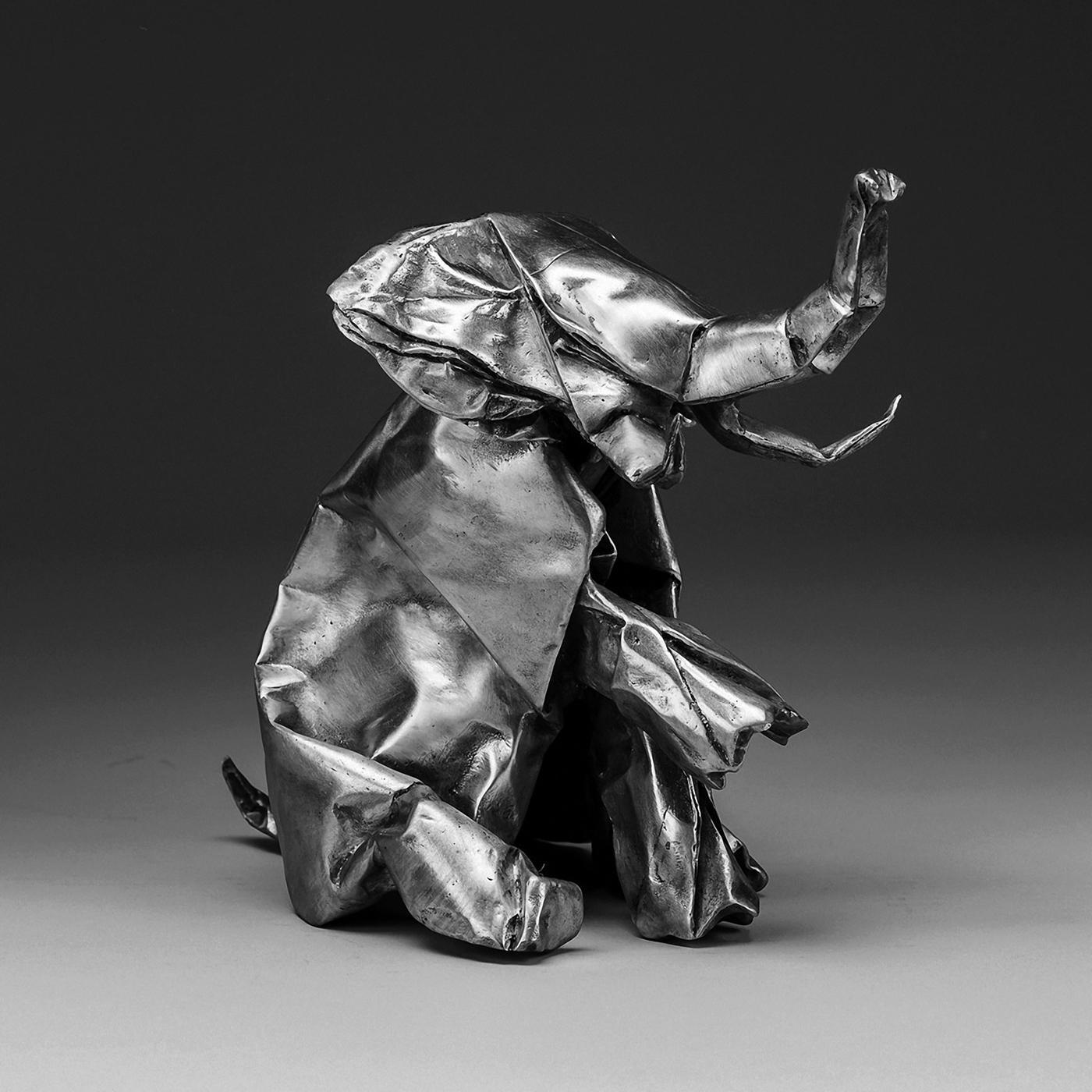
Black Origami

Rhythm Folded Like Paper

Jlin described the idea behind Black Origami by comparing composition to folding paper into increasingly complex shapes. In her version, sound replaces paper.

That metaphor becomes especially convincing when listening to the rhythms.

Patterns appear to fold into one another. Accents move away from the places where a conventional club groove might put them. Percussion can feel simultaneously organised and unstable.

Movement was not an accidental association. Jlin has explained that her collaboration with Indian dancer Avril Stormy Unger influenced the album directly, including the track “Carbon 7.”

This interests me because rhythm is often visualised horizontally.

A DAW gives us a timeline.

Beats move from left to right.

Jlin’s music makes me imagine rhythm differently, almost as an object being bent and refolded.

A sound that seemed to belong to one pattern suddenly becomes part of another.

That is a useful way to think about complex sequencing.

Instead of asking only where the next drum hit should go, ask what happens if the whole rhythmic shape is folded somewhere unexpected.

Complexity then does not have to mean adding more notes.

It can mean changing the geometry between the notes already there.

Black Origami

#Jlin #BlackOrigami #ElectronicRhythm #Percussion

Rhythm Folded Like Paper Rhythm Folded Like Paper planet.mu planet mu · Black Origami Mu are very excited to announce Jlin's long awaited second album “Black Origami”. A percussion-led tour de force, it's a creation that seals her reputation as a unique producer with an exceptional ability to make riveting rhythmic music.
Facebook LinkedIn WhatsApp Threads
More sharing options
X Reddit Pinterest Telegram Email