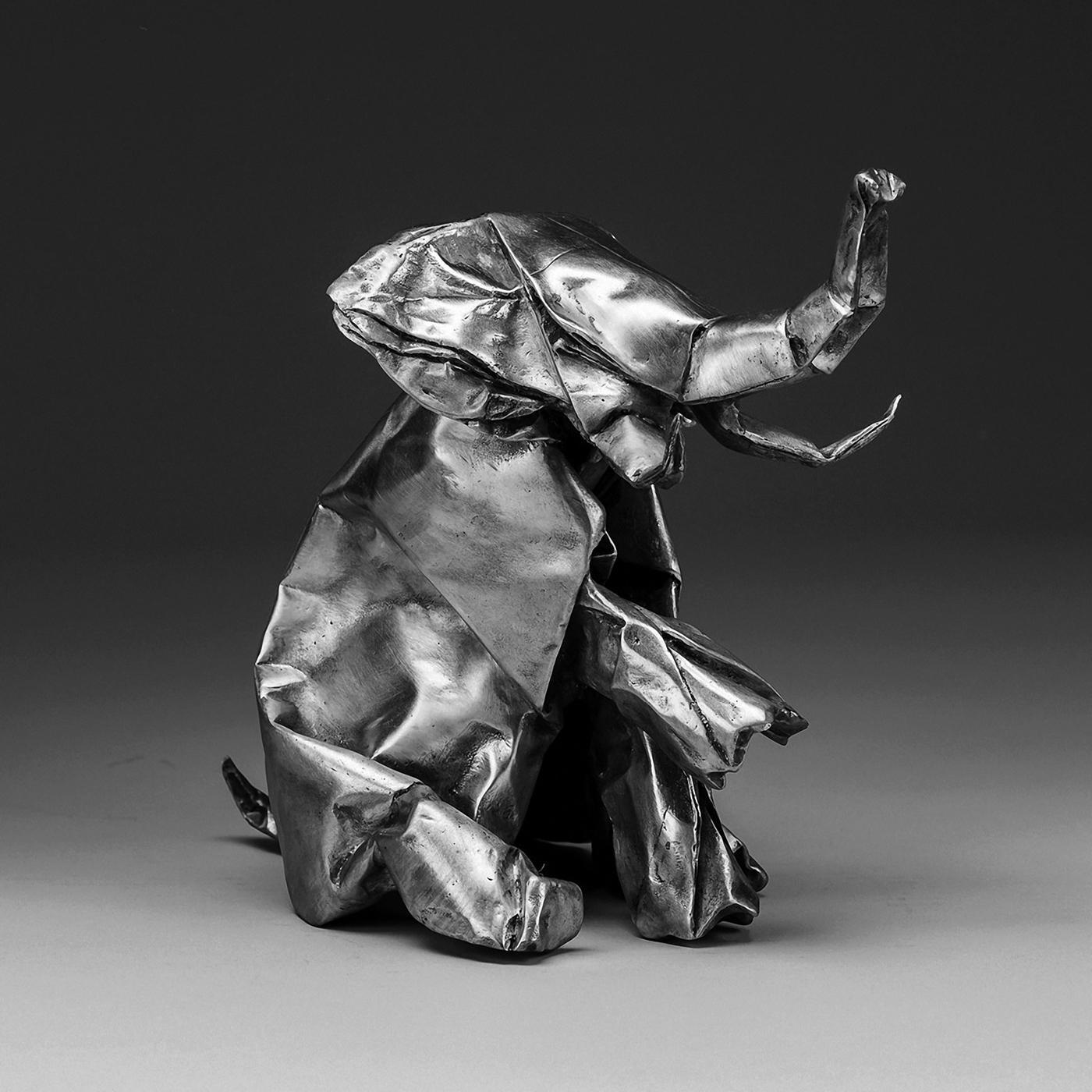
Jlin described the idea behind Black Origami by comparing composition to folding paper into increasingly complex shapes. In her version, sound replaces paper.
That metaphor becomes especially convincing when listening to the rhythms.
Patterns appear to fold into one another. Accents move away from the places where a conventional club groove might put them. Percussion can feel simultaneously organised and unstable.
Movement was not an accidental association. Jlin has explained that her collaboration with Indian dancer Avril Stormy Unger influenced the album directly, including the track “Carbon 7.”
This interests me because rhythm is often visualised horizontally.
A DAW gives us a timeline.
Beats move from left to right.
Jlin’s music makes me imagine rhythm differently, almost as an object being bent and refolded.
A sound that seemed to belong to one pattern suddenly becomes part of another.
That is a useful way to think about complex sequencing.
Instead of asking only where the next drum hit should go, ask what happens if the whole rhythmic shape is folded somewhere unexpected.
Complexity then does not have to mean adding more notes.
It can mean changing the geometry between the notes already there.