Skip to content

Experimental Film

Art Stream
Experimental Film

The Film Is Slowly Destroying Itself

Panu Johansson’s Wherever Street Piece begins with anonymous 16mm footage he rescued from being thrown away in the early 2000s.

Nobody appears to know exactly who filmed it. The material seems to have been recorded in several countries between roughly 1965 and 1975.

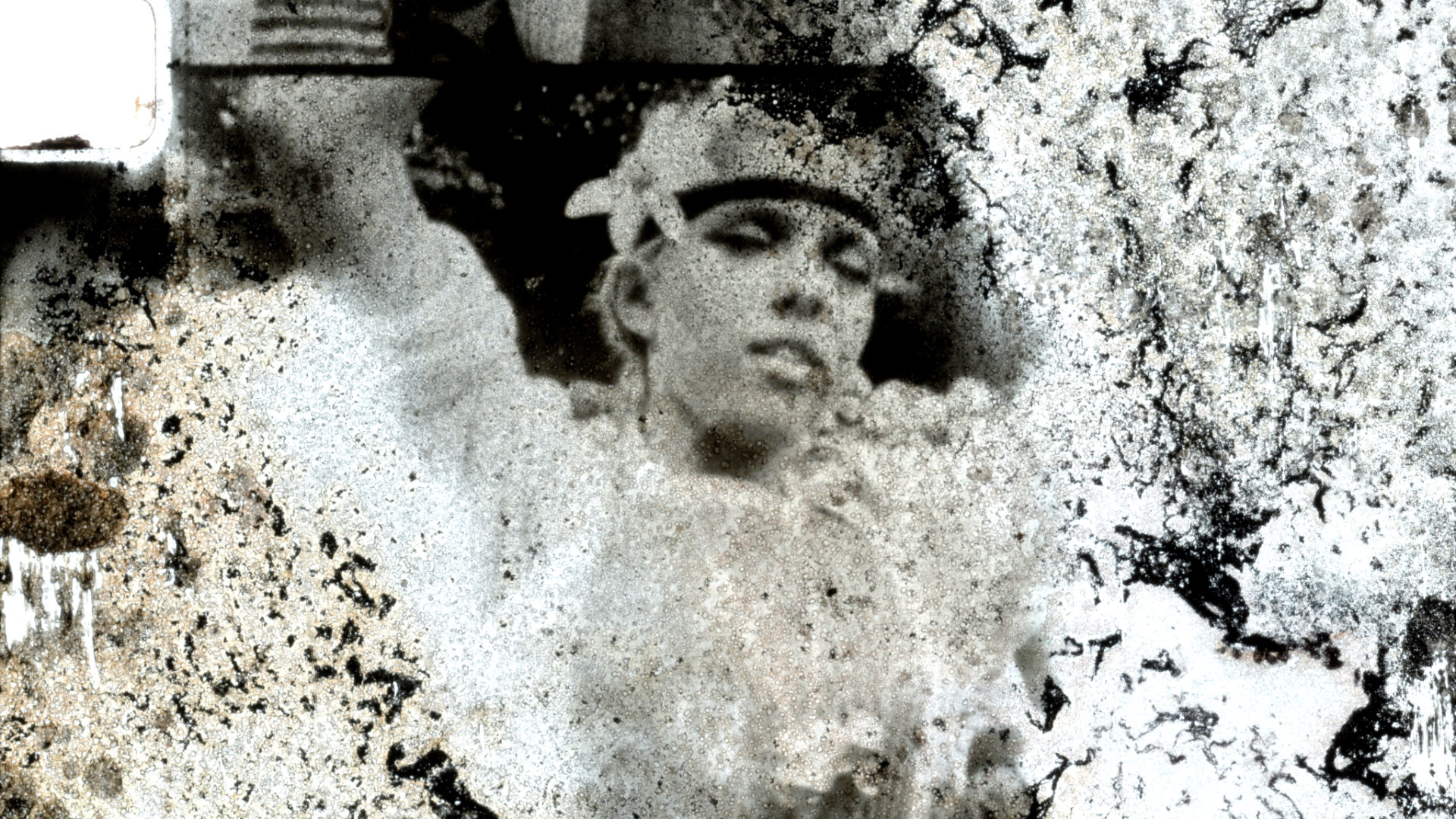
Johansson transferred the footage onto high-contrast Kodak 3378 sound-recording film and then treated it frame by frame with chemicals that erode the emulsion. The resulting two-channel moving-image installation was shown at Turku Art Museum in 2026.

That physical destruction interests me because archive culture usually tries to achieve the opposite.

Preserve the image.

Stabilise the film.

Remove scratches.

Recover detail.

Johansson deliberately damages the copy.

Memory becomes visible partly through information disappearing.

Digital editing makes it easy to simulate scratches, dust and chemical damage, but there is a conceptual difference when the process genuinely changes the film material.

The image cannot simply be reset.

Each intervention becomes part of that copy’s history.

Found footage already contains an absence because we do not know the people who made it.

Eroding the image adds another kind of disappearance.

We see the past while watching the material that carries it slowly refuse to preserve everything.
https://turuntaidemuseo.fi/en/nayttelyt/panu-johansson

#PanuJohansson #VideoArt #FoundFootage #ExperimentalFilm

The Film Is Slowly Destroying Itself The Film Is Slowly Destroying Itself Turun Taidemuseo Panu Johansson: Wherever Street Piece | Turku Art Museum Wherever Street Piece (2025) is a found footage work which portrays fragmented memories that cannot be directly linked to any single person’s life.
Facebook LinkedIn WhatsApp Threads
More sharing options
X Reddit Pinterest Telegram Email
Bell Labs

Computer Animation Before Personal Computers

Lillian Schwartz began working at Bell Laboratories in 1969, decades before computer graphics became ordinary creative tools.

Her 1970 film Pixillation combines computer-generated black-and-white imagery with microscopic structures, oil, water and optical printing. Colour filters add another layer, while Gershon Kingsley’s Moog-generated electronic soundtrack connects the film to the expanding world of electronic music.

What interests me is how hybrid the process already was.

It would be easy to imagine early computer art as a purely digital historical curiosity: primitive graphics generated by enormous machines.

Schwartz did something less predictable.

Computer output became one material among several.

It could be combined with photography, physical liquids, optical techniques and colour added elsewhere in the process.

That feels surprisingly contemporary.

Digital artists still move constantly between systems. Render something in software. Film a physical object. Feed one process into another. Distort it again.

The tools change.

The useful attitude does not.

Schwartz understood that a computer did not have to replace older visual techniques in order to transform them.

It could enter the chain and contaminate everything around it.

The most interesting computer art may begin when the computer stops being the subject.

https://archive.transmediale.de/content/pixillation

#LillianSchwartz #ComputerArt #ExperimentalFilm #BellLabs

Computer Animation Before Personal Computers Computer Animation Before Personal Computers archive.transmediale.de Pixillation | transmediale Lillian Schwartz began working at Bell Laboratories in 1969, decades before computer graphics became ordinary creative tools. Her 1970 film...
Facebook LinkedIn WhatsApp Threads
More sharing options
X Reddit Pinterest Telegram Email
Drawing the Soundtrack With

Drawing the Soundtrack With a Pen

Norman McLaren discovered that sound on film did not necessarily have to be recorded with a microphone.

Optical film sound converts visual information on the soundtrack area of a film strip into audio. McLaren realised that if the system was reading shapes, he could create those shapes himself. He drew and scratched patterns directly into the optical soundtrack area and produced synthetic sounds without first generating them acoustically. The National Film Board’s Pen Point Percussion demonstrates exactly how the process works.

I love the directness of this.

Normally sound becomes an image only after software analyses it as a waveform or spectrum.

McLaren could move in the opposite direction.

Draw the image.

Hear what it sounds like.

That collapses animation and electronic composition into the same physical material.

A mark can simultaneously belong to cinema and music.

For contemporary audiovisual artists this remains a surprisingly useful idea. We often synchronise completed audio and completed visuals afterwards.

McLaren’s process suggests something deeper.

Design one system capable of generating both.

When sound and image share a source, synchronisation stops being an effect.

It becomes part of their anatomy.

https://www.nfb.ca/film/pen_point_percussion/

#NormanMcLaren #VisualMusic #ExperimentalFilm #OpticalSound

Drawing the Soundtrack With a Pen Drawing the Soundtrack With a Pen National Film Board of Canada Pen Point Percussion Norman McLaren explains how he makes synthetic sound on film. With an oscilloscope he first demonstrates what familiar sounds look like on the screen; next, how sound shapes …
Facebook LinkedIn WhatsApp Threads
More sharing options
X Reddit Pinterest Telegram Email
16mm

Making a Film Without a Camera

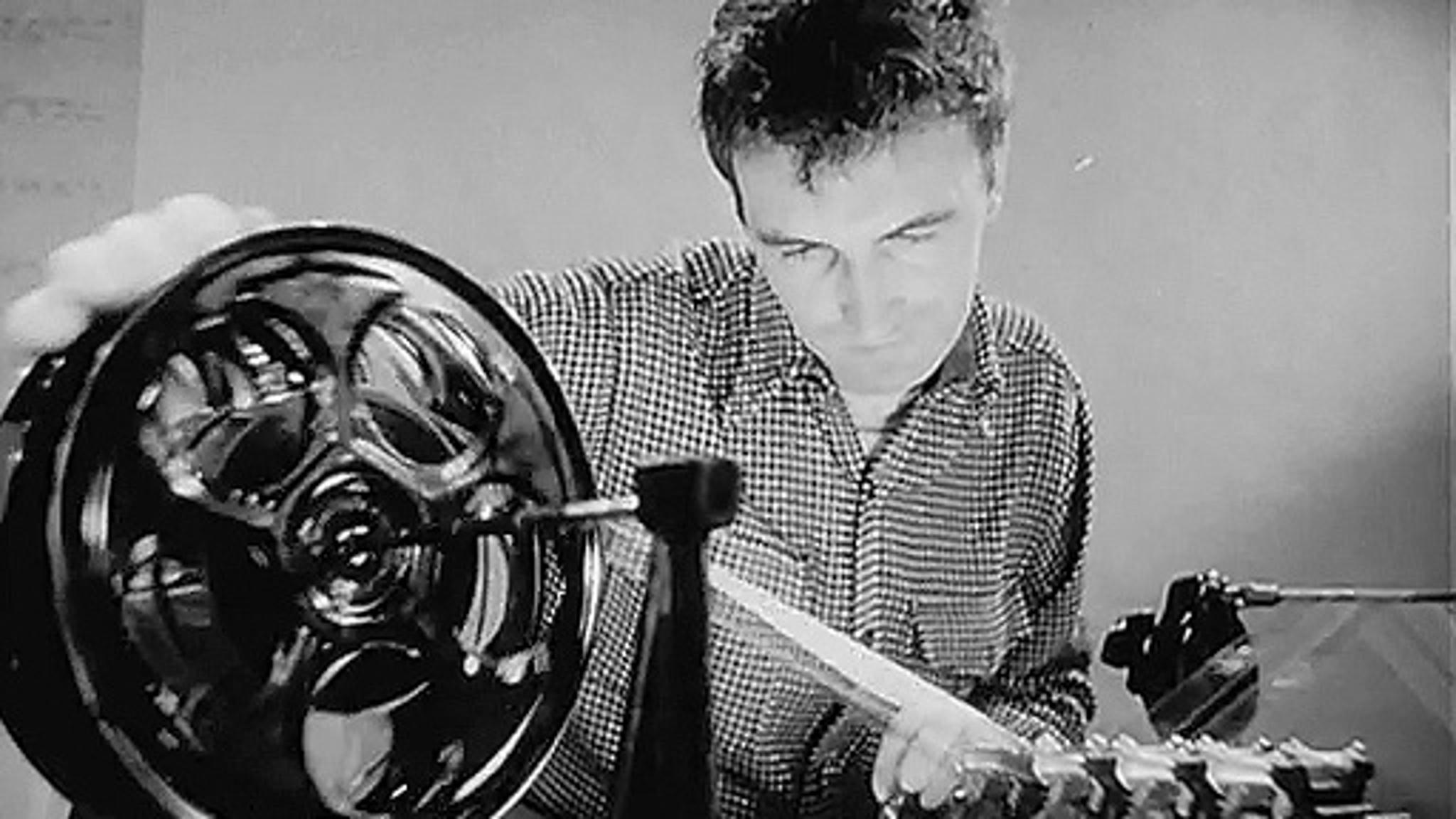
Stan Brakhage’s Mothlight is one of those works that makes a basic technology suddenly seem optional.

He created the 1963 film without photographing anything.

Instead, moth wings, flower petals and pieces of grass were arranged directly onto transparent film material and passed through a projector.

The objects become the images.

There is no photographed representation of a moth wing.

Light literally travels through its physical trace.

Brakhage later continued making films by painting, scratching and drawing directly onto film stock.

From a contemporary perspective this feels almost like the opposite of digital image production.

Normally we begin with an image and manipulate the data representing it.

Brakhage begins with the material carrying the image.

That difference matters when the film is projected.

Every tiny object becomes enormous.

A fragment that could fit on a fingertip suddenly occupies an entire screen for a fraction of a second.

Cinema usually uses technology to reproduce the visible world.

Mothlight uses cinema to reveal what the naked eye would probably never stop long enough to examine.

It reminds me that moving-image technology does not necessarily need a camera, a lens or even a conventional image.

Sometimes all it needs is something small enough to pass through light.

https://www.criterion.com/films/731-by-brakhage-an-anthology-volume-one

#StanBrakhage #Mothlight #ExperimentalFilm #16mm

Making a Film Without a Camera Making a Film Without a Camera criterion.com Stan Brakhage’s Mothlight is one of those works that makes a basic technology suddenly seem optional. He created the 1963 film without...
Facebook LinkedIn WhatsApp Threads
More sharing options
X Reddit Pinterest Telegram Email
Experimental Film

Visual Music Before Computers

Mary Ellen Bute wanted abstract images to possess something painting could not give her: actual duration. She turned to film and, between the 1930s and 1950s, created abstract animations in which shapes, light and movement were organised in close relationship with music. Her work also included technological experiments involving oscilloscopes and electronic imagery. Several of her films reached audiences at places such as Radio City Music Hall, an unusual level of public exposure for experimental abstraction.

What interests me from a VJ perspective is how familiar the ambition feels.

We now open Resolume, TouchDesigner or After Effects and assume that sound can be translated into movement almost automatically.

Bute was asking similar questions before digital graphics existed.

What does a musical phrase look like?

Should a visual form follow rhythm literally?

Can colour behave like orchestration?

How can movement produce something equivalent to musical tension?

The technology changes dramatically, but those questions hardly change at all.

That is why early experimental film can be more useful to a contemporary VJ than another software tutorial.

Software teaches us how to make an effect.

Bute reminds us to ask why an image should move in the first place.

https://www.eastman.org/mary-ellen-bute-rhythms-light

#MaryEllenBute #VisualMusic #ExperimentalFilm #VJHistory

Visual Music Before Computers Visual Music Before Computers eastman.org Mary Ellen Bute wanted abstract images to possess something painting could not give her: actual duration. She turned to film and, between the...
Facebook LinkedIn WhatsApp Threads
More sharing options
X Reddit Pinterest Telegram Email
Editing Became the Dance

Editing Became the Dance Partner

Maya Deren’s A Study in Choreography for Camera lasts only a few minutes, but it does something that remains surprisingly modern. Dancer Talley Beatty begins a movement in one location and completes it somewhere completely different. Through precisely matched editing, a gesture can carry him from a forest into a domestic interior or museum space without appearing to stop.

The cut becomes part of the choreography.

That is what interests me from an audiovisual perspective.

Normally a camera records a dancer moving through physical space. Deren realised that cinema could create another kind of space entirely.

The body obeys continuity.

The location does not.

Today we can create far more complicated transitions using digital compositing, realtime graphics and projection systems, but technical complexity does not automatically improve the idea.

Deren needed only movement, framing and a cut.

The result demonstrates something useful for VJ work too: an edit becomes much stronger when it continues an action rather than merely replacing one image with another.

Movement can hide the cut.

The cut can extend the movement.

https://www.moma.org/collection/works/302825

#MayaDeren #ExperimentalFilm #FilmEditing #VisualRhythm

Editing Became the Dance Partner Editing Became the Dance Partner moma.org Maya Deren’s A Study in Choreography for Camera lasts only a few minutes, but it does something that remains surprisingly modern. Dancer Talley...
Facebook LinkedIn WhatsApp Threads
More sharing options
X Reddit Pinterest Telegram Email
Expanded Cinema

When Film Invades the Room

Ho Tzu Nyen’s The Cloud of Unknowing begins as moving image but refuses to remain simply a film on a wall. Created for the Singapore Pavilion at the 2011 Venice Biennale, it was filmed inside a public housing block shortly before demolition. Eight characters encounter different manifestations of a mysterious cloud, with references ranging across Eastern and Western art history.

But the installation extends beyond the image.

Multiple screens, multichannel audio, theatrical lighting and smoke transform the viewing space itself. The cloud can effectively leave the projected world and appear to enter the room occupied by the audience.

That interests me from a VJ and expanded-cinema perspective.

Projection normally creates a clear border: reality here, image there.

Smoke destroys that certainty because projected light suddenly has volume. A beam that was invisible in the air becomes a physical-looking object.

The simplest atmospheric effect can therefore change the grammar of cinema.

The image stops being something we look at.

For a moment, we are standing inside it.

https://www.chanel.com/us/chanel-next-prize/ho-tzu-nyen/

#HoTzuNyen #ExperimentalFilm #VideoInstallation #ExpandedCinema

When Film Invades the Room When Film Invades the Room chanel.com Ho Tzu Nyen’s The Cloud of Unknowing begins as moving image but refuses to remain simply a film on a wall. Created for the Singapore Pavilion at...
Facebook LinkedIn WhatsApp Threads
More sharing options
X Reddit Pinterest Telegram Email
Cinema Escaping the Rectangle

Cinema Escaping the Rectangle

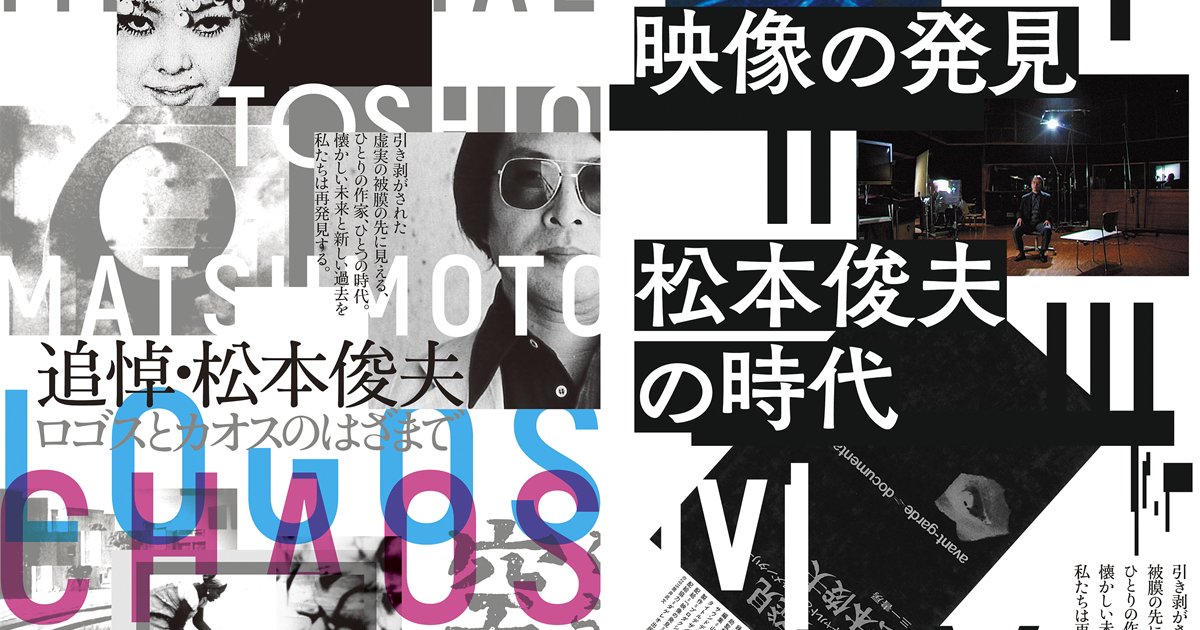
Toshio Matsumoto did not limit experimental film to unusual images inside a conventional cinema screen. During the late 1960s and early 1970s he worked with expanded cinema, questioning what his retrospective material describes as the standard “one projector, one screen” relationship between film and audience. For My Crushed Right Eye from 1968 could be presented with three simultaneous projections, while Space Projection Ako in 1970 pushed the idea further into spatial presentation.

This interests me much more from a VJ perspective than simply synchronising a video to music.

Once several projections occupy a space, editing no longer happens only in time. It happens across walls, screens and the viewer’s field of vision.

The audience effectively performs part of the edit by deciding where to look.

Modern projection mapping and realtime visuals have access to technology Matsumoto could never have imagined, yet the underlying question remains surprisingly current:

Why should a moving image stay inside one rectangle?

The moment that rectangle disappears, cinema begins behaving like architecture.

https://www.imageforum.co.jp/matsumototoshio/

#ToshioMatsumoto #ExpandedCinema #ExperimentalFilm #LiveVisuals

Cinema Escaping the Rectangle Cinema Escaping the Rectangle ??????? ??????????????????-??????? ??????? ??????????????????-??????? ???????? ??????????????????-????????2017?12??????????????????????
Facebook LinkedIn WhatsApp Threads
More sharing options
X Reddit Pinterest Telegram Email
Audiovisual Art

When Image and Sound Share Structure

Ryoichi Kurokawa’s syn_ is an audiovisual performance built as a diptych with 2.1-channel sound. First created in 2011, it has been performed internationally in spaces ranging from Tokyo’s Studio Coast to festivals and arts centres in Europe and North America. Kurokawa describes his broader practice in terms of constructing audiovisual phenomena from field recordings and digitally generated structures.

What interests me from a VJ perspective is that the image does not appear to be decoration placed behind finished music.

Sound and image seem to belong to the same organisational system: fragmentation, rhythm, interruption, density and sudden precision appear in both.

That changes the role of synchronization. Matching a visual flash to a kick drum is the most obvious way of connecting image and sound, but it is only one possibility. Both media can instead share behaviour.

A visual texture can become dense when the sound becomes structurally dense without literally following every beat.

The strongest audiovisual work may happen when you cannot easily decide which medium is leading the other.

https://www.ryoichikurokawa.com/project/syn_.html

#RyoichiKurokawa #AudiovisualArt #LiveVisuals #ExperimentalFilm

When Image and Sound Share Structure When Image and Sound Share Structure Ryoichi Kurokawa’s syn_ is an audiovisual performance built as a diptych with 2.1-channel sound. First created in 2011, it has been performed international…
Facebook LinkedIn WhatsApp Threads
More sharing options
X Reddit Pinterest Telegram Email