Isaac Julien rarely asks us to watch a film on one screen.
His installations distribute moving images across several screens so that editing begins to happen spatially as well as temporally. A character may disappear from one image and appear somewhere else in the room. Two events can run simultaneously. The viewer has to decide where to look.
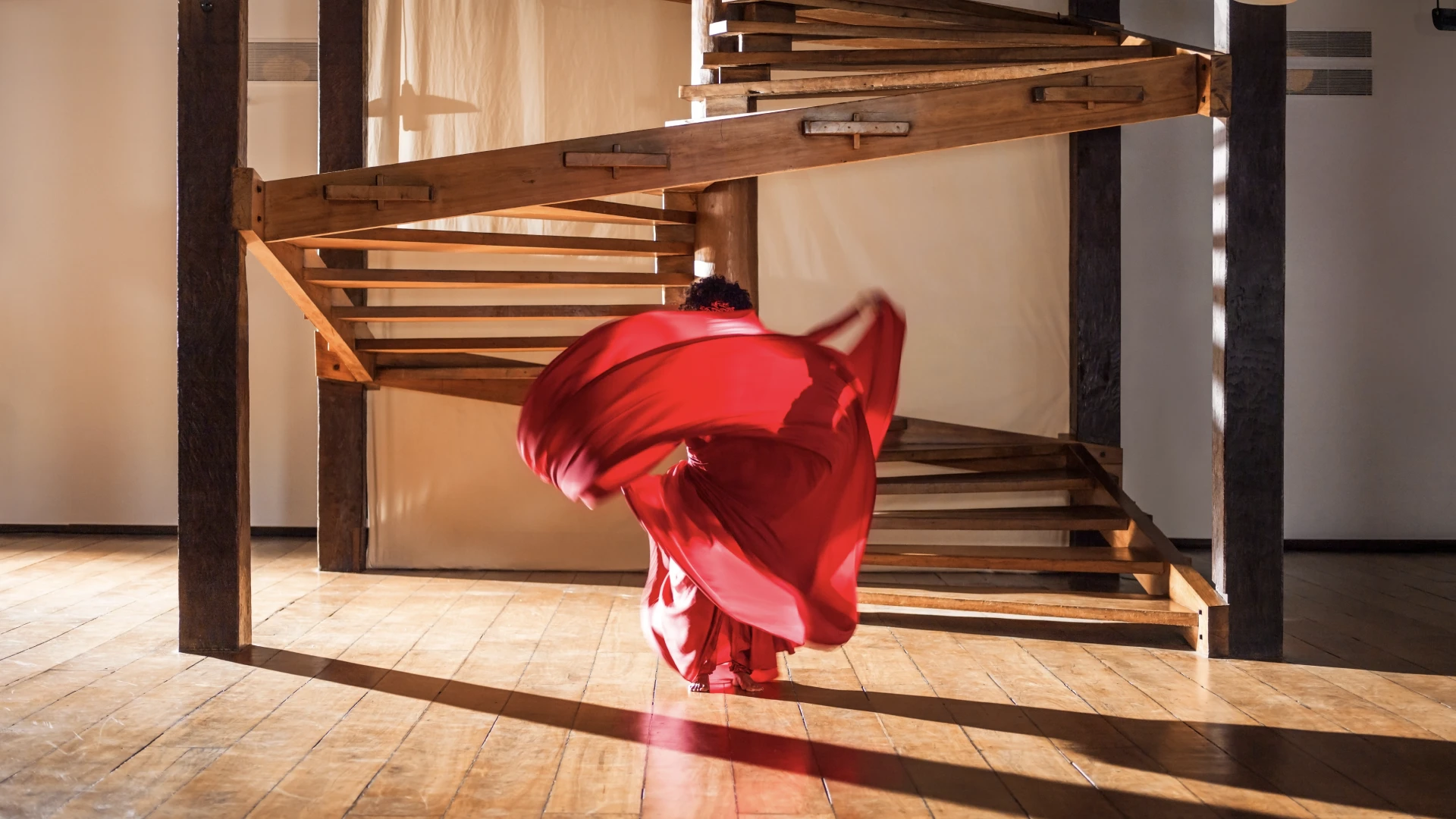
Museum Dreams, currently at gres art 671 in Bergamo until 4 October 2026, brings together five large-scale installations spanning more than two decades of Julien’s work, including Once Again… (Statues Never Die) and Lina Bo Bardi: A Marvellous Entanglement.
What changes for me in multi-screen cinema is the loss of the perfect edit.
In an ordinary film the director controls exactly which image follows another.
In an installation, the spectator can look away.
Another screen can become more interesting.
Two sequences can accidentally combine because of where you happen to be standing.
That sounds like a loss of control, but it creates another kind of authorship.
The filmmaker composes possibilities rather than one compulsory sequence.
It has something in common with electronic performance.
A set of carefully prepared elements exists, but their relationship becomes partly dependent on space, timing and attention.
Cinema stops being only something projected in front of us.
It becomes architecture we move through.
https://gresart671.org/en/2026/04/10/isaac-julien-museum-dreams/
#IsaacJulien #VideoInstallation #MovingImage #ExpandedCinema