Skip to content

Moving Image

Art Stream
Digital Ecology

A Pond Controlling the Gallery

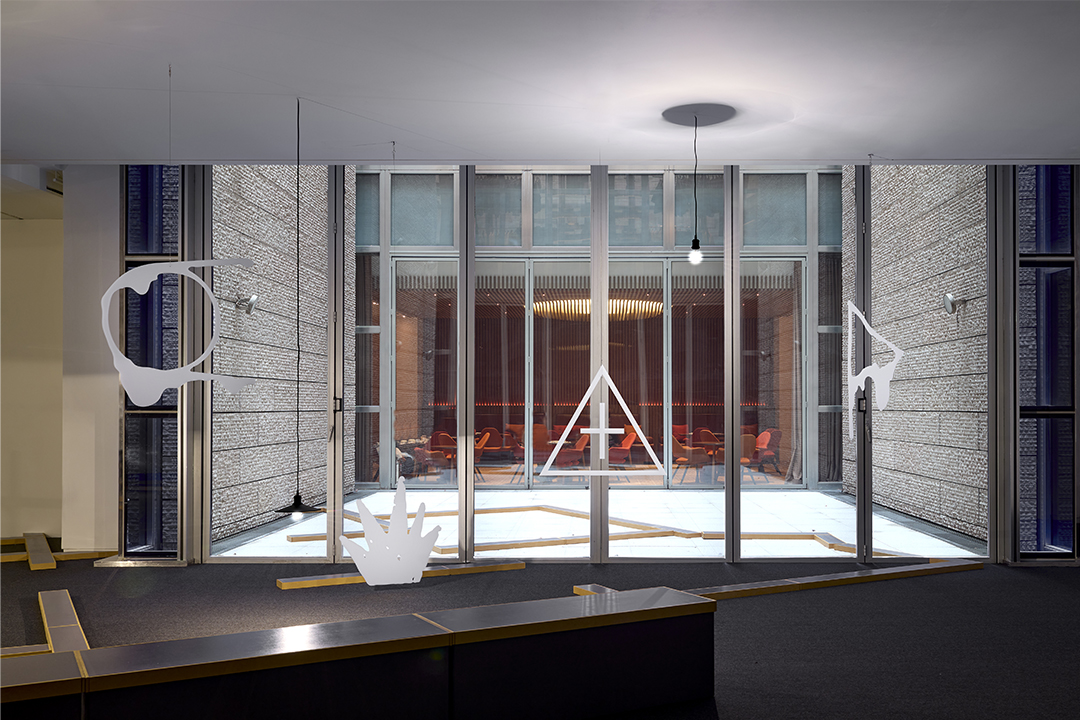
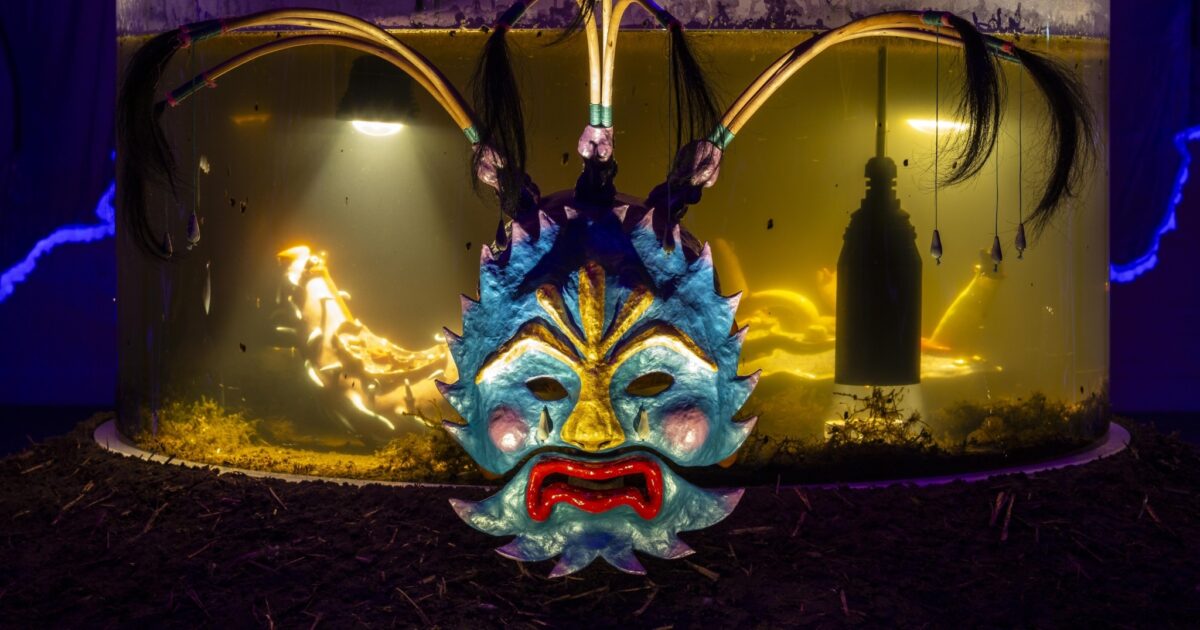
Rae-Yen Song’s new installation at FACT Liverpool contains something unusually literal at its centre: a living pond.

The exhibition •~TUA~• ?? •~MAK~•, opening on 18 September 2026, combines sculpture, sound and moving image within an imagined subaquatic world shaped partly by the artist’s family histories and diasporic mythology.

Cameras observe microscopic life and movement inside the pond. Activity within that ecosystem then affects the lights and sounds of the installation.

I like the reversal.

Interactive digital art usually waits for a human visitor.

Walk here.

Touch this.

Move your hand and the system responds.

Song gives some of that control to organisms that have no interest in being performers.

The gallery becomes responsive, but humans are no longer the only meaningful input.

That changes the idea of interactivity itself.

A living system is not a button.

It does not repeat the same response because somebody requests it.

The artwork has to share control with processes it cannot completely predict.

For a digital installation, that is a surprisingly biological kind of uncertainty.

https://www.fact.co.uk/event/rae-yen-song-%E5%AE%8B%E7%91%9E%E6%B8%8A
#RaeYenSong #MovingImage #InteractiveArt #DigitalEcology

A Pond Controlling the Gallery A Pond Controlling the Gallery FACT Rae-Yen Song ???: •~TUA~• ?? •~MAK~• Rae-Yen Song ??? draws on the flux and resilience of the immigrant experience to reimagine the world. For this exhibition, the gallery is transformed into a darkened abyss, suspended somewhere between the deep sea and the skies above. Moving through this landscape, Rae-Yen invites us to reconsider…
Facebook LinkedIn WhatsApp Threads
More sharing options
X Reddit Pinterest Telegram Email
Ayoung Kim

Rebuilding a Migrant Memory in 3D

Ayoung Kim’s Al-Mather Plot 1991 begins with an actual building in Riyadh.

The Al-Mather Housing Complex was constructed by the Korean company Hanyang during a period when large numbers of South Korean workers travelled to the Gulf. It remained largely unused until the Gulf War, when displaced Kuwaitis took refuge there. Kim’s own father had worked in the region.

Instead of making a conventional documentary, she reconstructs this history through live-action footage, archival photographs, field recordings, game-engine environments and synthetic imagery. Years of research are fed into a digital architecture where factual history begins to behave like memory.

That interests me because digital reconstruction usually promises accuracy.

Scan the object.

Model the building.

Restore what disappeared.

Kim uses similar technology while admitting something less comfortable: reconstruction is never neutral.

A building remembered by a migrant worker is not the same building found in an architectural archive. A photograph records one moment. A game engine can move through spaces the camera never entered.

The digital model therefore does not recover one definitive Al-Mather.

It creates somewhere between evidence and imagination.

Perhaps that is closer to how historical memory actually works.

We collect fragments, fill the spaces between them and eventually construct a place that nobody experienced in exactly the same way.

https://www.fondationdentreprisehermes.org/en/projet/exhibitions-atelier-hermes-seoul-plot-blob-plop-2025

#AyoungKim #MovingImage #GameEngine #DigitalArt

Rebuilding a Migrant Memory in 3D Rebuilding a Migrant Memory in 3D fondationdentreprisehermes.org “Plot, Blob, Plop” at l'Atelier Hermès | Fondation d'entreprise Hermès Discover the “Plot, Blob, Plop” at l'Atelier Hermès project and find key information to participate (dates, location, program)
Facebook LinkedIn WhatsApp Threads
More sharing options
X Reddit Pinterest Telegram Email
Artists Film

Reassembling a Forgotten Goddess

Darya Andijan’s new 2026 film Do You Know That I’m With You begins with a figure who has almost disappeared from cultural memory.

Travelling through Central Asia, Andijan searches for traces of Gülem, described as a forgotten goddess of carpet weaving from the Uyghur region. The 23-minute work combines travel, poetic voices, ritual and ancestral memory while addressing feminism, oppression and cultural loss produced through colonialism. It was recently added to Eye Filmmuseum’s collection of artists’ moving image.

What stays with me is the relationship between film and weaving.

A carpet produces an image by bringing separate threads into a structure.

A film can do something similar with fragments of memory.

One person remembers a story.

A place contains another trace.

A ritual survives while its original explanation becomes uncertain.

None is enough by itself.

Put them together and an image begins to return.

This is very different from reconstructing history as though every missing fact could simply be recovered.

Sometimes the gaps are part of the history.

Moving image becomes useful precisely because it can hold those fragments beside one another without pretending that the original object has been completely restored.

The film does not necessarily bring Gülem back.

It gives her fragments somewhere to meet.

https://www.eyefilm.nl/en/whats-on/new-dutch-selected-artists-moving-image/1680625

#DaryaAndijan #ArtistsFilm #MovingImage #CentralAsia

Reassembling a Forgotten Goddess Reassembling a Forgotten Goddess eyefilm.nl New Dutch Selected Artists' Moving Image | Eye Filmmuseum New work by Dutch artists and experimental filmmakers that was recently added to Eye’s collection. The program includes four short films by filmmakers and artists Helen Anna Flanagan, Nan Wang, Justin Bentvelsen, both emerging artists and established names.
Facebook LinkedIn WhatsApp Threads
More sharing options
X Reddit Pinterest Telegram Email
Cinema Escaping Into the

Cinema Escaping Into the Museum

Isaac Julien rarely asks us to watch a film on one screen.

His installations distribute moving images across several screens so that editing begins to happen spatially as well as temporally. A character may disappear from one image and appear somewhere else in the room. Two events can run simultaneously. The viewer has to decide where to look.

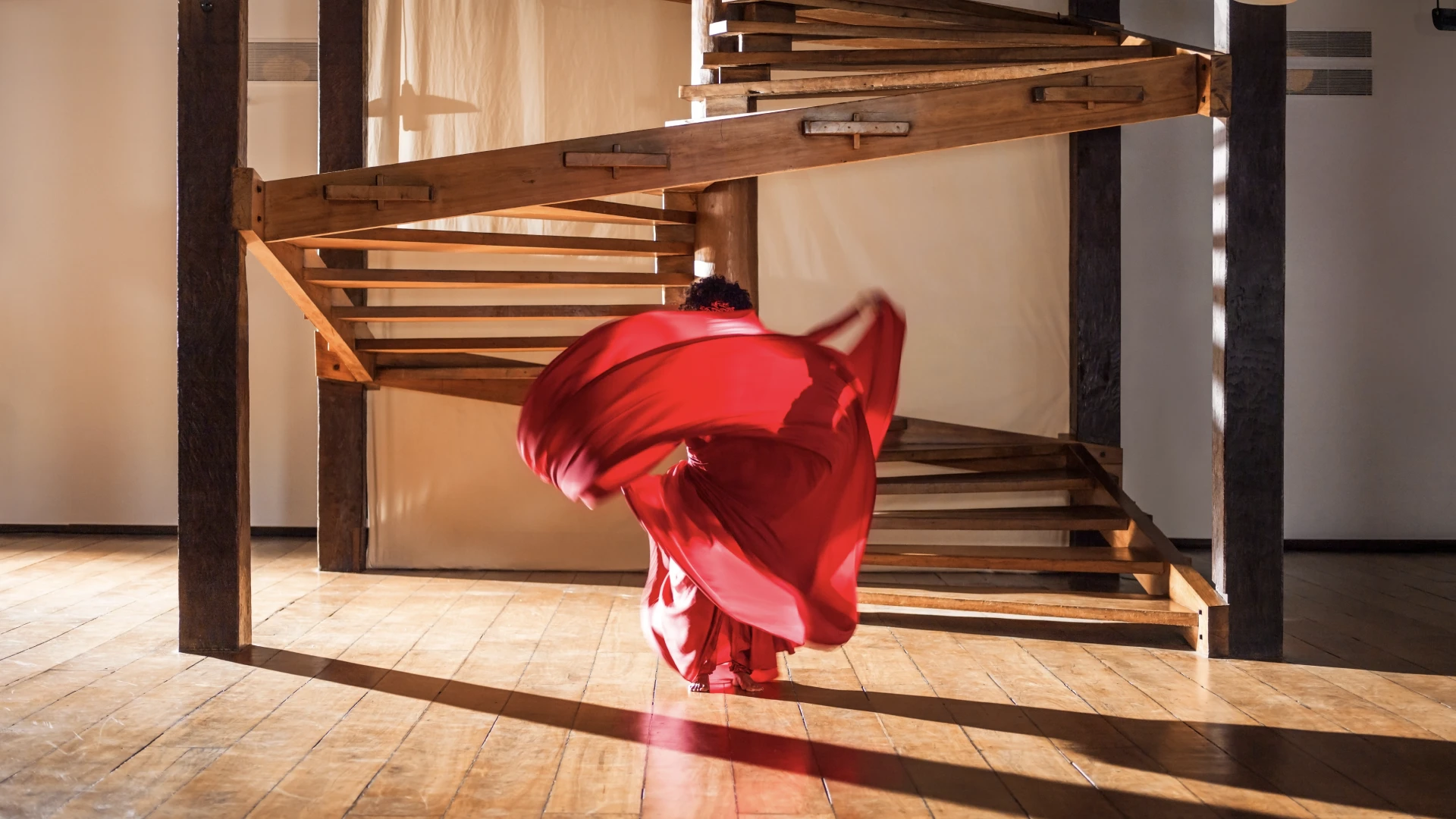
Museum Dreams, currently at gres art 671 in Bergamo until 4 October 2026, brings together five large-scale installations spanning more than two decades of Julien’s work, including Once Again… (Statues Never Die) and Lina Bo Bardi: A Marvellous Entanglement.

What changes for me in multi-screen cinema is the loss of the perfect edit.

In an ordinary film the director controls exactly which image follows another.

In an installation, the spectator can look away.

Another screen can become more interesting.

Two sequences can accidentally combine because of where you happen to be standing.

That sounds like a loss of control, but it creates another kind of authorship.

The filmmaker composes possibilities rather than one compulsory sequence.

It has something in common with electronic performance.

A set of carefully prepared elements exists, but their relationship becomes partly dependent on space, timing and attention.

Cinema stops being only something projected in front of us.

It becomes architecture we move through.

https://gresart671.org/en/2026/04/10/isaac-julien-museum-dreams/

#IsaacJulien #VideoInstallation #MovingImage #ExpandedCinema

Cinema Escaping Into the Museum Cinema Escaping Into the Museum gres art 671 ISAAC JULIEN gres art 671 Isaac Julien rarely asks us to watch a film on one screen. His installations distribute moving images across several screens so that editing begins to happ…
Facebook LinkedIn WhatsApp Threads
More sharing options
X Reddit Pinterest Telegram Email
Cameras Jasper Marsalis

Landscape Painting From Unsecured Cameras

Jasper Marsalis has made a contemporary landscape exhibition without travelling to photograph the landscapes himself.

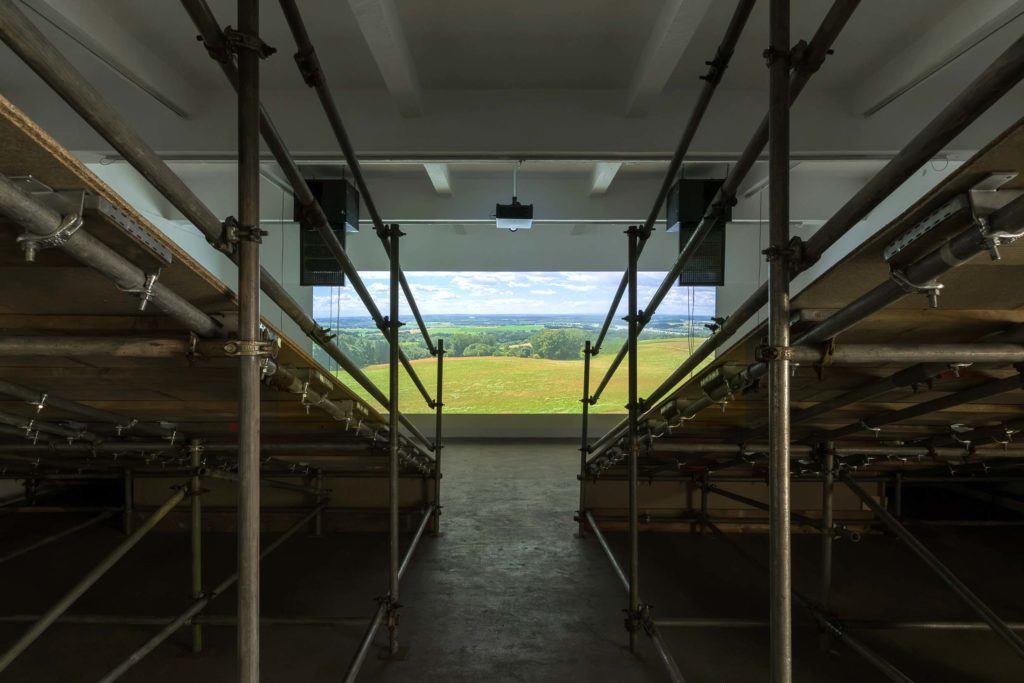
In Still Life, currently at Chisenhale Gallery in London until 6 September 2026, a large screen displays live images drawn from unsecured internet-connected cameras around the world.

Lakes appear. Roads. Hills. Parking lots. Agricultural spaces. Occasionally animals or people pass through.

An algorithm changes which cameras are shown, so the sequence is never completely predetermined. Four suspended speakers simultaneously transform live FM radio signals into slowly changing sound.

I find the landscapes strange precisely because nobody seems to be composing them.

Traditional landscape painting selects a viewpoint.

Photography selects a moment.

Marsalis inherits viewpoints selected by cameras installed for completely different reasons, then allows weather, daylight and whatever happens to pass through the frame to determine the image.

Compression errors become texture.

A slow camera turns movement into jumps.

Nightfall happens according to the actual location of a camera thousands of kilometres away.

The gallery therefore contains images that are live but geographically absent.

This is almost the reverse of cinematic control.

Nothing waits for the filmmaker.

The world keeps happening and the artwork briefly tunes into it.

https://flash—art.com/2026/07/jasper-marsalis-still-life-chisenhale-gallery-london/

#JasperMarsalis #VideoArt #NetworkArt #MovingImage

Landscape Painting From Unsecured Cameras Landscape Painting From Unsecured Cameras Flash Art Jasper Marsalis "Still Life" Chisenhale Gallery / London | | Flash Art Entering Chisenhale Gallery in London, a scaffolded passage opens onto a huge screen. On it a landscape scene appears, stays for thirty seconds or so, then changes to another. A lake. Hills. At night,
Facebook LinkedIn WhatsApp Threads
More sharing options
X Reddit Pinterest Telegram Email
Contemporary Art

An Island That Refused a Border

In 1831 an underwater volcanic eruption created a temporary island between Sicily and Tunisia. Britain, France, Spain and the Kingdom of the Two Sicilies quickly became interested in claiming it. Then the island disappeared beneath the Mediterranean again.

Elisa Giardina Papa turns this strange historical episode into She Flickered In and Out of History, a new 18-minute video installation currently at London’s ICA until 6 September 2026.

The work was filmed around Mount Etna, Stromboli and the submerged slopes of Mediterranean volcanic islands. It appears on a large freestanding LED screen alongside photographs and glass sculptures. A Sicilian spoken poem and an original score by duendita move through the images.

What interests me is that the island behaves almost like an impossible political object.

A territory normally becomes valuable because it stays where maps put it.

This one appeared, attracted competing claims of ownership, and then physically removed itself from the argument.

Video seems particularly suited to that story because moving image also refuses the stability of a photograph. Land emerges, changes, flickers and disappears.

Giardina Papa does not simply reconstruct the island as a forgotten historical curiosity. She lets geological time interfere with political time.

Governments can draw borders rapidly.

A volcano has another schedule.

There is something satisfying about a landscape that briefly enters European geopolitics and then sinks before anybody can permanently possess it.

Elisa Giardina Papa: She Flickered In and Out of History

#ElisaGiardinaPapa #VideoArt #MovingImage #ContemporaryArt

An Island That Refused a Border An Island That Refused a Border iiclondra.esteri.it Elisa Giardina Papa: She Flickered In and Out of History 17 July – 6 September 2026 at the Institute of Contemporary Arts (ICA) ICI London is proud to support She Flickered?In?and Out of History, a new video and?mixed-media?installation by interdisciplinary artist Elisa Giardina Papa (b. Italy;?lives and works in New York,?U.S.,?and?Sant’Ignazio, Sicily) at the Institute of Contemporary Arts (ICA). In 1831, an underwater volcanic eruption […]
Facebook LinkedIn WhatsApp Threads
More sharing options
X Reddit Pinterest Telegram Email
Accessibility

Captions Become Part of the Choreography

Carolyn Lazard’s current exhibition Long Take, at Stanford’s Cantor Arts Center until 13 December 2026, begins with dance but quickly moves beyond the idea that a video simply records a performance.

The central work Leans, Reverses was developed with dancer Jerron Herman and poet and artist Joselia Rebekah Hughes. The project exists through a dance performance, its recording, a choreographic score, captions and audio description. Three monitors can display black fields while text describes sounds or movements that are not necessarily visible in the conventional way.

What interests me is that accessibility is not added after the artwork is finished.

It becomes one of the materials from which the artwork is built.

Captions normally occupy the edge of moving-image culture.

We switch them on when necessary.

Lazard moves them toward the centre.

A phrase describing a movement becomes another version of that movement.

Audio description creates another performance through language.

The recorded image is no longer automatically treated as the most complete version.

That is a surprisingly radical idea for video art.

A camera does not necessarily preserve the work better than words.

Each translation loses something.

Each translation can also create something that was not visible before.

https://museum.stanford.edu/exhibitions/carolyn-lazard-long-take

#CarolynLazard #VideoArt #MovingImage #Accessibility

Captions Become Part of the Choreography Captions Become Part of the Choreography museum.stanford.edu Carolyn Lazard’s current exhibition Long Take, at Stanford’s Cantor Arts Center until 13 December 2026, begins with dance but quickly moves...
Facebook LinkedIn WhatsApp Threads
More sharing options
X Reddit Pinterest Telegram Email
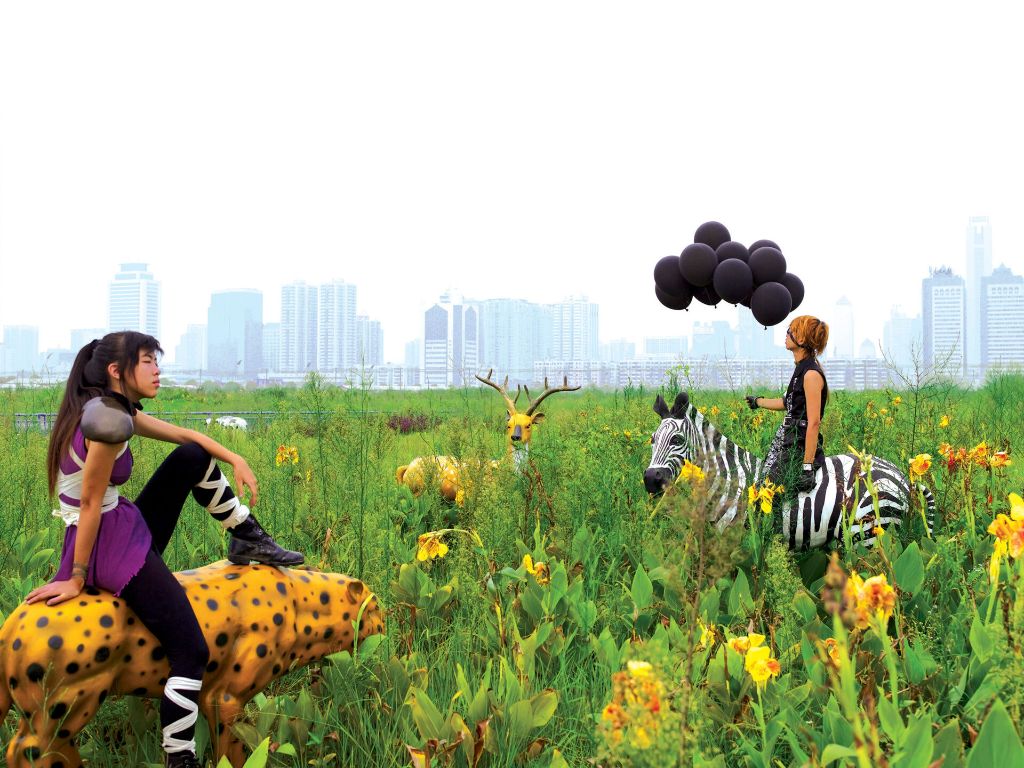
Cao Fei

A Digital City Built From Real Change

Cao Fei’s work has repeatedly used moving image, virtual worlds and digital culture to examine the speed of social change in China.

Her major current exhibition Testimonies to the Near Future opened at Kunstmuseum Basel | Gegenwart on 28 August 2026. The museum describes it as her first solo exhibition in Switzerland and her largest retrospective in Europe to date. Videos, digital environments, photography, sculpture and immersive installations are arranged so that the museum itself begins to resemble a city.

That seems particularly appropriate for Cao Fei.

Her moving-image work rarely treats digital space as something separate from ordinary life.

Factories, cosplay, online identities, architecture and imagined cities keep crossing into one another.

What interests me is how quickly work like this changes historically.

A virtual world that once appeared futuristic can become technologically obsolete within a decade.

But the social behaviour recorded inside it may become more recognisable.

That gives contemporary video art a strange double clock.

The technology ages rapidly.

The human desire to escape, perform another identity, build communities and imagine a different city does not.

Perhaps that is why digital art does not always need to remain technologically current.

Sometimes outdated technology becomes the evidence showing how recently our idea of the future looked completely different.

https://www.museenbasel.ch/en/museen/kunstmuseum-basel-gegenwart/cao-fei

#CaoFei #VideoArt #DigitalArt #MovingImage

A Digital City Built From Real Change A Digital City Built From Real Change museenbasel.ch Cao Fei The Chinese artist Cao Fei (born 1978, Guangzhou) is one of the defining voices of her generation. Through videos, digital media, photograph
Facebook LinkedIn WhatsApp Threads
More sharing options
X Reddit Pinterest Telegram Email