Skip to content

Video Art

Art Stream
Belmore’s Fountain

Projecting an Image Onto Water

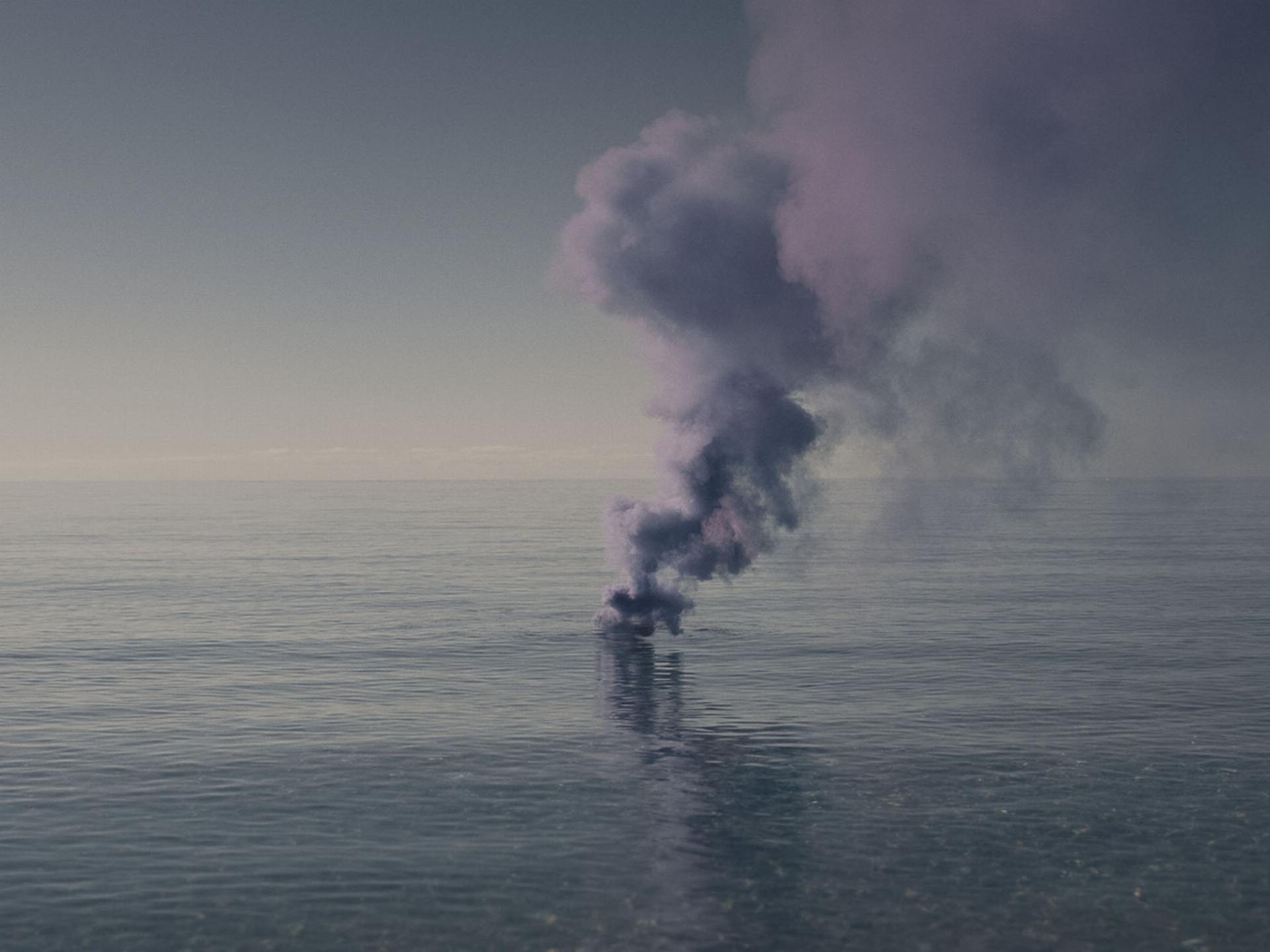
Rebecca Belmore’s Fountain, created for the Canadian Pavilion at the 2005 Venice Biennale, does something deceptively simple with video: the image is projected onto falling water rather than a conventional screen. The work moves between fire, water and blood, placing elemental imagery against an industrial North American landscape.

The physical projection surface changes everything for me. A normal screen is designed to disappear so that we concentrate on the image. Falling water refuses to disappear. It moves, breaks the projected light and reminds us that the image has a body. The medium becomes visible precisely because it cannot hold the picture perfectly still.

Belmore, an Anishinaabe artist, has repeatedly worked with land, bodies, political histories and the material presence of water. In Fountain, water is simultaneously subject, projection surface and moving sculpture. The video cannot be separated cleanly from the substance carrying it.

Digital images often feel weightless. Here light needs something unstable and physical before we can see it.

Fountain

#RebeccaBelmore #VideoArt #IndigenousArt #InstallationArt

Chen Chieh Jen

Returning Workers to an Empty Factory

Chen Chieh-Jen made Factory in 2003 after meeting former workers from Taiwan’s Lien Fu garment factory, which had closed in 1996 without paying workers compensation and pension claims. The women had spent years protesting. Chen invited them back into the abandoned workplace and filmed them quietly performing the labour they once carried out there.

The resulting work is deliberately slow and silent. Images of the women inside the empty factory are combined with archival propaganda footage presenting Taiwan’s earlier manufacturing prosperity. That collision interests me because nothing needs to be explained through dramatic narration. The same industrial history looks completely different depending on whether it is told through economic success or through the bodies left behind when production moves elsewhere.

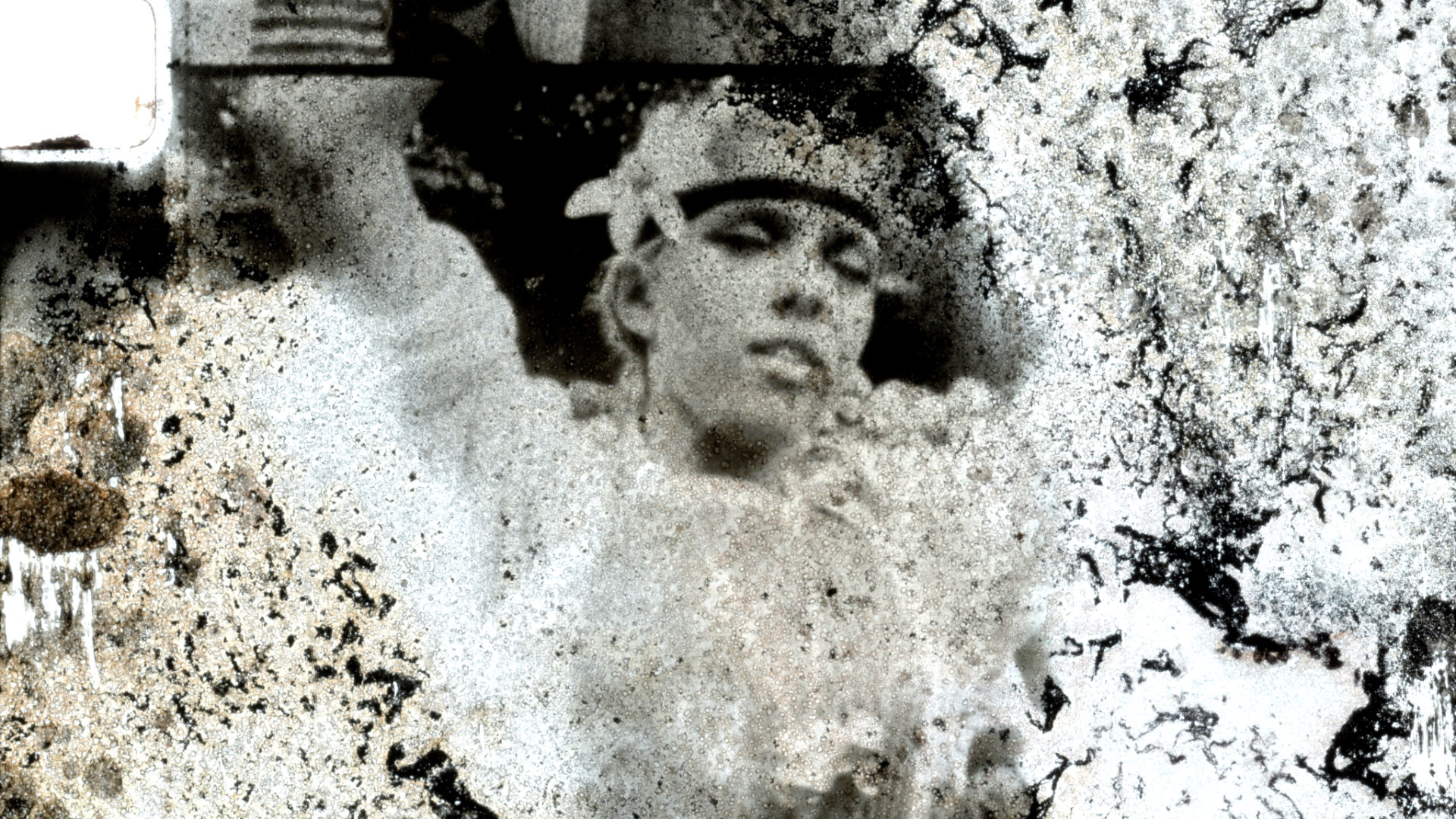
Re-enacting work inside a factory that no longer employs anyone turns labour into something almost ghostlike. The machines, gestures and building still remember a system that has already abandoned them. Silence does not make the political argument weaker. It gives the workers’ presence more weight.

???

#ChenChiehJen #TaiwaneseArt #VideoArt #LabourHistory

ARAVARA

Time Is Not Neutral

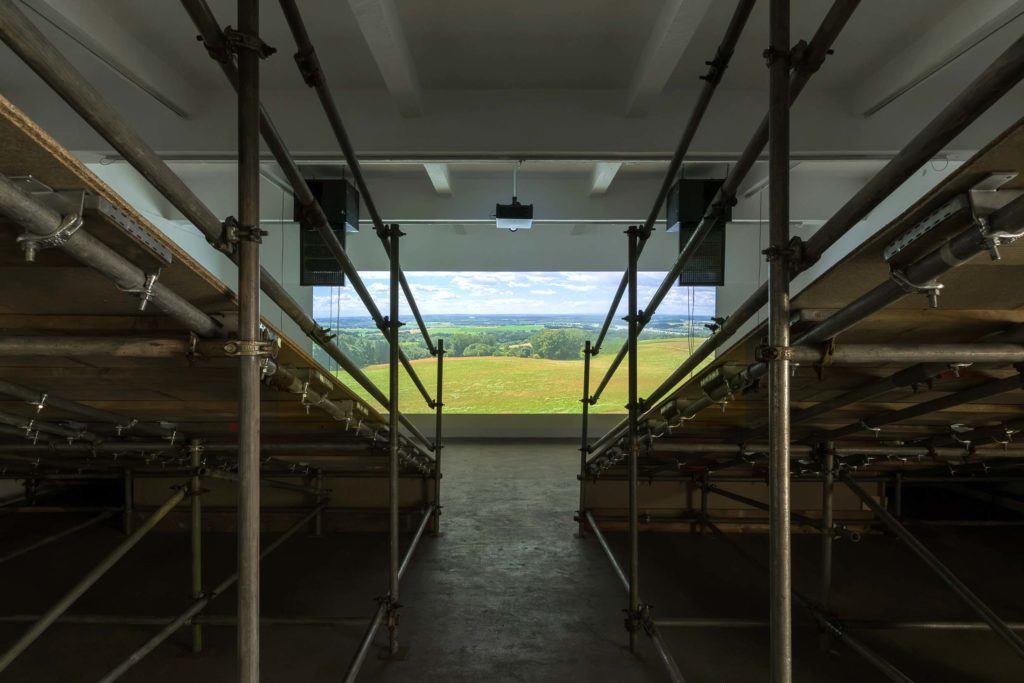
ARAVARA at the National Gallery of Jamaica is an audiovisual exhibition built around a deceptively difficult subject: time. Curated by Yina Jiménez Suriel and developed with KADIST, it brings together ten works by ten artists and is being presented through several Caribbean locations. The exhibition considers recurrence, repetition and historical layering, asking how promises of progress made in earlier periods continue to shape present realities. At the Kingston presentation, moving image and sound become ways of looking at history without assuming that time simply moves forward in a clean line.

I like that idea because museums themselves often organise history chronologically. One year follows another, giving the impression that the past has been completed. But political ideas, social structures and unfinished promises can return in altered forms. Perhaps history behaves less like a timeline and more like an image repeatedly edited without ever deleting all the previous layers.

National Gallery of Jamaica and KADIST Present ARAVARA: June 28, 2026

#ARAVARA #CaribbeanArt #VideoArt #JamaicaArt

National Gallery of Jamaica National Gallery of Jamaica and KADIST Present ARAVARA: June 28, 2026 The National Gallery of Jamaica (NGJ), in collaboration with KADIST, is pleased to present ARAVARA, an audiovisual exhibition curated by Dominican curator Yina Jiménez Suriel. The exhibition opens …
Christian Marclay

Twenty-Four Hours Inside Cinema

Christian Marclay’s The Clock is built from film fragments showing clocks, watches and references to time, edited so the work follows the actual time of day for twenty-four hours. The clever mechanism is obvious. What interests me more is what happens to thousands of unrelated films when one rule connects them. Narrative disappears, but another structure appears. Editing can create relationships between images that were never meant to meet.

https://www.centrepompidou.fr/fileadmin/user_upload/Les_visites_du_Centre_Pompidou_-_Christian_Marclay_-_transcription_du_podcast.pdf

#ChristianMarclay #VideoArt #FilmArt #Editing

Glitch Becomes the Structure

A Glitch Becomes the Structure

Joan Jonas built Vertical Roll around a television malfunction: the rolling bar that appeared when video signals fell out of sync. Instead of repairing the error, she performed with it. Her body appears fragmented by the unstable image while sound follows its rhythm. I keep returning to that decision. Technology often becomes creatively interesting at the exact point where it stops behaving as intended.

https://www.moma.org/collection/works/110544

#JoanJonas #VideoArt #PerformanceArt #MediaArt

Fluxus

When a Television Becomes a Line

Nam June Paik’s Zen for TV collapses the television picture into a single vertical line. A machine built to deliver constant information suddenly becomes almost empty. What interests me is that Paik did not reject television. He learned its electronics and changed its behaviour. Sometimes understanding a technology deeply enough allows you to make it do almost nothing, and that nothing becomes the artwork.

https://www.moma.org/collection/works/163792

#NamJunePaik #VideoArt #MediaArt #Fluxus