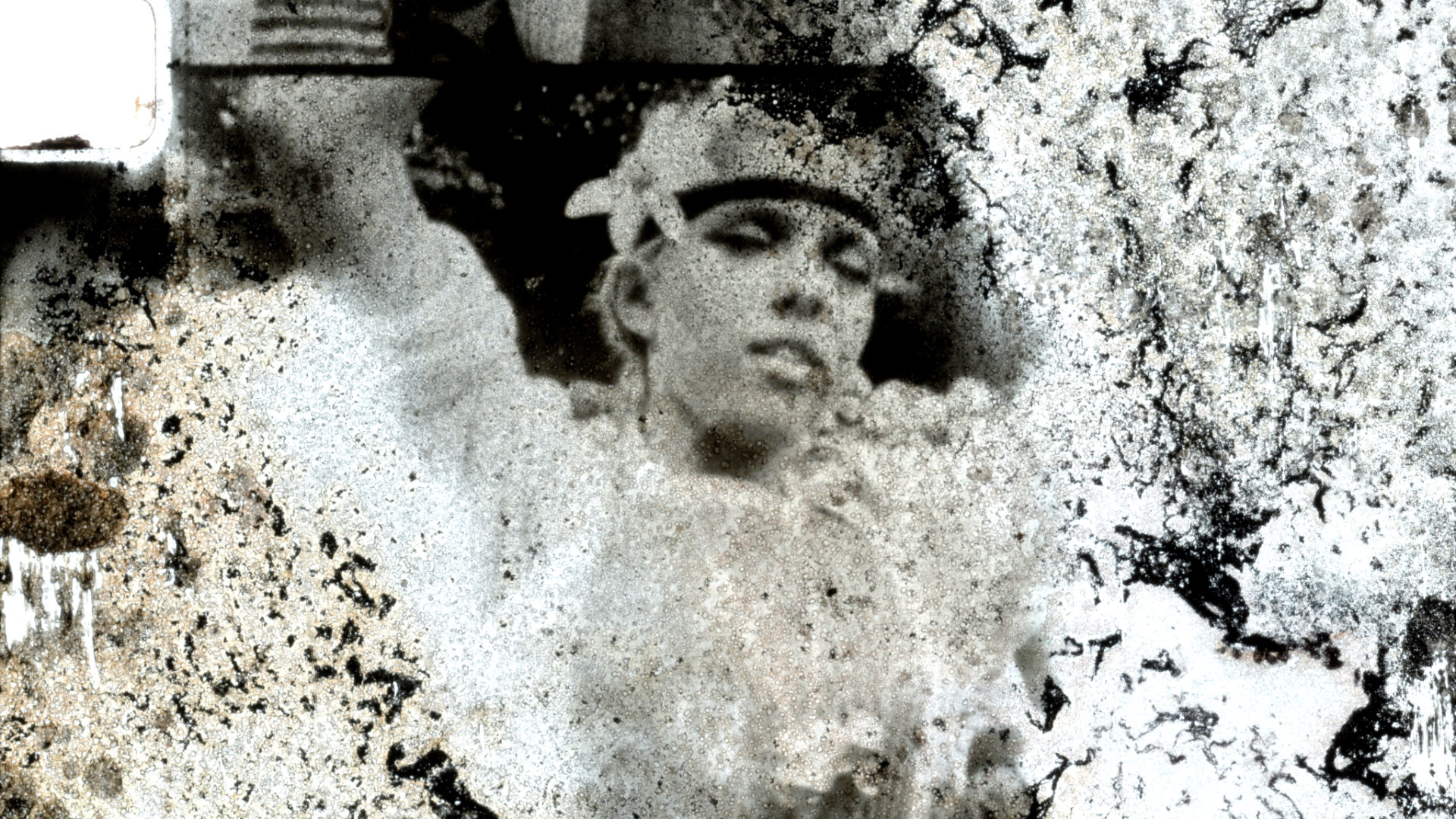
Panu Johansson’s Wherever Street Piece begins with anonymous 16mm footage he rescued from being thrown away in the early 2000s.
Nobody appears to know exactly who filmed it. The material seems to have been recorded in several countries between roughly 1965 and 1975.
Johansson transferred the footage onto high-contrast Kodak 3378 sound-recording film and then treated it frame by frame with chemicals that erode the emulsion. The resulting two-channel moving-image installation was shown at Turku Art Museum in 2026.
That physical destruction interests me because archive culture usually tries to achieve the opposite.
Preserve the image.
Stabilise the film.
Remove scratches.
Recover detail.
Johansson deliberately damages the copy.
Memory becomes visible partly through information disappearing.
Digital editing makes it easy to simulate scratches, dust and chemical damage, but there is a conceptual difference when the process genuinely changes the film material.
The image cannot simply be reset.
Each intervention becomes part of that copy’s history.
Found footage already contains an absence because we do not know the people who made it.
Eroding the image adds another kind of disappearance.
We see the past while watching the material that carries it slowly refuse to preserve everything.