Skip to content

Digital Art

Art Stream
Ayoung Kim

Rebuilding a Migrant Memory in 3D

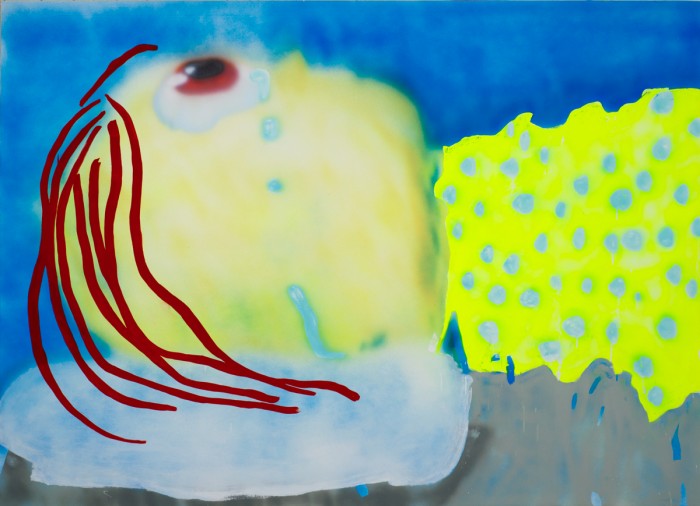
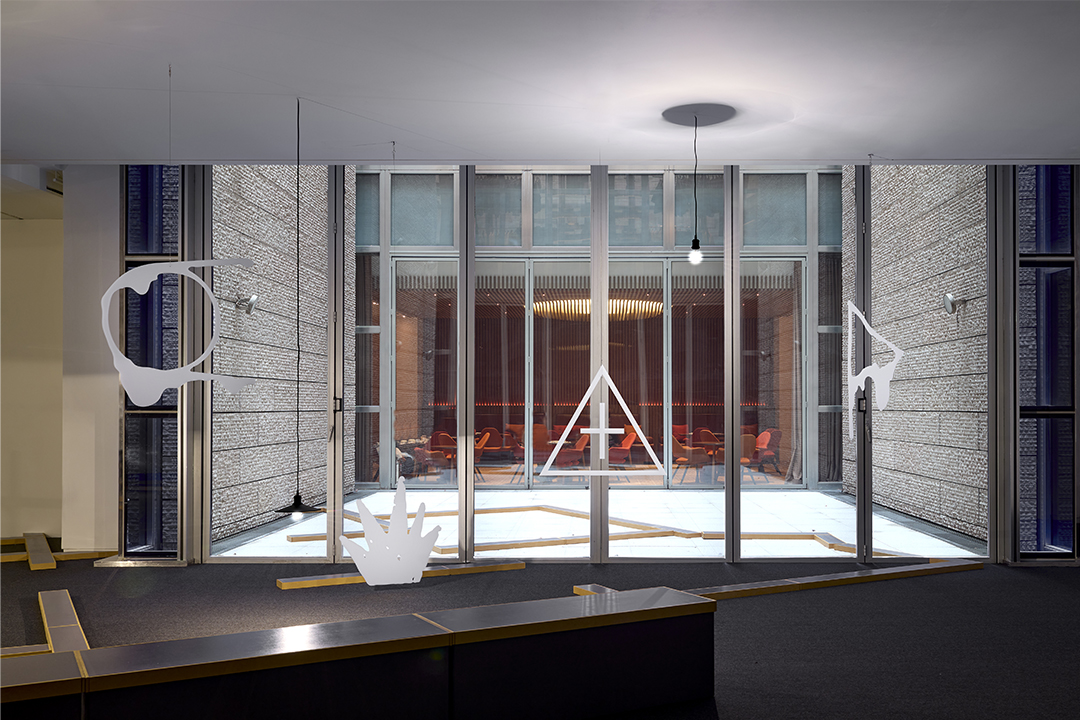
Ayoung Kim’s Al-Mather Plot 1991 begins with an actual building in Riyadh.

The Al-Mather Housing Complex was constructed by the Korean company Hanyang during a period when large numbers of South Korean workers travelled to the Gulf. It remained largely unused until the Gulf War, when displaced Kuwaitis took refuge there. Kim’s own father had worked in the region.

Instead of making a conventional documentary, she reconstructs this history through live-action footage, archival photographs, field recordings, game-engine environments and synthetic imagery. Years of research are fed into a digital architecture where factual history begins to behave like memory.

That interests me because digital reconstruction usually promises accuracy.

Scan the object.

Model the building.

Restore what disappeared.

Kim uses similar technology while admitting something less comfortable: reconstruction is never neutral.

A building remembered by a migrant worker is not the same building found in an architectural archive. A photograph records one moment. A game engine can move through spaces the camera never entered.

The digital model therefore does not recover one definitive Al-Mather.

It creates somewhere between evidence and imagination.

Perhaps that is closer to how historical memory actually works.

We collect fragments, fill the spaces between them and eventually construct a place that nobody experienced in exactly the same way.

https://www.fondationdentreprisehermes.org/en/projet/exhibitions-atelier-hermes-seoul-plot-blob-plop-2025

#AyoungKim #MovingImage #GameEngine #DigitalArt

Rebuilding a Migrant Memory in 3D Rebuilding a Migrant Memory in 3D fondationdentreprisehermes.org “Plot, Blob, Plop” at l'Atelier Hermès | Fondation d'entreprise Hermès Discover the “Plot, Blob, Plop” at l'Atelier Hermès project and find key information to participate (dates, location, program)
Facebook LinkedIn WhatsApp Threads
More sharing options
X Reddit Pinterest Telegram Email
Building Ecology Inside

Building Ecology Inside a Game Engine

Jakob Kudsk Steensen begins many of his digital worlds far away from the computer.

His fieldwork has taken him to environments including a collapsed Swiss ice cave, experimental forests in Minnesota, volcanic seafloors around the Azores, Bora Bora and abandoned tourist landscapes.

Those places are recorded using techniques including photogrammetry, environmental data gathering, sound recording and collaboration with scientists. The material then becomes the basis for virtual environments, spatial sound and immersive moving-image installations.

Otherworlds, at PHI in Montréal until 13 September 2026, brings together six of these worlds from roughly a decade of work. It includes the North American premiere of Psychosphere, where video from geothermal and deep-sea environments meets spatial sound, interactive light and sculptural forms.

What interests me is the direction of travel.

Digital world-building is often associated with inventing environments that never existed.

Steensen does something more complicated.

He begins with places that exist intensely enough to be measured, photographed and scientifically observed, then reconstructs them digitally until documentation turns into speculation.

The resulting world is neither nature nor simulation.

It contains traces of both.

That makes the computer less like an escape from the physical environment and more like a strange ecological memory device.

A forest can become data.

Data can become an imaginary forest.

And the imaginary forest may make us notice what was disappearing from the real one.

https://phi.ca/en/events/jakob-kudsk-steensen-otherworlds/

#JakobKudskSteensen #DigitalArt #VideoInstallation #VirtualWorlds

Building Ecology Inside a Game Engine Building Ecology Inside a Game Engine phi.ca One moment, please... Jakob Kudsk Steensen begins many of his digital worlds far away from the computer. His fieldwork has taken him to environments including a...
Facebook LinkedIn WhatsApp Threads
More sharing options
X Reddit Pinterest Telegram Email
Cao Fei

A Digital City Built From Real Change

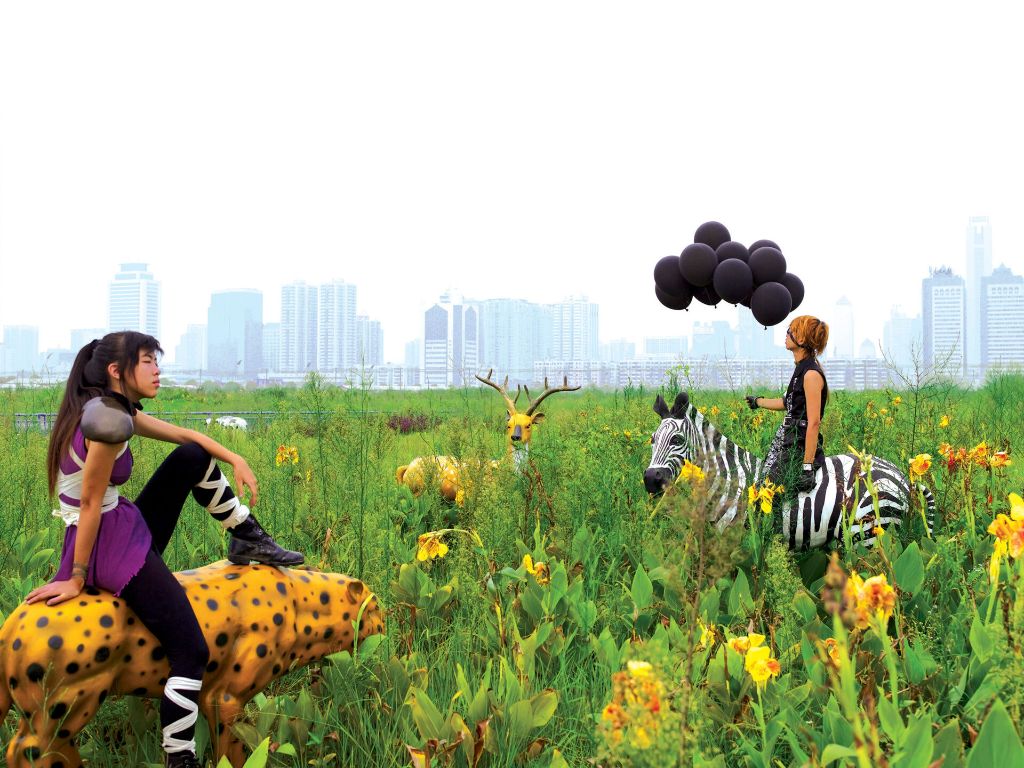
Cao Fei’s work has repeatedly used moving image, virtual worlds and digital culture to examine the speed of social change in China.

Her major current exhibition Testimonies to the Near Future opened at Kunstmuseum Basel | Gegenwart on 28 August 2026. The museum describes it as her first solo exhibition in Switzerland and her largest retrospective in Europe to date. Videos, digital environments, photography, sculpture and immersive installations are arranged so that the museum itself begins to resemble a city.

That seems particularly appropriate for Cao Fei.

Her moving-image work rarely treats digital space as something separate from ordinary life.

Factories, cosplay, online identities, architecture and imagined cities keep crossing into one another.

What interests me is how quickly work like this changes historically.

A virtual world that once appeared futuristic can become technologically obsolete within a decade.

But the social behaviour recorded inside it may become more recognisable.

That gives contemporary video art a strange double clock.

The technology ages rapidly.

The human desire to escape, perform another identity, build communities and imagine a different city does not.

Perhaps that is why digital art does not always need to remain technologically current.

Sometimes outdated technology becomes the evidence showing how recently our idea of the future looked completely different.

https://www.museenbasel.ch/en/museen/kunstmuseum-basel-gegenwart/cao-fei

#CaoFei #VideoArt #DigitalArt #MovingImage

A Digital City Built From Real Change A Digital City Built From Real Change museenbasel.ch Cao Fei The Chinese artist Cao Fei (born 1978, Guangzhou) is one of the defining voices of her generation. Through videos, digital media, photograph
Facebook LinkedIn WhatsApp Threads
More sharing options
X Reddit Pinterest Telegram Email
Art That Exists

Art That Exists by Disappearing

Taipei Fine Arts Museum’s online project Vanishing Acts runs through the end of 2026 as part of TFAM Net.Open. The title immediately raises an interesting problem for digital culture: what does disappearance mean when technology is supposed to make copying effortless?

Digital material appears infinitely reproducible, yet it can be surprisingly fragile. Servers close, software becomes incompatible, platforms disappear and links that once connected entire projects eventually return errors. A physical painting can decay, but its deterioration is visible. A digital artwork may remain theoretically perfect until the infrastructure required to experience it simply stops working.

That makes preservation a strange artistic question. Keeping a digital file is not necessarily enough. Sometimes you must preserve software, hardware, network behaviour, instructions or even an obsolete operating environment.

The internet encourages us to think that everything remains available somewhere. Digital art quietly demonstrates the opposite. An artwork can disappear without leaving an empty space on the wall.

https://www.tfam.museum/

#DigitalArt #TaiwanArt #NetArt #MediaArt

Art That Exists by Disappearing Art That Exists by Disappearing Taipei Fine Arts Museum’s online project Vanishing Acts runs through the end of 2026 as part of TFAM Net.Open. The title immediately raises an interesting…
Facebook LinkedIn WhatsApp Threads
More sharing options
X Reddit Pinterest Telegram Email