Skip to content

Art That Exists by Disappearing

Ethio Jazz

Jazz With Another Set of Scales

Mulatu Astatke’s Ethio-jazz was not created by simply placing Ethiopian melodies over American jazz. His musical path moved through Ethiopia, Wales, London and New York before returning to Addis Ababa. Strut’s retrospective of his 1965–1975 recordings describes how he gradually searched for a balance in which Ethiopian modes could retain their identity inside arrangements informed by jazz.

That word, balance, seems important. Fusion can easily become a situation where one language dominates and the other becomes decoration. In Mulatu’s music the harmonic and rhythmic centre does not always behave in the way a Western jazz listener expects. Vibraphone, horns, keyboards and percussion can sound familiar individually, yet the relationships between them shift the entire musical perspective.

It reminds me that originality does not necessarily require inventing a new instrument or technology. Sometimes it comes from hearing that two existing musical systems do not have to meet in the obvious place.

The interesting territory is often somewhere between them.

Mulatu Astatke 'New York – Addis – London The Story of Ethio Jazz 1965-1975'

#MulatuAstatke #EthioJazz #EthiopianMusic #Jazz

strutrecords Mulatu Astatke 'New York - Addis - London The Story of Ethio Jazz 1965 Vibraphone and keyboard player, master arranger and bandleader, Mulatu Astatke is one of the all-time greats of Ethiopian music and the creator of his own original music form, Ethio jazz. Through the acclaimed Ethiopiques album series and through featuring on the soundtrack to the Jim Jarmusch film Broken Flowers, his
Breathing Nils Frahm’s Felt

When the Piano Starts Breathing

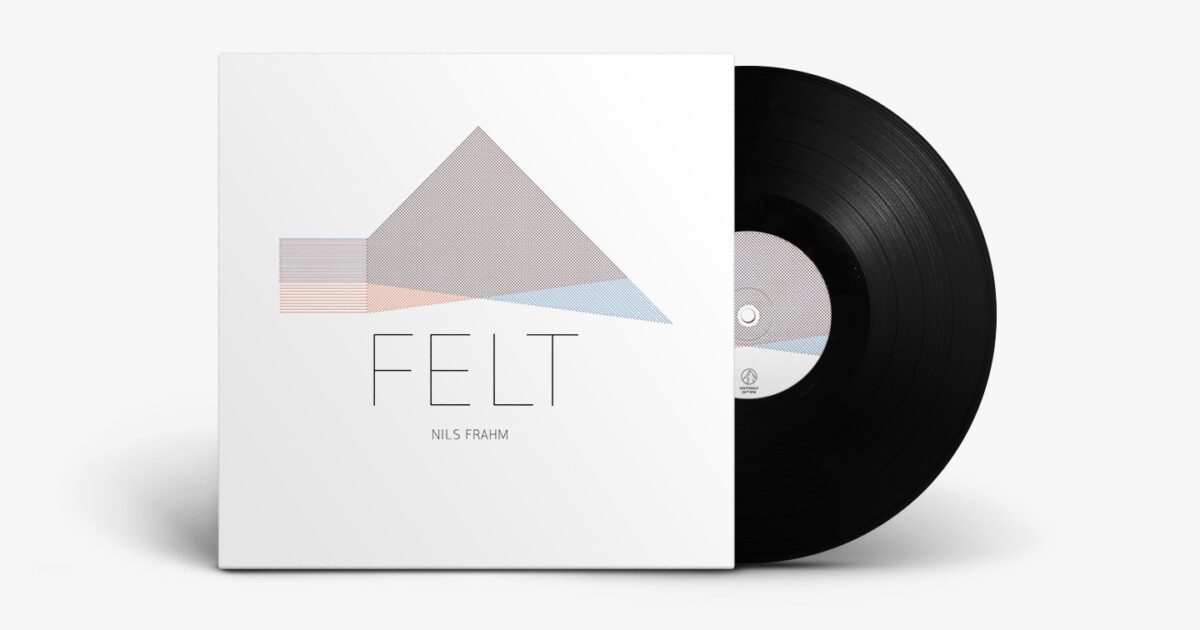
Nils Frahm’s Felt began with a practical problem: how do you play a piano late at night without disturbing your neighbours? He damped the instrument with thick felt and played extremely softly. Then he pushed the microphones deep inside the piano, close enough to capture sounds that recording engineers often try to remove. His breathing, the movement of the piano action and creaking floorboards became almost as audible as the notes.

That accident is what interests me. We spend enormous amounts of time in studios trying to separate the intended sound from everything around it. Felt does almost the reverse. The mechanism, performer and room are allowed into the composition.

It changes the scale of listening. Instead of making the piano larger, Frahm makes us move closer. A key being pressed becomes a physical event. Silence is no longer empty because you begin hearing everything that usually hides between the notes.

Sometimes intimacy in a recording has less to do with reverb or microphone quality than with deciding which imperfections deserve to remain.

https://www.erasedtapes.com/releases/eratp033-nils-frahm-felt

#NilsFrahm #Felt #PianoRecording #MusicProduction

Erased Tapes Felt by Nils Frahm · Releases · Erased Tapes Berlin-based pianist Nils Frahm is already a firebrand in the music world, collaborating with contemporaries such as Peter Broderick, Ólafur Arnalds and…
All the

Eighteen Musicians Breathing as One Machine

Steve Reich completed Music for 18 Musicians in 1976. The ensemble is unusual: four pianos, three marimbas, two xylophones, vibraphone, violin, cello, clarinets and four female voices. Reich noted that although the steady pulse connects the piece to his earlier work, its harmony, instrumentation and structure represented something new. All the sound is acoustic, with microphones used only for amplification.

What fascinates me is how mechanical the music can seem without actually being mechanical. Patterns repeat with extraordinary precision, yet changes are passed through human cues, breath and attention. Voices and clarinets have to breathe. Percussionists physically repeat figures. Small harmonic shifts gradually alter what the listener notices inside the pulse.

Minimalism is sometimes described as music where very little happens. Music for 18 Musicians makes me hear the opposite. So much happens that the changes can become almost microscopic. Repetition magnifies difference.

A machine could reproduce a loop perfectly. Eighteen musicians make the loop interesting because perfect repetition is never quite possible.

https://www.boosey.com/cr/music/Steve-Reich-Music-for-18-Musicians/548

#SteveReich #Minimalism #ContemporaryMusic #MusicFor18Musicians

boosey.com Boosey & Hawkes Composers and their Music Welcome to the world’s leading classical music publisher, formed from two historic companies and shaping the music of the future.
Art That Exists

Art That Exists by Disappearing

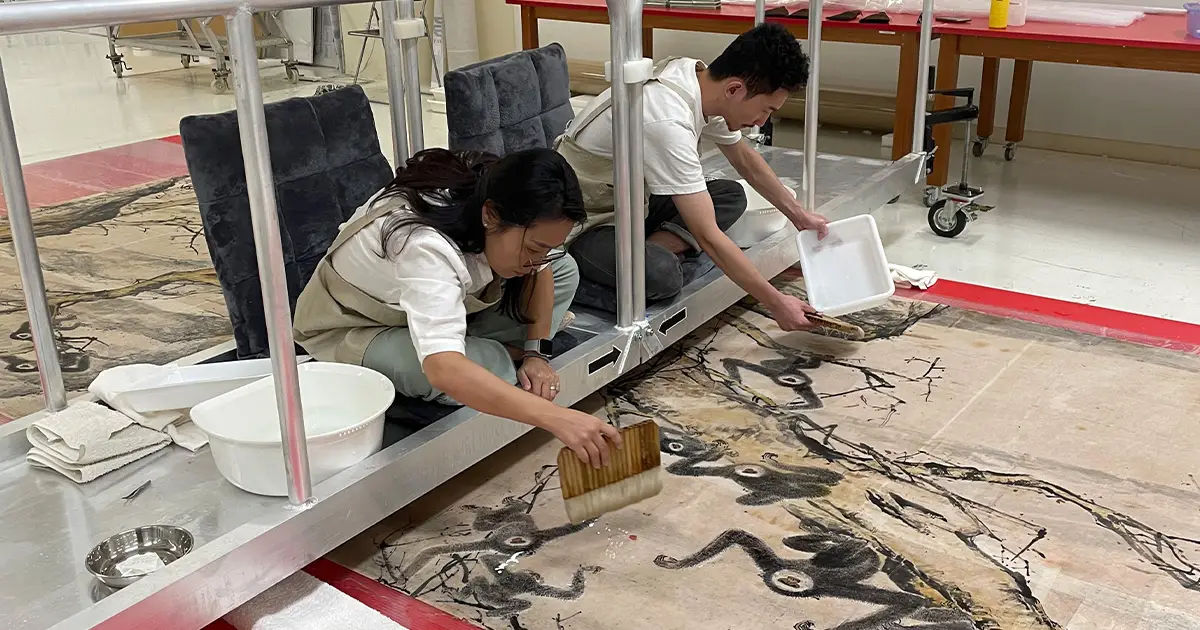
Taipei Fine Arts Museum’s online project Vanishing Acts runs through the end of 2026 as part of TFAM Net.Open. The title immediately raises an interesting problem for digital culture: what does disappearance mean when technology is supposed to make copying effortless?

Digital material appears infinitely reproducible, yet it can be surprisingly fragile. Servers close, software becomes incompatible, platforms disappear and links that once connected entire projects eventually return errors. A physical painting can decay, but its deterioration is visible. A digital artwork may remain theoretically perfect until the infrastructure required to experience it simply stops working.

That makes preservation a strange artistic question. Keeping a digital file is not necessarily enough. Sometimes you must preserve software, hardware, network behaviour, instructions or even an obsolete operating environment.

The internet encourages us to think that everything remains available somewhere. Digital art quietly demonstrates the opposite. An artwork can disappear without leaving an empty space on the wall.

https://www.tfam.museum/

#DigitalArt #TaiwanArt #NetArt #MediaArt

Bass Amplifier Gnaoua

When Tradition Meets the Bass Amplifier

Gnaoua music in Morocco carries histories connected to sub-Saharan African communities, spiritual practice, movement and memory. In Essaouira, the Gnaoua and World Music Festival has been bringing maâlems, master Gnaoua musicians, together with musicians from jazz, blues, rock, reggae and electronic music since 1998. One example is Maâlem Abdelaziz Soudani, who grew up inside a Gnaoua musical family and later worked in projects combining the tradition with electronic sound.

What interests me is that this kind of fusion does not automatically mean abandoning tradition. The deeper question is what remains stable while the surrounding music changes. The guembri, percussion patterns, repertoire and role of the maâlem can provide a strong centre while completely different musical languages enter around them.

We often imagine preservation as protection from outside influence. Living music may require something more difficult: enough knowledge of its own structure to enter a new conversation without losing its voice.

A tradition can change because it is weak. It can also change because it is strong enough to absorb the encounter.

https://www.festival-gnaoua.net/en/the-festival-and-the-city-of-essaouira/

#Gnaoua #MoroccanMusic #Essaouira #WorldMusic

Festival D'essaouira Gnaoua 2026 | World Music THE FESTIVAL - Festival D'essaouira Gnaoua 2026 | World Music Gnaoua Festival: music, fusion, and dialogue. Essaouira becomes a global meeting point of culture, tradition, and human rights.
Croatian Art

Painting From the Wrong Side

The Hlebine School became one of the central traditions of Croatian naive art, associated with artists who developed distinctive rural imagery outside conventional academic routes. One characteristic technique among Hlebine painters is reverse painting on glass. Instead of building an image from background toward foreground as on canvas, the painter must work in the opposite direction. Details that should appear on top are painted first because the finished work will be viewed through the glass.

That reversal fascinates me because it changes painting into a problem of prediction. On canvas you can continually cover, correct and reconsider earlier decisions. Painting on the reverse side of glass asks the artist to imagine the final image while constructing it backwards.

The Croatian Museum of Naive Art, founded in Zagreb in 1952 under an earlier name, holds more than 1,600 works and considers naive art part of modern art rather than a curiosity outside it.

Sometimes a technique changes more than appearance. It changes the order in which the artist has to think.

https://museums.hr/en/museum/details/16813/the-croatian-museum-of-naive-art

#CroatianNaiveArt #HlebineSchool #GlassPainting #CroatianArt

museums.hr The Croatian Museum of Naive Art In 1952, the Peasant Art Gallery was founded in Zagreb; from 1956 it operated under the name of the Gallery of Primitive Art, while since 1994, in line with a decision by the Croatian Parliament, its...
Archaeology

Pottery as a Map of Migration

At Naitabale on Fiji’s Moturiki Island, archaeologists found remains of a settlement established around 900 BC, including fragments of Lapita pottery decorated with characteristic dentate patterns. Research across Fiji places Lapita communities among the earliest settlers of the islands, arriving roughly 3,000 years ago and moving through an enormous Pacific world by sea.

What interests me is that a pottery fragment can become evidence of movement. A pot seems intensely local. It is made from clay and mineral material gathered somewhere specific, shaped by hands and used in daily life. Yet similarities in decoration and differences in the geological composition of pottery can reveal connections between islands separated by open ocean.

The pattern is therefore more than ornament. Archaeologists can read ceramics alongside materials and settlement sites to reconstruct networks of travel, exchange and cultural transmission.

A broken object buried in the ground can preserve the outline of journeys that left no written map. Sometimes design survives longer than the route that carried it.

https://www.usp.ac.fj/lapitaconference/about/videos-images-credits/

#Lapita #FijiHistory #PacificArt #Archaeology

Argentine Music

The Instrument Tango Adopted

The bandoneon seems inseparable from Argentine tango, yet the instrument was developed in nineteenth-century Europe and arrived in Buenos Aires later. Early tango groups commonly used combinations of violin, guitar, flute and piano. The bandoneon gradually entered these ensembles and became increasingly central as quartets and, from around 1910, the larger orquesta típica developed. The standard tango orchestra eventually brought bandoneons together with violins, piano and double bass.

I like how completely a migrating instrument can become identified with a music that did not invent it. The bandoneon arrived with its own mechanical construction and tonal possibilities, but musicians in Buenos Aires gave it another cultural life. Its ability to sustain, swell and reshape a note suited tango so well that the imported instrument eventually sounded local.

Musical identity often works like this. Cultures do not necessarily become distinctive by avoiding outside influences. Sometimes they become distinctive through what they do with something that arrived from elsewhere.

https://buenosaires.gob.ar/gcaba_historico/tango/orquesta-tipica

#Bandoneon #Tango #ArgentineMusic #BuenosAires

Belmore’s Fountain

Projecting an Image Onto Water

Rebecca Belmore’s Fountain, created for the Canadian Pavilion at the 2005 Venice Biennale, does something deceptively simple with video: the image is projected onto falling water rather than a conventional screen. The work moves between fire, water and blood, placing elemental imagery against an industrial North American landscape.

The physical projection surface changes everything for me. A normal screen is designed to disappear so that we concentrate on the image. Falling water refuses to disappear. It moves, breaks the projected light and reminds us that the image has a body. The medium becomes visible precisely because it cannot hold the picture perfectly still.

Belmore, an Anishinaabe artist, has repeatedly worked with land, bodies, political histories and the material presence of water. In Fountain, water is simultaneously subject, projection surface and moving sculpture. The video cannot be separated cleanly from the substance carrying it.

Digital images often feel weightless. Here light needs something unstable and physical before we can see it.

Fountain

#RebeccaBelmore #VideoArt #IndigenousArt #InstallationArt