Skip to content

Music Production

Art Stream
Depeche Mode

Depeche Mode Went Looking for Metal

During the making of Construction Time Again, Depeche Mode discovered sampling and immediately started looking beyond conventional instruments.

For “Pipeline,” Martin Gore, Gareth Jones and the group went into Shoreditch recording metal objects, pipes, steel plates and other found sounds. Engineer Gareth Jones recalls drumsticks and hammers striking objects around a disused railway environment. Gore’s vocal was also recorded outside beneath a railway arch.

The recordings were then brought back into the studio, sampled, edited and reorganised into music.

This is what I find interesting about early sampling.

A sampler did not initially mean access to an enormous prepared library.

The empty memory of the machine created a question:

What should we put into it?

Suddenly the street became an instrument store.

A metal plate was not valuable because it sounded like percussion.

It became percussion because someone heard a useful attack and resonance inside it.

Modern sample libraries reverse that process.

Search “industrial hit” and hundreds of professionally processed choices appear immediately.

That is convenient, but something disappears.

Going outside with a recorder means you do not yet know what the instrument is.

You have to find it.

The sampler then becomes less like a playback device and more like a way of listening to ordinary objects for musical possibilities.

https://www.soundonsound.com/techniques/classic-tracks-depeche-mode-people-are-people

#DepecheMode #Sampling #FieldRecording #MusicProduction

Depeche Mode Went Looking for Metal Depeche Mode Went Looking for Metal soundonsound.com Classic Tracks: Depeche Mode 'People Are People' Released in 1984, 'People Are People' perfectly combined Depeche Mode's love of pop music and experimentalism, and gave them their first US hit single.
Facebook LinkedIn WhatsApp Threads
More sharing options
X Reddit Pinterest Telegram Email
Analog Recording

Daft Punk Went Back to Tape

For Random Access Memories, Daft Punk made a strange decision for one of the world’s best-known electronic acts: instead of letting the computer solve everything, they deliberately brought musicians, analogue tape and large recording studios back into the centre of the process.

Engineer Peter Franco has described experiments in which material was recorded directly to tape, transferred between tape and Pro Tools, and compared to purely digital versions. The point was not nostalgia. They were listening to what tape physically did to the shape of a sound. Live musicians were recorded in studios including Henson in Los Angeles, while synthesizers such as the Prophet-5, Jupiter-6, Juno-106 and Yamaha CS-80 remained part of the electronic side of the record.

That makes Random Access Memories interesting beyond its songs.

Daft Punk had spent years helping normalise computer-based electronic production, then used their biggest album to question some of the efficiencies that computers had introduced.

A performance had to be good enough to keep. Tape imposed decisions. Musicians contributed tiny variations that would be unnecessarily difficult to program.

The record does not argue that analogue is better than digital. Pro Tools was still part of the process.

What it demonstrates is more useful: a production method has an aesthetic.

The easiest workflow is not always the one that produces the most interesting music.

https://www.soundonsound.com/people/recording-random-access-memories-daft-punk

#DaftPunk #RandomAccessMemories #AnalogRecording #MusicProduction

Daft Punk Went Back to Tape Daft Punk Went Back to Tape soundonsound.com Recording Random Access Memories | Daft Punk Daft Punk spent four years and over a million dollars on their quest to revisit the golden age of record production. Mick Guzauski and Peter Franco were with them all the way.
Facebook LinkedIn WhatsApp Threads
More sharing options
X Reddit Pinterest Telegram Email
Cascade

Producing an Album on Headphones

Floating Points made much of Cascade away from his normal studio. Sam Shepherd has described working in the Californian desert with a laptop and headphones rather than the larger collection of equipment available at home. The 2024 album nevertheless became an expansive return toward dancefloor-focused electronic music, with long tracks, Buchla-inspired rhythms and detailed electronic structures.

That limitation interests me more than the equipment he did have.

A fully equipped studio offers possibilities, but possibilities can slow decisions. Remove most of the hardware and the problem changes from “what can I use?” to “what can I make this do?”

Electronic musicians often accumulate tools because every synthesizer promises another colour. Yet some of the records that sound most carefully designed emerge from much narrower conditions.

Cascade is a useful reminder that complexity in the finished sound does not require complexity in the working environment.

Sometimes restricting the studio does not reduce creativity. It concentrates it.

https://ninjatune.net/release/floating-points/cascade

#FloatingPoints #Cascade #ElectronicMusic #MusicProduction

Producing an Album on Headphones Producing an Album on Headphones Ninja Tune Cascade by Floating Points Sam Shepherd aka Floating Points has announced his new album Cascade will be released on 13 September via Ninja Tune. Along with the announcement Shepherd has shared lead single 'Key103' which comes with visuals continuing his ongoing collaboration with Tokyo based artist Akiko Nakayama.Cascade is a...
Facebook LinkedIn WhatsApp Threads
More sharing options
X Reddit Pinterest Telegram Email
Arooj Aftab

Night as a Production Tool

Arooj Aftab has described night as a major source of inspiration for Night Reign. But what catches my attention is how that idea enters the arrangement rather than remaining only a lyrical concept. The album moves among jazz, South Asian musical traditions, electronics and carefully controlled space. Her voice often occupies the centre without needing a dense wall of accompaniment around it.

The record also treats older material as something that can remain alive through rearrangement. “Na Gul” works with poetry by eighteenth-century Urdu poet and musician Mah Laqa Bai Chanda, while “Bolo Na” returns in a form that places an older love song inside a different emotional and political context.

What I like here is the refusal to make tradition sound preserved behind glass. Material can move between centuries because musicians keep changing its surroundings.

The studio becomes part of that process. Space, breath, bass, electronics and silence can alter how an old text reaches us without requiring the text itself to become contemporary.

Sometimes production is interpretation.

About

#AroojAftab #NightReign #MusicProduction #ExperimentalMusic

Night as a Production Tool Night as a Production Tool Arooj Aftab | Home About - Arooj Aftab | Home Official Site
Facebook LinkedIn WhatsApp Threads
More sharing options
X Reddit Pinterest Telegram Email
Breathing Nils Frahm’s Felt

When the Piano Starts Breathing

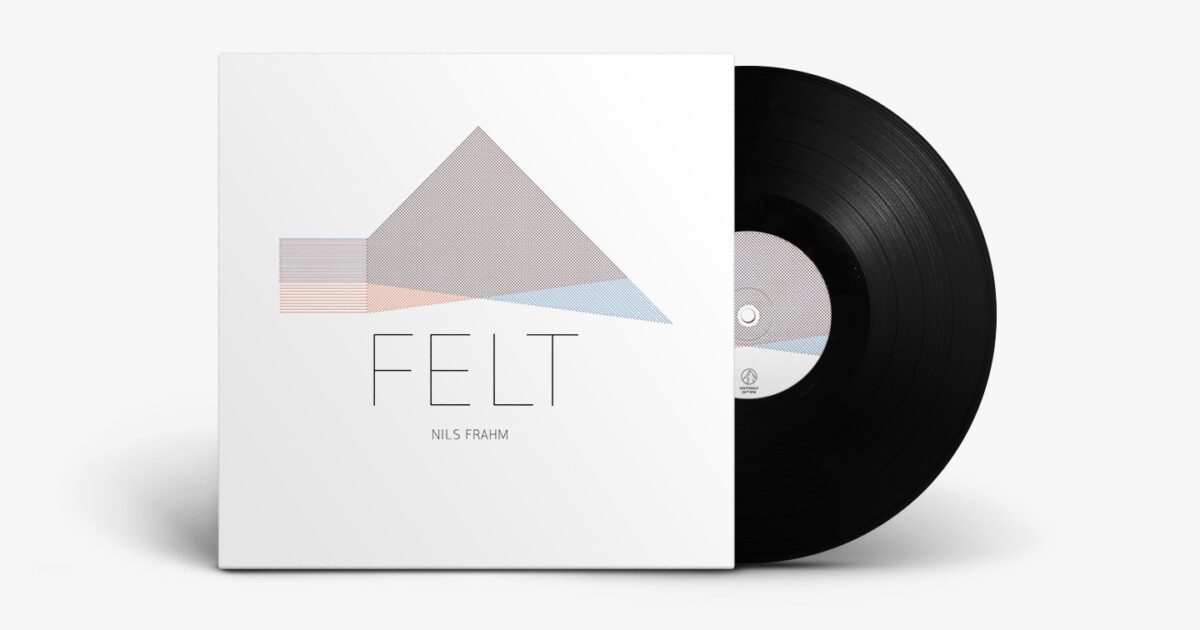
Nils Frahm’s Felt began with a practical problem: how do you play a piano late at night without disturbing your neighbours? He damped the instrument with thick felt and played extremely softly. Then he pushed the microphones deep inside the piano, close enough to capture sounds that recording engineers often try to remove. His breathing, the movement of the piano action and creaking floorboards became almost as audible as the notes.

That accident is what interests me. We spend enormous amounts of time in studios trying to separate the intended sound from everything around it. Felt does almost the reverse. The mechanism, performer and room are allowed into the composition.

It changes the scale of listening. Instead of making the piano larger, Frahm makes us move closer. A key being pressed becomes a physical event. Silence is no longer empty because you begin hearing everything that usually hides between the notes.

Sometimes intimacy in a recording has less to do with reverb or microphone quality than with deciding which imperfections deserve to remain.

https://www.erasedtapes.com/releases/eratp033-nils-frahm-felt

#NilsFrahm #Felt #PianoRecording #MusicProduction

When the Piano Starts Breathing When the Piano Starts Breathing Erased Tapes Felt by Nils Frahm · Releases · Erased Tapes Berlin-based pianist Nils Frahm is already a firebrand in the music world, collaborating with contemporaries such as Peter Broderick, Ólafur Arnalds and…
Facebook LinkedIn WhatsApp Threads
More sharing options
X Reddit Pinterest Telegram Email
Album With Almost

An Album With Almost No Ground

Nick Cave & The Bad Seeds recorded Ghosteen during 2018 and early 2019 across studios in Malibu, Los Angeles, Brighton and Berlin. Its instrumentation includes piano, synthesizers, loops, flute, violin, bass, percussion, vibraphone and guitar, yet much of the album feels unusually weightless. Cave divided it into two parts, describing the first group of songs as “the children” and the second as “their parents.” The record arrived in 2019 after a period in which grief had become inseparable from his writing.

What I keep noticing is how the arrangements often avoid giving the songs a firm floor. Synthesizers and sustained textures can float around the voice rather than locking everything into a conventional rock structure. Even with drums and bass available, space becomes one of the dominant musical materials. That makes Ghosteen interesting from a production perspective as well as an emotional one. Removing weight can sometimes make music feel larger. The arrangement does not need to tell us what grief sounds like. It creates a space where certainty itself seems difficult to hold.

Ghosteen

#NickCave #Ghosteen #MusicProduction #AustralianMusic

An Album With Almost No Ground An Album With Almost No Ground Nick Cave Ghosteen - Digital | Nick Cave Buy from the Official Website. A transcendent double album from Nick Cave & The Bad Seeds, exploring loss and hope.
Facebook LinkedIn WhatsApp Threads
More sharing options
X Reddit Pinterest Telegram Email