Skip to content

Producing an Album on Headphones

Experimental Music

Fifty-Two Strings Becoming Noise

Krzysztof Penderecki’s Threnody to the Victims of Hiroshima was composed in 1960 for 52 string instruments. Instead of treating those instruments primarily as carriers of melody and harmony, Penderecki pushed them toward clusters, glissandi, extreme registers and unconventional methods of producing sound. Players strike or bow unusual parts of their instruments, while blocks of sound expand and contract almost like physical objects.

The piece was originally titled 8’37” before receiving the name by which it became famous.

What interests me is how radically the identity of the string orchestra changes.

We know what a violin is supposed to sound like. Penderecki uses fifty-two familiar instruments to construct something that can initially seem electronic, industrial or impossible to locate.

No synthesizer is required.

That is useful to remember when thinking about experimental sound design. New timbre does not always require new technology. Sometimes it comes from asking an old instrument to perform an unfamiliar physical action.

The instrument has not changed.

Our definition of what counts as its sound has.
https://penderecki-center.pl/en/krzysztof-penderecki

#KrzysztofPenderecki #Threnody #Sonorism #ExperimentalMusic

Fifty-Two Strings Becoming Noise Fifty-Two Strings Becoming Noise penderecki-center.pl ?ycie i twórczo?? - Europejskie Centrum Muzyki Krzysztofa Pendereckiego (en) Krzysztof Penderecki’s Threnody to the Victims of Hiroshima was composed in 1960 for 52 string instruments. Instead of treating those instruments primarily…
Facebook LinkedIn WhatsApp Threads
More sharing options
X Reddit Pinterest Telegram Email
Experimental Music

Trying to Hear Light

For The Gleam, South Korean composer Park Jiha started with something that cannot actually be heard: changing daylight. The album moves from “At Dawn” through pieces concerned with sunrise and daytime before reaching “Nightfall Dancer.” She performs the music herself using instruments including piri, saenghwang, yanggeum and glockenspiel.

One piece, “Temporary Inertia,” grew from a performance in a meditation space designed by Tadao Ando, where a strip of daylight moves gradually across the interior. Park wanted to translate the changing texture, intensity and warmth of that light into sound.

I like the impossibility of the task.

There is no correct sonic equivalent of sunlight. You cannot measure a certain brightness and conclude that it should become one specific note. The translation has to remain subjective.

That is where the idea becomes interesting. Instead of illustrating nature, music becomes a way of paying closer attention to something we normally experience without noticing.

The album also reminds me that silence can function like shadow. Without space around a sound, its brightness is much harder to perceive.

The Gleam by Park Jiha

#ParkJiha #KoreanMusic #ExperimentalMusic #TheGleam

Trying to Hear Light Trying to Hear Light For The Gleam, South Korean composer Park Jiha started with something that cannot actually be heard: changing daylight. The album moves from “At Dawn” thro…
Facebook LinkedIn WhatsApp Threads
More sharing options
X Reddit Pinterest Telegram Email
Computer Singing Its Own

A Computer Singing Its Own Farewell

Jóhann Jóhannsson’s IBM 1401, A User’s Manual began with an object that most composers would probably never think of as musical material: an old mainframe computer. His father, Jóhann Gunnarsson, had worked with the IBM 1401 in Iceland and recorded the machine on reel-to-reel tape decades earlier. Those recordings eventually became part of a composition first written for string quartet and dance, then radically expanded for the 2006 album into a score for a sixty-piece string orchestra, electronics and the original tapes.

What stays with me is that Jóhannsson did not imitate a computer. He let the actual technological past enter the music.

That changes the emotional weight of the electronic sounds. They are not futuristic effects. They are recordings of a machine already becoming obsolete. Strings surround those fragile traces with something almost elegiac, turning computing history into memory.

Electronic music often celebrates the newest machine in the room. This piece does the opposite. It asks what happens when a machine becomes old enough to be remembered.

IBM 1401, A User’s Manual

#JohannJohannsson #ElectronicMusic #IBM1401 #ContemporaryClassical

A Computer Singing Its Own Farewell A Computer Singing Its Own Farewell Jóhann Jóhannsson’s IBM 1401, A User’s Manual began with an object that most composers would probably never think of as musical material: an old mainframe…
Facebook LinkedIn WhatsApp Threads
More sharing options
X Reddit Pinterest Telegram Email
Archives

The Archive Looking Back

Brook Andrew works across photography, installation, moving image, performance and museum interventions, frequently questioning the systems through which historical images and objects are collected and interpreted. His practice is informed by Wiradjuri and Ngunnawal cultural perspectives as well as sustained engagement with archives, colonial histories and the politics of visibility.

What interests me is the idea that an archive is never simply a storage room.

Someone decided what deserved to be collected. Someone wrote the label. Someone chose which photograph represented a person, culture or event. Those decisions can survive long enough that we begin treating them as neutral facts.

Andrew’s work often turns attention back onto those structures.

That changes the position of the viewer. Instead of only asking, “What does this historical image show?”, another question appears: “Who constructed the way I am seeing it?”

Museums traditionally ask objects to explain history. Artists can reverse the relationship and ask the museum itself to explain how it has been producing history all along.

https://www.brookandrew.com/ngadhi/me

#BrookAndrew #AustralianArt #IndigenousArt #Archives

The Archive Looking Back The Archive Looking Back Brook Andrew works across photography, installation, moving image, performance and museum interventions, frequently questioning the systems through which h…
Facebook LinkedIn WhatsApp Threads
More sharing options
X Reddit Pinterest Telegram Email
Audiovisual Art

When Image and Sound Share Structure

Ryoichi Kurokawa’s syn_ is an audiovisual performance built as a diptych with 2.1-channel sound. First created in 2011, it has been performed internationally in spaces ranging from Tokyo’s Studio Coast to festivals and arts centres in Europe and North America. Kurokawa describes his broader practice in terms of constructing audiovisual phenomena from field recordings and digitally generated structures.

What interests me from a VJ perspective is that the image does not appear to be decoration placed behind finished music.

Sound and image seem to belong to the same organisational system: fragmentation, rhythm, interruption, density and sudden precision appear in both.

That changes the role of synchronization. Matching a visual flash to a kick drum is the most obvious way of connecting image and sound, but it is only one possibility. Both media can instead share behaviour.

A visual texture can become dense when the sound becomes structurally dense without literally following every beat.

The strongest audiovisual work may happen when you cannot easily decide which medium is leading the other.

https://www.ryoichikurokawa.com/project/syn_.html

#RyoichiKurokawa #AudiovisualArt #LiveVisuals #ExperimentalFilm

When Image and Sound Share Structure When Image and Sound Share Structure Ryoichi Kurokawa’s syn_ is an audiovisual performance built as a diptych with 2.1-channel sound. First created in 2011, it has been performed international…
Facebook LinkedIn WhatsApp Threads
More sharing options
X Reddit Pinterest Telegram Email
Cascade

Producing an Album on Headphones

Floating Points made much of Cascade away from his normal studio. Sam Shepherd has described working in the Californian desert with a laptop and headphones rather than the larger collection of equipment available at home. The 2024 album nevertheless became an expansive return toward dancefloor-focused electronic music, with long tracks, Buchla-inspired rhythms and detailed electronic structures.

That limitation interests me more than the equipment he did have.

A fully equipped studio offers possibilities, but possibilities can slow decisions. Remove most of the hardware and the problem changes from “what can I use?” to “what can I make this do?”

Electronic musicians often accumulate tools because every synthesizer promises another colour. Yet some of the records that sound most carefully designed emerge from much narrower conditions.

Cascade is a useful reminder that complexity in the finished sound does not require complexity in the working environment.

Sometimes restricting the studio does not reduce creativity. It concentrates it.

https://ninjatune.net/release/floating-points/cascade

#FloatingPoints #Cascade #ElectronicMusic #MusicProduction

Producing an Album on Headphones Producing an Album on Headphones Ninja Tune Cascade by Floating Points Sam Shepherd aka Floating Points has announced his new album Cascade will be released on 13 September via Ninja Tune. Along with the announcement Shepherd has shared lead single 'Key103' which comes with visuals continuing his ongoing collaboration with Tokyo based artist Akiko Nakayama.Cascade is a...
Facebook LinkedIn WhatsApp Threads
More sharing options
X Reddit Pinterest Telegram Email
Field Recording

Listening Before Making Sound

KMRU’s work repeatedly begins with recording environments. Joseph Kamaru has built compositions from field recordings gathered in Nairobi and many other places, treating apparently minor environmental sounds as material worthy of sustained attention. His practice has expanded into installations, performances and long-form ambient works in which place is not simply captured but reshaped through processing and composition.

I find the order of operations interesting.

Music production usually begins with making a sound: play a synth, strike a drum, choose a sample. Field recording can reverse that relationship. First you listen. The world has already generated the material.

That produces another question: when does documentation become composition?

A recording of traffic, wind or machinery may initially describe a place. Once it is edited, layered, filtered and placed beside another recording, it begins constructing a place that never actually existed.

The microphone therefore becomes more than a device for collecting sound. It can be an instrument for noticing what most of us have trained ourselves to ignore.

https://kmru.info/

#KMRU #FieldRecording #KenyanMusic #SoundArt

Listening Before Making Sound Listening Before Making Sound KMRU’s work repeatedly begins with recording environments. Joseph Kamaru has built compositions from field recordings gathered in Nairobi and many other pl…
Facebook LinkedIn WhatsApp Threads
More sharing options
X Reddit Pinterest Telegram Email
Afrofuturism

History Mixed Like a Sound Collage

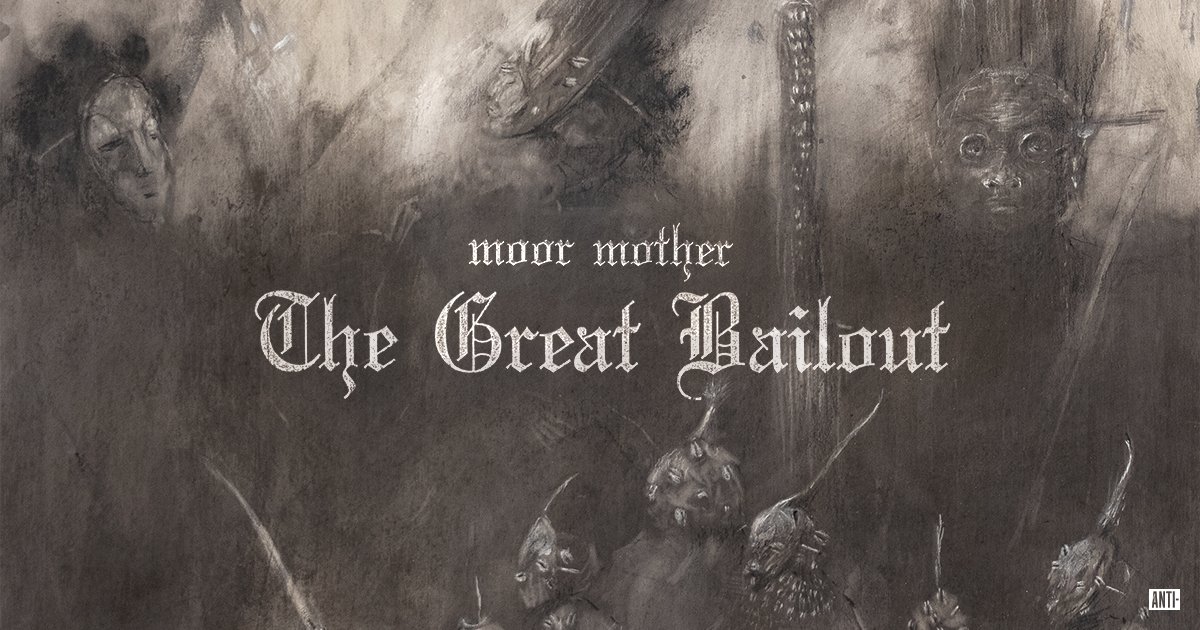
Moor Mother’s The Great Bailout approaches Britain’s relationship with colonialism, slavery and commerce through something closer to a sonic essay than a conventional album narrative. Camae Ayewa combines spoken language, electronics, jazz-derived textures, noise and contributions from musicians including Lonnie Holley and harpist Mary Lattimore. The music moves between fragility and abrasion rather than settling into one genre.

That instability feels important.

Historical subjects are often presented to us as completed information: dates, locations, documents, statistics. Sound works differently. A voice can overlap another voice. Noise can interrupt meaning. Something from the past can suddenly feel uncomfortably close.

I like the idea of an album behaving less like a timeline and more like an archive whose boxes have been opened simultaneously.

Music cannot prove historical facts by itself, but it can change the emotional distance at which we encounter them. Sometimes confusion, repetition and collision describe the persistence of history better than a perfectly ordered chronology.

https://moormother.net/

#MoorMother #ExperimentalMusic #SoundCollage #Afrofuturism

History Mixed Like a Sound Collage History Mixed Like a Sound Collage Moor Mother Moor Mother | The Great Bailout Moor Mother's 'The Great Bailout' (Deluxe) Out Now On ANTI- Records
Facebook LinkedIn WhatsApp Threads
More sharing options
X Reddit Pinterest Telegram Email
Ambient Music

Sampling as a Memory Machine

Susumu Yokota’s Symbol is assembled from fragments of classical recordings by composers including Debussy, Ravel, Prokofiev and Tchaikovsky, alongside material connected with John Cage and Meredith Monk. Yet the 2004 album rarely feels like a demonstration of clever sampling. The fragments are transformed into an atmospheric world where the historical source can become difficult to identify.

What interests me is what happens to time inside a sample. A digital fragment may last only seconds, but it contains an older performance, an older recording technology, another room and another interpretation. Yokota places those pieces beside one another until musical history stops behaving chronologically.

Sampling is sometimes discussed mainly through questions of borrowing. Symbol suggests another possibility: sampling as memory construction.

The original recording survives, but its function changes. A piece of orchestral music can become texture. A voice can become architecture. Something created decades earlier suddenly occupies the same musical present as everything surrounding it.

The sampler does not merely repeat history. It changes the room in which history is heard.

Symbol

#SusumuYokota #Sampling #AmbientMusic #ExperimentalMusic

Sampling as a Memory Machine Sampling as a Memory Machine Susumu Yokota’s Symbol is assembled from fragments of classical recordings by composers including Debussy, Ravel, Prokofiev and Tchaikovsky, alongside mate…
Facebook LinkedIn WhatsApp Threads
More sharing options
X Reddit Pinterest Telegram Email
Desert Blues

Desert Guitar Without Standing Still

Tinariwen’s 2026 album Hoggar continues a musical language rooted in the Tuareg culture of the Sahara, but the group has never behaved as if tradition means refusing outside contact. Their earlier recordings already connected electric guitar, Tamashek poetry and cyclical desert rhythms with encounters involving rock, folk and experimental musicians. Hoggar, released on 13 March 2026, adds collaborations including José González and Sudanese singer Sulafa Elyas.

That ongoing openness is what I find interesting. Tinariwen’s guitars can sound instantly recognisable, yet recognisability has not forced them into repeating one historical version of themselves.

There is an important difference between changing a tradition to make it fashionable and allowing it to continue meeting the world. Tinariwen seem closer to the second possibility.

A musical identity can remain strong without becoming sealed. Perhaps the clearest evidence that a tradition is alive is that it can absorb another musician without disappearing behind them.

https://www.tinariwen.com/

#Tinariwen #TuaregMusic #DesertBlues #Mali

Desert Guitar Without Standing Still Desert Guitar Without Standing Still tinariwen.com Tinariwen The official website for Tinariwen. New album 'Amatssou' out now.
Facebook LinkedIn WhatsApp Threads
More sharing options
X Reddit Pinterest Telegram Email
Chernobyl

Recording the Reactor Itself

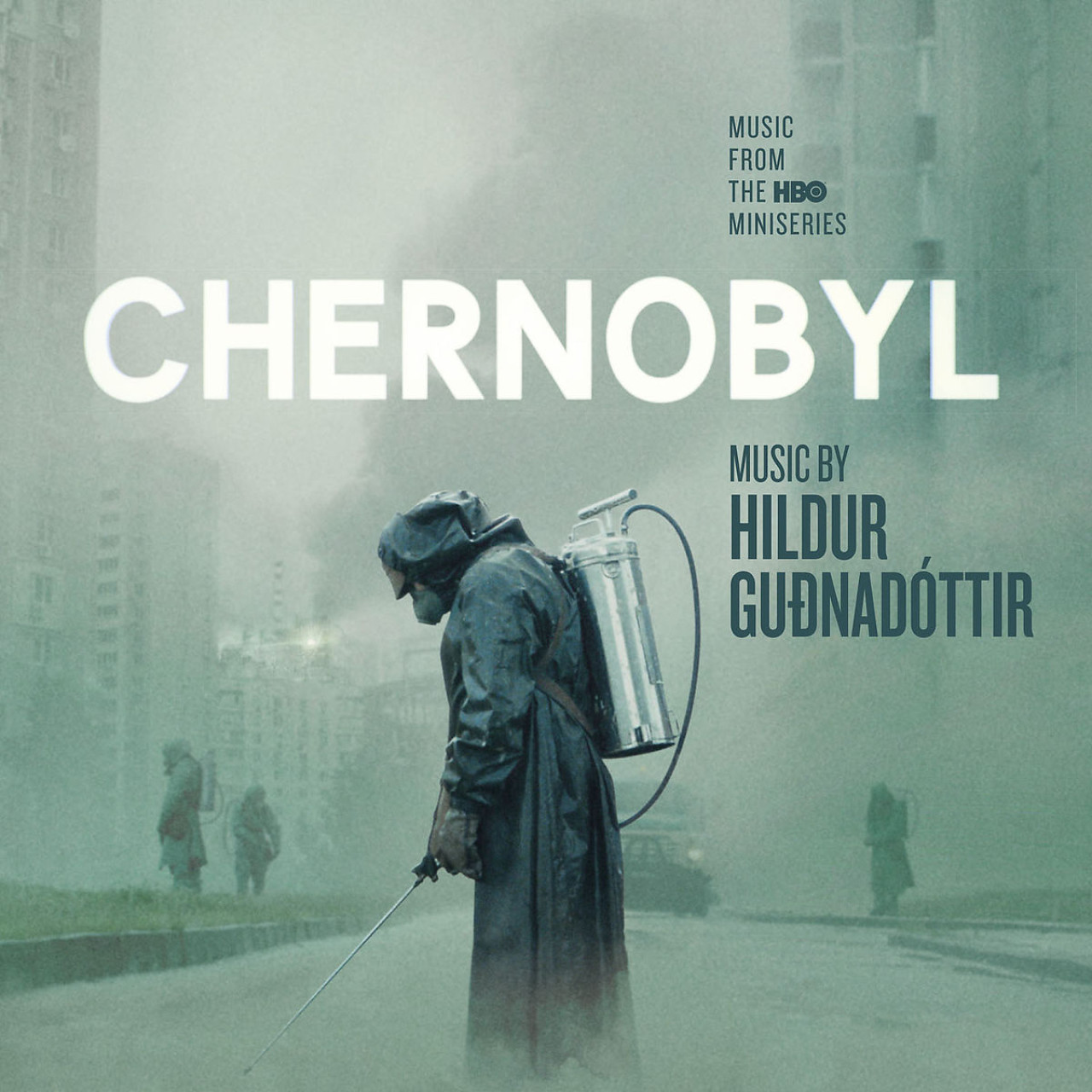
For Chernobyl, Hildur Guðnadóttir did not simply compose music inspired by a nuclear power station. Part of the sound world was built from recordings made inside Lithuania’s decommissioned Ignalina nuclear plant, whose RBMK reactors were similar to those used at Chernobyl. Industrial resonance, machinery and the acoustics of the building became raw musical material alongside voices and instruments. The soundtrack was released in 2019, but its production method still feels unusually direct.

What interests me is the decision to begin with the physical environment rather than imitate it later with synthesizers. A metallic drone generated by an actual industrial structure carries a different kind of information than a preset labelled “dark ambience.” The building already contains irregularities, resonances and mechanical histories that a composer can discover rather than invent.

Field recording is often treated as background texture. Here it becomes closer to orchestration. The place itself is one of the instruments.

https://www.deutschegrammophon.com/en/catalogue/products/chernobyl-soundtrack-gunadottir-7130

#HildurGudnadottir #Chernobyl #SoundDesign #FilmMusic

Recording the Reactor Itself Recording the Reactor Itself Deutsche Grammophon CHERNOBYL Soundtrack / Guðnadóttir | Deutsche Grammophon Chernobyl is a five-part miniseries by producer Craig Mazin, which premiered on HBO on May 6 2019. The series deals with the nuclear disaster which occurred in
Facebook LinkedIn WhatsApp Threads
More sharing options
X Reddit Pinterest Telegram Email