Skip to content

Ambient Music

Art Stream
Album Composed Between Train

An Album Composed Between Train Stations

Brussels producer Le Motel made much of Pozo de Agua outdoors or while travelling, especially on trains. The album, due on 15 September 2026 through Constellation Tatsu, treats environmental recordings such as water, movement and air with the same compositional weight as more conventional instruments. Those materials drift through ambient electronics and overlapping rhythmic structures rather than sitting behind the music as documentary decoration.

That approach interests me because portable production has changed what a studio means. A laptop and headphones make it possible to compose almost anywhere, but most mobile production still tries to recreate the controlled conditions of a room. Noise is something to isolate yourself from. Le Motel allows the place he is moving through to enter the work.

A train is an especially good studio if you stop expecting silence. It supplies periodic impacts, vibration, changing landscapes and a rhythm that belongs to the journey rather than to the sequencer. Even concentration changes when the physical location keeps moving.

Field recording is sometimes treated as a separate discipline, as though one first collects the world and later turns it into music. Pozo de Agua suggests a softer boundary. Composition can happen while the world is already passing through the microphone.

https://ctatsu.com/

#LeMotel #PozoDeAgua #FieldRecording #AmbientMusic

An Album Composed Between Train Stations An Album Composed Between Train Stations ctatsu.com Constellation Tatsu Home page of Constellation Tatsu, a label from Oakland. adventurous with spiritual artistic sensibilities
Facebook LinkedIn WhatsApp Threads
More sharing options
X Reddit Pinterest Telegram Email
Ambient Music

What Does a Room Without Echo Sound Like?

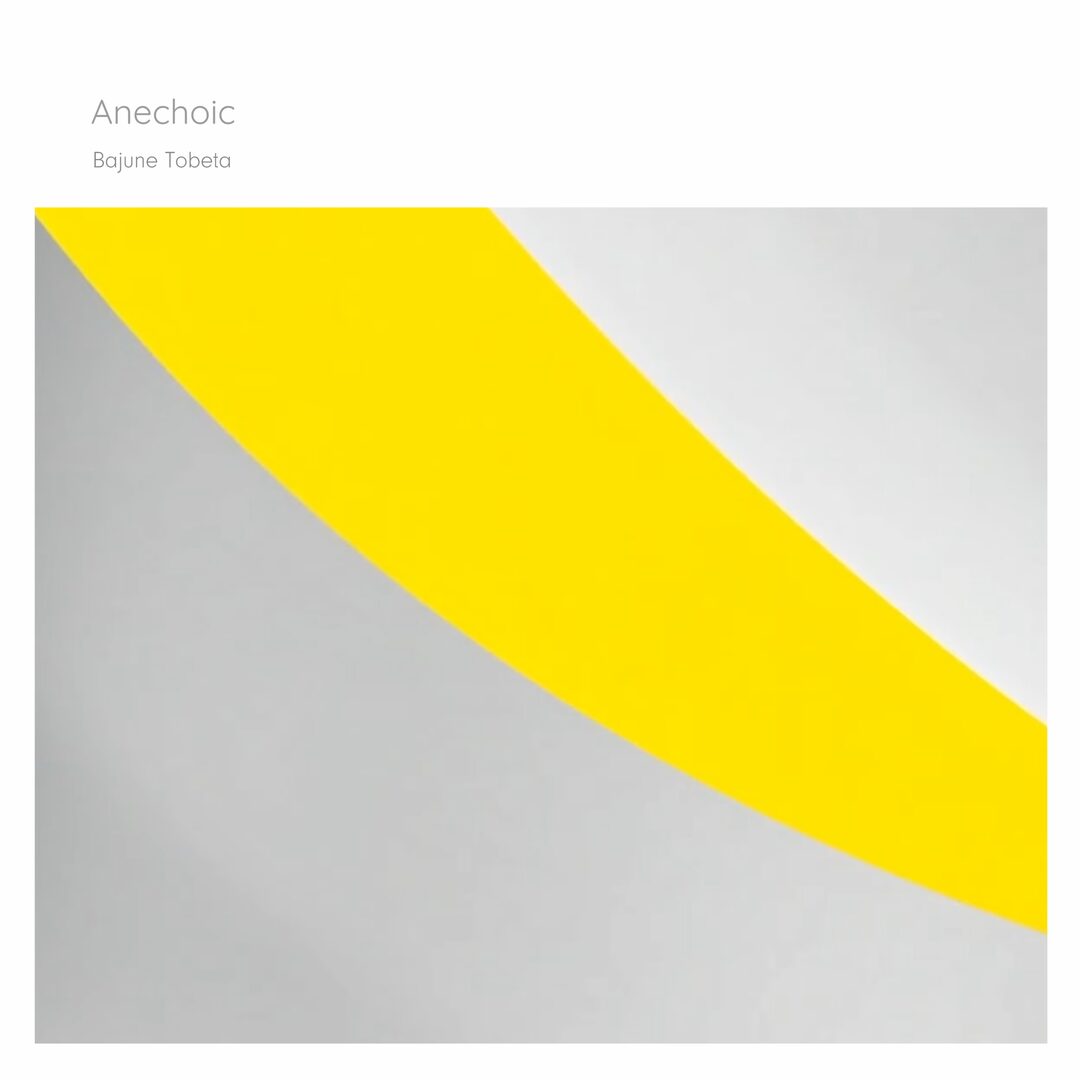
Bajune Tobeta’s Anechoic, released on 14 August 2026, takes its title from one of the strangest acoustic spaces humans build.

An anechoic chamber is designed to absorb reflections. Sound reaches the walls and, instead of returning as reverberation, is largely removed.

Tobeta translates that idea into five pieces combining electronics, piano and contemporary classical elements. His stated subject is not simply silence but the space between sound and silence.

That makes me think about how dependent music is on reflection.

A piano note is never only the piano.

It includes the room returning part of the sound.

Reverb tells us whether something feels intimate, distant, enormous or enclosed.

Remove those reflections and the sound becomes strangely exposed.

Electronic production usually gives us the opposite problem. We can invent impossible rooms with reverbs that last twenty seconds or place instruments inside spaces that never existed.

An anechoic chamber asks what remains when the imaginary architecture disappears.

The answer is not necessarily silence.

It may make the sound itself feel more physical because there is nowhere for it to hide.

Sometimes space becomes most noticeable when you remove it.

https://bajune.com/release/anechoic/

#BajuneTobeta #Anechoic #AmbientMusic #SoundSpace

What Does a Room Without Echo Sound Like? What Does a Room Without Echo Sound Like? bajune.com Anechoic — Bajune Tobeta The international debut release. Featuring Fennesz and AOKI takamasa. Released 14 August 2026.
Facebook LinkedIn WhatsApp Threads
More sharing options
X Reddit Pinterest Telegram Email
Ambient Music

Ambient Music From a Bedroom

Selected Ambient Works Volume II has become one of Aphex Twin’s most recognisable records, yet parts of its history are surprisingly ordinary. The album appeared in 1994, long before ambient music became a permanent streaming category. In notes accompanying the later expanded edition, Richard D. James recalls recording “Blue Calx” in his bedroom studio at his parents’ house in Cornwall after he had moved away to study microelectronic engineering.

That detail changes the scale of the record for me.

The music can feel enormous, almost architectural, but some of it came from a small domestic room. There is no requirement that an expansive sound needs an expansive studio.

Electronic production is particularly good at breaking that relationship between physical and imagined scale. A bedroom can contain a landscape if synthesis, repetition and reverb give the listener enough space to construct one.

Perhaps that is part of why the album has aged so well. It does not sound like expensive technology showing what it can do.

It sounds like someone discovering how large an internal world can become while barely leaving the room.

https://aphextwin.warp.net/release/460388-aphex-twin-selected-ambient-works-volume-ii-expanded-edition

#AphexTwin #AmbientMusic #ElectronicMusic #BedroomStudio

Ambient Music From a Bedroom Ambient Music From a Bedroom aphextwin.warp.net Selected Ambient Works Volume II has become one of Aphex Twin’s most recognisable records, yet parts of its history are surprisingly ordinary...
Facebook LinkedIn WhatsApp Threads
More sharing options
X Reddit Pinterest Telegram Email
Ambient Music

Sampling as a Memory Machine

Susumu Yokota’s Symbol is assembled from fragments of classical recordings by composers including Debussy, Ravel, Prokofiev and Tchaikovsky, alongside material connected with John Cage and Meredith Monk. Yet the 2004 album rarely feels like a demonstration of clever sampling. The fragments are transformed into an atmospheric world where the historical source can become difficult to identify.

What interests me is what happens to time inside a sample. A digital fragment may last only seconds, but it contains an older performance, an older recording technology, another room and another interpretation. Yokota places those pieces beside one another until musical history stops behaving chronologically.

Sampling is sometimes discussed mainly through questions of borrowing. Symbol suggests another possibility: sampling as memory construction.

The original recording survives, but its function changes. A piece of orchestral music can become texture. A voice can become architecture. Something created decades earlier suddenly occupies the same musical present as everything surrounding it.

The sampler does not merely repeat history. It changes the room in which history is heard.

Symbol

#SusumuYokota #Sampling #AmbientMusic #ExperimentalMusic

Sampling as a Memory Machine Sampling as a Memory Machine Susumu Yokota’s Symbol is assembled from fragments of classical recordings by composers including Debussy, Ravel, Prokofiev and Tchaikovsky, alongside mate…
Facebook LinkedIn WhatsApp Threads
More sharing options
X Reddit Pinterest Telegram Email