Skip to content

What Does a Room Without Echo Sound Like?

Its Own Economy Karimah

The Body as Its Own Economy

Karimah Ashadu’s MUSCLE follows bodybuilders training in Lagos, but the film is not really about bodybuilding as spectacle. It looks at the body as something that can be worked on, displayed, disciplined and turned into a form of personal capital.

The 22-minute film is part of Tendered, Ashadu’s exhibition opening at the Renaissance Society in Chicago on 12 September 2026. Her camera stays close to the men she films, avoiding the detached distance often associated with documentary observation. The result places physical training beside a much larger question about labour and autonomy in contemporary Nigeria.

What interests me is the overlap between sculpting a body and building an economic position.

Muscle is usually understood as physical strength. Here it can also represent time, discipline, aspiration and self-invention. The gym becomes a workplace even when nobody is formally paying for the hours spent there.

Video is particularly effective for this because effort has duration. A photograph can show the finished body. Moving image can show repetition, fatigue and the small routines required to produce it.

The body is not simply what the camera records.

It is where the work is happening.

https://www.e-flux.com/announcements/6787762/karimah-ashadutendered

#KarimahAshadu #VideoArt #MovingImage #Lagos

The Body as Its Own Economy The Body as Its Own Economy e-flux.com Karimah Ashadu: Tendered - Announcements - e-flux The Renaissance Society and Fondazione In Between Art Film present Tendered, a solo exhibition by Karimah Ashadu.
BBC Radiophonic Workshop

The Woman Between Oram and Derbyshire

The history of the BBC Radiophonic Workshop tends to settle quickly around a few famous names.

Maddalena Fagandini is one of the people who can disappear between them.

She joined the Workshop in 1959, after beginning her BBC career in the Italian Section of the World Service, and worked there until 1963. Her electronic output included radio drama, interval signals and experimental pieces such as “Timebeat,” later released commercially in a reworked version with George Martin.

Yet only a small part of her work remains easily available today. The surviving documentation itself acknowledges that much more may have existed than can now be securely identified.

That interests me because institutional anonymity creates a strange problem for art history.

Radiophonic sound was often produced to serve another programme.

A few seconds between broadcasts.

An atmosphere behind dialogue.

A signal.

The audience heard the result without necessarily knowing who had made it.

The work therefore succeeded precisely by disappearing into broadcasting.

Decades later, that invisibility makes the maker difficult to recover.

Electronic music history is full of famous machines.

The people operating them were not always given the same visibility.

Sometimes recovering a forgotten composer begins with listening again to sounds nobody originally thought required a signature.

https://rws.bbcrecords.co.uk/staff/maddalena-fagandini/

#MaddalenaFagandini #RadiophonicWorkshop #ElectronicMusic #ForgottenComposer

The Woman Between Oram and Derbyshire The Woman Between Oram and Derbyshire rws.bbcrecords.co.uk The history of the BBC Radiophonic Workshop tends to settle quickly around a few famous names. Maddalena Fagandini is one of the people who can...
Dacapo Records

The Tapes Almost Disappeared

Else Marie Pade became one of Denmark’s earliest major electronic composers during the 1950s and 1960s.

Yet parts of her electronic catalogue came surprisingly close to disappearing.

Dacapo Records’ recent reconstruction of her Complete Electronic Works 1955–2012 includes newly digitised pieces, previously unavailable material and works that remained overlooked for decades. The archive survived partly because a Danish Broadcasting Corporation technician contacted Pade when tapes were at risk and asked whether she wanted to preserve them. More boxes of tape were still appearing as recently as 2024.

I find that frightening.

Electronic music can feel technologically permanent because it belongs to machines.

In reality, magnetic tape is fragile.

A tape can deteriorate.

A machine capable of reading it can disappear.

A label can forget what is stored on a shelf.

The composer can fall out of cultural memory.

Then the music effectively stops existing even though the physical reel remains.

Digitisation therefore does more than improve access.

It can change history.

A work that was absent from the story can suddenly re-enter it.

The strange thing about forgotten art is that rediscovery often makes it seem newly created.

The sound has not changed.

The present finally caught up with the archive.

https://www.dacapo-records.dk/en/recordings/pade-complete-electronic-works-1955-2012

#ElseMariePade #ElectronicMusic #TapeMusic #MusicArchive

The Tapes Almost Disappeared The Tapes Almost Disappeared dacapo-records.dk Else Marie Pade became one of Denmark’s earliest major electronic composers during the 1950s and 1960s. Yet parts of her electronic catalogue...
Guitar Sound

The Guitar That Would Not Hold Its Pitch

Kevin Shields’ characteristic My Bloody Valentine guitar sound is often described as if it came from an enormous collection of effects.

One of its essential gestures is much simpler.

Shields loosens the tremolo arm of a Fender Jazzmaster, holds it while strumming and continuously moves the pitch slightly during the chord. Combined with open voicings and reverse reverb, the guitar stops behaving like a stable harmonic object.

The technique is sometimes called glide guitar.

What interests me is that the sound depends on instability at the source.

A normal approach would record a stable guitar and add modulation afterwards.

Shields physically changes pitch while the string is sounding.

Every strum therefore contains movement that cannot be completely separated from the performance.

That makes the famous wall of sound less complicated than it appears.

The ear hears layers because one chord contains several slightly shifting pitch relationships.

A guitar can begin sounding like several copies of itself drifting across tape.

There is an important production lesson hidden there.

Complexity does not always require more tracks.

Sometimes one unstable sound contains more information than ten perfectly stable ones.

https://www.fender.com/articles/fender-performances/my-bloody-valentines-kevin-shields-on-the-jazzmaster-and-his-iconic-albums

#MyBloodyValentine #KevinShields #Shoegaze #GuitarSound

The Guitar That Would Not Hold Its Pitch The Guitar That Would Not Hold Its Pitch fender.com Kevin Shields’ characteristic My Bloody Valentine guitar sound is often described as if it came from an enormous collection of effects. One of...
Drum And Bass

Fourteen Seconds Built New Forms

Roni Size made some of the music that helped move drum and bass from underground clubs toward a much wider audience, but the studio behind New Forms was surprisingly restricted.

One of his main tools was the Roland S-330 sampler.

It gave him only around fourteen seconds of total sampling time.

Fourteen seconds.

Yet Size preferred it to contemporary Akai machines because its screen and editing functions allowed him to manipulate those seconds in unusual ways. Samples could be reversed, stretched and reorganised while ghost notes helped construct increasingly detailed rhythms.

This is a useful reminder of what early drum and bass production actually involved.

A breakbeat was not an unlimited audio file sitting on a modern timeline.

Memory had a price.

Every sound competed for space.

If the sampler was full, something had to disappear or be shortened.

That restriction encourages another kind of listening.

You stop thinking in complete recordings.

A hi-hat may only need milliseconds.

A snare needs slightly more.

The useful part of a break may be smaller than the break itself.

Modern producers can load gigabytes without noticing.

Roni Size could build an album around seconds.

The interesting question is not how little technology they had.

It is how much musical information they learned to hear inside almost nothing.

https://blog.native-instruments.com/roni-size-on-new-forms/

#RoniSize #NewForms #DrumAndBass #Sampling

Fourteen Seconds Built New Forms Fourteen Seconds Built New Forms Native Instruments Blog Roni Size on New Forms | Native Instruments Blog Drum & bass legend Roni Size describes how technology has changed his approach to music, and the drum & bass of today.
Ambient Music

What Does a Room Without Echo Sound Like?

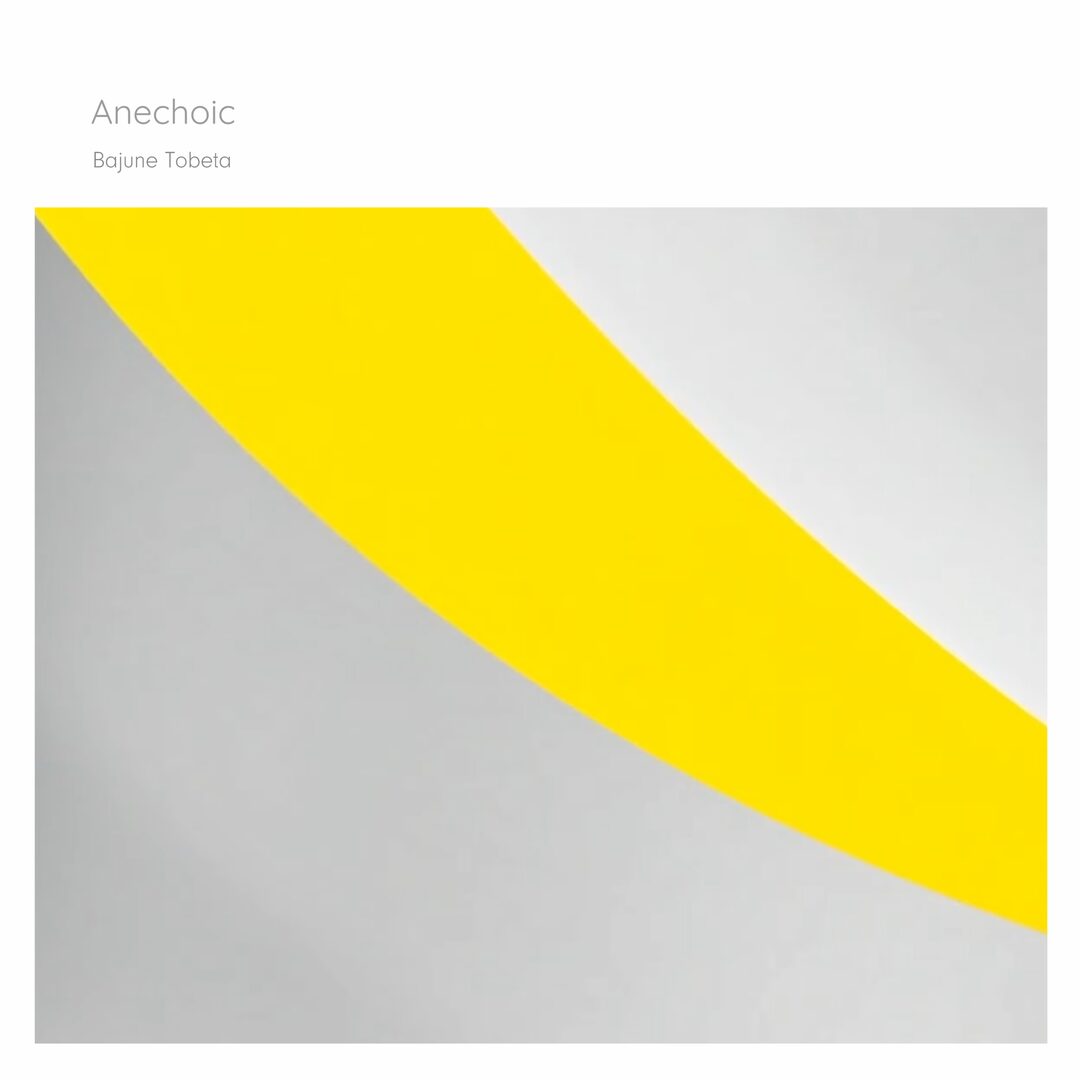
Bajune Tobeta’s Anechoic, released on 14 August 2026, takes its title from one of the strangest acoustic spaces humans build.

An anechoic chamber is designed to absorb reflections. Sound reaches the walls and, instead of returning as reverberation, is largely removed.

Tobeta translates that idea into five pieces combining electronics, piano and contemporary classical elements. His stated subject is not simply silence but the space between sound and silence.

That makes me think about how dependent music is on reflection.

A piano note is never only the piano.

It includes the room returning part of the sound.

Reverb tells us whether something feels intimate, distant, enormous or enclosed.

Remove those reflections and the sound becomes strangely exposed.

Electronic production usually gives us the opposite problem. We can invent impossible rooms with reverbs that last twenty seconds or place instruments inside spaces that never existed.

An anechoic chamber asks what remains when the imaginary architecture disappears.

The answer is not necessarily silence.

It may make the sound itself feel more physical because there is nowhere for it to hide.

Sometimes space becomes most noticeable when you remove it.

https://bajune.com/release/anechoic/

#BajuneTobeta #Anechoic #AmbientMusic #SoundSpace

What Does a Room Without Echo Sound Like? What Does a Room Without Echo Sound Like? bajune.com Anechoic — Bajune Tobeta The international debut release. Featuring Fennesz and AOKI takamasa. Released 14 August 2026.
Avaeken

A Guitar Recording Became a Sculpture

Stephen O’Malley’s Avaeken, released on 21 August 2026, did not begin as a conventional album.

The music originated as a site-specific sound work created in relation to Banks Violette’s exhibition Wish You Were Here. O’Malley installed sound into the gallery environment, continuing a collaboration between the two artists that has repeatedly placed amplified guitar beside sculpture and architecture.

That context changes what a sustained guitar tone means.

On a record, duration happens through speakers while the listener remains outside the music.

Inside a gallery, the same frequency occupies walls, floor, air and body.

Low frequencies become particularly physical. They can make architecture seem temporarily less solid because the room begins responding to the sound.

This is where drone music becomes difficult to separate from sculpture.

A sculpture normally occupies space with material.

O’Malley can occupy the same space with pressure.

Nothing visible has been added, yet the dimensions of the room feel different.

I keep coming back to this because electronic and amplified music are usually discussed through time: rhythm, duration, sequence.

Long tones reveal another possibility.

Sound can also be an architecture.

You do not only listen to it.

For a while, you stand inside it.

https://www.daisrecords.com/blogs/news/stephen-omalleys-avaeken-out-august-21-on-dais-records

#StephenOMalley #DroneMusic #SoundArt #Avaeken

A Guitar Recording Became a Sculpture A Guitar Recording Became a Sculpture Dais Records Stephen O'Malley's 'Avaeken' out August 21 on Dais Records American experimental composer Stephen O'Malley announces Avaeken, two sides of immense, immersive, self-annihilating music, out August 21, 2026 from Dais Records.
Contemporary Art

The Video Keeps Jumping Through Time

Hito Steyerl’s The Island, currently at Fondazione Prada’s Osservatorio in Milan until 30 October 2026, refuses to stay inside one period of history.

The project combines a newly produced film with installation, objects and video interviews. Its stories move from microorganisms and Neolithic time to war, contemporary technology and imagined futures. Flooding keeps returning as a connecting image.

Steyerl describes two very different experiences of time.

One is the frantic time produced by technology and capitalism: updates, interruptions, loops and information constantly replacing information.

The other is deep time.

Geological time.

Underwater time.

Time that barely notices whether a smartphone generation lasts three or five years.

I like the collision because moving image normally controls time extremely well.

Twenty-four frames.

Cut.

Jump.

Repeat.

Speed up.

Slow down.

But Steyerl uses those tools to point toward scales of time the video itself cannot really contain.

A five-minute sequence can jump thousands of years.

The screen makes that transition instantaneous.

Reality cannot.

Perhaps that is one reason moving image is so effective for thinking about our current technological culture.

The edit has taught us to expect reality to move at the speed of an edit.

The planet never agreed.

https://www.fondazioneprada.org/project/the-island-hito-steyerl/?lang=en

#HitoSteyerl #VideoArt #TheIsland #ContemporaryArt

The Video Keeps Jumping Through Time The Video Keeps Jumping Through Time fondazioneprada.org Hito Steyerl’s The Island, currently at Fondazione Prada’s Osservatorio in Milan until 30 October 2026, refuses to stay inside one period of...
Family History Between Vietnam

A Family History Between Vietnam and Senegal

Tu?n Andrew Nguy?n’s new two-channel video Ñi demoon ñoo dellusi connects Vietnam and Senegal through a history that rarely fits neatly inside either country’s national story.

During French colonial rule, Senegalese soldiers were deployed to Indochina. Some formed families with Vietnamese women. After the wars, parts of those families travelled to Senegal, carrying several histories with them.

Nguy?n encountered descendants of these families while working in Dakar. His 2026 Venice Biennale installation centres on Bouba Chinois, now elderly, whose Vietnamese mother ??i became one of the emotional anchors of the work. Archival photographs and family material are placed beside his present-day image.

What interests me is how moving image changes the archive.

A photograph freezes somebody inside historical evidence.

Video allows that person to answer back.

The older Bouba can look toward photographs of the younger family from which his story emerged. Several times exist inside the installation simultaneously.

This is where two-channel video becomes more than a presentation format.

One screen does not have to replace another.

Past and present can remain visible together.

History usually gives us timelines.

Nguy?n gives us coexistence.

A person can be Senegalese, Vietnamese, colonial history, family memory and contemporary presence without having to become only one of them.

https://www.labiennale.org/en/art/2026/tu%E1%BA%A5n-andrew-nguy%E1%BB%85n

#TuanAndrewNguyen #VideoInstallation #Vietnam #Senegal

A Family History Between Vietnam and Senegal A Family History Between Vietnam and Senegal La Biennale di Venezia Biennale Arte 2026 | Tu?n Andrew Nguy?n 1976, Sài Gòn, Viet Nam Lives in H?i An, Viet Nam
Contour Biennale

The Internet Produces Its Own Geology

Yuyan Wang’s new Boring Billion is a 2026 single-channel video made from the kind of image material digital culture produces almost without noticing.

Wang has long worked with images recycled from industrial and online image systems. She edits, repeats and recontextualises them until their original purpose becomes unstable. Boring Billion, commissioned for 2026 and now included in Contour Biennale 11 in Mechelen, pushes that approach toward geological time.

The title refers to an immense period in Earth’s history often described as comparatively stable.

That becomes an odd thing to place beside contemporary digital imagery.

Our visual culture behaves as though the opposite is true.

Refresh.

Scroll.

Generate.

Upload.

Replace.

The individual image barely has time to become old before another one arrives.

Wang’s editing makes me think about that accumulation differently. Billions of disposable images may eventually behave like sediment. One meme or advertisement is insignificant. Millions layered together begin describing a civilisation.

Video editing can therefore become something like archaeology performed in real time.

The archive is no longer something we discover after the culture has disappeared.

We are producing the archaeological layer while we are still living inside it.

Yuyan Wang

#YuyanWang #VideoArt #DigitalImages #ContourBiennale

The Internet Produces Its Own Geology The Internet Produces Its Own Geology Contour Biennale 11 Yuyan Wang - Contour Biennale 11 For Contour Biennale 11, Yuyan Wang presents Boring Billion, a film that uses online footage to portray an overheated machine haunted by petro-industrial desire.
Ayoung Kim

Rebuilding a Migrant Memory in 3D

Ayoung Kim’s Al-Mather Plot 1991 begins with an actual building in Riyadh.

The Al-Mather Housing Complex was constructed by the Korean company Hanyang during a period when large numbers of South Korean workers travelled to the Gulf. It remained largely unused until the Gulf War, when displaced Kuwaitis took refuge there. Kim’s own father had worked in the region.

Instead of making a conventional documentary, she reconstructs this history through live-action footage, archival photographs, field recordings, game-engine environments and synthetic imagery. Years of research are fed into a digital architecture where factual history begins to behave like memory.

That interests me because digital reconstruction usually promises accuracy.

Scan the object.

Model the building.

Restore what disappeared.

Kim uses similar technology while admitting something less comfortable: reconstruction is never neutral.

A building remembered by a migrant worker is not the same building found in an architectural archive. A photograph records one moment. A game engine can move through spaces the camera never entered.

The digital model therefore does not recover one definitive Al-Mather.

It creates somewhere between evidence and imagination.

Perhaps that is closer to how historical memory actually works.

We collect fragments, fill the spaces between them and eventually construct a place that nobody experienced in exactly the same way.

https://www.fondationdentreprisehermes.org/en/projet/exhibitions-atelier-hermes-seoul-plot-blob-plop-2025

#AyoungKim #MovingImage #GameEngine #DigitalArt

Rebuilding a Migrant Memory in 3D Rebuilding a Migrant Memory in 3D fondationdentreprisehermes.org “Plot, Blob, Plop” at l'Atelier Hermès | Fondation d'entreprise Hermès Discover the “Plot, Blob, Plop” at l'Atelier Hermès project and find key information to participate (dates, location, program)