Skip to content

Fairlight CMI

Art Stream
Electronic Music

When 0.8 Seconds Felt Enormous

The Fairlight CMI helped change recorded sound from something musicians played back into something they could play.

Developed in Australia by Peter Vogel and Kim Ryrie and released at the end of the 1970s, the system became one of the first commercially influential digital sampling instruments. The National Film and Sound Archive of Australia describes it as the world’s first polyphonic digital sampling synthesizer.

By modern standards its early sampling capacity seems tiny.

Jean-Michel Jarre has recalled working with a maximum sample length of roughly 0.8 seconds at 8-bit resolution on an early Fairlight.

Yet that fraction of a second was enough to change composition.

A voice could become a chord.

A broken object could become percussion.

A sound recorded somewhere in the world could be mapped across a keyboard and played at pitches that had never existed in the original recording.

Today we can load hours of high-resolution audio into a laptop without thinking about memory.

That abundance makes it easy to forget how radical 0.8 seconds once was.

The important technological breakthrough was not duration.

It was separation.

For the first time, a tiny recorded fragment could be detached from the event that produced it and treated almost like an oscillator.

Less than one second of memory was enough to introduce an entirely different idea of what an instrument could be.

https://www.nfsa.gov.au/collection/item/sampling-sounds-fairlight-cmi

#FairlightCMI #Sampling #MusicTechnology #ElectronicMusic

When 0.8 Seconds Felt Enormous When 0.8 Seconds Felt Enormous nfsa.gov.au The Fairlight CMI helped change recorded sound from something musicians played back into something they could play. Developed in Australia by...
Facebook LinkedIn WhatsApp Threads
More sharing options
X Reddit Pinterest Telegram Email
Fairlight CMI

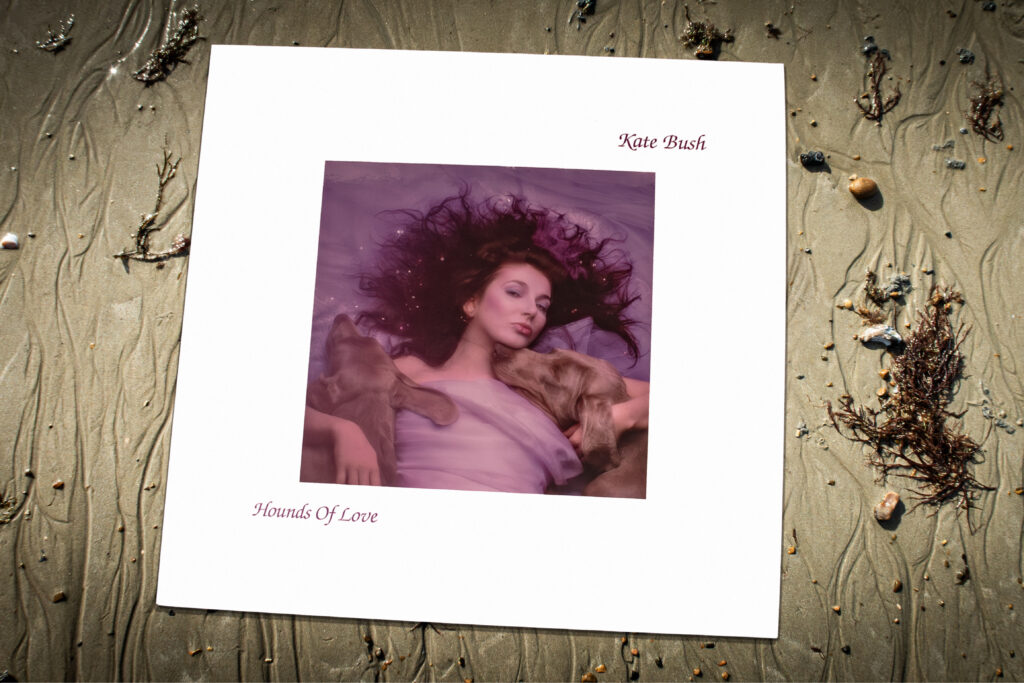
Kate Bush Found a Song Inside One Sound

“Running Up That Hill” began not with a lyric or chord progression but with a sound Kate Bush found in the Fairlight CMI.

Bush later explained that she immediately liked the Fairlight sound that became the central riff and wanted a military, drone-like atmosphere around it. A Linn drum pattern was programmed, the Fairlight repeated its figure, and she developed the vocal over that foundation. The familiar sustained atmosphere also involved freezing Fairlight material through a Quantec processor.

I like this because it is an unusually clear example of sound design becoming composition.

A preset is normally treated as something that comes after the musical idea. Choose the notes first, then search for an appropriate sound.

Here the relationship is reversed.

The timbre suggested the music.

That is one reason synthesizers and samplers changed songwriting so profoundly. They did not merely provide electronic replacements for piano, strings or drums. A strange sound could suggest a rhythm, a register, an atmosphere and eventually an entire song.

There is another useful detail. The Fairlight sample was noisy.

Today that might send us searching immediately for a cleaner library.

Bush built one of her most recognisable recordings around it.

The imperfect sound was not a problem waiting to be fixed.

It was the reason to begin.

Hounds of Love

#KateBush #FairlightCMI #RunningUpThatHill #SoundDesign

Kate Bush Found a Song Inside One Sound Kate Bush Found a Song Inside One Sound Kate Bush Hounds of Love - Kate Bush “Running Up That Hill” began not with a lyric or chord progression but with a sound Kate Bush found in the Fairlight CMI. Bush later explained that she imm…
Facebook LinkedIn WhatsApp Threads
More sharing options
X Reddit Pinterest Telegram Email