Skip to content

Music Technology

Art Stream
Bruce Haack

Bruce Haack Wired People Into Synthesizers

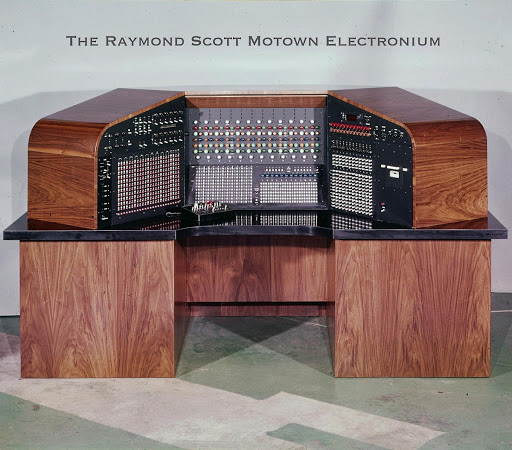
Bruce Haack spent much of his career building electronic instruments rather than waiting for manufacturers to invent the ones he wanted.

One of the strangest was the Dermatron, an instrument that used the electrical conductivity of human skin as part of its control system. Haack demonstrated versions of it on American television during the 1960s, at one point using performers’ bodies as part of the circuit.

At the same time, he was producing electronic music for children, theatre, advertising and his own increasingly unusual records. The Electric Lucifer appeared on Columbia in 1970.

What I like about the Dermatron is that it makes the word “interface” very literal.

Modern electronic instruments usually place something between the body and electricity.

A key.

A pad.

A touchscreen.

Haack wondered whether the body itself could become part of the control voltage.

That idea no longer seems entirely eccentric. Sensors, conductive materials and biofeedback now appear regularly in interactive art.

Haack reached similar territory using homemade electronics at a time when the commercial synthesizer industry had barely begun.

Sometimes technological history looks cleaner than it really was because we remember the products that survived.

The homemade machines are easier to forget.

https://www.brucehaack.com/biography

#BruceHaack #ElectronicMusic #InventedInstruments #MusicTechnology

Bruce Haack Wired People Into Synthesizers Bruce Haack Wired People Into Synthesizers Bruce Haack Biography — Bruce Haack Bruce Haack spent much of his career building electronic instruments rather than waiting for manufacturers to invent the ones he wanted. One of...
Facebook LinkedIn WhatsApp Threads
More sharing options
X Reddit Pinterest Telegram Email
Electronic Music

When 0.8 Seconds Felt Enormous

The Fairlight CMI helped change recorded sound from something musicians played back into something they could play.

Developed in Australia by Peter Vogel and Kim Ryrie and released at the end of the 1970s, the system became one of the first commercially influential digital sampling instruments. The National Film and Sound Archive of Australia describes it as the world’s first polyphonic digital sampling synthesizer.

By modern standards its early sampling capacity seems tiny.

Jean-Michel Jarre has recalled working with a maximum sample length of roughly 0.8 seconds at 8-bit resolution on an early Fairlight.

Yet that fraction of a second was enough to change composition.

A voice could become a chord.

A broken object could become percussion.

A sound recorded somewhere in the world could be mapped across a keyboard and played at pitches that had never existed in the original recording.

Today we can load hours of high-resolution audio into a laptop without thinking about memory.

That abundance makes it easy to forget how radical 0.8 seconds once was.

The important technological breakthrough was not duration.

It was separation.

For the first time, a tiny recorded fragment could be detached from the event that produced it and treated almost like an oscillator.

Less than one second of memory was enough to introduce an entirely different idea of what an instrument could be.

https://www.nfsa.gov.au/collection/item/sampling-sounds-fairlight-cmi

#FairlightCMI #Sampling #MusicTechnology #ElectronicMusic

When 0.8 Seconds Felt Enormous When 0.8 Seconds Felt Enormous nfsa.gov.au The Fairlight CMI helped change recorded sound from something musicians played back into something they could play. Developed in Australia by...
Facebook LinkedIn WhatsApp Threads
More sharing options
X Reddit Pinterest Telegram Email
Album Stored

An Album Stored as DNA

For the twentieth anniversary of Massive Attack’s Mezzanine, researchers at ETH Zurich translated the album’s digital audio into DNA.

The process sounds almost absurdly futuristic. The music was first compressed using the Opus codec. Its binary information was then converted into sequences based on the four DNA building blocks A, C, G and T. Around 920,000 short DNA strands were produced and encapsulated in microscopic silica spheres.

The whole album effectively became biological data.

What interests me is not the novelty of putting music into DNA. It is what this says about the idea of a recording.

We usually associate an album with its carrier.

Vinyl record.

Cassette.

CD.

Hard drive.

Stream.

But none of these is actually the music. Each one is simply a temporary system for storing instructions that can later be turned back into sound.

DNA makes that fact impossible to ignore.

Mezzanine can exist without grooves, magnetic particles, a waveform on a screen or even an object recognisable as music.

At that point an album starts resembling a genetic recipe.

Nothing inside the tiny glass particles sounds like Massive Attack.

The music only returns when another machine knows how to read the code.

A record is therefore not necessarily sound.

Sometimes it is the possibility of sound waiting inside information.

https://fml.ethz.ch/research/research/storing-mezzanine-in-dna.html

#MassiveAttack #Mezzanine #DNAStorage #MusicTechnology

An Album Stored as DNA An Album Stored as DNA fml.ethz.ch For the twentieth anniversary of Massive Attack’s Mezzanine, researchers at ETH Zurich translated the album’s digital audio into DNA. The process...
Facebook LinkedIn WhatsApp Threads
More sharing options
X Reddit Pinterest Telegram Email
Album Becomes

When an Album Becomes an Instrument

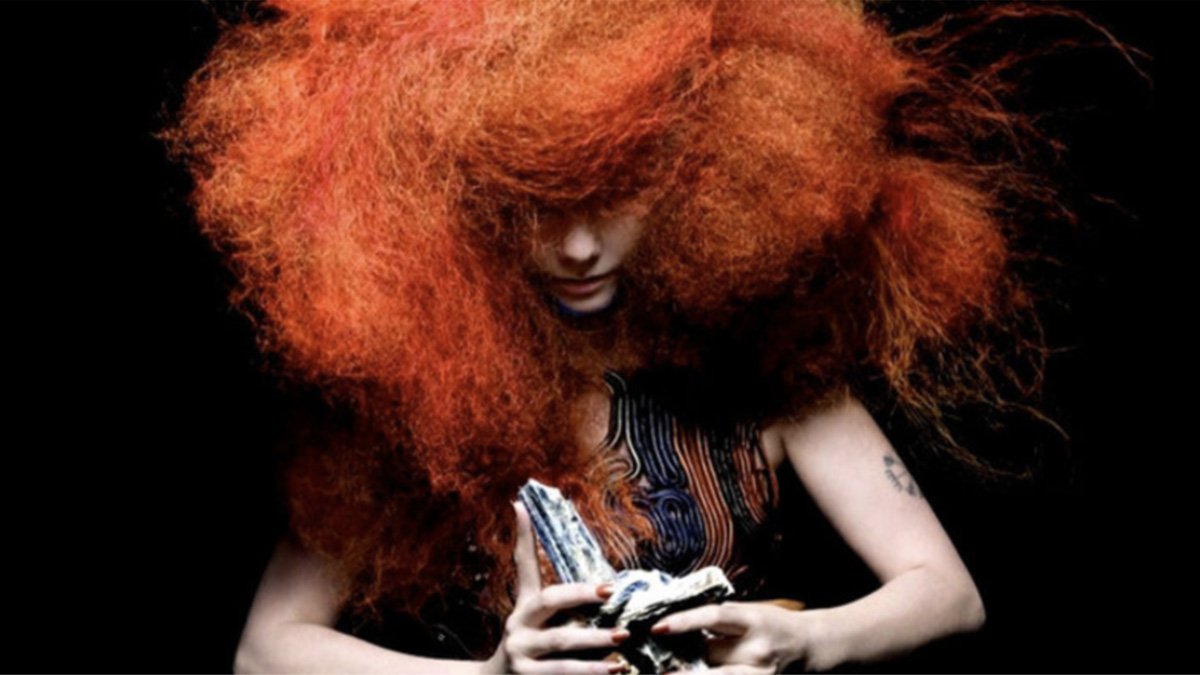
With Biophilia, Björk treated an album as something that could be entered, touched and changed. Released in 2011, the project connected ten songs to interactive apps exploring relationships between musical structures and natural phenomena. The live version pushed that idea into physical space with custom instruments: pendulum harps used gravity to pluck strings, Tesla coils produced pitched electrical arcs, and a modified celeste incorporated bronze gamelan bars. The project also included educational workshops rather than limiting itself to concerts.

What interests me is how Biophilia refuses to decide where the music actually lives. Is it in the recording, the app, the instrument, the physical force producing the sound, or the listener interacting with it? Most albums arrive as finished objects. Here the musical idea becomes a system that can be explored from several directions. Technology is not simply used to decorate the music. It becomes a way of making musical structure visible and playable.

https://www.snibbe.com/apps/biophilia

#Bjork #Biophilia #InteractiveMusic #MusicTechnology

When an Album Becomes an Instrument When an Album Becomes an Instrument Scott Snibbe BJÖRK: BIOPHILIA — Scott Snibbe - Interactive Art Biophilia by Björk is the world’s first app album: a multimedia exploration of music, nature and technology.
Facebook LinkedIn WhatsApp Threads
More sharing options
X Reddit Pinterest Telegram Email