Skip to content

Raymond Scott

Art Stream
Electronic Music

A Machine That Suggested Music

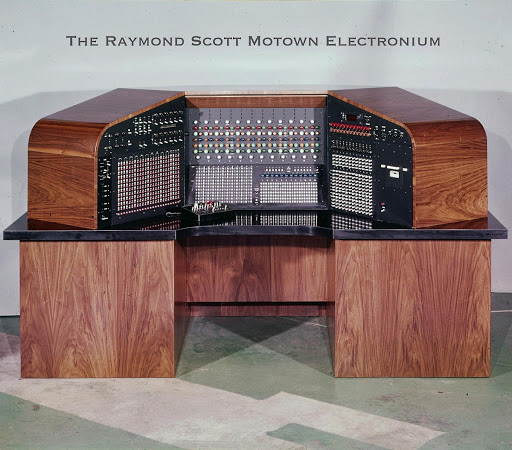
Raymond Scott’s Electronium was not simply an early synthesizer. It was conceived as a system that could generate and perform musical material automatically, using electronic circuits and algorithmic processes. Scott described the relationship as a collaboration between a person and a machine. The operator did not have to enter a finished score and press play. The machine could propose musical events while the composer adjusted, selected and redirected them.

That makes the Electronium difficult to place in the usual history of electronic instruments. A keyboard waits for instructions. A tape machine reproduces decisions already made. A sequencer repeats information placed into it. Scott was trying to build something less obedient: an instrument with enough internal behaviour to surprise its maker without removing the maker from the process.

The surviving machine was never turned into a stable commercial product, and descriptions of its capabilities changed as Scott continued developing it. That incompleteness is part of the story rather than a flaw to hide. Musical tools are often presented as finished solutions, while actual creative practice is full of unstable patches, provisional controls and systems that are never quite complete. The Electronium makes that unfinished state visible. Its most durable contribution may be the model of the studio as a place where composition can emerge through negotiation with a system, not only through commands given to it.

https://artsandculture.google.com/story/the-electronium%E2%80%94a-cockpit-of-dreams-raymondscottarchives/vgVRMrpuDa3FnQ?hl=en

#RaymondScott #Electronium #ElectronicMusic #MusicTechnology
A Machine That Suggested Music A Machine That Suggested Music Google Arts & Culture The Electronium—A Cockpit of Dreams - Google Arts & Culture The Electronium, conceived as a collaboration between man and machine, could instantaneously compose and perform music automatically using algorithms that were precursors of artificial intelligence. It is undoubtedly the magnum opus of Scott's electronic music career.
Facebook LinkedIn WhatsApp Threads
More sharing options
X Reddit Pinterest Telegram Email
Compose With You Raymond

The Machine That Was Supposed to Compose With You

Raymond Scott is remembered by many people without them knowing his name. His earlier compositions were adapted extensively for Warner Bros. cartoons, but another side of his work took place inside a private electronic laboratory.

During the 1950s and 1960s Scott built machines with names such as the Circle Machine, Rhythm Modulator, Bass-Line Generator, Clavivox and Electronium.

The Electronium is the one that interests me most.

Scott did not conceive it simply as a synthesizer that waited for a musician to tell it which notes to play. He imagined a system in which electronic circuitry could generate and develop musical patterns while the human operator guided the process.

That sounds remarkably close to later ideas of generative music.

The machine was unfinished, constantly evolving and never became a normal commercial instrument. Scott later worked for Motown, where an Electronium was installed.

This may be part of why his place in electronic music history feels strangely unstable.

Successful products leave thousands of physical copies behind.

Experimental machines can disappear almost completely.

Yet sometimes the abandoned machine contains an idea more important than the product that actually reached the shops.

Scott was asking a question that musicians are still asking:

What should happen when the instrument starts making decisions too?

Available Recordings

#RaymondScott #Electronium #ElectronicMusic #GenerativeMusic

The Machine That Was Supposed to Compose With You The Machine That Was Supposed to Compose With You Raymond Scott (1908-1994) Available Recordings | Raymond Scott (1908-1994) Recordings by Raymond Scott which are commercially available on CD, LP, or as digital downloads.
Facebook LinkedIn WhatsApp Threads
More sharing options
X Reddit Pinterest Telegram Email