Skip to content

The Machine That Was Supposed to Compose With You

Fairlight CMI

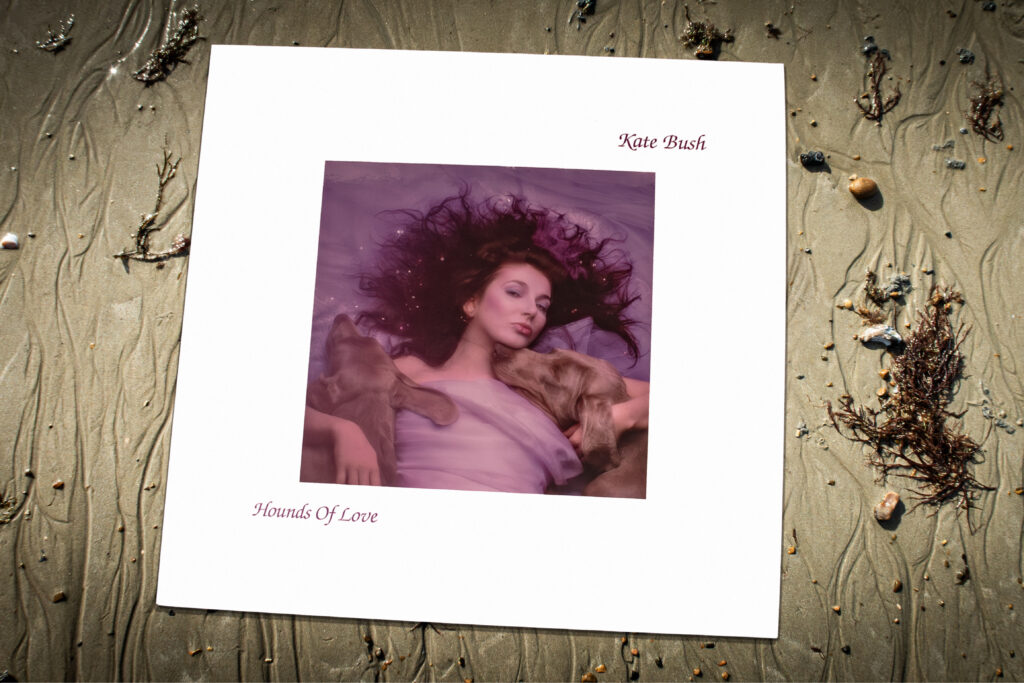
Kate Bush Found a Song Inside One Sound

“Running Up That Hill” began not with a lyric or chord progression but with a sound Kate Bush found in the Fairlight CMI.

Bush later explained that she immediately liked the Fairlight sound that became the central riff and wanted a military, drone-like atmosphere around it. A Linn drum pattern was programmed, the Fairlight repeated its figure, and she developed the vocal over that foundation. The familiar sustained atmosphere also involved freezing Fairlight material through a Quantec processor.

I like this because it is an unusually clear example of sound design becoming composition.

A preset is normally treated as something that comes after the musical idea. Choose the notes first, then search for an appropriate sound.

Here the relationship is reversed.

The timbre suggested the music.

That is one reason synthesizers and samplers changed songwriting so profoundly. They did not merely provide electronic replacements for piano, strings or drums. A strange sound could suggest a rhythm, a register, an atmosphere and eventually an entire song.

There is another useful detail. The Fairlight sample was noisy.

Today that might send us searching immediately for a cleaner library.

Bush built one of her most recognisable recordings around it.

The imperfect sound was not a problem waiting to be fixed.

It was the reason to begin.

Hounds of Love

#KateBush #FairlightCMI #RunningUpThatHill #SoundDesign

Kate Bush Found a Song Inside One Sound Kate Bush Found a Song Inside One Sound Kate Bush Hounds of Love - Kate Bush “Running Up That Hill” began not with a lyric or chord progression but with a sound Kate Bush found in the Fairlight CMI. Bush later explained that she imm…
Analog Recording

Daft Punk Went Back to Tape

For Random Access Memories, Daft Punk made a strange decision for one of the world’s best-known electronic acts: instead of letting the computer solve everything, they deliberately brought musicians, analogue tape and large recording studios back into the centre of the process.

Engineer Peter Franco has described experiments in which material was recorded directly to tape, transferred between tape and Pro Tools, and compared to purely digital versions. The point was not nostalgia. They were listening to what tape physically did to the shape of a sound. Live musicians were recorded in studios including Henson in Los Angeles, while synthesizers such as the Prophet-5, Jupiter-6, Juno-106 and Yamaha CS-80 remained part of the electronic side of the record.

That makes Random Access Memories interesting beyond its songs.

Daft Punk had spent years helping normalise computer-based electronic production, then used their biggest album to question some of the efficiencies that computers had introduced.

A performance had to be good enough to keep. Tape imposed decisions. Musicians contributed tiny variations that would be unnecessarily difficult to program.

The record does not argue that analogue is better than digital. Pro Tools was still part of the process.

What it demonstrates is more useful: a production method has an aesthetic.

The easiest workflow is not always the one that produces the most interesting music.

https://www.soundonsound.com/people/recording-random-access-memories-daft-punk

#DaftPunk #RandomAccessMemories #AnalogRecording #MusicProduction

Daft Punk Went Back to Tape Daft Punk Went Back to Tape soundonsound.com Recording Random Access Memories | Daft Punk Daft Punk spent four years and over a million dollars on their quest to revisit the golden age of record production. Mick Guzauski and Peter Franco were with them all the way.
Brazilian Art

When Geometry Became Something You Could Enter

Brazilian artist Lygia Pape began within geometric abstraction, but eventually moved away from the idea that geometry should remain fixed on a surface.

That shift produced works in which bodies, movement and space became part of the structure.

Her Ttéia installations use almost impossibly thin threads stretched through architectural space. From certain viewpoints the threads form luminous geometric planes. Move slightly and the geometry changes or nearly disappears.

There is no single image.

The viewer has to construct it by moving.

That interests me because it turns perspective into an active medium.

Painting normally assumes that the viewer changes position while the artwork remains stable.

Ttéia makes the work itself seem unstable because your position determines which relationships become visible.

A few strands can create something that appears much larger than the amount of material suggests.

Almost everything is empty space.

The thread merely gives that emptiness edges.

Pape’s work belongs to the broader Brazilian experiments that questioned whether an artwork should remain a distant object. Geometry could become tactile, spatial and temporary.

It no longer had to describe space.

It could organise the space your body was already standing inside.

https://www.metmuseum.org/exhibitions/listings/2017/lygia-pape

#LygiaPape #Tteia #BrazilianArt #InstallationArt

When Geometry Became Something You Could Enter When Geometry Became Something You Could Enter metmuseum.org Brazilian artist Lygia Pape began within geometric abstraction, but eventually moved away from the idea that geometry should remain fixed on a...
Artwork James Turrell

Building an Observatory as an Artwork

James Turrell has spent decades transforming Roden Crater, an extinct volcanic cinder cone in northern Arizona, into an artwork built around direct observation of light, sky and celestial movement.

What interests me is that almost nothing about the central material is manufactured.

The sun already exists.

The moon already moves.

Stars were visible long before the architecture arrived.

Turrell changes the conditions under which we see them.

Interior chambers, tunnels and openings frame portions of the sky, turning natural cycles into events with almost architectural precision.

This reverses a familiar relationship between artwork and lighting.

Museums usually design lighting so we can see the artwork.

At Roden Crater, the architecture exists so we can see the light.

That distinction becomes important.

A rectangular opening can make a piece of sky suddenly appear flat, almost like a painted surface. A tunnel can isolate an astronomical event that would otherwise disappear inside the enormous scale of the landscape.

Nothing has been added to the sky.

Attention has been engineered.

Perhaps that is one of the strangest powers architecture possesses.

It cannot change the universe outside the building.

But it can change how large a piece of that universe we are capable of noticing.

About

#JamesTurrell #RodenCrater #LightArt #LandArt

Building an Observatory as an Artwork Building an Observatory as an Artwork Roden Crater About James Turrell has spent decades transforming Roden Crater, an extinct volcanic cinder cone in northern Arizona, into an artwork built around...
16mm

Making a Film Without a Camera

Stan Brakhage’s Mothlight is one of those works that makes a basic technology suddenly seem optional.

He created the 1963 film without photographing anything.

Instead, moth wings, flower petals and pieces of grass were arranged directly onto transparent film material and passed through a projector.

The objects become the images.

There is no photographed representation of a moth wing.

Light literally travels through its physical trace.

Brakhage later continued making films by painting, scratching and drawing directly onto film stock.

From a contemporary perspective this feels almost like the opposite of digital image production.

Normally we begin with an image and manipulate the data representing it.

Brakhage begins with the material carrying the image.

That difference matters when the film is projected.

Every tiny object becomes enormous.

A fragment that could fit on a fingertip suddenly occupies an entire screen for a fraction of a second.

Cinema usually uses technology to reproduce the visible world.

Mothlight uses cinema to reveal what the naked eye would probably never stop long enough to examine.

It reminds me that moving-image technology does not necessarily need a camera, a lens or even a conventional image.

Sometimes all it needs is something small enough to pass through light.

https://www.criterion.com/films/731-by-brakhage-an-anthology-volume-one

#StanBrakhage #Mothlight #ExperimentalFilm #16mm

Making a Film Without a Camera Making a Film Without a Camera criterion.com Stan Brakhage’s Mothlight is one of those works that makes a basic technology suddenly seem optional. He created the 1963 film without...
Compose With You Raymond

The Machine That Was Supposed to Compose With You

Raymond Scott is remembered by many people without them knowing his name. His earlier compositions were adapted extensively for Warner Bros. cartoons, but another side of his work took place inside a private electronic laboratory.

During the 1950s and 1960s Scott built machines with names such as the Circle Machine, Rhythm Modulator, Bass-Line Generator, Clavivox and Electronium.

The Electronium is the one that interests me most.

Scott did not conceive it simply as a synthesizer that waited for a musician to tell it which notes to play. He imagined a system in which electronic circuitry could generate and develop musical patterns while the human operator guided the process.

That sounds remarkably close to later ideas of generative music.

The machine was unfinished, constantly evolving and never became a normal commercial instrument. Scott later worked for Motown, where an Electronium was installed.

This may be part of why his place in electronic music history feels strangely unstable.

Successful products leave thousands of physical copies behind.

Experimental machines can disappear almost completely.

Yet sometimes the abandoned machine contains an idea more important than the product that actually reached the shops.

Scott was asking a question that musicians are still asking:

What should happen when the instrument starts making decisions too?

Available Recordings

#RaymondScott #Electronium #ElectronicMusic #GenerativeMusic

The Machine That Was Supposed to Compose With You The Machine That Was Supposed to Compose With You Raymond Scott (1908-1994) Available Recordings | Raymond Scott (1908-1994) Recordings by Raymond Scott which are commercially available on CD, LP, or as digital downloads.
Experimental Music

Laurie Anderson Built Her Own Duet Partner

Laurie Anderson’s Self-Playing Violin from 1974 contained a speaker and amplifier inside the instrument. A prerecorded violin part played from the body while Anderson could perform another part live on the strings.

One violin effectively contained two performers.

That idea seems simple now because looping is everywhere. A pedal can record a phrase in seconds and immediately turn one musician into an ensemble.

Anderson’s instrument feels different because the playback system is physically embedded inside the object that originally produced the sound.

The violin appears to remember itself.

She later used the instrument in Duets on Ice, a performance in which she stood on ice skates frozen into blocks of ice and continued performing until the ice melted enough that she lost her balance.

Time was therefore not only musical.

It was physical.

The concert duration was determined by temperature.

I like how several systems meet here: recorded loop, live performance, instrument design, body weight and melting ice.

None is simply decoration.

The technology creates a duet.

The ice creates the clock.

The performer exists between both.

It is the kind of work that makes the boundary between music and visual art feel completely unnecessary.

https://www.nonesuch.com/artists/laurie-anderson

#LaurieAnderson #PerformanceArt #ExperimentalMusic #InventedInstruments

Laurie Anderson Built Her Own Duet Partner Laurie Anderson Built Her Own Duet Partner Nonesuch Records Official Website Nonesuch Records Laurie Anderson Laurie Anderson’s Self-Playing Violin from 1974 contained a speaker and amplifier inside the instrument. A prerecorded violin part played from the body whi…
Electric Guitar

Rock Guitar Before Rock Was Supposed to Exist

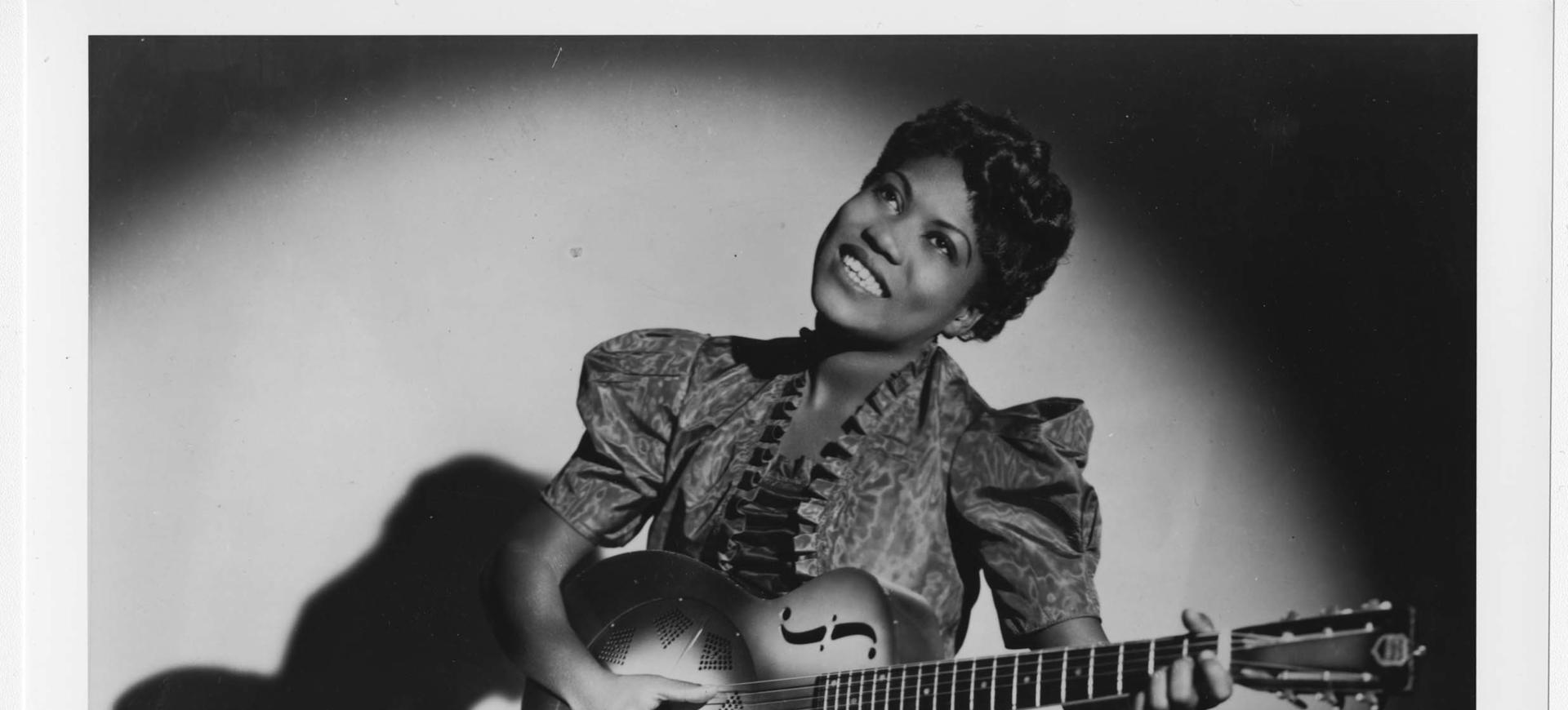
Sister Rosetta Tharpe was combining gospel singing with amplified electric guitar long before rock and roll had settled into a recognisable genre.

By the late 1930s she was already performing outside the church circuit, and her guitar playing eventually became one of the clearest bridges between gospel, rhythm and blues and the music that would later be called rock.

The remarkable part is not simply that she was early.

Listen to the physical attitude of the playing.

The guitar is not background accompaniment.

It answers the voice.

It pushes rhythm forward.

It distorts.

It becomes theatrical.

This is behaviour we now associate automatically with rock guitar.

Historical categories can hide relationships because we name music after the fact. Once “rock and roll” exists as a category, it becomes tempting to search for its beginning only among musicians already labelled as rock musicians.

Tharpe makes that impossible.

She was working inside gospel while producing gestures another generation would recognise as rock.

That is a useful reminder that genres rarely begin on the day somebody gives them a name.

The sound usually exists first.

History catches up afterwards.

https://rockhall.com/inductees/sister-rosetta-tharpe/

#SisterRosettaTharpe #ElectricGuitar #Gospel #RockHistory

Rock Guitar Before Rock Was Supposed to Exist Rock Guitar Before Rock Was Supposed to Exist rockhall.com Sister Rosetta Tharpe | Rock & Roll Hall of Fame Rock & Roll Hall of Fame 2018 Inductee Sister Rosetta Tharpe was the first guitar heroine of rock & roll.
Algorithmic Music

A Piano Playing Beyond Human Hands

Conlon Nancarrow spent much of his working life composing for player piano because the machine could perform rhythmic relationships that human pianists could barely reproduce.

Between 1948 and 1984 he created more than fifty Studies for Player Piano. Instead of writing music and hoping performers could realise it, Nancarrow punched the musical information directly into paper rolls.

That changed what composition could demand.

Several independent tempos could accelerate or decelerate simultaneously. Rhythmic canons could unfold at ratios too exact and too fast for ordinary performance. The limitation was no longer the pianist’s hands.

The machine became the performer.

Nancarrow even permanently altered his pianos, modifying their hammers and damping systems to make the complicated textures clearer.

I find this fascinating because it anticipates something electronic musicians now take for granted.

A DAW can execute an impossible MIDI sequence without asking whether a person can physically play it.

Nancarrow reached that freedom through mechanical technology decades earlier.

But there is an important difference.

His player piano is not silent computation. Pumps, motors, paper rolls, keys and hammers are physically struggling to execute the information.

You can hear the machine working.

It is algorithmic music with muscles.

https://www.paul-sacher-stiftung.ch/en/research/1-2-Conlon-Nancarrow-Edition-project.html

#ConlonNancarrow #PlayerPiano #AlgorithmicMusic #Composition

A Piano Playing Beyond Human Hands A Piano Playing Beyond Human Hands paul-sacher-stiftung.ch Paul Sacher Stiftung - 2016-21 Conlon Nancarrow: Towards a Critical Edition Conlon Nancarrow spent much of his working life composing for player piano because the machine could perform rhythmic relationships that human...
Album Stored

An Album Stored as DNA

For the twentieth anniversary of Massive Attack’s Mezzanine, researchers at ETH Zurich translated the album’s digital audio into DNA.

The process sounds almost absurdly futuristic. The music was first compressed using the Opus codec. Its binary information was then converted into sequences based on the four DNA building blocks A, C, G and T. Around 920,000 short DNA strands were produced and encapsulated in microscopic silica spheres.

The whole album effectively became biological data.

What interests me is not the novelty of putting music into DNA. It is what this says about the idea of a recording.

We usually associate an album with its carrier.

Vinyl record.

Cassette.

CD.

Hard drive.

Stream.

But none of these is actually the music. Each one is simply a temporary system for storing instructions that can later be turned back into sound.

DNA makes that fact impossible to ignore.

Mezzanine can exist without grooves, magnetic particles, a waveform on a screen or even an object recognisable as music.

At that point an album starts resembling a genetic recipe.

Nothing inside the tiny glass particles sounds like Massive Attack.

The music only returns when another machine knows how to read the code.

A record is therefore not necessarily sound.

Sometimes it is the possibility of sound waiting inside information.

https://fml.ethz.ch/research/research/storing-mezzanine-in-dna.html

#MassiveAttack #Mezzanine #DNAStorage #MusicTechnology

An Album Stored as DNA An Album Stored as DNA fml.ethz.ch For the twentieth anniversary of Massive Attack’s Mezzanine, researchers at ETH Zurich translated the album’s digital audio into DNA. The process...
Björk

Björk Replaced the Band With Bodies

For Medúlla, Björk stripped away most conventional instrumentation and built an album almost entirely from human voices. The recording involved Icelandic and London choirs, throat singing, vocal percussion and beatboxing by Rahzel, alongside layers of Björk’s own voice.

What interests me is that this is not really an a cappella album in the traditional sense.

The voice is treated as raw production material.

A mouth can become percussion.

Breathing becomes texture.

A choir can behave like a synthesizer pad.

Individual syllables can be arranged almost like samples.

That changes the usual hierarchy between singer and accompaniment. Instead of placing a vocal on top of an instrumental track, Medúlla asks what happens when almost the entire track is made from the same physical source.

There is also something quietly radical about choosing the oldest instrument humans possess at a moment when digital production technology was becoming increasingly powerful.

The album does not reject technology. Editing, layering and processing remain essential.

But technology is used to enlarge the body rather than replace it.

The result makes synthesis feel less like inventing an artificial sound and more like discovering how artificial a familiar human sound can become.

Björk – Medúlla

#Bjork #Medulla #Voice #ExperimentalPop

Björk Replaced the Band With Bodies Björk Replaced the Band With Bodies Björk Official Store Björk - Medúlla "Almost entirely a cappella, and recorded with choirs from Iceland and London, a throat singer and a human beat-box (Rahzel from the Roots), Medulla has little precedent in popular music. There is, though, an esoteric lineage to be traced back, from Kate Bush's work with the Trio Bulgarka to Donald Byrd's collaboration