Skip to content

Sound Design

Art Stream
Ambient Music

Water Without a Landscape

The 51 tracks on Synthetic Water Music do not try to agree on what water sounds like. Across two hours, the compilation moves between reflective surfaces, submerged tones, imagined currents and pieces whose connection to water is suggested more by texture than by direct imitation. Its scale makes it less like a concept album and more like a collection of listening tests.

Released by the Slovak label mappa on 10 September 2026, the set includes Pauline Anna Strom, Francesca Heart, Visible Cloaks and dozens of other contributors. The title is useful because the word “synthetic” removes any obligation to document a real river, sea or rainfall. Water can be reconstructed through synthesis, memory, naming or rhythm. A track does not need a field recording of waves to create a sense of liquid movement.

There is a practical production idea here. Sound design often begins by asking which device can reproduce a known sound. This compilation suggests another route: identify how a material behaves, then translate that behaviour. Water accumulates, reflects, leaks, repeats, erodes and changes shape around resistance. Those verbs offer more musical possibilities than the search for a convincing splash.

https://mappa.bandcamp.com/album/synthetic-water-music

#SyntheticWaterMusic #Mappa #AmbientMusic #SoundDesign

Water Without a Landscape Water Without a Landscape mappa Synthetic Water Music, by Various Artists 51 track album
Facebook LinkedIn WhatsApp Threads
More sharing options
X Reddit Pinterest Telegram Email
Boris Blank

Yello Turned a Snowball Into a Kick

Boris Blank of Yello has spent decades recording sounds that were never designed to become musical instruments.

His enormous personal sample archive has included voices, percussion, broken instruments and ordinary environmental noises. One particularly good example is almost ridiculous: Blank recalled throwing a snowball against his studio wall, recording the impact and eventually transforming it into a bass drum.

He has described sampling as central to Yello’s process from the beginning, first through tape loops and later with digital systems such as the Fairlight CMI.

I love the snowball because it demonstrates the essential magic of sampling better than an expensive studio explanation ever could.

The source does not need to resemble its eventual function.

A kick drum does not need to begin as a drum.

It needs an attack, a body and some useful energy that can be transformed.

Once sound is recorded, its original cause becomes optional.

Pitch it down.

Shorten it.

Filter it.

Layer it.

The visual image of a snowball hitting a wall disappears and a rhythmic object takes its place.

That is one of the profound changes recording technology introduced into music.

Before recording, an instrument was usually defined by the object producing the sound.

Sampling separates sound from object.

After that, almost anything can join the drum kit.

Oh Yeah: The Legacy Of YELLO

#Yello #BorisBlank #Sampling #SoundDesign

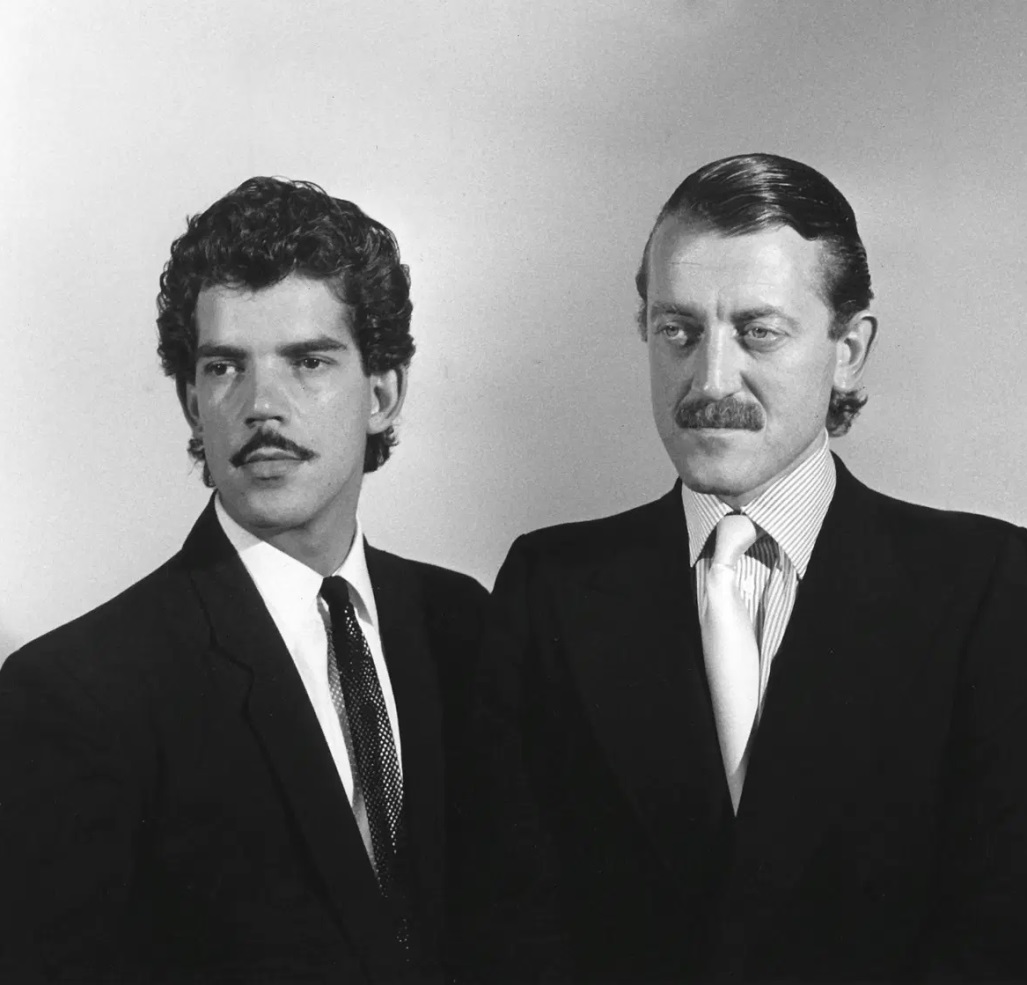
Yello Turned a Snowball Into a Kick Yello Turned a Snowball Into a Kick ELECTRICITYCLUB.CO.UK Oh Yeah: The Legacy Of YELLO - ELECTRICITYCLUB.CO.UK The illustrious career of the Swiss electronic trailblazers YELLO is being celebrated in a new lavishly packaged 4CD earbook retrospective entitled ‘YELL4O Years’. Boris Blank founded YELLO with Carlos Perón through a mutual love of jazz, musique concrète and tape experimentation. Dieter Meier was the son of millionaire banker and had a penchant for performance art.
Facebook LinkedIn WhatsApp Threads
More sharing options
X Reddit Pinterest Telegram Email
Electronic Music

SOPHIE Designed Materials That Never Existed

SOPHIE often talked about synthesis in physical terms.

Rather than asking how to imitate a conventional instrument, the producer thought about materials: bubbles, latex, metal, liquid, plastic. Sounds could behave as though they possessed weight, elasticity, friction or surface.

That approach is part of why tracks such as “BIPP,” “LEMONADE” and “HARD” still sound so distinctive. Much of the percussion does not convincingly resemble acoustic percussion at all. It suggests imaginary objects being squeezed, struck, stretched or shattered.

SOPHIE’s brother and studio engineer Ben Long later described the same way of working: sounds would be discussed in terms such as needing more fizz or more bubbles. He also noted that SOPHIE preferred working deeply with a relatively small set of tools rather than endlessly collecting plug-ins.

That seems important.

Synthesis is often taught as reconstruction.

Here is how to synthesise a kick.

Here is how to synthesise brass.

Here is how to reproduce a bass guitar.

SOPHIE’s work points toward a more interesting question.

What if the object producing the sound has never existed?

Then synthesis becomes almost sculptural.

You are not reproducing reality.

You are deciding what an impossible material would sound like if somebody hit it.

#SOPHIE #SoundDesign #Synthesis #ElectronicMusic

SOPHIE Designed Materials That Never Existed SOPHIE Designed Materials That Never Existed Apple Music - Web Player Product by SOPHIE on Apple Music Album · 2015 · 8 Songs
Facebook LinkedIn WhatsApp Threads
More sharing options
X Reddit Pinterest Telegram Email
Drum Machine Without Samples

**A Drum Machine Without Samples**

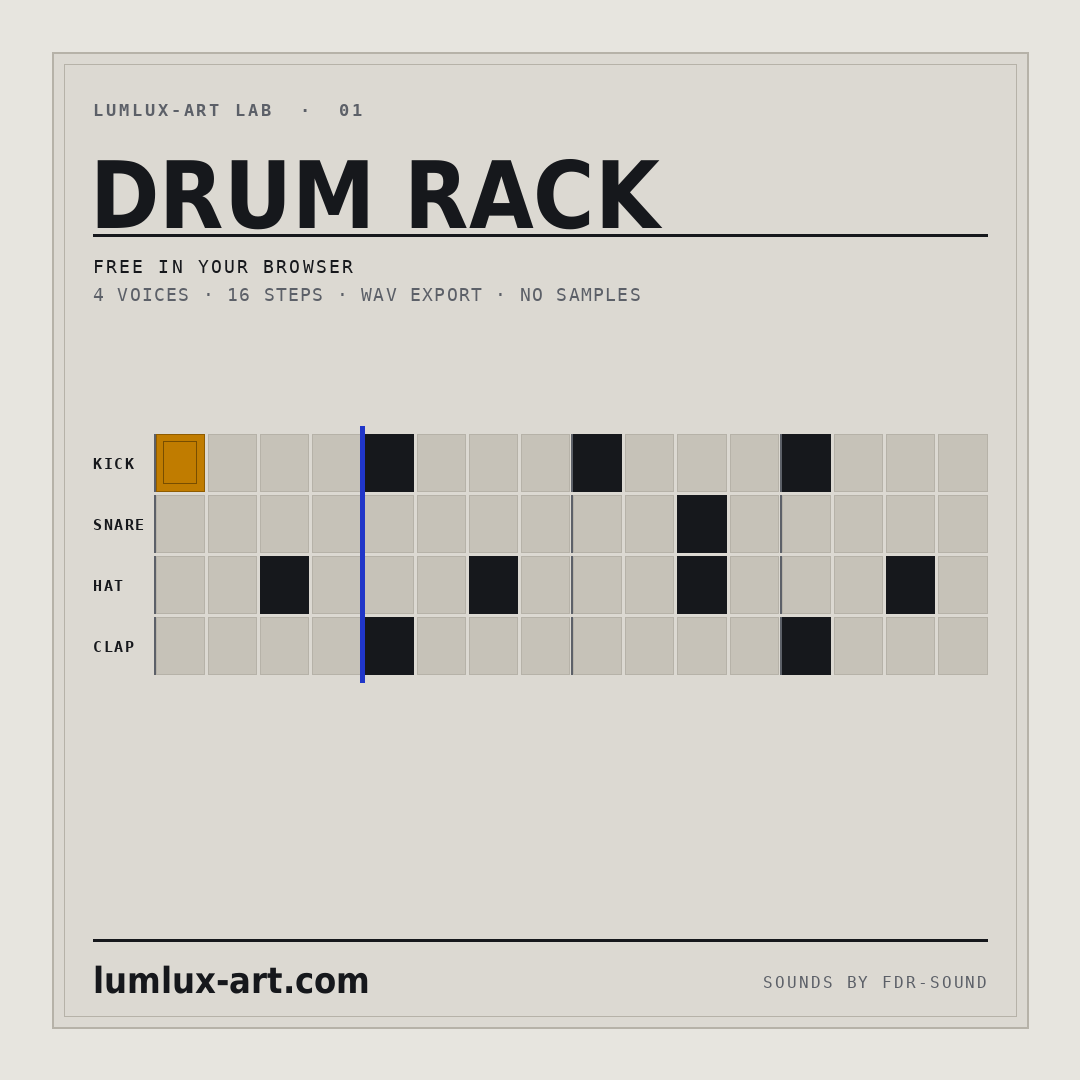
Most drum machines begin with recorded sounds. LumLux Art’s Drum Rack starts somewhere else. Its kick, snare, hi-hat and clap are synthesised directly from oscillators and noise in the browser. There are no drum samples hiding underneath the interface.

That becomes most visible in the kick. Instead of reducing it to a few familiar controls, Drum Rack exposes the pitch envelope itself. Nodes can be moved, added and curved while a waveform display redraws the result. The kick is constructed from three layers: a short noise click for attack, a pitched body and a sine-based sub layer.

What interests me is that this turns a small drum machine into something closer to a lesson in sound design.

Changing a sample usually means selecting another recording. Here, changing the envelope changes the physical behaviour of the sound being generated. A steep pitch fall gives the kick a different sense of attack from a slow one. Harmonics, decay, sub level and drive then reshape the same underlying synthesis rather than disguising it with another preset.

The sequencer follows a similar idea. Individual hits can have their own level, timing nudge and repeated strikes, so a rhythm does not have to remain perfectly attached to the grid. Patterns can also move between 4/4, triplets, 3/4 and odd meters such as 5/4 and 7/4. WAV and MIDI export let the results leave the browser and continue inside a DAW.

Perhaps the most interesting limitation is also the simplest one: only four voices.

In a world of enormous sample libraries and plug-ins with thousands of presets, Drum Rack asks what can happen when there is less to choose from and more to shape.

Sometimes designing the drum is more interesting than finding one.

Drum Rack

#DrumRack #DrumSynthesis #Sequencer #SoundDesign #WebAudio

**A Drum Machine Without Samples** **A Drum Machine Without Samples** Lumlux Art Drum Rack - Lumlux Art Pass it on No install needed — it runs in any browser. Send to a friend Drum Rack is on the App Store The iPhone version is live. The same drum machine you just played, running natively on your phone. Free, no ads, no account, nothing collected. Android version coming soon Drum Rack is in…
Facebook LinkedIn WhatsApp Threads
More sharing options
X Reddit Pinterest Telegram Email
Amon Tobin

Amon Tobin Turned Recordings Into Instruments

Amon Tobin’s relationship with sampling changed dramatically over time.

His earlier work often began with fragments taken from existing records. By Foley Room, he had moved toward recording his own material, gathering sounds from environments that included animals, machines and factories. With ISAM in 2011, he pushed that process further. Field recordings became raw material for synthesis, and those transformed sounds were built into playable instruments from which the music could then be composed.

That distinction is important.

Sampling usually begins with the identity of a recorded sound.

A door closes.

A bee buzzes.

A machine rattles.

Process the recording far enough and that identity can disappear. What remains may be only a grain, envelope, texture or spectral character.

At that point the recording stops behaving like documentation.

It becomes synthesis material.

I find this more interesting than the endless argument about whether a synthesizer sounds “realistic.” Tobin’s method travels in the opposite direction.

Start with reality.

Destroy enough information that it becomes something imaginary.

Then make the imaginary sound playable again.

A microphone can therefore be the first oscillator in a synthesizer that has not yet been built.

https://ninjatune.net/release/amon-tobin/isam

#AmonTobin #ISAM #FieldRecording #SoundDesign

Amon Tobin Turned Recordings Into Instruments Amon Tobin Turned Recordings Into Instruments Ninja Tune ISAM by Amon Tobin Amon Tobin's relationship with sampling changed dramatically over time. His earlier work often began with fragments taken from existing records. By Foley R…
Facebook LinkedIn WhatsApp Threads
More sharing options
X Reddit Pinterest Telegram Email
Fairlight CMI

Kate Bush Found a Song Inside One Sound

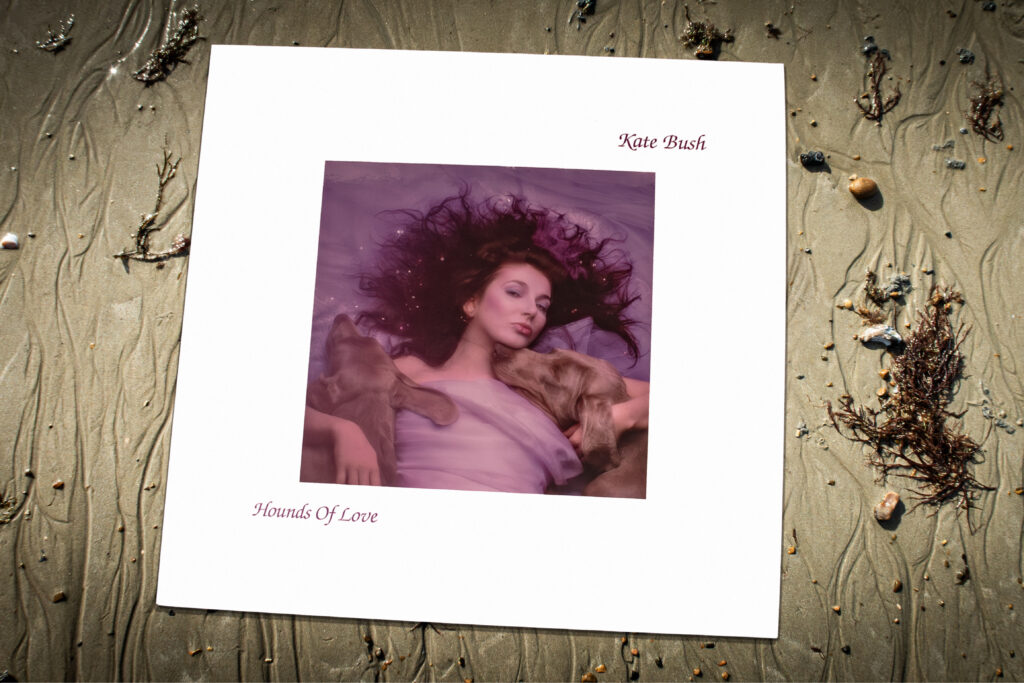
“Running Up That Hill” began not with a lyric or chord progression but with a sound Kate Bush found in the Fairlight CMI.

Bush later explained that she immediately liked the Fairlight sound that became the central riff and wanted a military, drone-like atmosphere around it. A Linn drum pattern was programmed, the Fairlight repeated its figure, and she developed the vocal over that foundation. The familiar sustained atmosphere also involved freezing Fairlight material through a Quantec processor.

I like this because it is an unusually clear example of sound design becoming composition.

A preset is normally treated as something that comes after the musical idea. Choose the notes first, then search for an appropriate sound.

Here the relationship is reversed.

The timbre suggested the music.

That is one reason synthesizers and samplers changed songwriting so profoundly. They did not merely provide electronic replacements for piano, strings or drums. A strange sound could suggest a rhythm, a register, an atmosphere and eventually an entire song.

There is another useful detail. The Fairlight sample was noisy.

Today that might send us searching immediately for a cleaner library.

Bush built one of her most recognisable recordings around it.

The imperfect sound was not a problem waiting to be fixed.

It was the reason to begin.

Hounds of Love

#KateBush #FairlightCMI #RunningUpThatHill #SoundDesign

Kate Bush Found a Song Inside One Sound Kate Bush Found a Song Inside One Sound Kate Bush Hounds of Love - Kate Bush “Running Up That Hill” began not with a lyric or chord progression but with a sound Kate Bush found in the Fairlight CMI. Bush later explained that she imm…
Facebook LinkedIn WhatsApp Threads
More sharing options
X Reddit Pinterest Telegram Email
Chernobyl

Recording the Reactor Itself

For Chernobyl, Hildur Guðnadóttir did not simply compose music inspired by a nuclear power station. Part of the sound world was built from recordings made inside Lithuania’s decommissioned Ignalina nuclear plant, whose RBMK reactors were similar to those used at Chernobyl. Industrial resonance, machinery and the acoustics of the building became raw musical material alongside voices and instruments. The soundtrack was released in 2019, but its production method still feels unusually direct.

What interests me is the decision to begin with the physical environment rather than imitate it later with synthesizers. A metallic drone generated by an actual industrial structure carries a different kind of information than a preset labelled “dark ambience.” The building already contains irregularities, resonances and mechanical histories that a composer can discover rather than invent.

Field recording is often treated as background texture. Here it becomes closer to orchestration. The place itself is one of the instruments.

https://www.deutschegrammophon.com/en/catalogue/products/chernobyl-soundtrack-gunadottir-7130

#HildurGudnadottir #Chernobyl #SoundDesign #FilmMusic

Recording the Reactor Itself Recording the Reactor Itself Deutsche Grammophon CHERNOBYL Soundtrack / Guðnadóttir | Deutsche Grammophon Chernobyl is a five-part miniseries by producer Craig Mazin, which premiered on HBO on May 6 2019. The series deals with the nuclear disaster which occurred in
Facebook LinkedIn WhatsApp Threads
More sharing options
X Reddit Pinterest Telegram Email