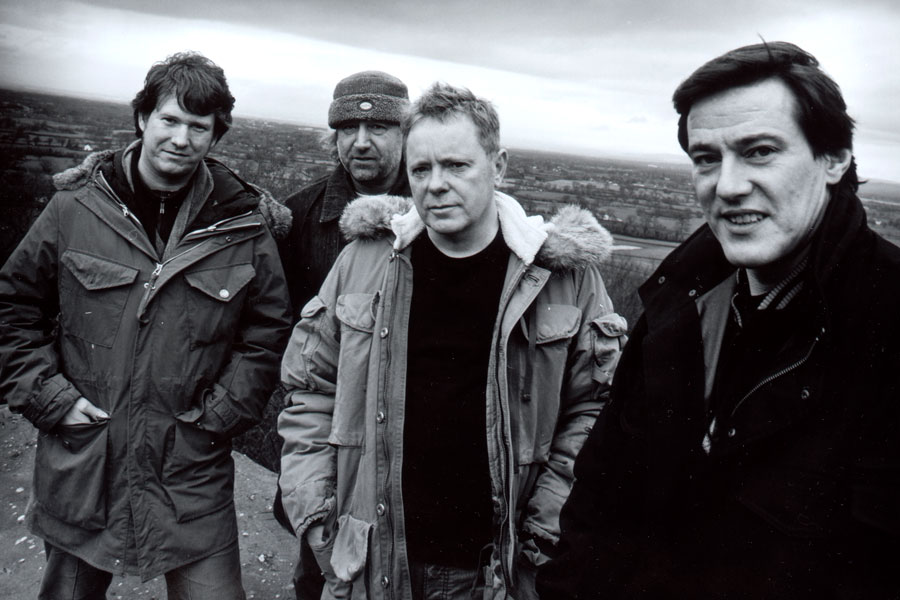
New Order’s “Blue Monday” now sounds like a piece of electronic music whose machines must have known exactly what they were doing.
They did not.
The group had a sequencer and a drum machine that could not communicate properly with each other. Bernard Sumner has recalled taking the equipment to Martin Usher, who designed an electronic circuit that allowed the two machines to synchronise.
When they connected everything and pressed start, the drum machine and synthesizer finally began running together.
That technological connection became part of the session from which “Blue Monday” emerged.
I like this because synchronization is now practically invisible.
Connect MIDI or load a plug-in and every machine immediately knows the tempo.
In 1983, getting two electronic devices to agree about time could itself require invention.
The song therefore sits at an interesting point in electronic music history.
The composition was partly enabled by somebody solving an engineering problem.
A homemade circuit became a musical collaborator.
This also says something about technological limitations.
We tend to imagine that earlier electronic musicians achieved interesting results despite primitive equipment.
Sometimes they achieved them because the equipment was incomplete enough that musicians had to invent new relationships between the machines.
Before the groove existed, somebody had to build the wire that allowed the groove to happen.
https://www.nme.com/blogs/nme-blogs/new-order-how-we-wrote-blue-monday-762505