Skip to content

Sampling

Art Stream
Drum And Bass

Fourteen Seconds Built New Forms

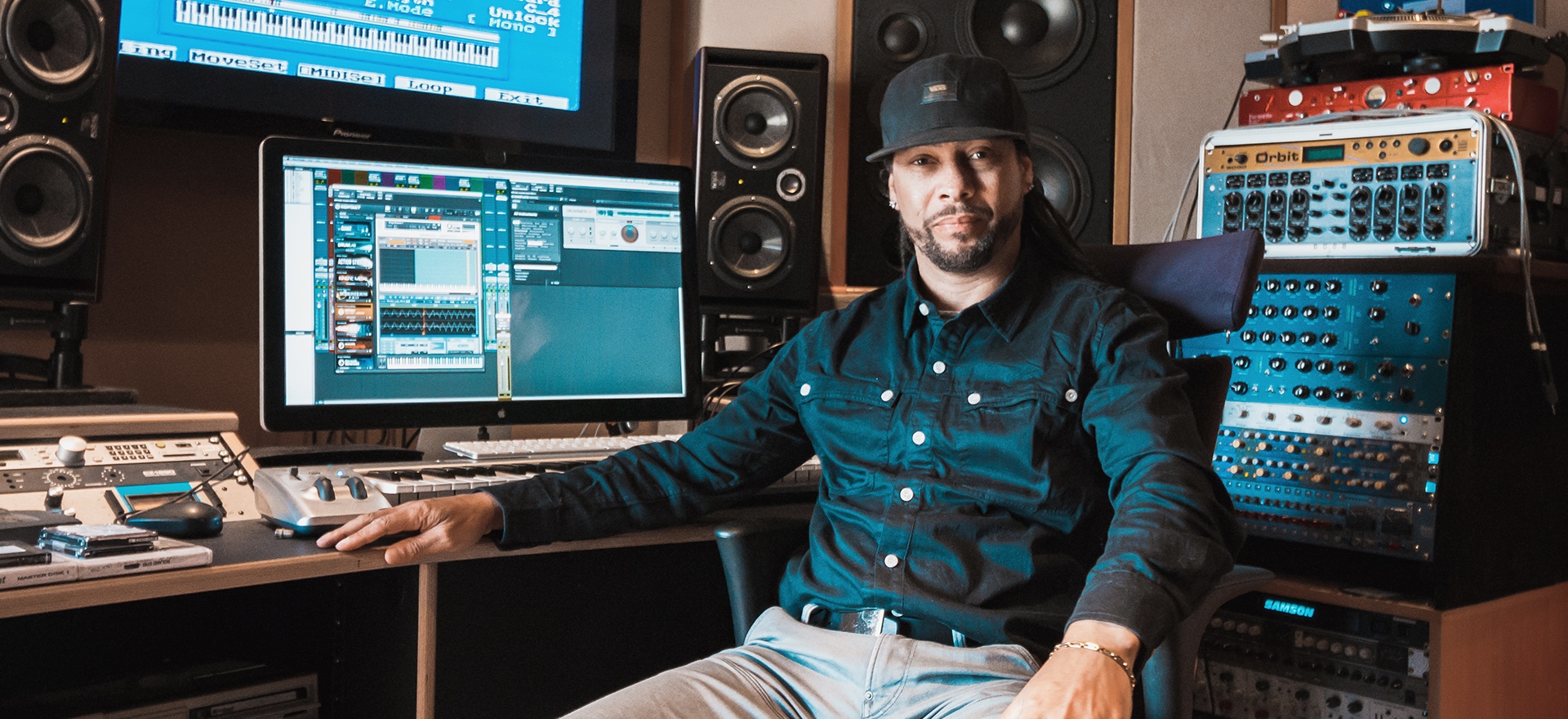
Roni Size made some of the music that helped move drum and bass from underground clubs toward a much wider audience, but the studio behind New Forms was surprisingly restricted.

One of his main tools was the Roland S-330 sampler.

It gave him only around fourteen seconds of total sampling time.

Fourteen seconds.

Yet Size preferred it to contemporary Akai machines because its screen and editing functions allowed him to manipulate those seconds in unusual ways. Samples could be reversed, stretched and reorganised while ghost notes helped construct increasingly detailed rhythms.

This is a useful reminder of what early drum and bass production actually involved.

A breakbeat was not an unlimited audio file sitting on a modern timeline.

Memory had a price.

Every sound competed for space.

If the sampler was full, something had to disappear or be shortened.

That restriction encourages another kind of listening.

You stop thinking in complete recordings.

A hi-hat may only need milliseconds.

A snare needs slightly more.

The useful part of a break may be smaller than the break itself.

Modern producers can load gigabytes without noticing.

Roni Size could build an album around seconds.

The interesting question is not how little technology they had.

It is how much musical information they learned to hear inside almost nothing.
https://blog.native-instruments.com/roni-size-on-new-forms/

#RoniSize #NewForms #DrumAndBass #Sampling

Fourteen Seconds Built New Forms Fourteen Seconds Built New Forms Native Instruments Blog Roni Size on New Forms | Native Instruments Blog Drum & bass legend Roni Size describes how technology has changed his approach to music, and the drum & bass of today.
Facebook LinkedIn WhatsApp Threads
More sharing options
X Reddit Pinterest Telegram Email
Electronic Music

When 0.8 Seconds Felt Enormous

The Fairlight CMI helped change recorded sound from something musicians played back into something they could play.

Developed in Australia by Peter Vogel and Kim Ryrie and released at the end of the 1970s, the system became one of the first commercially influential digital sampling instruments. The National Film and Sound Archive of Australia describes it as the world’s first polyphonic digital sampling synthesizer.

By modern standards its early sampling capacity seems tiny.

Jean-Michel Jarre has recalled working with a maximum sample length of roughly 0.8 seconds at 8-bit resolution on an early Fairlight.

Yet that fraction of a second was enough to change composition.

A voice could become a chord.

A broken object could become percussion.

A sound recorded somewhere in the world could be mapped across a keyboard and played at pitches that had never existed in the original recording.

Today we can load hours of high-resolution audio into a laptop without thinking about memory.

That abundance makes it easy to forget how radical 0.8 seconds once was.

The important technological breakthrough was not duration.

It was separation.

For the first time, a tiny recorded fragment could be detached from the event that produced it and treated almost like an oscillator.

Less than one second of memory was enough to introduce an entirely different idea of what an instrument could be.

https://www.nfsa.gov.au/collection/item/sampling-sounds-fairlight-cmi

#FairlightCMI #Sampling #MusicTechnology #ElectronicMusic

When 0.8 Seconds Felt Enormous When 0.8 Seconds Felt Enormous nfsa.gov.au The Fairlight CMI helped change recorded sound from something musicians played back into something they could play. Developed in Australia by...
Facebook LinkedIn WhatsApp Threads
More sharing options
X Reddit Pinterest Telegram Email
Boris Blank

Yello Turned a Snowball Into a Kick

Boris Blank of Yello has spent decades recording sounds that were never designed to become musical instruments.

His enormous personal sample archive has included voices, percussion, broken instruments and ordinary environmental noises. One particularly good example is almost ridiculous: Blank recalled throwing a snowball against his studio wall, recording the impact and eventually transforming it into a bass drum.

He has described sampling as central to Yello’s process from the beginning, first through tape loops and later with digital systems such as the Fairlight CMI.

I love the snowball because it demonstrates the essential magic of sampling better than an expensive studio explanation ever could.

The source does not need to resemble its eventual function.

A kick drum does not need to begin as a drum.

It needs an attack, a body and some useful energy that can be transformed.

Once sound is recorded, its original cause becomes optional.

Pitch it down.

Shorten it.

Filter it.

Layer it.

The visual image of a snowball hitting a wall disappears and a rhythmic object takes its place.

That is one of the profound changes recording technology introduced into music.

Before recording, an instrument was usually defined by the object producing the sound.

Sampling separates sound from object.

After that, almost anything can join the drum kit.

Oh Yeah: The Legacy Of YELLO

#Yello #BorisBlank #Sampling #SoundDesign

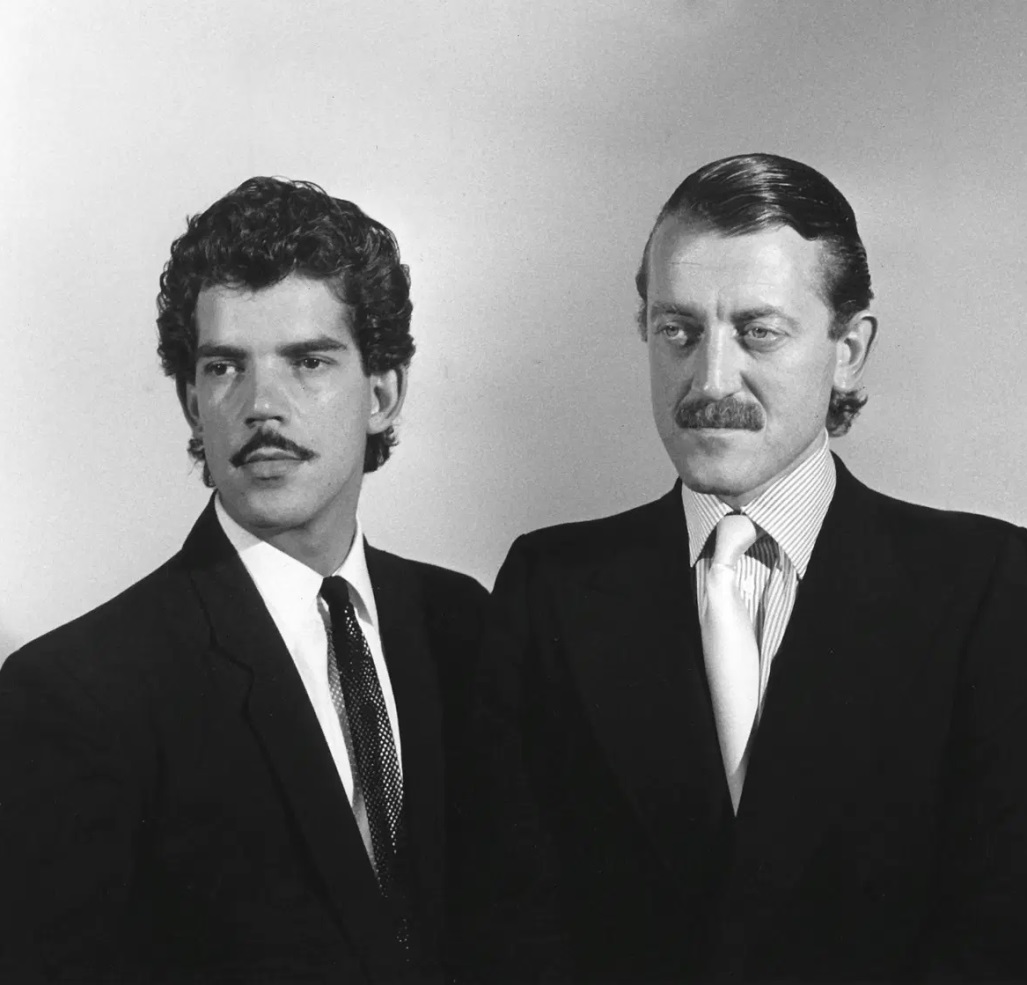
Yello Turned a Snowball Into a Kick Yello Turned a Snowball Into a Kick ELECTRICITYCLUB.CO.UK Oh Yeah: The Legacy Of YELLO - ELECTRICITYCLUB.CO.UK The illustrious career of the Swiss electronic trailblazers YELLO is being celebrated in a new lavishly packaged 4CD earbook retrospective entitled ‘YELL4O Years’. Boris Blank founded YELLO with Carlos Perón through a mutual love of jazz, musique concrète and tape experimentation. Dieter Meier was the son of millionaire banker and had a penchant for performance art.
Facebook LinkedIn WhatsApp Threads
More sharing options
X Reddit Pinterest Telegram Email
Depeche Mode

Depeche Mode Went Looking for Metal

During the making of Construction Time Again, Depeche Mode discovered sampling and immediately started looking beyond conventional instruments.

For “Pipeline,” Martin Gore, Gareth Jones and the group went into Shoreditch recording metal objects, pipes, steel plates and other found sounds. Engineer Gareth Jones recalls drumsticks and hammers striking objects around a disused railway environment. Gore’s vocal was also recorded outside beneath a railway arch.

The recordings were then brought back into the studio, sampled, edited and reorganised into music.

This is what I find interesting about early sampling.

A sampler did not initially mean access to an enormous prepared library.

The empty memory of the machine created a question:

What should we put into it?

Suddenly the street became an instrument store.

A metal plate was not valuable because it sounded like percussion.

It became percussion because someone heard a useful attack and resonance inside it.

Modern sample libraries reverse that process.

Search “industrial hit” and hundreds of professionally processed choices appear immediately.

That is convenient, but something disappears.

Going outside with a recorder means you do not yet know what the instrument is.

You have to find it.

The sampler then becomes less like a playback device and more like a way of listening to ordinary objects for musical possibilities.

https://www.soundonsound.com/techniques/classic-tracks-depeche-mode-people-are-people

#DepecheMode #Sampling #FieldRecording #MusicProduction

Depeche Mode Went Looking for Metal Depeche Mode Went Looking for Metal soundonsound.com Classic Tracks: Depeche Mode 'People Are People' Released in 1984, 'People Are People' perfectly combined Depeche Mode's love of pop music and experimentalism, and gave them their first US hit single.
Facebook LinkedIn WhatsApp Threads
More sharing options
X Reddit Pinterest Telegram Email
MIA

A Pop Song Built From a Political Sample

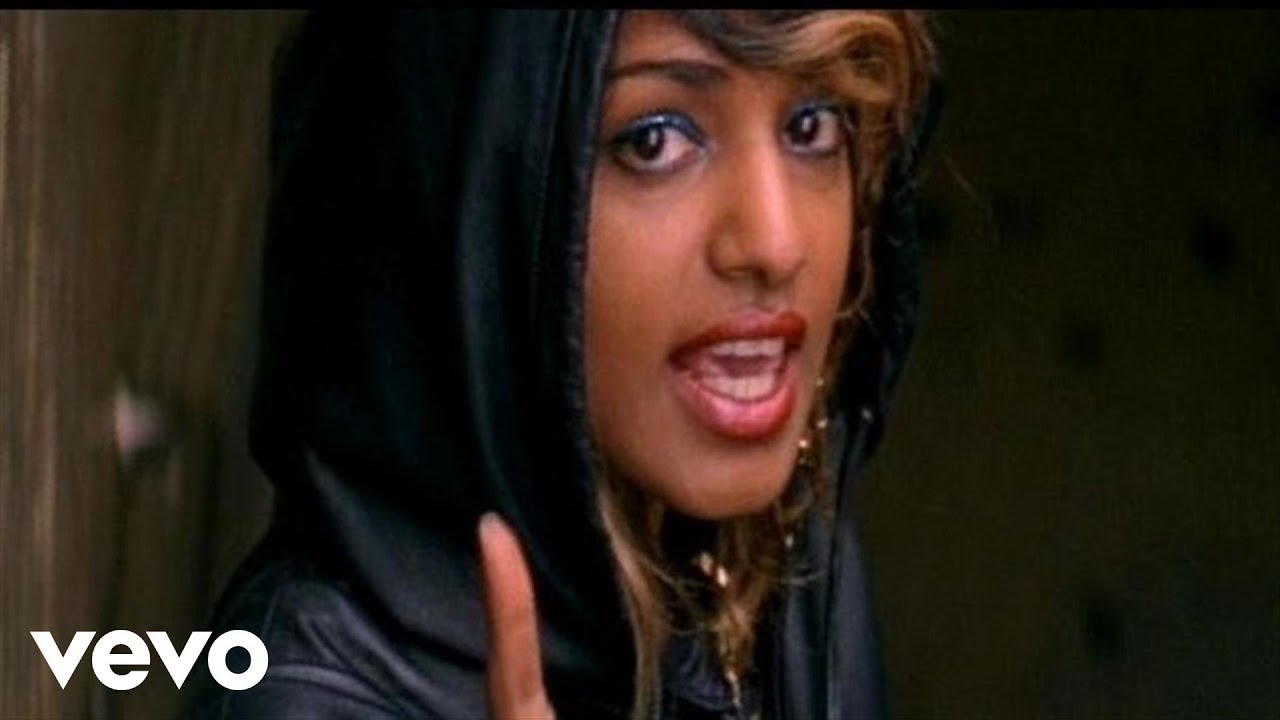
M.I.A.’s “Paper Planes” takes its central instrumental loop from “Straight to Hell” by The Clash, but the sample does not behave like a nostalgic quotation.

It is pulled into a completely different musical and political environment. Gunshot sounds and a cash-register effect punctuate the chorus, while the track’s lyrics turn attention toward migration, suspicion, money and the stereotypes attached to outsiders. Diplo later described the Clash sample as successful precisely because its new context changed its flavour so completely.

That is what good sampling can do.

The source remains recognisable, but recognition is not the destination.

Context changes meaning.

A melancholy guitar pattern from a British punk record becomes the foundation of a global pop track by a British-Sri Lankan artist whose work repeatedly dealt with borders and displacement.

Sampling is often discussed as ownership of sound.

Artistically, I find the more interesting question to be ownership of interpretation.

A sample can preserve the original recording while completely changing what that recording now seems to say.

#MIA #PaperPlanes #Sampling #PopProduction

A Pop Song Built From a Political Sample A Pop Song Built From a Political Sample YouTube M.I.A. - Paper Planes Subscribe: https://MIA.lnk.to/Subscribe Watch more: https://MIA.lnk.to/WatchMore Connect with M.I.A. Online:Follow M.I.A. on Instagram: https://MIA.lnk.to/I...
Facebook LinkedIn WhatsApp Threads
More sharing options
X Reddit Pinterest Telegram Email
Actual Life

Fred Again Turns Messages Into Memory

Fred again..’s Actual Life records are built partly from material that normally disappears into the endless flow of phones and social media: voice notes, FaceTime conversations, videos and fragments of everyday speech. On “Marea (We’ve Lost Dancing),” for example, words from The Blessed Madonna originated in a FaceTime conversation about the disappearance of communal dancing during the pandemic.

The interesting part is not simply that Fred samples people speaking. Hip-hop, musique concrète and electronic music have been transforming recorded voices for decades.

What changes is the status of the source.

A traditional sample often begins as something already public: a record, broadcast or film. A voice note was never necessarily intended to become culture at all. It may have existed only as communication between two people.

Fred moves that private fragment into a musical structure where thousands of strangers can attach their own memories to it.

The sampler becomes less like an instrument for borrowing music and more like a machine for preserving fleeting human moments.

There is also a production lesson in this. A technically imperfect recording can carry something a pristine studio vocal cannot reproduce: the circumstances in which it happened.

Sometimes the noise around a voice is part of why we believe it.

https://www.grammy.com/news/fred-again-2024-grammys-nominations-best-new-artist-dance/

#FredAgain #ActualLife #Sampling #ElectronicMusic

Fred Again Turns Messages Into Memory Fred Again Turns Messages Into Memory Grammy 6 Reasons Why Fred Again.. Was Dance Music’s Rookie Of The Year | Grammy Arguably dance music’s buzziest star in 2023, Fred again.. topped off a breakout year with four nominations at the 2024 GRAMMYs, including Best New Artist. Take a look at some of the producer/
Facebook LinkedIn WhatsApp Threads
More sharing options
X Reddit Pinterest Telegram Email
Ambient Music

Sampling as a Memory Machine

Susumu Yokota’s Symbol is assembled from fragments of classical recordings by composers including Debussy, Ravel, Prokofiev and Tchaikovsky, alongside material connected with John Cage and Meredith Monk. Yet the 2004 album rarely feels like a demonstration of clever sampling. The fragments are transformed into an atmospheric world where the historical source can become difficult to identify.

What interests me is what happens to time inside a sample. A digital fragment may last only seconds, but it contains an older performance, an older recording technology, another room and another interpretation. Yokota places those pieces beside one another until musical history stops behaving chronologically.

Sampling is sometimes discussed mainly through questions of borrowing. Symbol suggests another possibility: sampling as memory construction.

The original recording survives, but its function changes. A piece of orchestral music can become texture. A voice can become architecture. Something created decades earlier suddenly occupies the same musical present as everything surrounding it.

The sampler does not merely repeat history. It changes the room in which history is heard.

Symbol

#SusumuYokota #Sampling #AmbientMusic #ExperimentalMusic

Sampling as a Memory Machine Sampling as a Memory Machine Susumu Yokota’s Symbol is assembled from fragments of classical recordings by composers including Debussy, Ravel, Prokofiev and Tchaikovsky, alongside mate…
Facebook LinkedIn WhatsApp Threads
More sharing options
X Reddit Pinterest Telegram Email