Alma Thomas spent decades teaching art before her most recognisable abstract paintings emerged after retirement. By then she was already in her seventies.
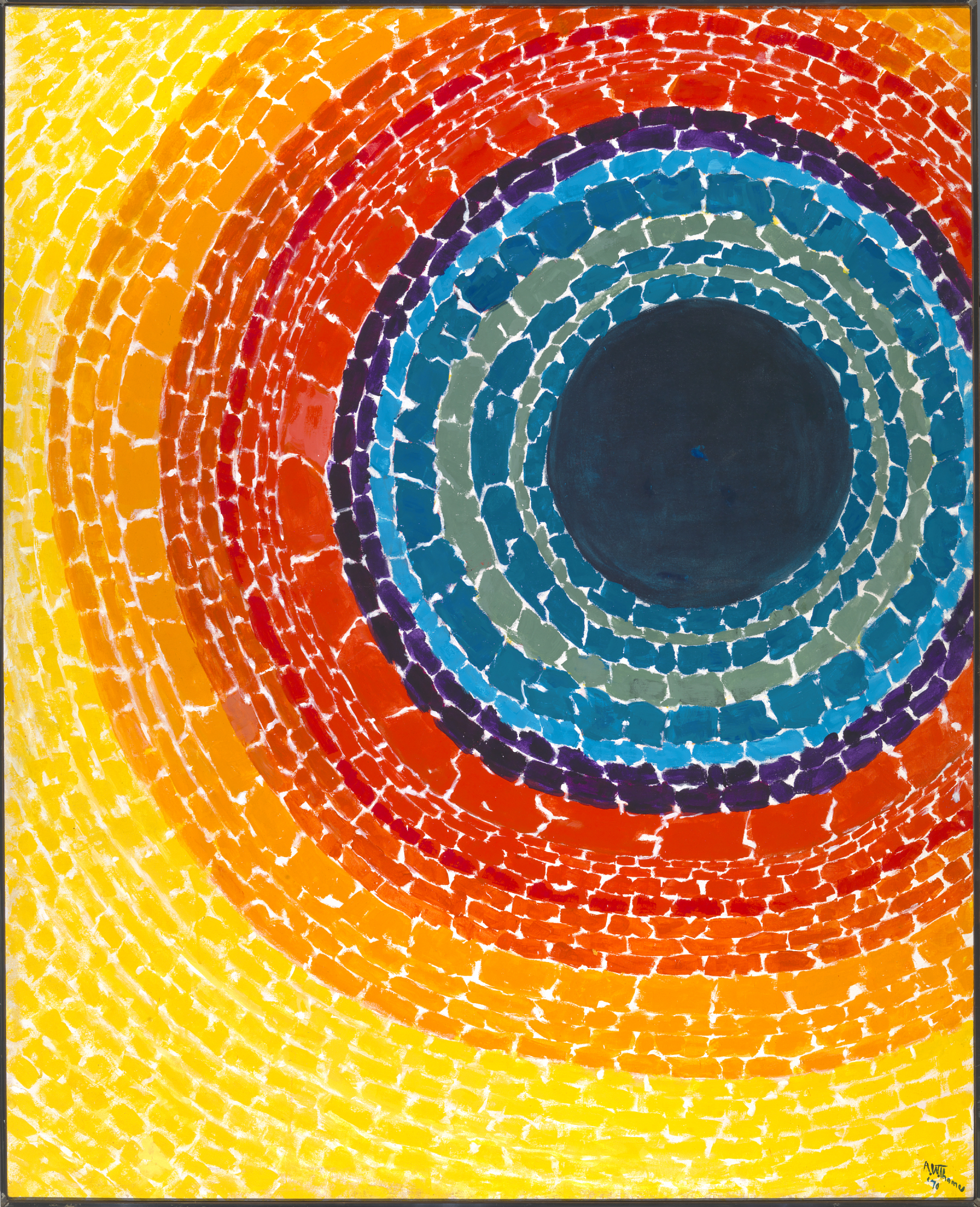
Her mature paintings use repeated blocks and strokes of colour separated by narrow areas of exposed canvas. The Smithsonian has documented another detail that makes those rhythms more interesting: Thomas frequently listened to music while she worked, and she thought carefully about relationships between visual composition and musical ideas such as sequence, contrast, harmony and rhythm. Her titles repeatedly connect colour, nature, space and music.
Look at the paintings with that in mind and the gaps become important.
The coloured marks do not form one continuous surface.
They arrive in pulses.
White canvas interrupts them like tiny rests between notes.
I do not think the paintings need to be translated literally into music. That would make them less interesting.
What matters is that rhythm is not owned by sound.
Repetition, interruption, tempo and variation can all exist visually.
Thomas also complicates one of art history’s favourite myths: the important artist revealed as a young genius.
Some of her strongest work came in her eighth decade.
Creative development does not always peak early.
Sometimes decades of looking are preparation.