Skip to content

Visual Rhythm

Art Stream
Abstract Art

Alma Thomas Painted While Music Played

Alma Thomas spent decades teaching art before her most recognisable abstract paintings emerged after retirement. By then she was already in her seventies.

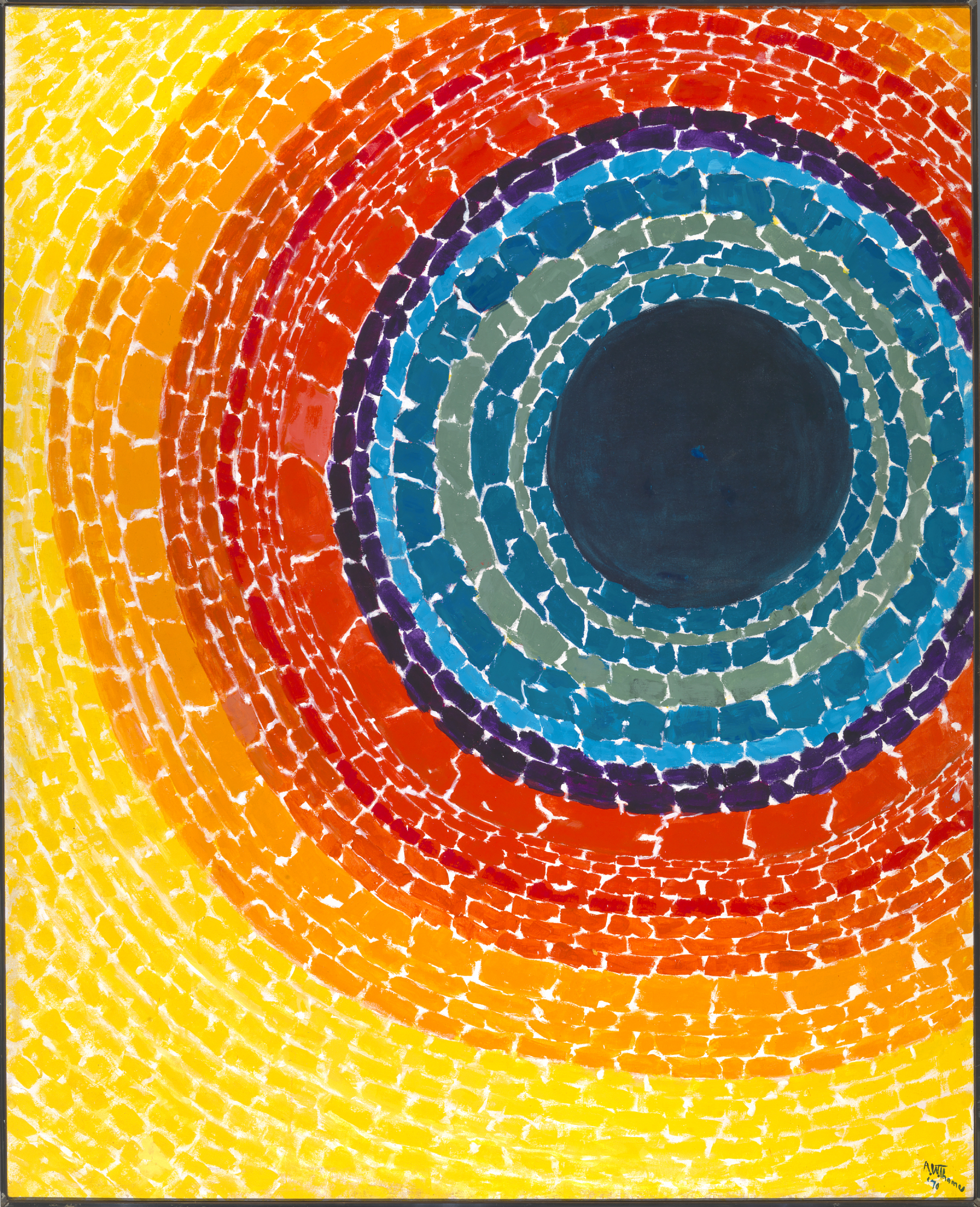
Her mature paintings use repeated blocks and strokes of colour separated by narrow areas of exposed canvas. The Smithsonian has documented another detail that makes those rhythms more interesting: Thomas frequently listened to music while she worked, and she thought carefully about relationships between visual composition and musical ideas such as sequence, contrast, harmony and rhythm. Her titles repeatedly connect colour, nature, space and music.

Look at the paintings with that in mind and the gaps become important.

The coloured marks do not form one continuous surface.

They arrive in pulses.

White canvas interrupts them like tiny rests between notes.

I do not think the paintings need to be translated literally into music. That would make them less interesting.

What matters is that rhythm is not owned by sound.

Repetition, interruption, tempo and variation can all exist visually.

Thomas also complicates one of art history’s favourite myths: the important artist revealed as a young genius.

Some of her strongest work came in her eighth decade.

Creative development does not always peak early.

Sometimes decades of looking are preparation.
https://americanart.si.edu/exhibitions/alma-thomas

#AlmaThomas #ColorPainting #AbstractArt #VisualRhythm

Alma Thomas Painted While Music Played Alma Thomas Painted While Music Played Smithsonian American Art Museum Composing Color: Paintings by Alma Thomas Alma Thomas spent decades teaching art before her most recognisable abstract paintings emerged after retirement. By then she was already in her seventies.…
Facebook LinkedIn WhatsApp Threads
More sharing options
X Reddit Pinterest Telegram Email
Editing Became the Dance

Editing Became the Dance Partner

Maya Deren’s A Study in Choreography for Camera lasts only a few minutes, but it does something that remains surprisingly modern. Dancer Talley Beatty begins a movement in one location and completes it somewhere completely different. Through precisely matched editing, a gesture can carry him from a forest into a domestic interior or museum space without appearing to stop.

The cut becomes part of the choreography.

That is what interests me from an audiovisual perspective.

Normally a camera records a dancer moving through physical space. Deren realised that cinema could create another kind of space entirely.

The body obeys continuity.

The location does not.

Today we can create far more complicated transitions using digital compositing, realtime graphics and projection systems, but technical complexity does not automatically improve the idea.

Deren needed only movement, framing and a cut.

The result demonstrates something useful for VJ work too: an edit becomes much stronger when it continues an action rather than merely replacing one image with another.

Movement can hide the cut.

The cut can extend the movement.

https://www.moma.org/collection/works/302825

#MayaDeren #ExperimentalFilm #FilmEditing #VisualRhythm

Editing Became the Dance Partner Editing Became the Dance Partner moma.org Maya Deren’s A Study in Choreography for Camera lasts only a few minutes, but it does something that remains surprisingly modern. Dancer Talley...
Facebook LinkedIn WhatsApp Threads
More sharing options
X Reddit Pinterest Telegram Email