Skip to content

Contemporary Art

Art Stream
Contemporary Art

A Nation Drawn While It Was Changing

The National Gallery of Australia’s Bilong Papua New Guinea looked at fifty years of independence through art rather than through a conventional political timeline. Papua New Guinea became independent on 16 September 1975 after periods of British, German and Australian colonial rule. The exhibition placed contemporary works beside cultural forms and showed how artists have addressed independence, ancestral knowledge, Christianity, technology and rapid social change. Figures such as Mathias Kauage and Timothy Akis helped shape a modern visual language that could absorb new materials without abandoning local cultural references.

Papua New Guinea contains extraordinary linguistic and cultural diversity. That makes the idea of a single national image complicated from the beginning. What interests me is how artists can participate in creating national identity without making everyone look the same. Art can connect different histories while allowing their differences to remain visible. Perhaps a nation becomes more convincing when its image is allowed to stay unfinished.

https://nga.gov.au/stories-ideas/bilong-papua-new-guinea/

#PapuaNewGuineaArt #PacificArt #ContemporaryArt #CulturalIdentity

Conceptual Art

Sweetness That Refuses to Stay Still

Felix Gonzalez-Torres built some of his most affecting works from materials that seem almost too ordinary for a museum: wrapped candies, stacks of paper, strings of lights, curtains and billboards. Sweet Revenge, at Madrid’s Museo Reina Sofía until 12 October 2026, brings together more than fifty works and is his first large-scale presentation in the city. Madrid carries particular weight in his biography. Gonzalez-Torres was sent there from Cuba in 1971 before moving to Puerto Rico, and when he returned almost twenty years later he premiered “Untitled” (Revenge), a spill of blue candies.

What interests me is how instability becomes part of the work rather than something a museum must prevent. Visitors can take sheets of paper or candies. The works diminish and may be replenished. Ownership does not produce one permanent physical object. Gonzalez-Torres created rules, but those rules deliberately leave space for change. That combination of tenderness and structure feels especially powerful in work shaped by love, loss, the AIDS crisis and the conservative politics of the 1980s and 1990s. The work can disappear in your hand and still remain the work.

https://www.museoreinasofia.es/en/exhibition/felix-gonzalez-torres/

#FelixGonzalezTorres #ConceptualArt #ContemporaryArt #MadridArt

museoreinasofia.es Felix Gonzalez-Torres Sweet Revenge is the first large-scale presentation of Felix Gonzalez-Torres (1957–1996) in Madrid. The work of the Cuban-born, American artist’s emotive and political practice continues to resonate today in powerful ways. The city of Madrid was an emotionally fraught site for Gonzalez-Torres, one he contemplated in his early work and referenced throughout his all-too-brief career. In 1971, he was sent to Spain as part of a program to transport children out of Cuba to escape the regime. He stayed in Madrid for a brief period of time before relocating to Puerto Rico and later New York city, where he would spend most of his adult life. He did not return to Madrid until 1991 on the occasion of a group exhibition. For this show, he premiered the sculpture “Untitled” (Revenge), a spill of crystal blue candies. Reflecting on his first return to the city, he wrote, “went back to Madrid after almost twenty years — sweet revenge.” This major exhibition of Gonzalez-Torres’s work uses the paradox of “sweet revenge” as the methodological lens through which to understand his powerful uses of difference, contradiction, and paradox across the different bodies of work that comprise his oeuvre. The refined beauty of his aesthetic vocabulary, for instance, is often tempered or enhanced by the parenthetical parts of titles he ascribed to the individual pieces, invoking references to diverse topics such as romance, war, and illness as well as contested social and political narratives, which remain visually unarticulated. Similarly, the protocols governing his give-away, endlessly replenishable paper stacks and candy spills, or the installation of his curtains, billboards, and light strings (all objects included in this exhibition) are structured yet flexible—leaving room for contingency and reinterpretation. The central framework of Sweet Revenge is to demonstrate how Gonzalez-Torres’s work consistently sustains multiple, often seemingly opposing conditions at once. The tension between these terms is not incidental but central to how the work activates critical reflection. As a queer artist working at the height of the AIDS crisis, and within a political climate in the U.S. shaped by the conservative right, the work of Gonzalez-Torres employs a visual language that is purposefully unstable, participatory, and personal. In his elegiac work, the death of his lover to AIDS in 1991 was fundamental. The artist mourned his loss as much as he celebrated their love; the work articulates and enacts this. Gonzalez-Torres’s knowledge of his own impending death from AIDS afforded him the opportunity to contemplate the future of his work, leaving an influential legacy that transforms aesthetic forms into vehicles for both emotional resonance and political urgency. 
Bogota Art

A Geography Made From Feeling

MAMBO’s Desconfinamientos revisits works from its collection through the idea of affective geography rather than placing them neatly inside a conventional history of Colombian art. I find that approach interesting because places are never only coordinates. A city can be mapped through memories, disappearances, encounters and emotional attachments that no official map records. Collections can work the same way. Rearranging familiar works can reveal relationships that chronological order quietly hides. Sometimes changing the map is enough to change the story.

https://www.mambogota.com/exposicion/coleccion-en-escena-7desconfinamientosgeografias-afectivas-en-la-coleccion-mambo/

#MAMBO #ColombianArt #BogotaArt #ContemporaryArt

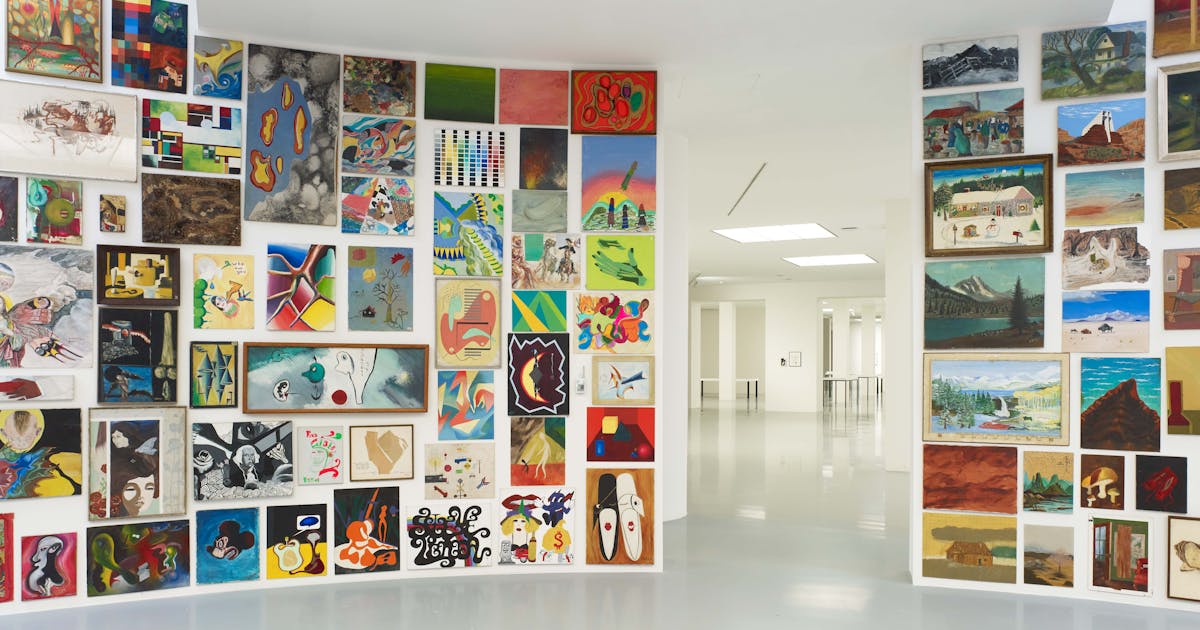
MAMBO Colección en escena #7 Desconfinamientos: Geografías afectivas en la Colección MAMBO - MAMBO El oráculo de la noche es la exposición individual de la artista colombiana María Isabel Rueda.
Art Collection

When Unease Becomes a Collection

At Serralves in Portugal, Vexation of Spirit brings together works collected over four decades around moral unease and historical awareness. What interests me is the idea that a collection can become more than a sequence of individual tastes. Over time, choices begin to reveal a way of looking at the world. The artworks may have been created independently, yet placing them together produces another layer of meaning. Collecting is also editing: deciding which voices should remain beside one another long enough for unexpected conversations to begin.

https://www.serralves.pt/en/ciclo-serralves/2605-colecao-duerckheim/

#Serralves #ContemporaryArt #PortugalArt #ArtCollection

serralves.pt Vexation of Spirit. The Duerckheim Collection x Serralves Vexation of Spirit brings the Duerckheim Collection to Serralves. Art, conflict, religion and society in dialogue with recent history.
Art History

Digging Through the Recent Past

Before the Eclipse looks back at art made in Mexico between 1981 and 1991 through archaeology, ecology, popular culture and the country’s move toward globalisation. I like the use of archaeology as a metaphor for such a recent period. We normally dig through centuries. Here only a few decades are enough to reveal that ideas about national identity can become historical layers surprisingly quickly.

https://www.museotamayo.org/en/exposiciones/ante-el-eclipse-arqueologias-del-arte-en-mexico

#MexicanArt #MuseoTamayo #ContemporaryArt #ArtHistory

museotamayo.org Before the Eclipse Jun 10, 2026 - Oct 18, 2026
Contemporary Art

Infinity Needs a Small Room

Yayoi Kusama’s mirrored rooms create the impression of endless space using surprisingly limited ingredients: mirrors, light and repetition. Dancing Lights That Flew Up to the Universe is currently part of Guggenheim Pop: 1960 to Now. What stays with me is the contradiction. Infinity is experienced inside a carefully bounded room. Perhaps scale has less to do with physical size than with what an image convinces the mind to continue.

https://www.guggenheim.org/exhibition/guggenheim-pop

#YayoiKusama #InstallationArt #InfinityRoom #ContemporaryArt

The Guggenheim Museums and Foundation Guggenheim Pop: 1960 to Now | The Guggenheim Museums and Foundation From Andy Warhol to Maurizio Cattelan, this exhibition features Pop art from the collection and its enduring influence on contemporary artists.
Animation

When Drawing Starts Moving

William Kentridge’s Shadow Procession turns simple silhouetted figures and objects into a moving procession. Some shapes transform almost absurdly: ordinary objects begin behaving like animals or vehicles. The means are deliberately visible and uncomplicated. That is what I like about it. Animation does not need realism to create life. Sometimes a cut-out shape moving across a wall can suggest more history, weight and emotion than a perfectly rendered digital figure.

‘Why Should I Hesitate: Putting drawings to work’ – Zeitz MOCAA hosts William Kentridge survey

#WilliamKentridge #Animation #ShadowArt #ContemporaryArt

Zeitz MOCAA 'Why Should I Hesitate: Putting drawings to work' - Zeitz MOCAA hosts William Kentridge survey - Zeitz MOCAA Cape Town, 25 August 2019: The largest ever survey exhibition by internationally acclaimed artist William Kentridge opens in Cape Town in August. This major exhibition will be hosted simultaneously in two parts by the Zeitz Museum of Contemporary Art Africa (Zeitz MOCAA), which will host his multi-media works; and at Norval Foundation, which will present […]
Contemporary Art

When Everyday Objects Become a Cosmos

Sarah Sze builds installations from ordinary objects, images, videos and fragments that can shift in scale from something almost microscopic to something architectural. Her work makes me think about how easily attention moves between those extremes now. We zoom into a screen, step back into a room, then return to a tiny detail. Perhaps scale is no longer only a property of objects. It has become a habit of looking.

https://www.fondationcartier.com/en/collection/artists/sarah-sze

#SarahSze #InstallationArt #Sculpture #ContemporaryArt

Fondation Cartier Sarah Sze | Collection of the Fondation Cartier pour l'art contemporain — Fondation Cartier pour l’art contemporain Welcome to the new premises of the Fondation Cartier pour l’art contemporain at 2 Place du Palais-Royal, Paris.
Chicago Art

The Garden That Wasn’t a Garden

Kerry James Marshall’s Many Mansions emerged partly from the contradiction he saw in Chicago public housing projects carrying names such as “Gardens.” The painting places an idealised landscape against the reality suggested by the housing blocks behind it. Names can be tiny pieces of architecture too. Call somewhere a garden and language begins constructing a place that may never actually exist.

https://www.artic.edu/files/aa3ebf14-5f78-489a-a75f-2613336d614d/TX-CR1103.pdf

#KerryJamesMarshall #Painting #ChicagoArt #ContemporaryArt

Contemporary Art

Hair Becomes a Line

Mona Hatoum made Composition with Circles using her own hair on handmade paper. At first the marks can simply look drawn. Knowing the material changes everything. The line once belonged to a body. Something normally cut away, swept up and discarded becomes evidence of physical presence. It is a remarkably small gesture, yet it makes the boundary between drawing and body difficult to locate.

https://shop.tate.org.uk/mona-hatoum-composition-with-circles-2016-framed/ed1029.html

#MonaHatoum #ContemporaryArt #Drawing #MaterialArt

Contemporary Art

A Sky Made From Fragments

Sarah Sze’s Tracing Fallen Sky combines steel, marble fragments, projected images and traces of the process that produced it. Physical objects and moving images overlap until it becomes difficult to decide where sculpture ends and image begins. I like that uncertainty. We increasingly experience the world through objects and screens simultaneously. Sze turns that ordinary condition into something we can actually stand inside.

https://www.fondationcartier.com/en/ways-to-visit/parcours-un-monde-reel

#SarahSze #InstallationArt #ContemporaryArt #MovingImage

Fondation Cartier Parcours « Un monde réel » — Fondation Cartier pour l’art contemporain L’un des volets de l’Exposition Générale met en avant les relations entre sciences, fiction et création artistique. Il réunit artistes et chercheurs qui tentent d’imaginer d’autres manières de percevoir et de représenter le réel.