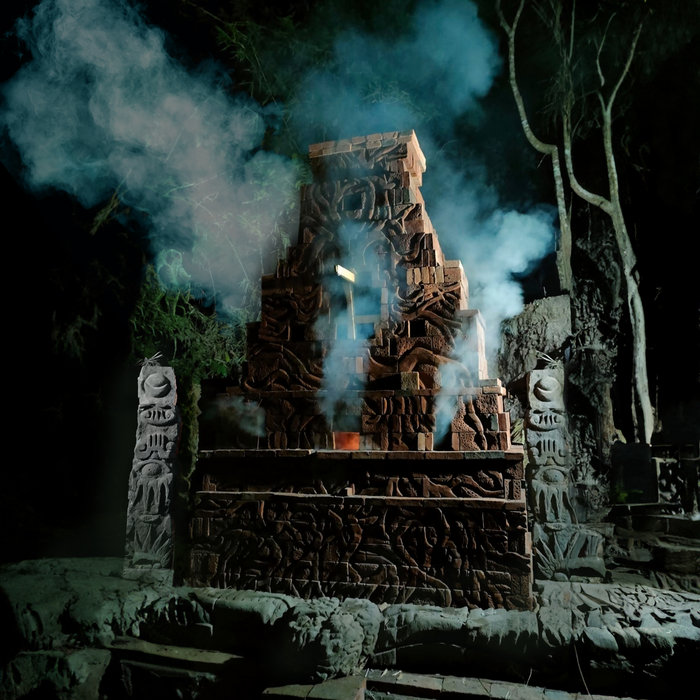
Indonesian experimental duo Senyawa have always blurred the distinction between instrument building and composition. For Vajranala, Wukir Suryadi took the form of a traditional Indonesian plough, the luku, and transformed it into a large bowed instrument. A smaller version was constructed for the recording sessions.
The album connects this instrument with mythology surrounding Pawon Temple in Central Java, natural cycles and ideas about how knowledge becomes power. The project extended beyond recorded sound into a physical monument built from thousands of carved red bricks and andesite stones.
What interests me most is the plough. An agricultural tool already contains rhythm: repetition, resistance, movement through material. Converting its form into an instrument does not simply create an exotic sound source. It shifts an object from producing lines in soil to producing vibrations in air.
That feels close to the best experimental music. The experiment is not merely a strange effect added after composition. It begins by questioning what an instrument can be in the first place.