Skip to content

Media Art

Art Stream
Art That Exists

Art That Exists by Disappearing

Taipei Fine Arts Museum’s online project Vanishing Acts runs through the end of 2026 as part of TFAM Net.Open. The title immediately raises an interesting problem for digital culture: what does disappearance mean when technology is supposed to make copying effortless?

Digital material appears infinitely reproducible, yet it can be surprisingly fragile. Servers close, software becomes incompatible, platforms disappear and links that once connected entire projects eventually return errors. A physical painting can decay, but its deterioration is visible. A digital artwork may remain theoretically perfect until the infrastructure required to experience it simply stops working.

That makes preservation a strange artistic question. Keeping a digital file is not necessarily enough. Sometimes you must preserve software, hardware, network behaviour, instructions or even an obsolete operating environment.

The internet encourages us to think that everything remains available somewhere. Digital art quietly demonstrates the opposite. An artwork can disappear without leaving an empty space on the wall.
https://www.tfam.museum/

#DigitalArt #TaiwanArt #NetArt #MediaArt

Auckland Art

Machines Performing Belief

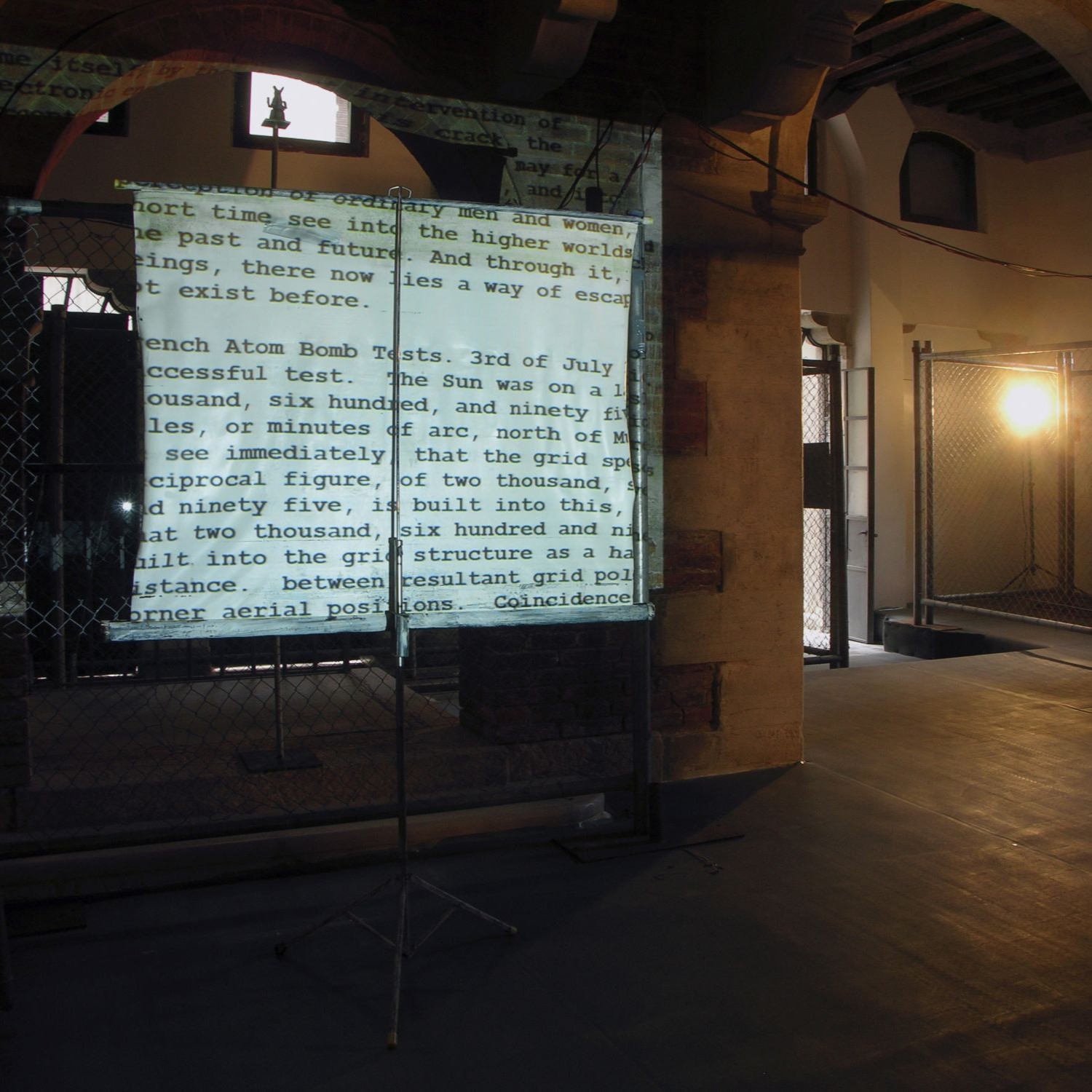
Twenty-one years after representing New Zealand at the Venice Biennale, et al.’s the fundamental practice is being shown in its entirety in Aotearoa for the first time. Five moving autonomous systems, computer-generated voices and sound form what feels like a dystopian orchestra. What interests me is how easily machines can borrow the language of authority. A synthetic voice does not need to understand an idea to repeat it convincingly. The work turns technology into a strange theatre of belief, obedience and doubt.

https://www.aucklandartgallery.com/connect/news-and-media/new-zealands-2005-venice-biennale-presentation-to-be-shown-in-aotearoa-for-the-first-time

#NewZealandArt #MediaArt #InstallationArt #AucklandArt

Auckland Art Gallery Toi o T?maki New Zealand’s 2005 Venice Biennale presentation to be shown in Aotearoa for the first time | Auckland Art Gallery Toi o T?maki New Zealand’s 2005 Venice Biennale presentation to be shown in Aotearoa for the first time.
Clouds Stayed Cory Arcangel

Mario Left, the Clouds Stayed

Cory Arcangel removed almost everything from Super Mario Bros. and left only the blue sky and slowly scrolling clouds. No Mario, coins, enemies or goal remain. A game becomes a quiet moving landscape. What fascinates me is how little information is needed before recognition disappears. Remove enough function from software and the interface stops being a tool. It becomes an image with a memory attached to it.

https://whitney.org/collection/works/20588.The

#CoryArcangel #DigitalArt #GameArt #MediaArt

Whitney Museum of American Art Cory Arcangel | Super Mario Clouds For this video installation, Cory Arcangel “hacked” a cartridge of Super Mario Brothers, the original version of the blockbuster Nintendo video game released in the United States in 1985. By tweaking the game’s code, the artist erased all of the sound and visual elements except the iconic scrolling clouds. On a formal level, the project is reminiscent of paintings that push representation toward abstraction: how many elements can be removed before the ability to discern the source is lost? Arcangel, who was trained in classical music, considers computers and video game consoles his instruments, and insists on mastering them prior to creative exploration; he will often learn a new programming language in order to develop a work. What might be viewed as nostalgia for the popular entertainments of an earlier era depends, in fact, on a rigorous conceptual approach to computer hard- and software as well as a refusal to participate in contemporary culture’s lightning-fast cycle of technological turnover.
Glitch Becomes the Structure

A Glitch Becomes the Structure

Joan Jonas built Vertical Roll around a television malfunction: the rolling bar that appeared when video signals fell out of sync. Instead of repairing the error, she performed with it. Her body appears fragmented by the unstable image while sound follows its rhythm. I keep returning to that decision. Technology often becomes creatively interesting at the exact point where it stops behaving as intended.

https://www.moma.org/collection/works/110544

#JoanJonas #VideoArt #PerformanceArt #MediaArt

Fluxus

When a Television Becomes a Line

Nam June Paik’s Zen for TV collapses the television picture into a single vertical line. A machine built to deliver constant information suddenly becomes almost empty. What interests me is that Paik did not reject television. He learned its electronics and changed its behaviour. Sometimes understanding a technology deeply enough allows you to make it do almost nothing, and that nothing becomes the artwork.

https://www.moma.org/collection/works/163792

#NamJunePaik #VideoArt #MediaArt #Fluxus