Skip to content

A Digital City Built From Real Change

Cameras Jasper Marsalis

Landscape Painting From Unsecured Cameras

Jasper Marsalis has made a contemporary landscape exhibition without travelling to photograph the landscapes himself.

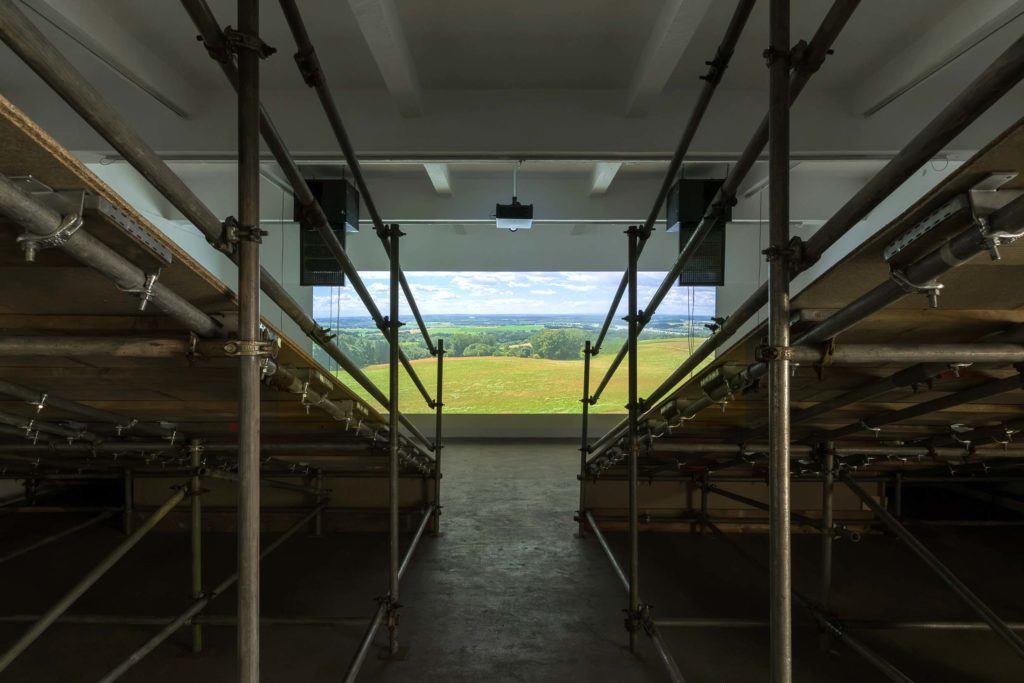
In Still Life, currently at Chisenhale Gallery in London until 6 September 2026, a large screen displays live images drawn from unsecured internet-connected cameras around the world.

Lakes appear. Roads. Hills. Parking lots. Agricultural spaces. Occasionally animals or people pass through.

An algorithm changes which cameras are shown, so the sequence is never completely predetermined. Four suspended speakers simultaneously transform live FM radio signals into slowly changing sound.

I find the landscapes strange precisely because nobody seems to be composing them.

Traditional landscape painting selects a viewpoint.

Photography selects a moment.

Marsalis inherits viewpoints selected by cameras installed for completely different reasons, then allows weather, daylight and whatever happens to pass through the frame to determine the image.

Compression errors become texture.

A slow camera turns movement into jumps.

Nightfall happens according to the actual location of a camera thousands of kilometres away.

The gallery therefore contains images that are live but geographically absent.

This is almost the reverse of cinematic control.

Nothing waits for the filmmaker.

The world keeps happening and the artwork briefly tunes into it.

https://flash—art.com/2026/07/jasper-marsalis-still-life-chisenhale-gallery-london/
#JasperMarsalis #VideoArt #NetworkArt #MovingImage

Landscape Painting From Unsecured Cameras Landscape Painting From Unsecured Cameras Flash Art Jasper Marsalis "Still Life" Chisenhale Gallery / London | | Flash Art Entering Chisenhale Gallery in London, a scaffolded passage opens onto a huge screen. On it a landscape scene appears, stays for thirty seconds or so, then changes to another. A lake. Hills. At night,
Contemporary Art

An Island That Refused a Border

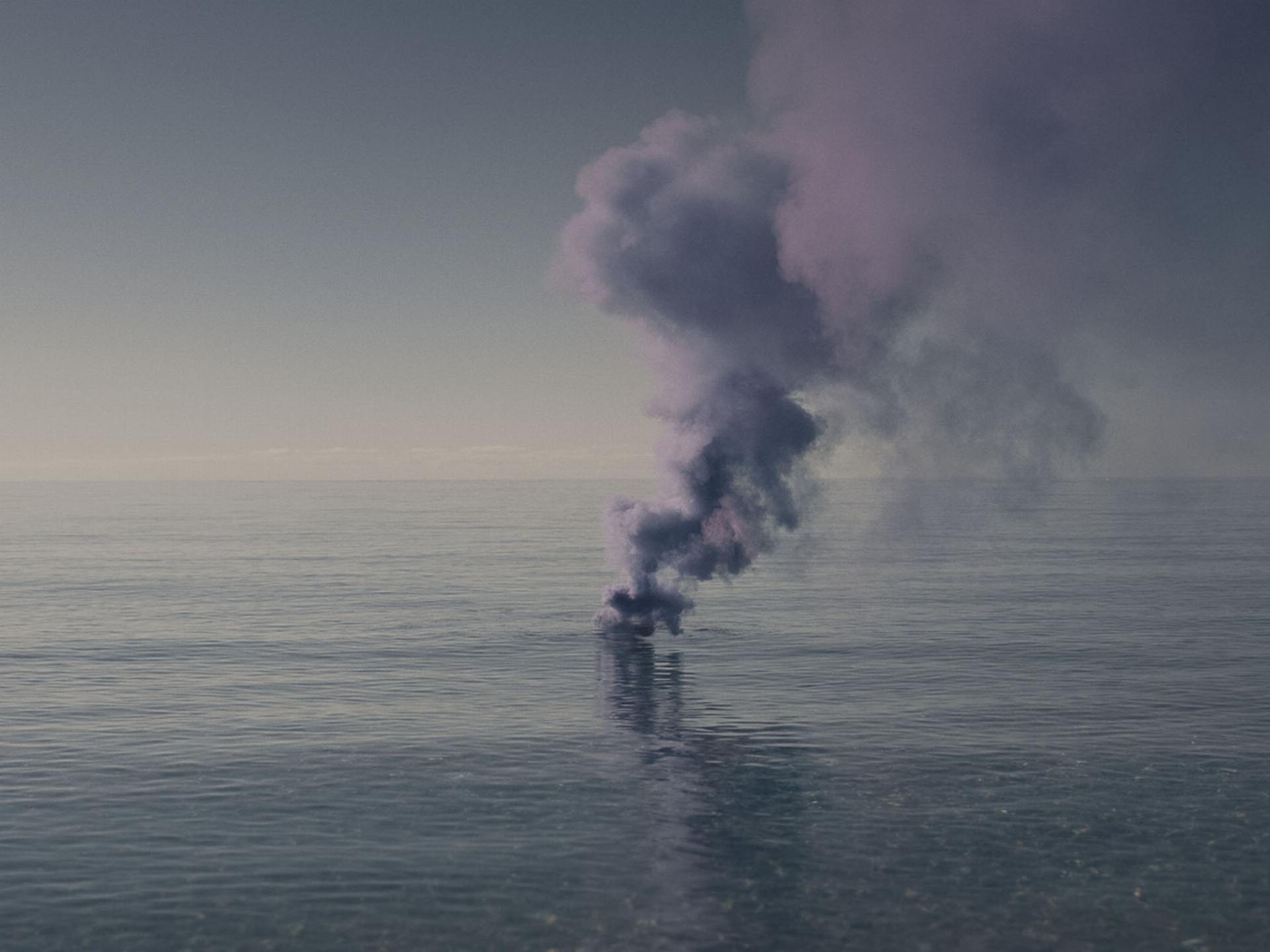
In 1831 an underwater volcanic eruption created a temporary island between Sicily and Tunisia. Britain, France, Spain and the Kingdom of the Two Sicilies quickly became interested in claiming it. Then the island disappeared beneath the Mediterranean again.

Elisa Giardina Papa turns this strange historical episode into She Flickered In and Out of History, a new 18-minute video installation currently at London’s ICA until 6 September 2026.

The work was filmed around Mount Etna, Stromboli and the submerged slopes of Mediterranean volcanic islands. It appears on a large freestanding LED screen alongside photographs and glass sculptures. A Sicilian spoken poem and an original score by duendita move through the images.

What interests me is that the island behaves almost like an impossible political object.

A territory normally becomes valuable because it stays where maps put it.

This one appeared, attracted competing claims of ownership, and then physically removed itself from the argument.

Video seems particularly suited to that story because moving image also refuses the stability of a photograph. Land emerges, changes, flickers and disappears.

Giardina Papa does not simply reconstruct the island as a forgotten historical curiosity. She lets geological time interfere with political time.

Governments can draw borders rapidly.

A volcano has another schedule.

There is something satisfying about a landscape that briefly enters European geopolitics and then sinks before anybody can permanently possess it.

Elisa Giardina Papa: She Flickered In and Out of History

#ElisaGiardinaPapa #VideoArt #MovingImage #ContemporaryArt

An Island That Refused a Border An Island That Refused a Border iiclondra.esteri.it Elisa Giardina Papa: She Flickered In and Out of History 17 July – 6 September 2026 at the Institute of Contemporary Arts (ICA) ICI London is proud to support She Flickered?In?and Out of History, a new video and?mixed-media?installation by interdisciplinary artist Elisa Giardina Papa (b. Italy;?lives and works in New York,?U.S.,?and?Sant’Ignazio, Sicily) at the Institute of Contemporary Arts (ICA). In 1831, an underwater volcanic eruption […]
Antwerp Art

Not Knowing as a Working Method

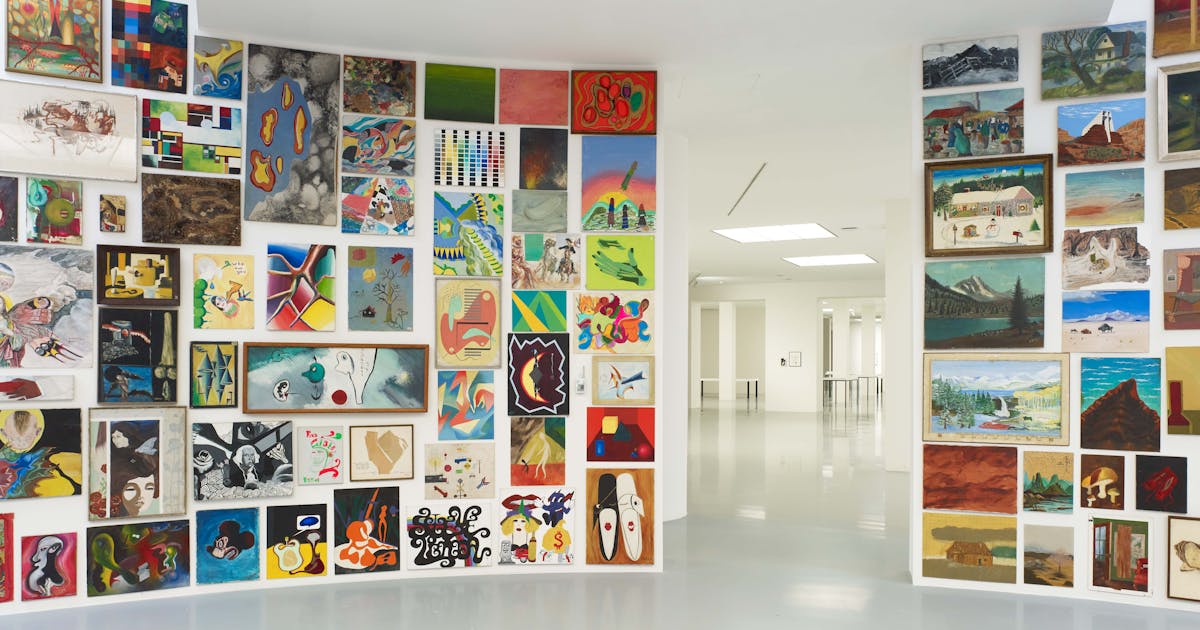
Jürgen Addiers opened I Have No Idea What I Am Doing at M HKA in Antwerp on 28 August 2026.

The exhibition combines painting, installation, neon and video, but its title may be the most interesting material in the room. The sentence itself becomes a physical sculpture made from metal spheres suspended from the ceiling.

The museum describes uncertainty not as failure but as a position from which experimentation and curiosity can begin.

I like that because creative culture usually tells the opposite story after the fact.

An exhibition makes an artist’s process look inevitable.

Finished works stand in carefully chosen positions.

A text explains the connections.

The uncertainty that produced them has disappeared.

Anyone who actually makes things knows how misleading that can be.

You try something.

It fails.

Another accident becomes useful.

A technical limitation changes the direction.

You discover the idea while making the object supposedly based on the idea.

“I have no idea what I am doing” therefore does not necessarily describe incompetence.

It can describe the moment before a procedure hardens into habit.

Knowing exactly what will happen is efficient.

Not knowing may be where the new work begins.

https://www.muhka.be/en/exhibitions/jurgen-addiers-i-have-no-idea-what-i-am-doing/

#JurgenAddiers #ContemporaryArt #AntwerpArt #InstallationArt

Not Knowing as a Working Method Not Knowing as a Working Method M HKA Jürgen Addiers: I Have No Idea What I Am Doing | M HKA The M HKA is a museum for contemporary art, film and visual culture in its widest sense.
Experimental Film

The Film Is Slowly Destroying Itself

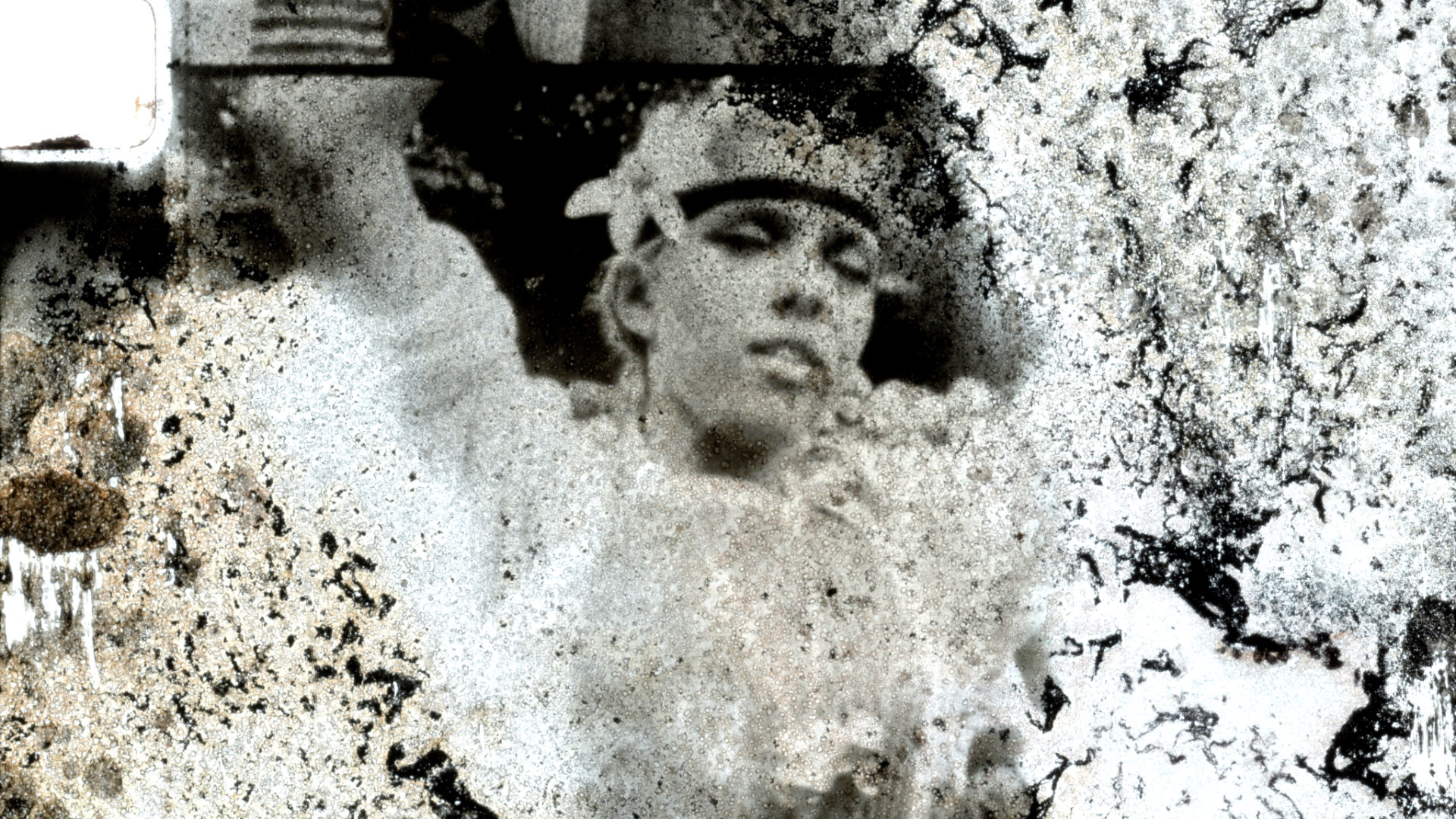
Panu Johansson’s Wherever Street Piece begins with anonymous 16mm footage he rescued from being thrown away in the early 2000s.

Nobody appears to know exactly who filmed it. The material seems to have been recorded in several countries between roughly 1965 and 1975.

Johansson transferred the footage onto high-contrast Kodak 3378 sound-recording film and then treated it frame by frame with chemicals that erode the emulsion. The resulting two-channel moving-image installation was shown at Turku Art Museum in 2026.

That physical destruction interests me because archive culture usually tries to achieve the opposite.

Preserve the image.

Stabilise the film.

Remove scratches.

Recover detail.

Johansson deliberately damages the copy.

Memory becomes visible partly through information disappearing.

Digital editing makes it easy to simulate scratches, dust and chemical damage, but there is a conceptual difference when the process genuinely changes the film material.

The image cannot simply be reset.

Each intervention becomes part of that copy’s history.

Found footage already contains an absence because we do not know the people who made it.

Eroding the image adds another kind of disappearance.

We see the past while watching the material that carries it slowly refuse to preserve everything.

https://turuntaidemuseo.fi/en/nayttelyt/panu-johansson

#PanuJohansson #VideoArt #FoundFootage #ExperimentalFilm

The Film Is Slowly Destroying Itself The Film Is Slowly Destroying Itself Turun Taidemuseo Panu Johansson: Wherever Street Piece | Turku Art Museum Wherever Street Piece (2025) is a found footage work which portrays fragmented memories that cannot be directly linked to any single person’s life.
Accessibility

Captions Become Part of the Choreography

Carolyn Lazard’s current exhibition Long Take, at Stanford’s Cantor Arts Center until 13 December 2026, begins with dance but quickly moves beyond the idea that a video simply records a performance.

The central work Leans, Reverses was developed with dancer Jerron Herman and poet and artist Joselia Rebekah Hughes. The project exists through a dance performance, its recording, a choreographic score, captions and audio description. Three monitors can display black fields while text describes sounds or movements that are not necessarily visible in the conventional way.

What interests me is that accessibility is not added after the artwork is finished.

It becomes one of the materials from which the artwork is built.

Captions normally occupy the edge of moving-image culture.

We switch them on when necessary.

Lazard moves them toward the centre.

A phrase describing a movement becomes another version of that movement.

Audio description creates another performance through language.

The recorded image is no longer automatically treated as the most complete version.

That is a surprisingly radical idea for video art.

A camera does not necessarily preserve the work better than words.

Each translation loses something.

Each translation can also create something that was not visible before.

https://museum.stanford.edu/exhibitions/carolyn-lazard-long-take

#CarolynLazard #VideoArt #MovingImage #Accessibility

Captions Become Part of the Choreography Captions Become Part of the Choreography museum.stanford.edu Carolyn Lazard’s current exhibition Long Take, at Stanford’s Cantor Arts Center until 13 December 2026, begins with dance but quickly moves...
Cao Fei

A Digital City Built From Real Change

Cao Fei’s work has repeatedly used moving image, virtual worlds and digital culture to examine the speed of social change in China.

Her major current exhibition Testimonies to the Near Future opened at Kunstmuseum Basel | Gegenwart on 28 August 2026. The museum describes it as her first solo exhibition in Switzerland and her largest retrospective in Europe to date. Videos, digital environments, photography, sculpture and immersive installations are arranged so that the museum itself begins to resemble a city.

That seems particularly appropriate for Cao Fei.

Her moving-image work rarely treats digital space as something separate from ordinary life.

Factories, cosplay, online identities, architecture and imagined cities keep crossing into one another.

What interests me is how quickly work like this changes historically.

A virtual world that once appeared futuristic can become technologically obsolete within a decade.

But the social behaviour recorded inside it may become more recognisable.

That gives contemporary video art a strange double clock.

The technology ages rapidly.

The human desire to escape, perform another identity, build communities and imagine a different city does not.

Perhaps that is why digital art does not always need to remain technologically current.

Sometimes outdated technology becomes the evidence showing how recently our idea of the future looked completely different.

https://www.museenbasel.ch/en/museen/kunstmuseum-basel-gegenwart/cao-fei

#CaoFei #VideoArt #DigitalArt #MovingImage

A Digital City Built From Real Change A Digital City Built From Real Change museenbasel.ch Cao Fei The Chinese artist Cao Fei (born 1978, Guangzhou) is one of the defining voices of her generation. Through videos, digital media, photograph
Electronic Music

A Trumpet That Forgot It Was a Trumpet

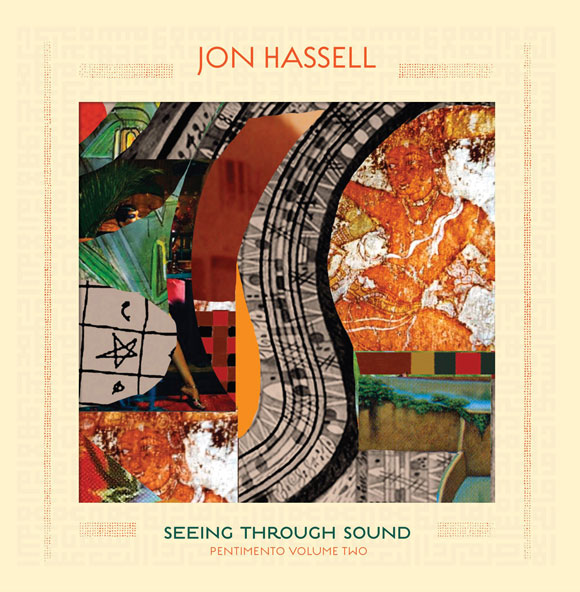
Jon Hassell transformed trumpet playing by combining techniques influenced by Indian classical singing with electronic processing.

On Vernal Equinox, first released in 1977, the trumpet can become difficult to locate inside the music. It bends between pitches, passes through effects and sits among percussion, synthesizer drones, environmental recordings and other textures. Hassell later developed the term “Fourth World” for the broader musical territory he was pursuing.

What I like is that the electronics do not simply decorate the trumpet.

They destabilise its identity.

We still recognise breath and phrasing, but the instrument begins behaving like something between voice, wind instrument and synthesizer.

That seems more interesting than using effects to make an acoustic instrument merely larger.

Hassell used processing to make the source ambiguous.

Contemporary software gives us endless tools for transforming recorded instruments, but the artistic question remains the same.

How much identity should survive?

Process too little and the source remains predictable.

Process too much and its physical origin disappears completely.

Hassell often seems to occupy the unstable space between those extremes.

You hear a human breath entering the system.

What comes out no longer belongs entirely to the trumpet.

Discography

#JonHassell #FourthWorld #Trumpet #ElectronicMusic

A Trumpet That Forgot It Was a Trumpet A Trumpet That Forgot It Was a Trumpet Jon Hassell Discography - Jon Hassell Discography
Afrofuturism

Detroit Techno Built an Underwater Civilization

Drexciya did more than release electro and techno records.

Across titles, sleeve notes and an intentionally mysterious identity, the project constructed an underwater mythology around the descendants of pregnant African women thrown overboard during the transatlantic slave trade. Within the fiction, their unborn children adapted to breathing underwater and founded the civilization of Drexciya.

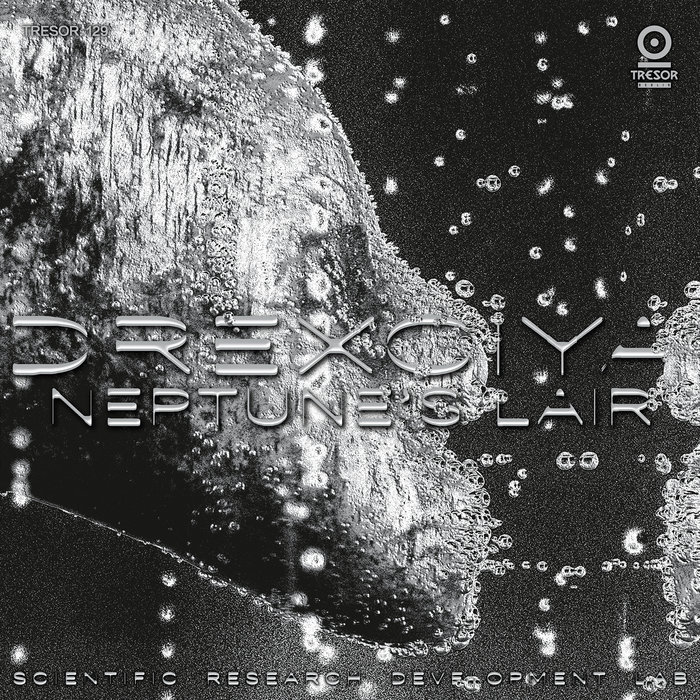
By Neptune’s Lair in 1999, track titles such as “Hydro Theory,” “Aquatic Bata Particles,” “Lost Vessel” and “Draining of the Tanks” made the album feel almost like an expedition through that invented world. Tresor describes Drexciya’s catalogue as both music and a self-made mythic universe that went on to influence generations.

What fascinates me is how little exposition was necessary.

There is no conventional science-fiction film explaining the story.

The world grows from fragments.

Track names.

Artwork.

Anonymous identities.

Electronic sounds.

That forces the listener to construct much of Drexciya independently.

Electronic music is particularly suited to this kind of world-building because instrumental sounds do not need to describe a place literally.

A filtered sequence can become sonar.

A bassline can suggest pressure.

A metallic percussion hit can become machinery at the bottom of an ocean.

The studio becomes not only a place for producing tracks.

It becomes a place for producing geography.

https://tresorberlin.bandcamp.com/album/neptunes-lair

#Drexciya #DetroitTechno #Electro #Afrofuturism

Detroit Techno Built an Underwater Civilization Detroit Techno Built an Underwater Civilization Tresor Records Neptune's Lair, by Drexciya 21 track album
Electronic Music

SOPHIE Designed Materials That Never Existed

SOPHIE often talked about synthesis in physical terms.

Rather than asking how to imitate a conventional instrument, the producer thought about materials: bubbles, latex, metal, liquid, plastic. Sounds could behave as though they possessed weight, elasticity, friction or surface.

That approach is part of why tracks such as “BIPP,” “LEMONADE” and “HARD” still sound so distinctive. Much of the percussion does not convincingly resemble acoustic percussion at all. It suggests imaginary objects being squeezed, struck, stretched or shattered.

SOPHIE’s brother and studio engineer Ben Long later described the same way of working: sounds would be discussed in terms such as needing more fizz or more bubbles. He also noted that SOPHIE preferred working deeply with a relatively small set of tools rather than endlessly collecting plug-ins.

That seems important.

Synthesis is often taught as reconstruction.

Here is how to synthesise a kick.

Here is how to synthesise brass.

Here is how to reproduce a bass guitar.

SOPHIE’s work points toward a more interesting question.

What if the object producing the sound has never existed?

Then synthesis becomes almost sculptural.

You are not reproducing reality.

You are deciding what an impossible material would sound like if somebody hit it.

#SOPHIE #SoundDesign #Synthesis #ElectronicMusic

SOPHIE Designed Materials That Never Existed SOPHIE Designed Materials That Never Existed Apple Music - Web Player Product by SOPHIE on Apple Music Album · 2015 · 8 Songs
Black Origami

Rhythm Folded Like Paper

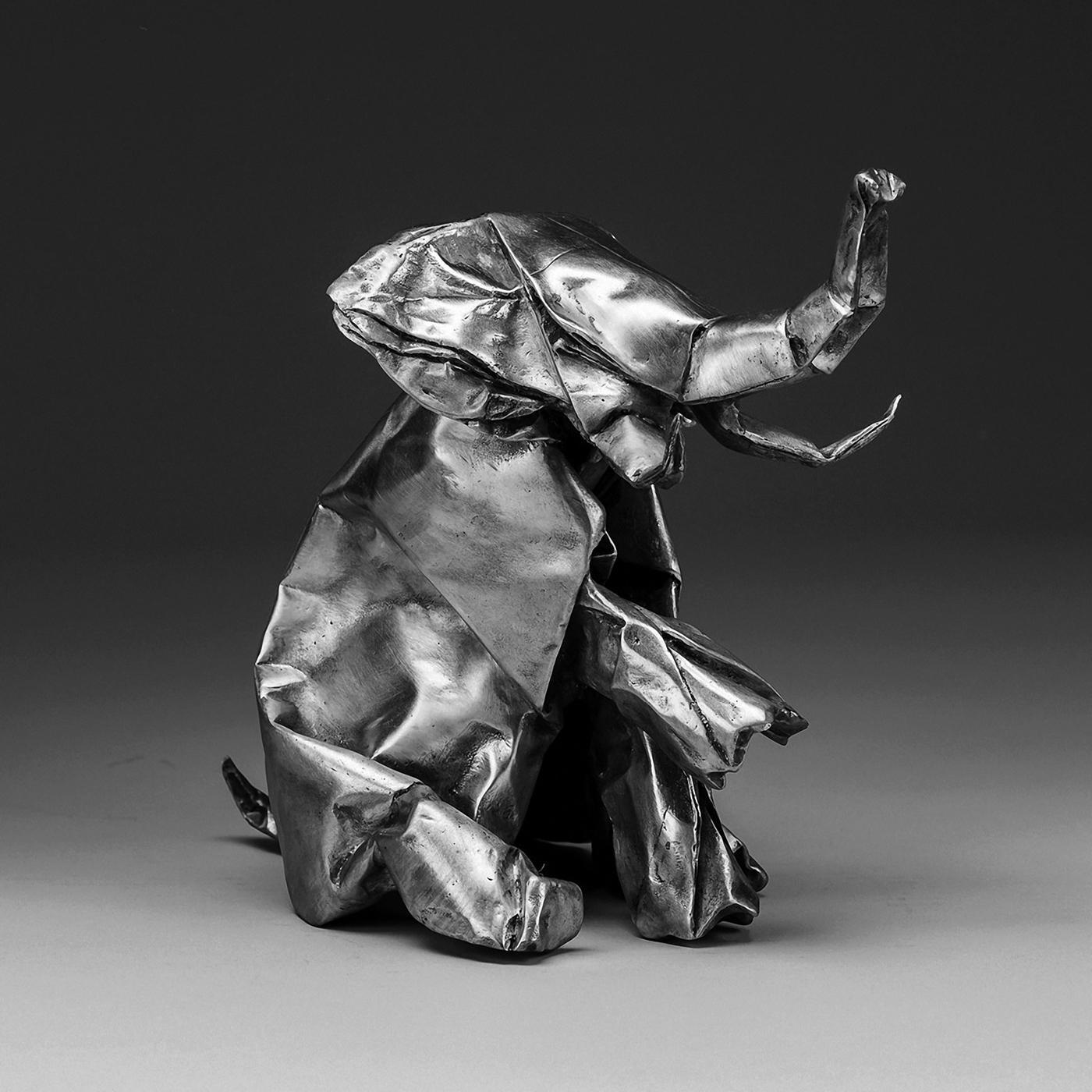
Jlin described the idea behind Black Origami by comparing composition to folding paper into increasingly complex shapes. In her version, sound replaces paper.

That metaphor becomes especially convincing when listening to the rhythms.

Patterns appear to fold into one another. Accents move away from the places where a conventional club groove might put them. Percussion can feel simultaneously organised and unstable.

Movement was not an accidental association. Jlin has explained that her collaboration with Indian dancer Avril Stormy Unger influenced the album directly, including the track “Carbon 7.”

This interests me because rhythm is often visualised horizontally.

A DAW gives us a timeline.

Beats move from left to right.

Jlin’s music makes me imagine rhythm differently, almost as an object being bent and refolded.

A sound that seemed to belong to one pattern suddenly becomes part of another.

That is a useful way to think about complex sequencing.

Instead of asking only where the next drum hit should go, ask what happens if the whole rhythmic shape is folded somewhere unexpected.

Complexity then does not have to mean adding more notes.

It can mean changing the geometry between the notes already there.

Black Origami

#Jlin #BlackOrigami #ElectronicRhythm #Percussion

Rhythm Folded Like Paper Rhythm Folded Like Paper planet.mu planet mu · Black Origami Mu are very excited to announce Jlin's long awaited second album “Black Origami”. A percussion-led tour de force, it's a creation that seals her reputation as a unique producer with an exceptional ability to make riveting rhythmic music.
Contemporary Jazz

Ten Pieces, One Continuous Pulse

Nala Sinephro’s Endlessness consists of ten pieces, yet a continuous arpeggio runs through the entire forty-five-minute album. Around it, modular synthesizer, pedal harp, saxophones, drums and a twenty-one-piece string ensemble continually change the surrounding space.

That continuous figure interests me because repetition here does not make the album static.

It gives everything else something to move against.

A repeated arpeggio can operate like a grid, but Sinephro does not use it to make the music feel mechanically organised. At times it is obvious. Elsewhere it seems to sink beneath strings or improvisation until you notice that the pulse has never actually disappeared.

This changes the way time works across the album.

Instead of ten tracks starting and stopping, Endlessness feels like one environment whose weather keeps changing.

Electronic music often builds continuity through loops. Jazz often values responsiveness and change. Sinephro allows those two principles to occupy the same piece.

The loop does not prevent improvisation.

It gives improvisation a horizon.

I like that as a compositional idea because it suggests that repetition does not necessarily mean saying the same thing again.

Sometimes repetition is simply the fixed point that lets everything around it reveal how much it has changed.

https://nalasinephro.com/release/465342-nala-sinephro-endlessness

#NalaSinephro #Endlessness #ModularSynth #ContemporaryJazz

Ten Pieces, One Continuous Pulse Ten Pieces, One Continuous Pulse nalasinephro.com Nala Sinephro’s Endlessness consists of ten pieces, yet a continuous arpeggio runs through the entire forty-five-minute album. Around it, modular...