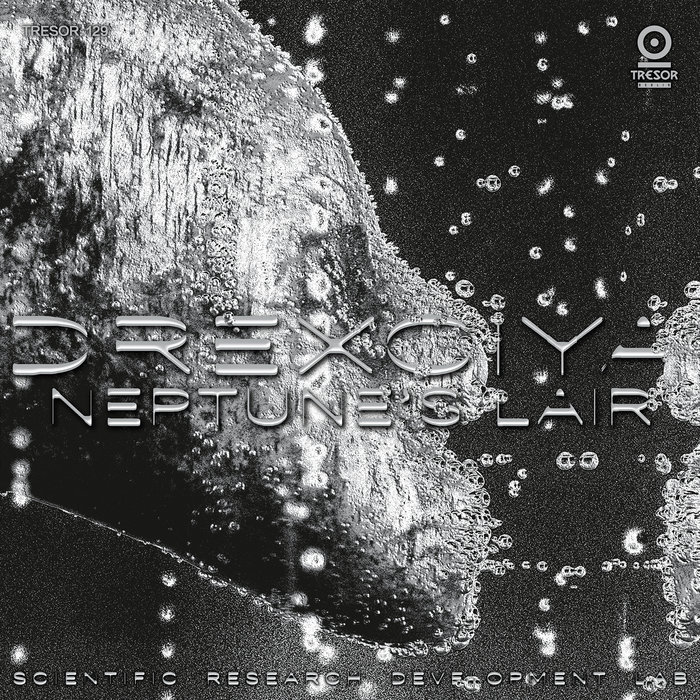
Drexciya did more than release electro and techno records.
Across titles, sleeve notes and an intentionally mysterious identity, the project constructed an underwater mythology around the descendants of pregnant African women thrown overboard during the transatlantic slave trade. Within the fiction, their unborn children adapted to breathing underwater and founded the civilization of Drexciya.
By Neptune’s Lair in 1999, track titles such as “Hydro Theory,” “Aquatic Bata Particles,” “Lost Vessel” and “Draining of the Tanks” made the album feel almost like an expedition through that invented world. Tresor describes Drexciya’s catalogue as both music and a self-made mythic universe that went on to influence generations.
What fascinates me is how little exposition was necessary.
There is no conventional science-fiction film explaining the story.
The world grows from fragments.
Track names.
Artwork.
Anonymous identities.
Electronic sounds.
That forces the listener to construct much of Drexciya independently.
Electronic music is particularly suited to this kind of world-building because instrumental sounds do not need to describe a place literally.
A filtered sequence can become sonar.
A bassline can suggest pressure.
A metallic percussion hit can become machinery at the bottom of an ocean.
The studio becomes not only a place for producing tracks.
It becomes a place for producing geography.