Skip to content

Moog

Art Stream
Berlin School

The Moog That Would Not Stay in Tune

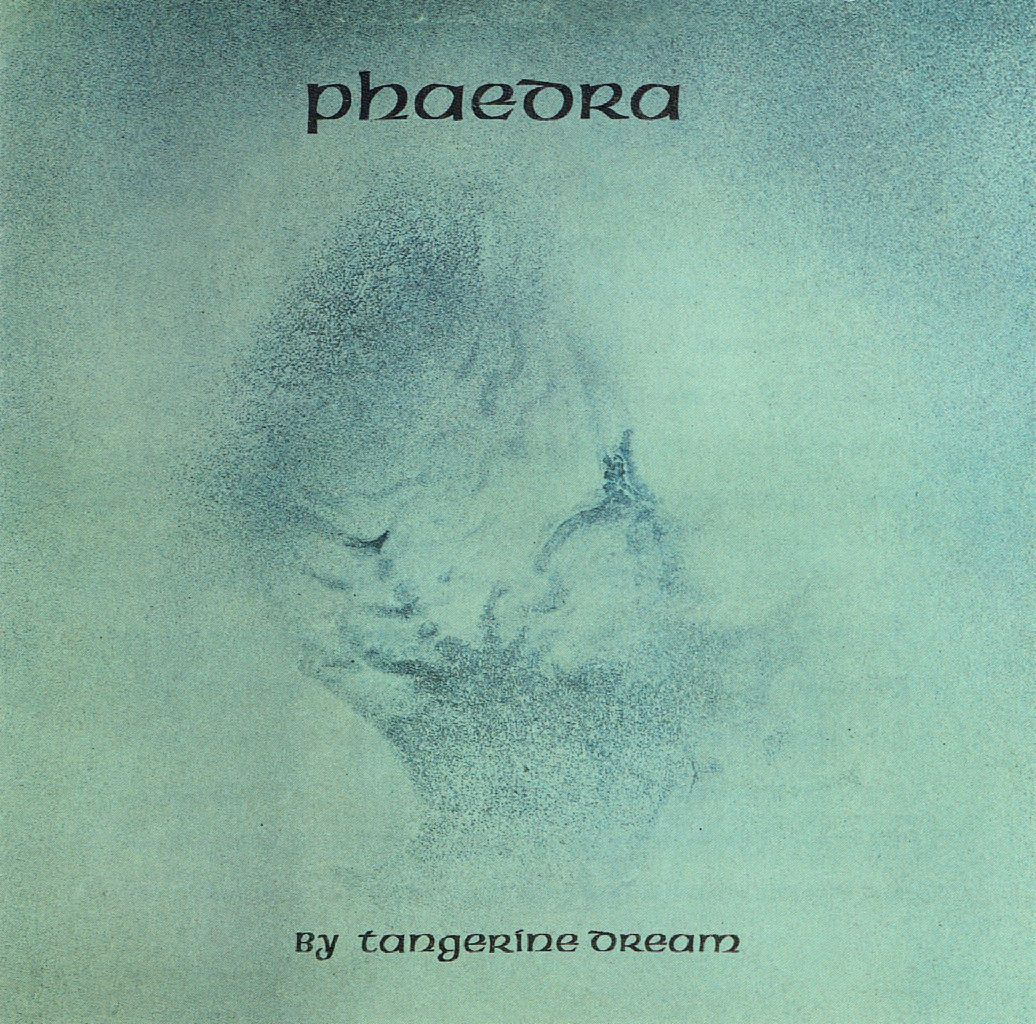
Tangerine Dream’s Phaedra is remembered as one of the records that established the sequencer-driven language later associated with the Berlin School. One of its defining sounds, however, emerged partly because the technology refused to behave.

The group recorded Phaedra at The Manor in England in November 1973, using a recently acquired Moog modular synthesizer. According to Tangerine Dream’s own account, the recording sessions were technically difficult and the musicians were still learning how to use the machine. During the title track, the Moog’s oscillators drifted in pitch as the synthesizer warmed up. Instead of discarding the unstable sequence, they kept it.

That detail changes how I hear the piece.

The sequence seems to move with a strange organic instability. It does not behave like a perfectly repeating digital pattern because it literally cannot remain perfectly stable.

Modern synthesizers solve this problem for us. Oscillators stay in tune. Sessions reopen exactly where we left them. Automation can reproduce every movement.

That reliability is enormously useful, but Phaedra reminds me that technical failure can occasionally produce musical character more interesting than technical perfection.

The synthesizer was supposed to repeat a pattern.

Instead, temperature became a modulation source.

https://www.tangerinedreammusic.com/en/music/detail.asp?id=12&tit=Phaedra
#TangerineDream #Phaedra #Moog #BerlinSchool

The Moog That Would Not Stay in Tune The Moog That Would Not Stay in Tune tangerinedreammusic.com Phaedra This is the first Tangerine Dream album to feature their now classic sequencer-driven sound, which later became known as their trademark and of the ...
Facebook LinkedIn WhatsApp Threads
More sharing options
X Reddit Pinterest Telegram Email
Annette Peacock

Putting the Voice Through a Moog

Around 1970, Annette Peacock was doing something with synthesizers that still feels surprisingly modern: using a Moog modular system to process her voice in real time.

The Bob Moog Foundation documents how Peacock and pianist Paul Bley toured Europe with an ARP synthesizer and Moog modules, with Peacock using the Moog specifically for vocal modification.

That is quite different from simply singing alongside a synthesizer.

Her voice itself entered the electronic system.

By the time I’m the One appeared in 1972, Peacock had developed a music in which jazz, electronics, rock, improvisation and manipulated vocals refused to settle into a comfortable category.

What interests me is how early this was.

Today a vocalist can open a laptop and choose from pitch correction, spectral processors, vocoders, formant shifting, granular effects and hundreds of plug-ins designed specifically for the voice.

Peacock was experimenting when electronic processing still meant understanding patch cables, oscillators and signal paths well enough to make the equipment cooperate.

The voice is usually treated as the most human element in a recording.

Peacock seems to have realised very early that this made it the perfect thing to make strange.

Electronic music history remembers many synthesizer players.

It should remember more clearly the people who asked what would happen if the synthesizer started playing the singer.

https://www.universalmusic.fr/artistes/20000043831

#AnnettePeacock #Moog #VoiceProcessing #ExperimentalMusic

Putting the Voice Through a Moog Putting the Voice Through a Moog universalmusic.fr Annette Peacock - Universal Music France Tout sur Annette Peacock : news, biographie, discographie, photos, clips, vidéos, paroles, boutique...
Facebook LinkedIn WhatsApp Threads
More sharing options
X Reddit Pinterest Telegram Email
Bach Had

Bach Had to Be Built Note by Note

When Switched-On Bach appeared in 1968, the Moog synthesizer was still far from the convenient polyphonic instrument we now associate with keyboards. Wendy Carlos worked closely with Robert Moog and used multitrack recording to construct Bach’s polyphonic music from an electronic instrument that could produce only limited musical information at once. Carlos even built her own eight-track recording machine.

That means a piece that a pianist can perform with ten fingers became something closer to architectural construction.

Voice after voice had to be recorded and fitted together.

Today we can place an orchestral sample library on one MIDI track and play an entire arrangement immediately. Carlos faced almost the reverse situation: extraordinary control over timbre but painfully limited simultaneous performance.

The limitation forced listening at another level.

If every line has to be built separately, orchestration stops being an abstract concept. You have to decide what every note actually is.

Switched-On Bach is often remembered because it helped bring the Moog into popular consciousness. I find the production process more interesting.

Carlos was not using technology to make music easier.

She was using an impossibly cumbersome machine because it allowed music to sound like something that had barely existed before.

https://www.wendycarlos.com/biog.html

#WendyCarlos #Moog #SwitchedOnBach #ElectronicMusic

Bach Had to Be Built Note by Note Bach Had to Be Built Note by Note wendycarlos.com Wendy Carlos Biography A biography of the composer and electronic synthesizer pioneer.
Facebook LinkedIn WhatsApp Threads
More sharing options
X Reddit Pinterest Telegram Email