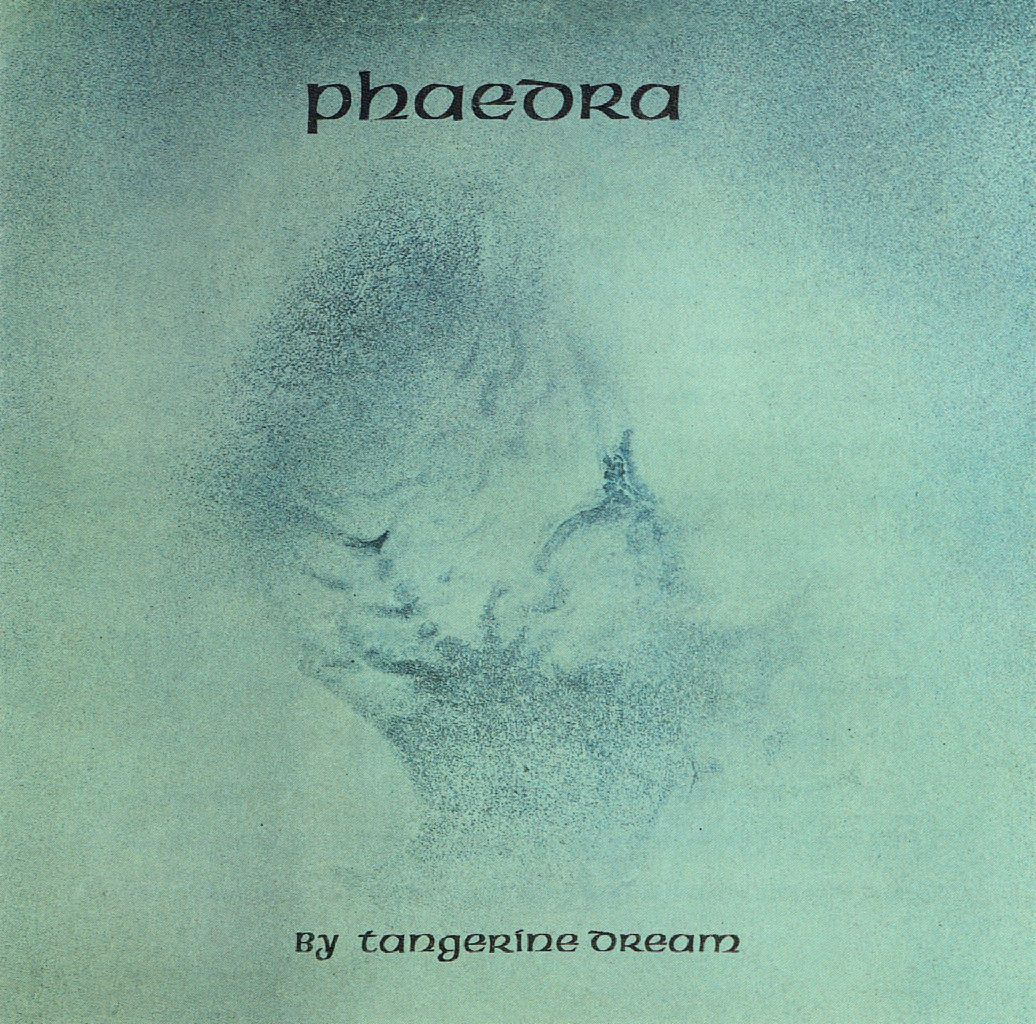
Tangerine Dream’s Phaedra is remembered as one of the records that established the sequencer-driven language later associated with the Berlin School. One of its defining sounds, however, emerged partly because the technology refused to behave.
The group recorded Phaedra at The Manor in England in November 1973, using a recently acquired Moog modular synthesizer. According to Tangerine Dream’s own account, the recording sessions were technically difficult and the musicians were still learning how to use the machine. During the title track, the Moog’s oscillators drifted in pitch as the synthesizer warmed up. Instead of discarding the unstable sequence, they kept it.
That detail changes how I hear the piece.
The sequence seems to move with a strange organic instability. It does not behave like a perfectly repeating digital pattern because it literally cannot remain perfectly stable.
Modern synthesizers solve this problem for us. Oscillators stay in tune. Sessions reopen exactly where we left them. Automation can reproduce every movement.
That reliability is enormously useful, but Phaedra reminds me that technical failure can occasionally produce musical character more interesting than technical perfection.
The synthesizer was supposed to repeat a pattern.
Instead, temperature became a modulation source.
https://www.tangerinedreammusic.com/en/music/detail.asp?id=12&tit=Phaedra