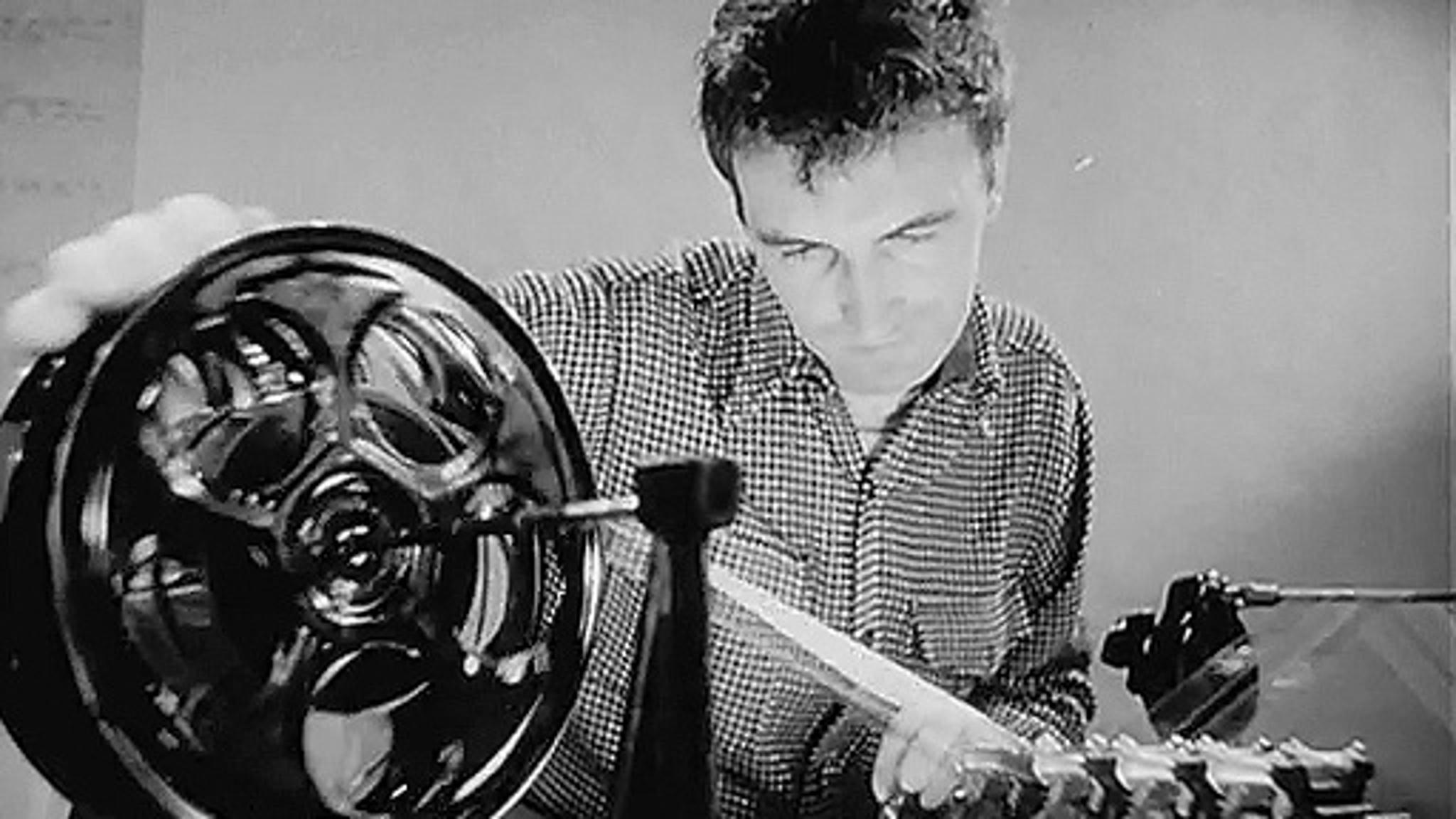
Norman McLaren discovered that sound on film did not necessarily have to be recorded with a microphone.
Optical film sound converts visual information on the soundtrack area of a film strip into audio. McLaren realised that if the system was reading shapes, he could create those shapes himself. He drew and scratched patterns directly into the optical soundtrack area and produced synthetic sounds without first generating them acoustically. The National Film Board’s Pen Point Percussion demonstrates exactly how the process works.
I love the directness of this.
Normally sound becomes an image only after software analyses it as a waveform or spectrum.
McLaren could move in the opposite direction.
Draw the image.
Hear what it sounds like.
That collapses animation and electronic composition into the same physical material.
A mark can simultaneously belong to cinema and music.
For contemporary audiovisual artists this remains a surprisingly useful idea. We often synchronise completed audio and completed visuals afterwards.
McLaren’s process suggests something deeper.
Design one system capable of generating both.
When sound and image share a source, synchronisation stops being an effect.
It becomes part of their anatomy.