Skip to content

Belgian Art

Art Stream
Abstraction

Colour Returning From the Shadows

Germaine Rimbout is currently the subject of Poetry. Color. Movement at the Royal Museums of Fine Arts of Belgium in Brussels, running until 18 October 2026.

The exhibition describes her as a figure who remained in the shadows for a long time.

Born in 1894, Rimbout worked through influences from Cubism and Fauvism before moving after the Second World War toward freer abstraction and increasingly adventurous colour.

The rediscovery itself interests me because museum history can give us a distorted impression of how artistic importance works.

We walk through permanent collections and easily assume that the artists on the walls were always the obvious ones.

They were not.

Collections are edited histories.

Visibility can depend on gender, geography, institutions, collectors and which works happened to survive inside accessible archives.

Rimbout’s drawings and paintings did not suddenly acquire colour in 2026.

What changed was attention.

There is something useful in that for anyone making art.

Recognition and artistic development operate on completely different clocks.

A work can be finished while its audience is still decades away.

The current Brussels presentation is therefore not simply retrospective.

It is another reminder that art history remains unfinished because someone can always reopen the storage room and discover that the story was missing a chapter.

https://fine-arts-museum.be/en/exhibitions/germaine-rimbout-poetry-color-movement

#GermaineRimbout #BelgianArt #Abstraction #RediscoveredArtists

Colour Returning From the Shadows Colour Returning From the Shadows fine-arts-museum.be Germaine Rimbout is currently the subject of Poetry. Color. Movement at the Royal Museums of Fine Arts of Belgium in Brussels, running until 18...
Belgian Art

Sculpture That Refuses to Stay Rigid

Tapta began in textile art, but gradually pushed weaving away from the wall.

Ropes were twisted, knotted and extended into space. Viewers could move around them and, in some installations, enter the structures themselves. During the 1980s she made an even stranger material shift, replacing woven fibres with neoprene, the synthetic rubber more commonly associated with industrial and protective applications.

Yet the underlying idea remained remarkably consistent.

Tapta called attention to flexible sculpture.

That phrase seems almost contradictory because sculpture has historically been associated with solidity: stone, bronze, wood, objects expected to maintain their shape.

Tapta chose materials that bend.

A neoprene form can sag, curve, lean or respond visually to gravity without pretending to be permanent in the way marble does.

I like that because it changes the relationship between material and authority.

Rigid sculpture often seems to declare exactly what shape it is.

Flexible material leaves open the possibility that another configuration exists.

Tapta spent much of her career teaching in Brussels, yet her international recognition remained more limited than that of many artists exploring related questions of space and material.

Recent exhibitions have started correcting that imbalance.

The work did not become more relevant.

The history around it finally became more flexible.
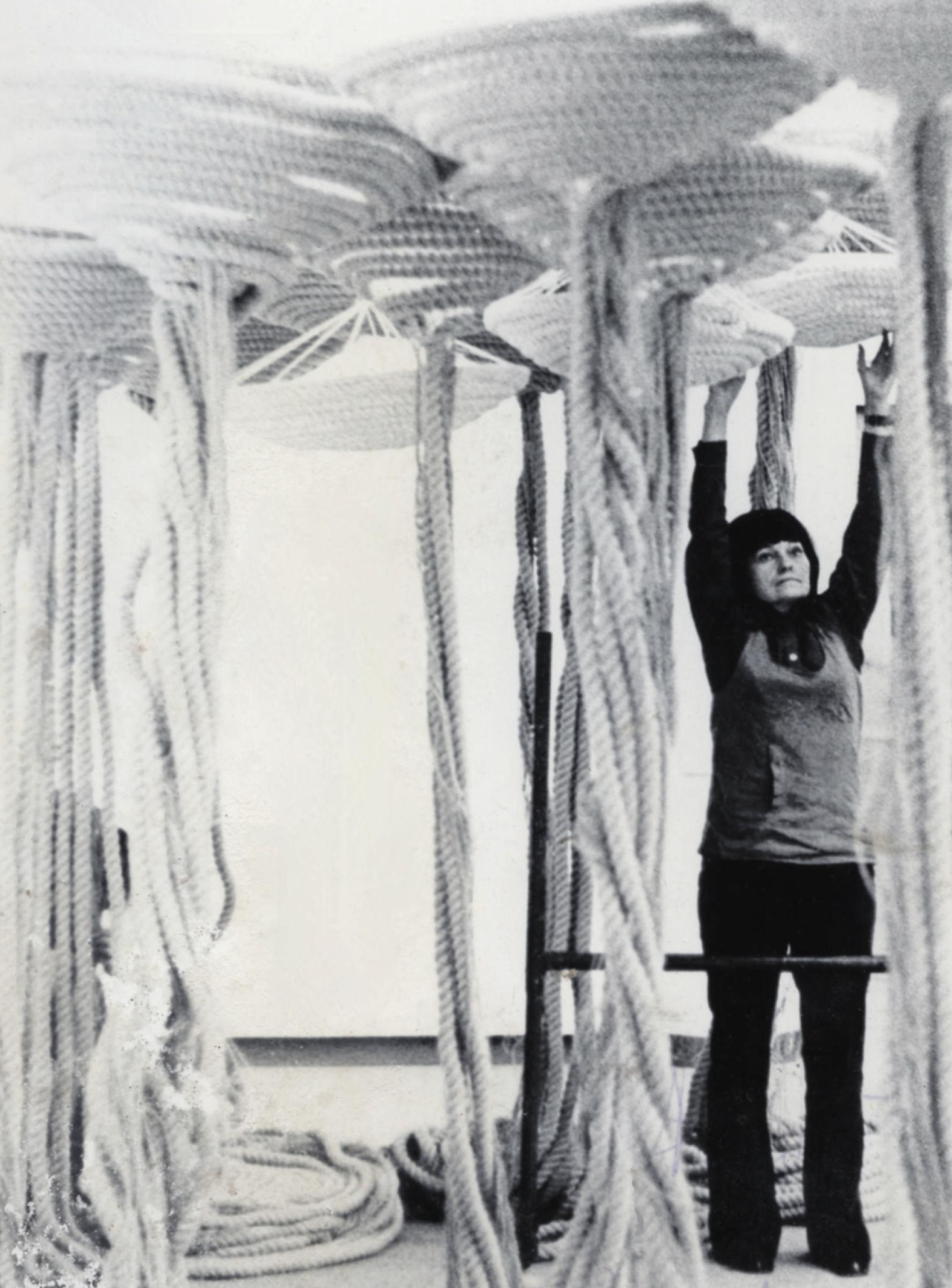
https://www.luca-arts.be/nl/tapta-flexible-forms

#Tapta #BelgianArt #Sculpture #Neoprene

Sculpture That Refuses to Stay Rigid Sculpture That Refuses to Stay Rigid LUCA Tapta: Flexible Forms | LUCA Tapta: Flexible Forms is the first large-scale retrospective dedicated to the Polish-Belgian artist Tapta (1926–1997) outside of Belgium, the country to which she fled in 1945 and where she developed her artistic career from the 1960s onwards.