Skip to content

Cinema Escaping Into the Museum

Boris Blank

Yello Turned a Snowball Into a Kick

Boris Blank of Yello has spent decades recording sounds that were never designed to become musical instruments.

His enormous personal sample archive has included voices, percussion, broken instruments and ordinary environmental noises. One particularly good example is almost ridiculous: Blank recalled throwing a snowball against his studio wall, recording the impact and eventually transforming it into a bass drum.

He has described sampling as central to Yello’s process from the beginning, first through tape loops and later with digital systems such as the Fairlight CMI.

I love the snowball because it demonstrates the essential magic of sampling better than an expensive studio explanation ever could.

The source does not need to resemble its eventual function.

A kick drum does not need to begin as a drum.

It needs an attack, a body and some useful energy that can be transformed.

Once sound is recorded, its original cause becomes optional.

Pitch it down.

Shorten it.

Filter it.

Layer it.

The visual image of a snowball hitting a wall disappears and a rhythmic object takes its place.

That is one of the profound changes recording technology introduced into music.

Before recording, an instrument was usually defined by the object producing the sound.

Sampling separates sound from object.

After that, almost anything can join the drum kit.
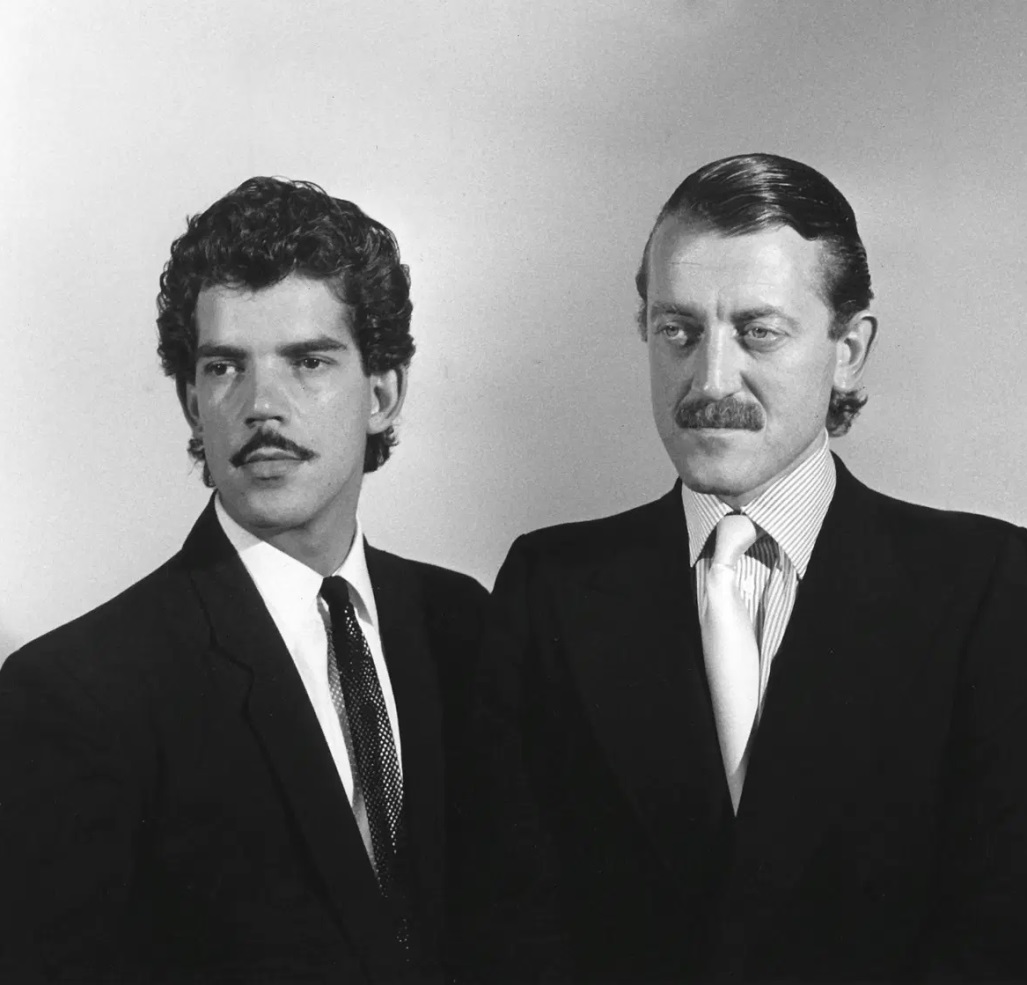
Oh Yeah: The Legacy Of YELLO

#Yello #BorisBlank #Sampling #SoundDesign

Yello Turned a Snowball Into a Kick Yello Turned a Snowball Into a Kick ELECTRICITYCLUB.CO.UK Oh Yeah: The Legacy Of YELLO - ELECTRICITYCLUB.CO.UK The illustrious career of the Swiss electronic trailblazers YELLO is being celebrated in a new lavishly packaged 4CD earbook retrospective entitled ‘YELL4O Years’. Boris Blank founded YELLO with Carlos Perón through a mutual love of jazz, musique concrète and tape experimentation. Dieter Meier was the son of millionaire banker and had a penchant for performance art.
Drum And Bass

Photek Treated Jungle as Programming

Rupert Parkes, better known as Photek, once described jungle in a way that still seems unusually precise.

For him it was not primarily a set of instruments.

It was a method of programming and using sound.

Talking about Modus Operandi, his 1997 debut album, Photek described the music through soundscapes, space and bass rather than through conventional instrumental roles.

That explains why the album can feel so controlled even when the drum programming becomes extraordinarily complicated.

A chopped break is not simply a recording of a drummer anymore.

Individual attacks can be isolated.

A snare can be moved.

Silence can be inserted between fragments that originally touched.

One drummer’s performance becomes a collection of microscopic events from which another rhythm can be constructed.

This is one of the things that makes drum and bass production fascinating to me.

At high tempo the obvious temptation is to add more.

Photek often creates intensity by making the placement of relatively few sounds incredibly precise.

Space matters because speed makes every empty millisecond noticeable.

The computer therefore does not only make the music faster.

It allows rhythm to be examined at a level of detail a live performance could never reproduce exactly.

Programming becomes a form of percussion.

The screen becomes part of the drum kit.

Photek reflects on Modus Operandi, his classic 1997 debut album that changed the face of jungle

<iframe class="wp-embedded-content" sandbox="allow-scripts" security="restricted" style="position: absolute; visibility: hidden;" title="“Photek reflects on Modus Operandi, his classic 1997 debut album that changed the face of jungle” — Fact Magazine" src="https://www.factmag.com/2012/07/28/photek-reflects-on-modus-operandi-his-classic-1997-debut-album/embed/#?secret=fs2tf15apu#?secret=WLfigiVVcI" data-secret="WLfigiVVcI" width="600" height="338" frameborder="0" marginwidth="0" marginheight="0" scrolling="no">

#Photek #DrumAndBass #Jungle #DrumProgramming

Photek Treated Jungle as Programming Photek Treated Jungle as Programming Fact Magazine Photek reflects on Modus Operandi, his classic 1997 debut album that changed the face of jungle - Fact Magazine In 1997, Photek released Modus Operandi. It was one of the most eagerly anticipated albums of its era, at least…
Depeche Mode

Depeche Mode Went Looking for Metal

During the making of Construction Time Again, Depeche Mode discovered sampling and immediately started looking beyond conventional instruments.

For “Pipeline,” Martin Gore, Gareth Jones and the group went into Shoreditch recording metal objects, pipes, steel plates and other found sounds. Engineer Gareth Jones recalls drumsticks and hammers striking objects around a disused railway environment. Gore’s vocal was also recorded outside beneath a railway arch.

The recordings were then brought back into the studio, sampled, edited and reorganised into music.

This is what I find interesting about early sampling.

A sampler did not initially mean access to an enormous prepared library.

The empty memory of the machine created a question:

What should we put into it?

Suddenly the street became an instrument store.

A metal plate was not valuable because it sounded like percussion.

It became percussion because someone heard a useful attack and resonance inside it.

Modern sample libraries reverse that process.

Search “industrial hit” and hundreds of professionally processed choices appear immediately.

That is convenient, but something disappears.

Going outside with a recorder means you do not yet know what the instrument is.

You have to find it.

The sampler then becomes less like a playback device and more like a way of listening to ordinary objects for musical possibilities.

https://www.soundonsound.com/techniques/classic-tracks-depeche-mode-people-are-people

#DepecheMode #Sampling #FieldRecording #MusicProduction

Depeche Mode Went Looking for Metal Depeche Mode Went Looking for Metal soundonsound.com Classic Tracks: Depeche Mode 'People Are People' Released in 1984, 'People Are People' perfectly combined Depeche Mode's love of pop music and experimentalism, and gave them their first US hit single.
Blue Monday

Blue Monday Needed a Homemade Circuit

New Order’s “Blue Monday” now sounds like a piece of electronic music whose machines must have known exactly what they were doing.

They did not.

The group had a sequencer and a drum machine that could not communicate properly with each other. Bernard Sumner has recalled taking the equipment to Martin Usher, who designed an electronic circuit that allowed the two machines to synchronise.

When they connected everything and pressed start, the drum machine and synthesizer finally began running together.

That technological connection became part of the session from which “Blue Monday” emerged.

I like this because synchronization is now practically invisible.

Connect MIDI or load a plug-in and every machine immediately knows the tempo.

In 1983, getting two electronic devices to agree about time could itself require invention.

The song therefore sits at an interesting point in electronic music history.

The composition was partly enabled by somebody solving an engineering problem.

A homemade circuit became a musical collaborator.

This also says something about technological limitations.

We tend to imagine that earlier electronic musicians achieved interesting results despite primitive equipment.

Sometimes they achieved them because the equipment was incomplete enough that musicians had to invent new relationships between the machines.

Before the groove existed, somebody had to build the wire that allowed the groove to happen.

https://www.nme.com/blogs/nme-blogs/new-order-how-we-wrote-blue-monday-762505

#NewOrder #BlueMonday #Sequencer #ElectronicMusic

Blue Monday Needed a Homemade Circuit Blue Monday Needed a Homemade Circuit NME New Order - How We Wrote 'Blue Monday' New Order released their first new album in a decade in 2015 – reason to celebrate indeed. However, ‘Blue Monday’, a track that 30 years on, remains as powerful as ever, will always be considered their defining anthem. In 2012, we asked the Bernard Sumner and since-departed bassist Peter Hook how they wrote the classic […]
Artists Film

Reassembling a Forgotten Goddess

Darya Andijan’s new 2026 film Do You Know That I’m With You begins with a figure who has almost disappeared from cultural memory.

Travelling through Central Asia, Andijan searches for traces of Gülem, described as a forgotten goddess of carpet weaving from the Uyghur region. The 23-minute work combines travel, poetic voices, ritual and ancestral memory while addressing feminism, oppression and cultural loss produced through colonialism. It was recently added to Eye Filmmuseum’s collection of artists’ moving image.

What stays with me is the relationship between film and weaving.

A carpet produces an image by bringing separate threads into a structure.

A film can do something similar with fragments of memory.

One person remembers a story.

A place contains another trace.

A ritual survives while its original explanation becomes uncertain.

None is enough by itself.

Put them together and an image begins to return.

This is very different from reconstructing history as though every missing fact could simply be recovered.

Sometimes the gaps are part of the history.

Moving image becomes useful precisely because it can hold those fragments beside one another without pretending that the original object has been completely restored.

The film does not necessarily bring Gülem back.

It gives her fragments somewhere to meet.

https://www.eyefilm.nl/en/whats-on/new-dutch-selected-artists-moving-image/1680625

#DaryaAndijan #ArtistsFilm #MovingImage #CentralAsia

Reassembling a Forgotten Goddess Reassembling a Forgotten Goddess eyefilm.nl New Dutch Selected Artists' Moving Image | Eye Filmmuseum New work by Dutch artists and experimental filmmakers that was recently added to Eye’s collection. The program includes four short films by filmmakers and artists Helen Anna Flanagan, Nan Wang, Justin Bentvelsen, both emerging artists and established names.
Cinema Escaping Into the

Cinema Escaping Into the Museum

Isaac Julien rarely asks us to watch a film on one screen.

His installations distribute moving images across several screens so that editing begins to happen spatially as well as temporally. A character may disappear from one image and appear somewhere else in the room. Two events can run simultaneously. The viewer has to decide where to look.

Museum Dreams, currently at gres art 671 in Bergamo until 4 October 2026, brings together five large-scale installations spanning more than two decades of Julien’s work, including Once Again… (Statues Never Die) and Lina Bo Bardi: A Marvellous Entanglement.

What changes for me in multi-screen cinema is the loss of the perfect edit.

In an ordinary film the director controls exactly which image follows another.

In an installation, the spectator can look away.

Another screen can become more interesting.

Two sequences can accidentally combine because of where you happen to be standing.

That sounds like a loss of control, but it creates another kind of authorship.

The filmmaker composes possibilities rather than one compulsory sequence.

It has something in common with electronic performance.

A set of carefully prepared elements exists, but their relationship becomes partly dependent on space, timing and attention.

Cinema stops being only something projected in front of us.

It becomes architecture we move through.

https://gresart671.org/en/2026/04/10/isaac-julien-museum-dreams/

#IsaacJulien #VideoInstallation #MovingImage #ExpandedCinema

Cinema Escaping Into the Museum Cinema Escaping Into the Museum gres art 671 ISAAC JULIEN gres art 671 Isaac Julien rarely asks us to watch a film on one screen. His installations distribute moving images across several screens so that editing begins to happ…
Building Ecology Inside

Building Ecology Inside a Game Engine

Jakob Kudsk Steensen begins many of his digital worlds far away from the computer.

His fieldwork has taken him to environments including a collapsed Swiss ice cave, experimental forests in Minnesota, volcanic seafloors around the Azores, Bora Bora and abandoned tourist landscapes.

Those places are recorded using techniques including photogrammetry, environmental data gathering, sound recording and collaboration with scientists. The material then becomes the basis for virtual environments, spatial sound and immersive moving-image installations.

Otherworlds, at PHI in Montréal until 13 September 2026, brings together six of these worlds from roughly a decade of work. It includes the North American premiere of Psychosphere, where video from geothermal and deep-sea environments meets spatial sound, interactive light and sculptural forms.

What interests me is the direction of travel.

Digital world-building is often associated with inventing environments that never existed.

Steensen does something more complicated.

He begins with places that exist intensely enough to be measured, photographed and scientifically observed, then reconstructs them digitally until documentation turns into speculation.

The resulting world is neither nature nor simulation.

It contains traces of both.

That makes the computer less like an escape from the physical environment and more like a strange ecological memory device.

A forest can become data.

Data can become an imaginary forest.

And the imaginary forest may make us notice what was disappearing from the real one.

https://phi.ca/en/events/jakob-kudsk-steensen-otherworlds/

#JakobKudskSteensen #DigitalArt #VideoInstallation #VirtualWorlds

Building Ecology Inside a Game Engine Building Ecology Inside a Game Engine phi.ca One moment, please... Jakob Kudsk Steensen begins many of his digital worlds far away from the computer. His fieldwork has taken him to environments including a...
Cameras Jasper Marsalis

Landscape Painting From Unsecured Cameras

Jasper Marsalis has made a contemporary landscape exhibition without travelling to photograph the landscapes himself.

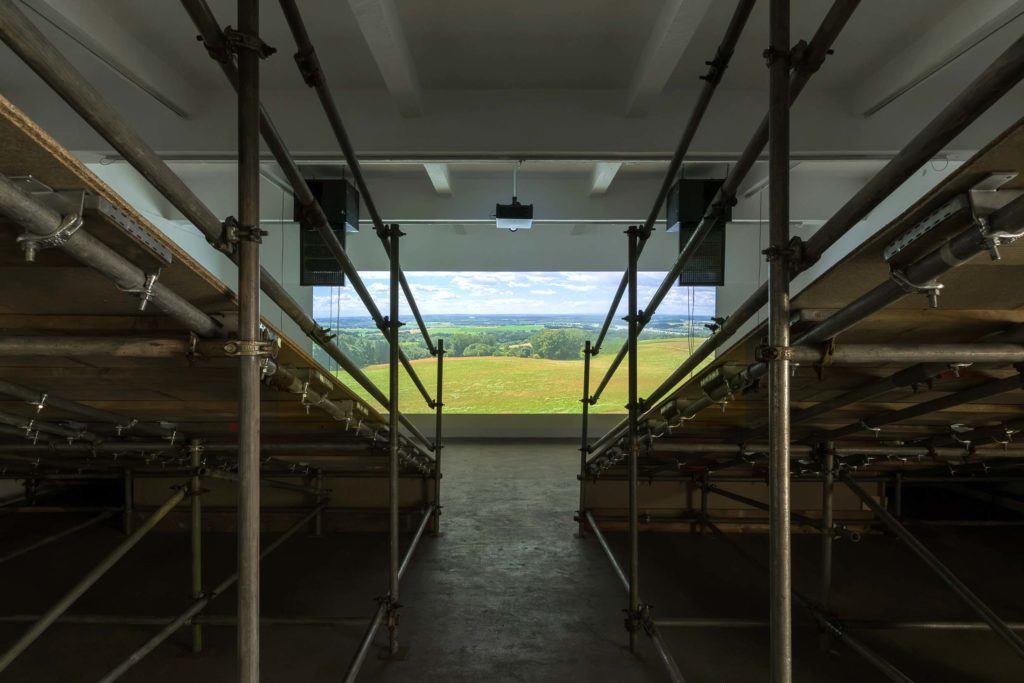
In Still Life, currently at Chisenhale Gallery in London until 6 September 2026, a large screen displays live images drawn from unsecured internet-connected cameras around the world.

Lakes appear. Roads. Hills. Parking lots. Agricultural spaces. Occasionally animals or people pass through.

An algorithm changes which cameras are shown, so the sequence is never completely predetermined. Four suspended speakers simultaneously transform live FM radio signals into slowly changing sound.

I find the landscapes strange precisely because nobody seems to be composing them.

Traditional landscape painting selects a viewpoint.

Photography selects a moment.

Marsalis inherits viewpoints selected by cameras installed for completely different reasons, then allows weather, daylight and whatever happens to pass through the frame to determine the image.

Compression errors become texture.

A slow camera turns movement into jumps.

Nightfall happens according to the actual location of a camera thousands of kilometres away.

The gallery therefore contains images that are live but geographically absent.

This is almost the reverse of cinematic control.

Nothing waits for the filmmaker.

The world keeps happening and the artwork briefly tunes into it.

https://flash—art.com/2026/07/jasper-marsalis-still-life-chisenhale-gallery-london/

#JasperMarsalis #VideoArt #NetworkArt #MovingImage

Landscape Painting From Unsecured Cameras Landscape Painting From Unsecured Cameras Flash Art Jasper Marsalis "Still Life" Chisenhale Gallery / London | | Flash Art Entering Chisenhale Gallery in London, a scaffolded passage opens onto a huge screen. On it a landscape scene appears, stays for thirty seconds or so, then changes to another. A lake. Hills. At night,
Contemporary Art

An Island That Refused a Border

In 1831 an underwater volcanic eruption created a temporary island between Sicily and Tunisia. Britain, France, Spain and the Kingdom of the Two Sicilies quickly became interested in claiming it. Then the island disappeared beneath the Mediterranean again.

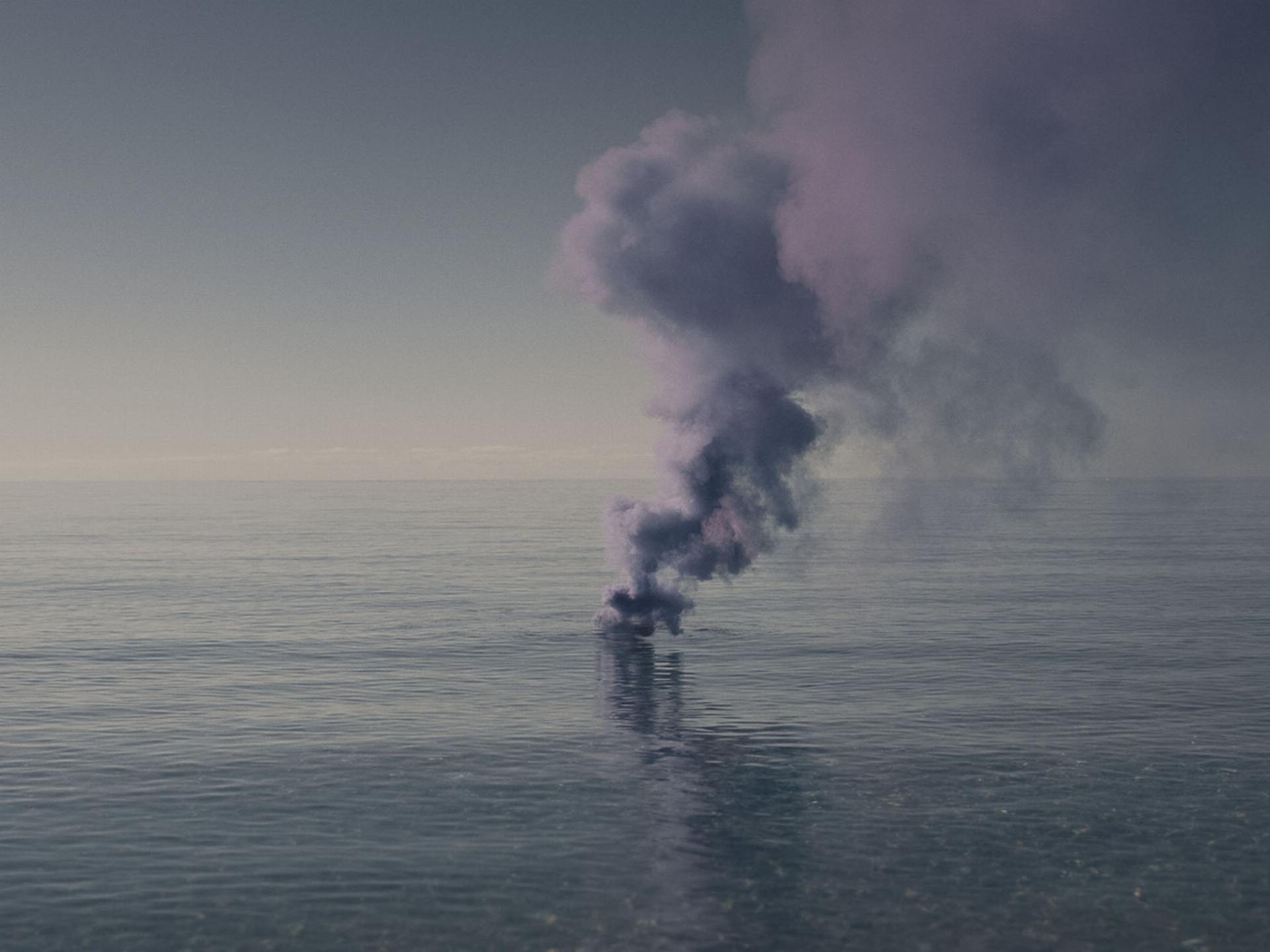
Elisa Giardina Papa turns this strange historical episode into She Flickered In and Out of History, a new 18-minute video installation currently at London’s ICA until 6 September 2026.

The work was filmed around Mount Etna, Stromboli and the submerged slopes of Mediterranean volcanic islands. It appears on a large freestanding LED screen alongside photographs and glass sculptures. A Sicilian spoken poem and an original score by duendita move through the images.

What interests me is that the island behaves almost like an impossible political object.

A territory normally becomes valuable because it stays where maps put it.

This one appeared, attracted competing claims of ownership, and then physically removed itself from the argument.

Video seems particularly suited to that story because moving image also refuses the stability of a photograph. Land emerges, changes, flickers and disappears.

Giardina Papa does not simply reconstruct the island as a forgotten historical curiosity. She lets geological time interfere with political time.

Governments can draw borders rapidly.

A volcano has another schedule.

There is something satisfying about a landscape that briefly enters European geopolitics and then sinks before anybody can permanently possess it.

Elisa Giardina Papa: She Flickered In and Out of History

#ElisaGiardinaPapa #VideoArt #MovingImage #ContemporaryArt

An Island That Refused a Border An Island That Refused a Border iiclondra.esteri.it Elisa Giardina Papa: She Flickered In and Out of History 17 July – 6 September 2026 at the Institute of Contemporary Arts (ICA) ICI London is proud to support She Flickered?In?and Out of History, a new video and?mixed-media?installation by interdisciplinary artist Elisa Giardina Papa (b. Italy;?lives and works in New York,?U.S.,?and?Sant’Ignazio, Sicily) at the Institute of Contemporary Arts (ICA). In 1831, an underwater volcanic eruption […]
Antwerp Art

Not Knowing as a Working Method

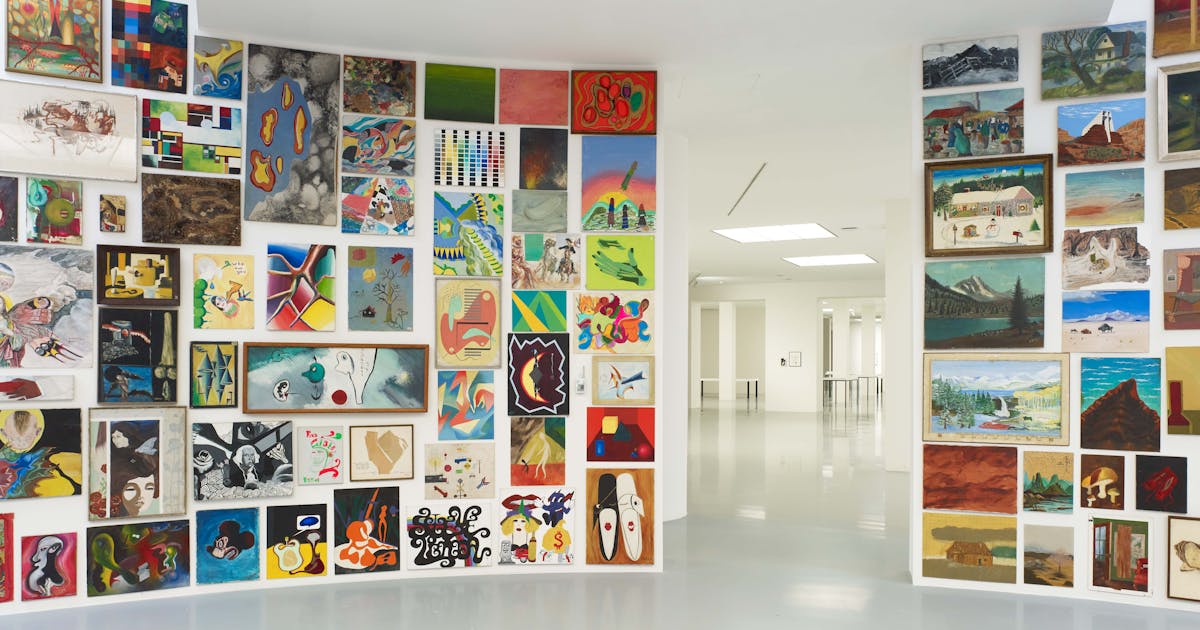
Jürgen Addiers opened I Have No Idea What I Am Doing at M HKA in Antwerp on 28 August 2026.

The exhibition combines painting, installation, neon and video, but its title may be the most interesting material in the room. The sentence itself becomes a physical sculpture made from metal spheres suspended from the ceiling.

The museum describes uncertainty not as failure but as a position from which experimentation and curiosity can begin.

I like that because creative culture usually tells the opposite story after the fact.

An exhibition makes an artist’s process look inevitable.

Finished works stand in carefully chosen positions.

A text explains the connections.

The uncertainty that produced them has disappeared.

Anyone who actually makes things knows how misleading that can be.

You try something.

It fails.

Another accident becomes useful.

A technical limitation changes the direction.

You discover the idea while making the object supposedly based on the idea.

“I have no idea what I am doing” therefore does not necessarily describe incompetence.

It can describe the moment before a procedure hardens into habit.

Knowing exactly what will happen is efficient.

Not knowing may be where the new work begins.

https://www.muhka.be/en/exhibitions/jurgen-addiers-i-have-no-idea-what-i-am-doing/

#JurgenAddiers #ContemporaryArt #AntwerpArt #InstallationArt

Not Knowing as a Working Method Not Knowing as a Working Method M HKA Jürgen Addiers: I Have No Idea What I Am Doing | M HKA The M HKA is a museum for contemporary art, film and visual culture in its widest sense.
Experimental Film

The Film Is Slowly Destroying Itself

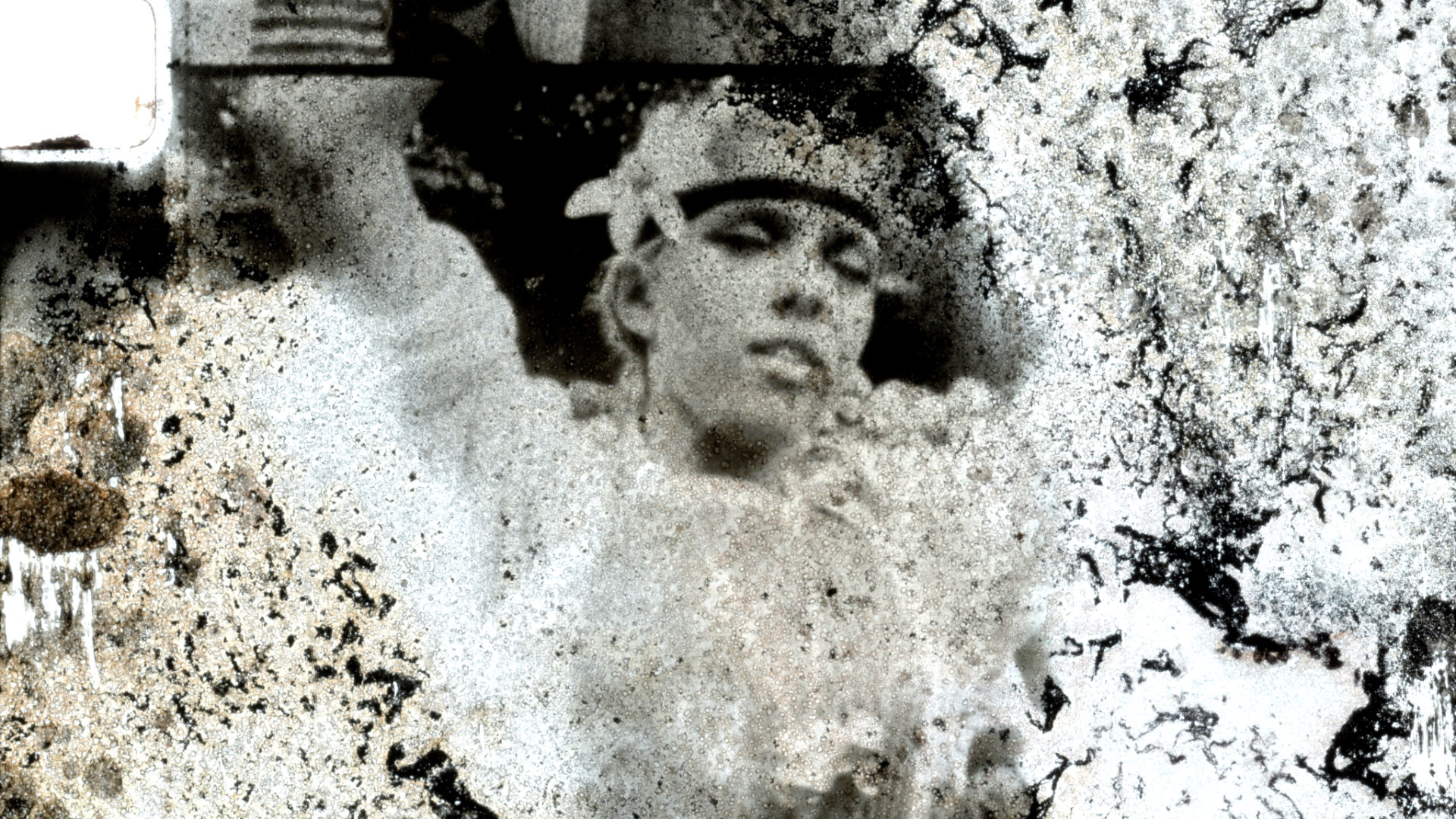
Panu Johansson’s Wherever Street Piece begins with anonymous 16mm footage he rescued from being thrown away in the early 2000s.

Nobody appears to know exactly who filmed it. The material seems to have been recorded in several countries between roughly 1965 and 1975.

Johansson transferred the footage onto high-contrast Kodak 3378 sound-recording film and then treated it frame by frame with chemicals that erode the emulsion. The resulting two-channel moving-image installation was shown at Turku Art Museum in 2026.

That physical destruction interests me because archive culture usually tries to achieve the opposite.

Preserve the image.

Stabilise the film.

Remove scratches.

Recover detail.

Johansson deliberately damages the copy.

Memory becomes visible partly through information disappearing.

Digital editing makes it easy to simulate scratches, dust and chemical damage, but there is a conceptual difference when the process genuinely changes the film material.

The image cannot simply be reset.

Each intervention becomes part of that copy’s history.

Found footage already contains an absence because we do not know the people who made it.

Eroding the image adds another kind of disappearance.

We see the past while watching the material that carries it slowly refuse to preserve everything.

https://turuntaidemuseo.fi/en/nayttelyt/panu-johansson

#PanuJohansson #VideoArt #FoundFootage #ExperimentalFilm

The Film Is Slowly Destroying Itself The Film Is Slowly Destroying Itself Turun Taidemuseo Panu Johansson: Wherever Street Piece | Turku Art Museum Wherever Street Piece (2025) is a found footage work which portrays fragmented memories that cannot be directly linked to any single person’s life.