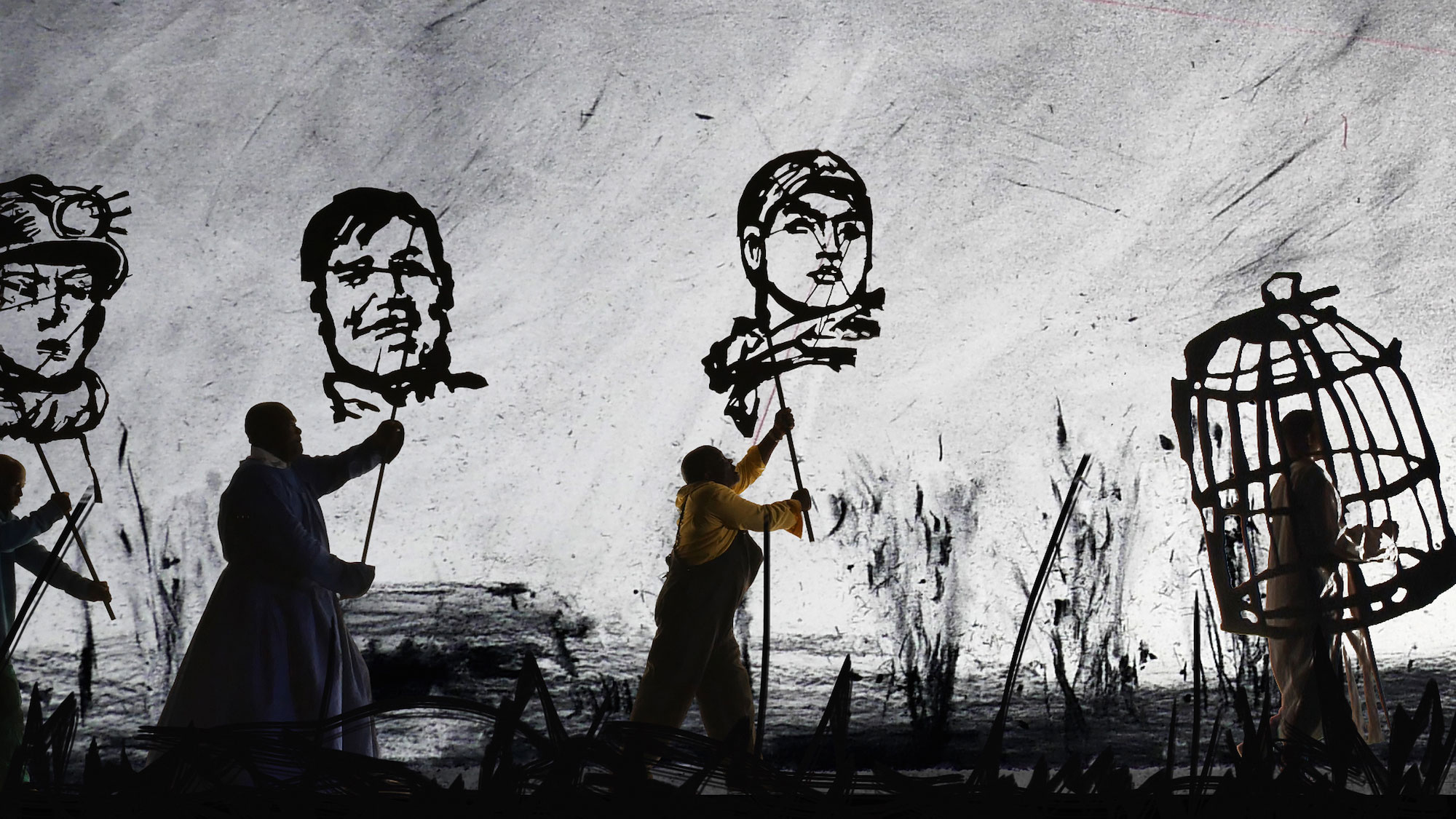
William Kentridge repeatedly draws, erases and redraws charcoal images to make his animations. The previous state never vanishes completely. Smudges remain inside the next frame. That makes movement carry its own history. In a practice concerned with apartheid, colonialism and memory, the technique feels inseparable from the subject. The page remembers what has been removed, even when the image tries to move on.
Music Without the Pianist
Mario Left, the Clouds Stayed
Cory Arcangel removed almost everything from Super Mario Bros. and left only the blue sky and slowly scrolling clouds. No Mario, coins, enemies or goal remain. A game becomes a quiet moving landscape. What fascinates me is how little information is needed before recognition disappears. Remove enough function from software and the interface stops being a tool. It becomes an image with a memory attached to it.
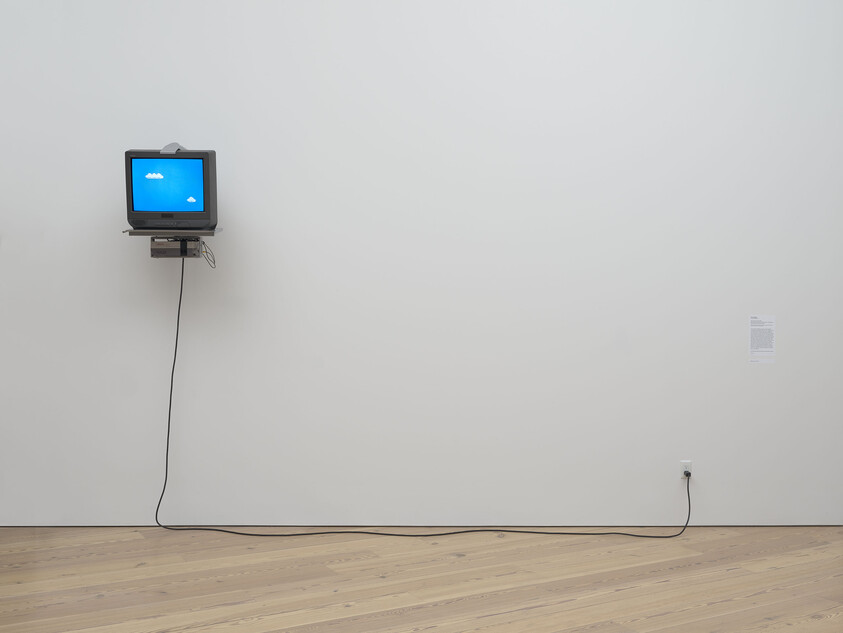 Whitney Museum of American Art Cory Arcangel | Super Mario Clouds For this video installation, Cory Arcangel “hacked” a cartridge of Super Mario Brothers, the original version of the blockbuster Nintendo video game released in the United States in 1985. By tweaking the game’s code, the artist erased all of the sound and visual elements except the iconic scrolling clouds. On a formal level, the project is reminiscent of paintings that push representation toward abstraction: how many elements can be removed before the ability to discern the source is lost? Arcangel, who was trained in classical music, considers computers and video game consoles his instruments, and insists on mastering them prior to creative exploration; he will often learn a new programming language in order to develop a work. What might be viewed as nostalgia for the popular entertainments of an earlier era depends, in fact, on a rigorous conceptual approach to computer hard- and software as well as a refusal to participate in contemporary culture’s lightning-fast cycle of technological turnover.
A Glitch Becomes the Structure
Joan Jonas built Vertical Roll around a television malfunction: the rolling bar that appeared when video signals fell out of sync. Instead of repairing the error, she performed with it. Her body appears fragmented by the unstable image while sound follows its rhythm. I keep returning to that decision. Technology often becomes creatively interesting at the exact point where it stops behaving as intended.
A Sky Made From Fragments
Sarah Sze’s Tracing Fallen Sky combines steel, marble fragments, projected images and traces of the process that produced it. Physical objects and moving images overlap until it becomes difficult to decide where sculpture ends and image begins. I like that uncertainty. We increasingly experience the world through objects and screens simultaneously. Sze turns that ordinary condition into something we can actually stand inside.
https://www.fondationcartier.com/en/ways-to-visit/parcours-un-monde-reel
 Fondation Cartier Parcours « Un monde réel » — Fondation Cartier pour l’art contemporain L’un des volets de l’Exposition Générale met en avant les relations entre sciences, fiction et création artistique. Il réunit artistes et chercheurs qui tentent d’imaginer d’autres manières de percevoir et de représenter le réel.
A Sculpture That Refuses One Shape
Lygia Clark wanted spectators to manipulate her hinged metal sculptures rather than simply look at them. Poetic Shelter belongs to this world of forms that can change through handling. What I find interesting is the loss of a single correct appearance. The artwork does not wait for the viewer in a finished state. Touch becomes part of its structure, and every configuration is temporary.
Music Without the Pianist
Samson Young’s Carillon includes a prepared Disklavier player piano alongside documents, books, tickets and personal objects. I like the contradiction of a piano playing while the performer is absent. Sound makes the archive temporarily physical again. Paper can describe a past, but a mechanical instrument fills the room with an event happening now. Presence survives even when the person producing it has disappeared.
https://www.mplus.org.hk/en/collection/objects/carillon-2019584/
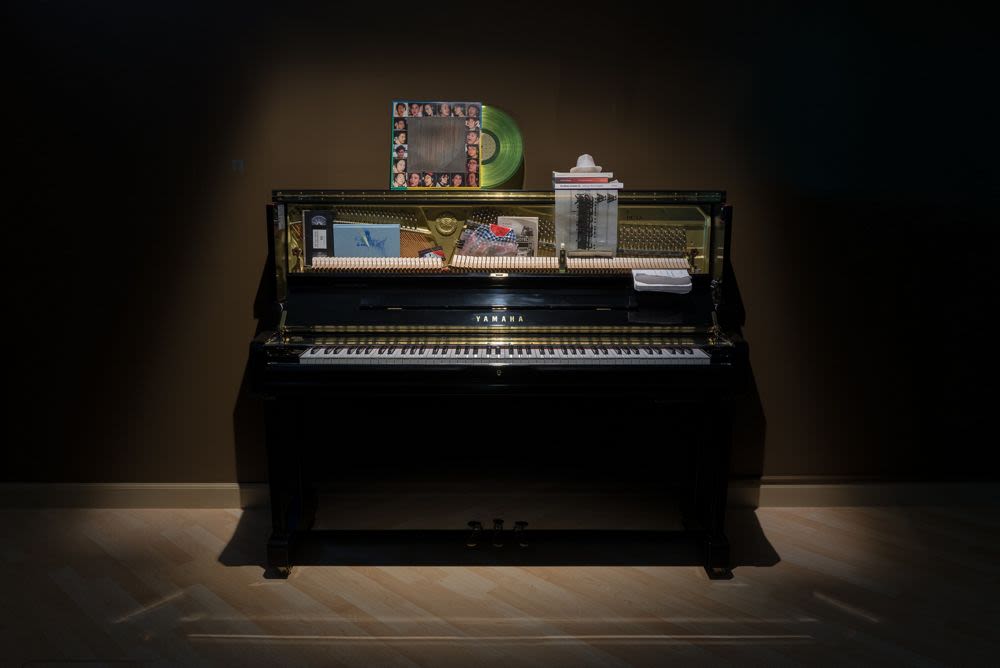 mplus.org.hk Carillon (2017) - Samson Young | Objects | M+ Museum Discover some of the world’s foremost collections of twentieth- and twenty-first-century visual culture.
When a Wall Starts Speaking
Shilpa Gupta’s Speaking Wall uses bricks, headphones, a small screen and a sensor. The viewer moves along a line of bricks while a voice responds to their position. A wall normally tells the body where it cannot go. Here the boundary begins giving instructions. That reversal makes the work unsettling: something built to separate becomes strangely intimate because it knows exactly how close you are.
https://www.mplus.org.hk/en/collection/objects/speaking-wall-201762/
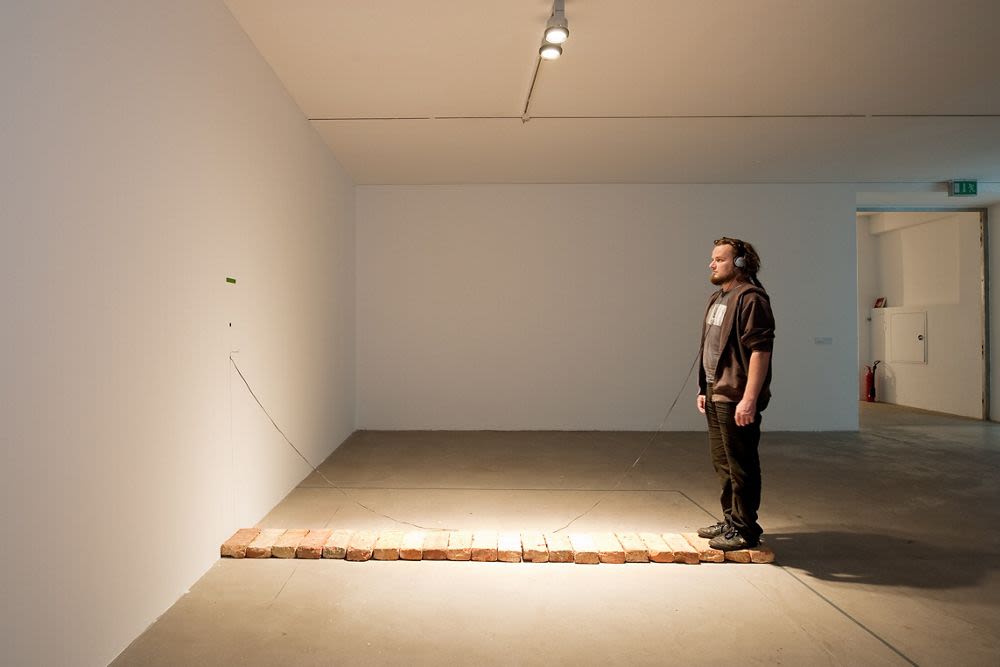 mplus.org.hk Speaking Wall (2009–2010) - Shilpa Gupta | Objects | M+ Museum Discover some of the world’s foremost collections of twentieth- and twenty-first-century visual culture.
Metal Learning to Flow
El Anatsui builds enormous hanging forms from thousands of discarded metal bottle tops and fragments. From a distance Behind the Red Moon can resemble woven fabric, although nothing about its material should behave like cloth. That transformation stays with me. Something industrial, repetitive and discarded becomes flexible, fragile-looking and almost weightless. Material carries its previous life into the new one.
https://shop.tate.org.uk/hyundai-commission-2023-el-anatsui-behind-the-red-moon/28591.html
A Sound Without a Sign
Max Neuhaus hid Times Square beneath a pedestrian island in Manhattan. No sculpture announces itself. A deep electronic sound simply rises through a street grate among traffic, footsteps and city noise. I like that you can encounter the work without knowing you have encountered art. In a place where almost everything competes for attention, Neuhaus created something that becomes visible only by listening.
https://www.diaart.org/visit/visit-our-locations-sites/max-neuhaus-times-square
The Mountain Almost Disappears
Everyone remembers the wave in Hokusai’s Under the Wave off Kanagawa, yet Mount Fuji may be the more curious detail. Japan’s enormous mountain is reduced to a small triangle beneath a temporary wall of water. Hokusai reverses the expected hierarchy: the permanent becomes tiny while a moment becomes monumental. The wave will collapse. Fuji will remain. The image makes us feel the opposite.
When a Television Becomes a Line
Nam June Paik’s Zen for TV collapses the television picture into a single vertical line. A machine built to deliver constant information suddenly becomes almost empty. What interests me is that Paik did not reject television. He learned its electronics and changed its behaviour. Sometimes understanding a technology deeply enough allows you to make it do almost nothing, and that nothing becomes the artwork.