Skip to content

Memory as a Production Technique

Album Composed Between Train

An Album Composed Between Train Stations

Brussels producer Le Motel made much of Pozo de Agua outdoors or while travelling, especially on trains. The album, due on 15 September 2026 through Constellation Tatsu, treats environmental recordings such as water, movement and air with the same compositional weight as more conventional instruments. Those materials drift through ambient electronics and overlapping rhythmic structures rather than sitting behind the music as documentary decoration.

That approach interests me because portable production has changed what a studio means. A laptop and headphones make it possible to compose almost anywhere, but most mobile production still tries to recreate the controlled conditions of a room. Noise is something to isolate yourself from. Le Motel allows the place he is moving through to enter the work.

A train is an especially good studio if you stop expecting silence. It supplies periodic impacts, vibration, changing landscapes and a rhythm that belongs to the journey rather than to the sequencer. Even concentration changes when the physical location keeps moving.

Field recording is sometimes treated as a separate discipline, as though one first collects the world and later turns it into music. Pozo de Agua suggests a softer boundary. Composition can happen while the world is already passing through the microphone.

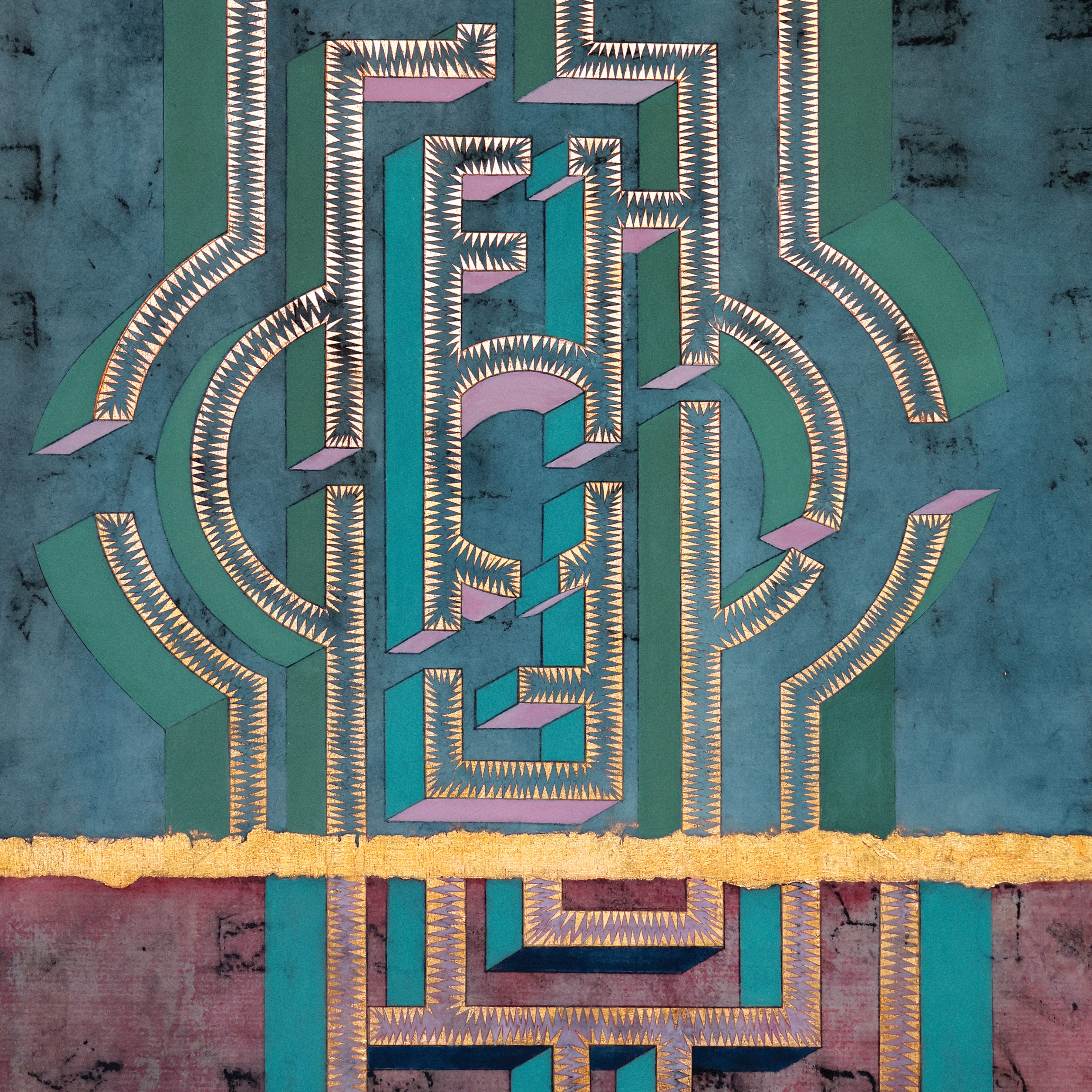
https://ctatsu.com/

#LeMotel #PozoDeAgua #FieldRecording #AmbientMusic

An Album Composed Between Train Stations An Album Composed Between Train Stations ctatsu.com Constellation Tatsu Home page of Constellation Tatsu, a label from Oakland. adventurous with spiritual artistic sensibilities
Facebook LinkedIn WhatsApp Threads
Meer delen
X Reddit Pinterest Telegram E-mail
Audiovisual Art

The Album Belongs to a Video Artist Too

Solari, arriving on 25 September 2026, is the first release under the Courant Zéro name by Montréal sound and video artist Maxime Corbeil-Perron. His background in electroacoustic composition remains audible, but the album moves between ambient passages, rhythmic electronic music and dense digital structures rather than presenting itself as academic electroacoustics. It was recorded and mixed across Montréal, Morelia, Mexico City and Stockholm.

Corbeil-Perron is interesting for LumLux Art because the separation between music and moving image is already unstable in his practice. Sound does not simply accompany visuals, nor does video function as packaging added once the music is finished. Both come from a way of thinking about structure, texture, digital processing and time.

That matters in electronic work because the tools themselves increasingly overlap. A modulation curve can control brightness as easily as frequency. A rhythmic event can trigger a sound, a cut or a change in geometry. The difference between an audiovisual artist and an electronic musician can sometimes come down to which output cable is being watched.

Solari can be heard entirely as an album, but knowing that its maker also thinks through moving images changes the way its rapid transitions and spatial textures read. Some music feels composed not only across time but across an imagined screen.

CST194 Courant Zéro | Solari

#CourantZero #Electroacoustic #ElectronicMusic #AudiovisualArt

The Album Belongs to a Video Artist Too The Album Belongs to a Video Artist Too Constellation CST194 Courant Zéro | Solari Courant Zéro is the new moniker of Montréal multi-media installation artist and Kohlenstoff label co-founder Maxime Corbeil-Perron, signalling his return to purely recording-based electronic music production following several years focused on award-winning experimental film and audio-visual works. Solari channels his c
Facebook LinkedIn WhatsApp Threads
Meer delen
X Reddit Pinterest Telegram E-mail
Beatriz Ferreyra

She Composed With Her Ears First

Beatriz Ferreyra entered the Groupe de Recherches Musicales in Paris in 1963 after hearing musique concrète for the first time.

She later worked with Pierre Schaeffer on the Solfège de l’Objet Sonore, but her own description of those early years is refreshingly different from the mythology surrounding institutional electronic music.

Ferreyra has said she arrived without an academic composition background and had to learn tape editing, filtering and recording directly through practice. She was fascinated less by traditional notes than by the physical character of sound itself. She has described hearing sounds as forms and colours, almost as though composing were another kind of painting.

That feels important because electronic music is often taught backwards.

First understand the technology.

Then make something.

Ferreyra’s story begins with fascination.

A sound was interesting enough that she needed to discover how to work with it.

The technical knowledge followed the desire to listen more closely.

That may be why early musique concrète still has something useful to teach producers surrounded by sophisticated software.

A new plug-in does not automatically produce a new way of hearing.

Sometimes the more difficult skill is noticing that an ordinary sound was already interesting before anyone processed it.

https://brahms.ircam.fr/en/composer/beatriz-ferreyra/biography

#BeatrizFerreyra #MusiqueConcrete #ElectroacousticMusic #SoundArt

She Composed With Her Ears First She Composed With Her Ears First Ressources IRCAM Biographie - Béatriz Ferreyra La biographie du compositeur Béatriz Ferreyra
Facebook LinkedIn WhatsApp Threads
Meer delen
X Reddit Pinterest Telegram E-mail
Bruce Haack

Bruce Haack Wired People Into Synthesizers

Bruce Haack spent much of his career building electronic instruments rather than waiting for manufacturers to invent the ones he wanted.

One of the strangest was the Dermatron, an instrument that used the electrical conductivity of human skin as part of its control system. Haack demonstrated versions of it on American television during the 1960s, at one point using performers’ bodies as part of the circuit.

At the same time, he was producing electronic music for children, theatre, advertising and his own increasingly unusual records. The Electric Lucifer appeared on Columbia in 1970.

What I like about the Dermatron is that it makes the word “interface” very literal.

Modern electronic instruments usually place something between the body and electricity.

A key.

A pad.

A touchscreen.

Haack wondered whether the body itself could become part of the control voltage.

That idea no longer seems entirely eccentric. Sensors, conductive materials and biofeedback now appear regularly in interactive art.

Haack reached similar territory using homemade electronics at a time when the commercial synthesizer industry had barely begun.

Sometimes technological history looks cleaner than it really was because we remember the products that survived.

The homemade machines are easier to forget.

https://www.brucehaack.com/biography

#BruceHaack #ElectronicMusic #InventedInstruments #MusicTechnology

Bruce Haack Wired People Into Synthesizers Bruce Haack Wired People Into Synthesizers Bruce Haack Biography — Bruce Haack Bruce Haack spent much of his career building electronic instruments rather than waiting for manufacturers to invent the ones he wanted. One of...
Facebook LinkedIn WhatsApp Threads
Meer delen
X Reddit Pinterest Telegram E-mail
Born Slippy

The 909 Under Born Slippy

“Born Slippy .NUXX” became enormous through Trainspotting, but the track’s rhythmic foundation is surprisingly straightforward.

Rick Smith has explained that the kick is a Roland TR-909 pushed hard through a mixing console. The familiar chords came from a Juno-106. Karl Hyde’s vocal was based on fragments he had written after nights spent drinking in London, and the vocal heard on the record was essentially captured in a single take.

Those ingredients explain why the record still feels divided against itself.

The machines are controlled.

The voice is not.

The 909 keeps moving forward with almost physical certainty while Hyde’s words arrive like fragments from somebody struggling to remain inside the same timeline.

This is more interesting than treating the track simply as a rave anthem.

Electronic repetition can sometimes make emotion stronger because it refuses to respond.

The beat does not slow down because the singer is exhausted.

The sequencer offers no sympathy.

That tension is part of what gives the track its force.

A machine repeats exactly.

The person standing above it cannot.

Roland Artist Interview – Underworld

#Underworld #BornSlippy #TR909 #ElectronicMusic

The 909 Under Born Slippy The 909 Under Born Slippy Roland Indonesia Blog Roland Artist Interview - Underworld “Born Slippy .NUXX” became enormous through Trainspotting, but the track’s rhythmic foundation is surprisingly straightforward. Rick Smith has explained th…
Facebook LinkedIn WhatsApp Threads
Meer delen
X Reddit Pinterest Telegram E-mail
Details di

Memory as a Production Technique

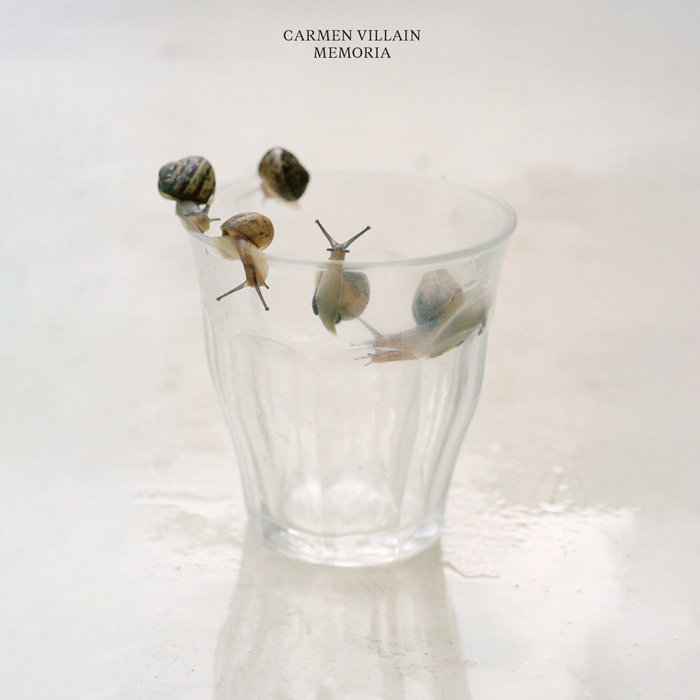
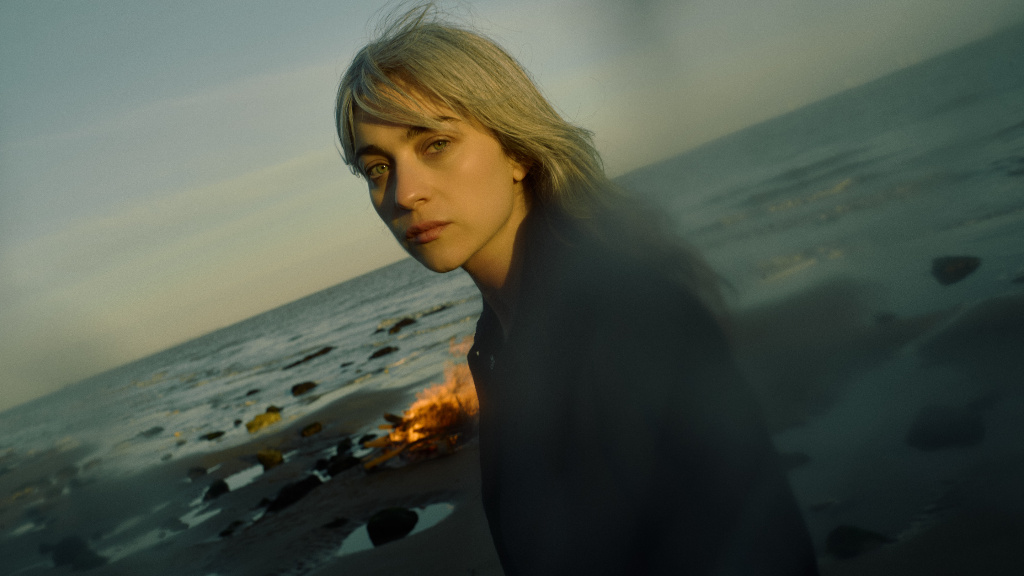
Carmen Villain’s new album Memoria, released on 4 September 2026, uses an unusually broad palette: clarinet, piano, synthesizers, field recordings, percussion, flute, trumpet and strings.

Yet the most useful clue may be the title.

Villain describes her work as moving through memory and transformation, with sounds eroding, repeating and returning in altered forms. On Memoria, instruments rarely feel isolated into clean roles. Acoustic and electronic materials occupy the same atmosphere until identifying the original source becomes less important than hearing what has happened to it.

That feels close to how memory actually behaves.

We do not retrieve an event like opening an untouched audio file.

Every recollection has already passed through time.

Details disappear.

Others become exaggerated.

Something from the present enters the past without permission.

Production can work the same way.

Repeat a sound.

Filter it.

Record the processed version.

Return to it later.

Eventually the copy may carry more emotional weight than the original.

The studio becomes less like an archive preserving sounds accurately and more like memory itself, constantly rewriting what it stores.

https://carmenvillain.bandcamp.com/album/memoria

Memory as a Production Technique Memory as a Production Technique Carmen Villain Memoria, by Carmen Villain 7 track album
Facebook LinkedIn WhatsApp Threads
Meer delen
X Reddit Pinterest Telegram E-mail
Experimental Music

Twenty Microphones for an Organ

Kali Malone recorded her forthcoming album Burning Song during two late-night sessions at Leipzig’s Thomaskirche, the church where Johann Sebastian Bach served as cantor.

Malone became the first musician to perform contemporary works on the church’s Bach Organ, an instrument completed in 2000 and designed around historical Baroque tuning principles. Engineer Francesco Donadello placed more than twenty microphones around the church for the recordings. Lucy Railton adds cello, while Stephen O’Malley plays bowed acoustic guitar. The album is due on 30 October 2026.

The microphone count interests me because an organ already turns architecture into part of the instrument.

Its pipes fill the building with sound, but the room determines how those sounds return to the listener.

One microphone gives you one relationship with that space.

Twenty microphones create many.

Close.

Distant.

Direct.

Reflected.

The recording process therefore becomes partly a decision about which version of the church should survive on the album.

You cannot record architecture completely.

You can only choose where to listen from.

https://ra.co/news/85911

#KaliMalone #OrganMusic #SoundRecording #ExperimentalMusic

Twenty Microphones for an Organ Twenty Microphones for an Organ Resident Advisor Kali Malone announces new album, Burning Song · News ? RA The LP of solo compositions is out October 30th and features Stephen O'Malley and Lucy Railton.
Facebook LinkedIn WhatsApp Threads
Meer delen
X Reddit Pinterest Telegram E-mail
Digital Ecology

A Pond Controlling the Gallery

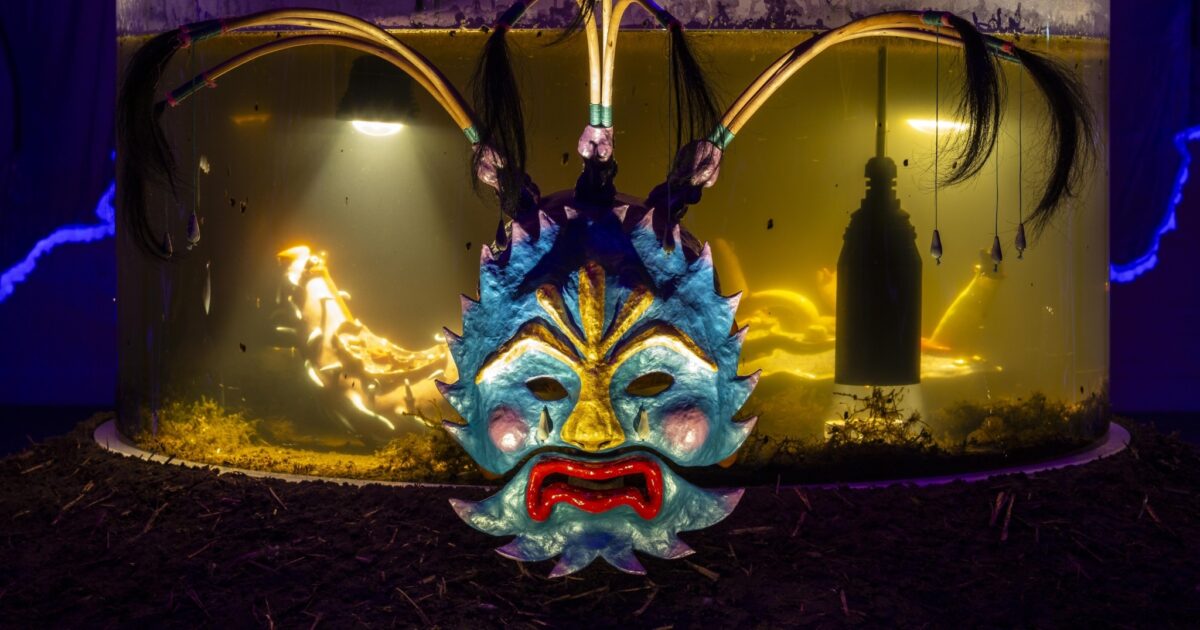
Rae-Yen Song’s new installation at FACT Liverpool contains something unusually literal at its centre: a living pond.

The exhibition •~TUA~• ?? •~MAK~•, opening on 18 September 2026, combines sculpture, sound and moving image within an imagined subaquatic world shaped partly by the artist’s family histories and diasporic mythology.

Cameras observe microscopic life and movement inside the pond. Activity within that ecosystem then affects the lights and sounds of the installation.

I like the reversal.

Interactive digital art usually waits for a human visitor.

Walk here.

Touch this.

Move your hand and the system responds.

Song gives some of that control to organisms that have no interest in being performers.

The gallery becomes responsive, but humans are no longer the only meaningful input.

That changes the idea of interactivity itself.

A living system is not a button.

It does not repeat the same response because somebody requests it.

The artwork has to share control with processes it cannot completely predict.

For a digital installation, that is a surprisingly biological kind of uncertainty.

https://www.fact.co.uk/event/rae-yen-song-%E5%AE%8B%E7%91%9E%E6%B8%8A

#RaeYenSong #MovingImage #InteractiveArt #DigitalEcology

A Pond Controlling the Gallery A Pond Controlling the Gallery FACT Rae-Yen Song ???: •~TUA~• ?? •~MAK~• Rae-Yen Song ??? draws on the flux and resilience of the immigrant experience to reimagine the world. For this exhibition, the gallery is transformed into a darkened abyss, suspended somewhere between the deep sea and the skies above. Moving through this landscape, Rae-Yen invites us to reconsider…
Facebook LinkedIn WhatsApp Threads
Meer delen
X Reddit Pinterest Telegram E-mail
Chasing Storms Through Screens

Chasing Storms Through Screens

Shuang Li’s Alliance begins with storm chasing, the deliberate pursuit of tornadoes, hurricanes and other extreme weather.

At Kunsthalle Basel, where the exhibition runs until 13 September 2026, that pursuit expands into an immersive environment of video, sound and architecture. Roads, weather forecasts and meteorological imagery appear within a visual world that connects physical storms to the less visible systems shaping contemporary digital life.

The comparison works because both kinds of systems are difficult to see as a whole.

A storm can be tracked on a screen, measured and predicted, yet standing inside one is completely different from reading its data.

Digital infrastructures behave similarly. Algorithms, networks and platforms surround daily life while most of their operations remain invisible.

What I like here is that weather is not reduced to a metaphor pasted onto technology. Both involve prediction, control and a point where prediction fails.

The storm chaser moves toward instability in order to observe it.

Most technology is designed to do the opposite. It promises to remove uncertainty.

Li seems interested in the moment when that promise begins to break down.

https://kunsthallebasel.ch/de/exhibitions/shuang-li

#ShuangLi #VideoInstallation #DigitalCulture #ContemporaryArt

Chasing Storms Through Screens Chasing Storms Through Screens Kunsthalle Basel Alliance · Kunsthalle Basel Seit 1872 zeigt die Kunsthalle Basel nicht nur Kunst – sie hat sie immer wieder neu definiert. Mit unerschütterlichem Engagement für aufstrebende Künstler:innen rückt sie deren bahnbrechendes Schaffen ins Rampenlicht – oft lange bevor diese international bekannt werden.
Facebook LinkedIn WhatsApp Threads
Meer delen
X Reddit Pinterest Telegram E-mail
BBC Radiophonic Workshop

The Woman Between Oram and Derbyshire

The history of the BBC Radiophonic Workshop tends to settle quickly around a few famous names.

Maddalena Fagandini is one of the people who can disappear between them.

She joined the Workshop in 1959, after beginning her BBC career in the Italian Section of the World Service, and worked there until 1963. Her electronic output included radio drama, interval signals and experimental pieces such as “Timebeat,” later released commercially in a reworked version with George Martin.

Yet only a small part of her work remains easily available today. The surviving documentation itself acknowledges that much more may have existed than can now be securely identified.

That interests me because institutional anonymity creates a strange problem for art history.

Radiophonic sound was often produced to serve another programme.

A few seconds between broadcasts.

An atmosphere behind dialogue.

A signal.

The audience heard the result without necessarily knowing who had made it.

The work therefore succeeded precisely by disappearing into broadcasting.

Decades later, that invisibility makes the maker difficult to recover.

Electronic music history is full of famous machines.

The people operating them were not always given the same visibility.

Sometimes recovering a forgotten composer begins with listening again to sounds nobody originally thought required a signature.

https://rws.bbcrecords.co.uk/staff/maddalena-fagandini/

#MaddalenaFagandini #RadiophonicWorkshop #ElectronicMusic #ForgottenComposer

The Woman Between Oram and Derbyshire The Woman Between Oram and Derbyshire rws.bbcrecords.co.uk The history of the BBC Radiophonic Workshop tends to settle quickly around a few famous names. Maddalena Fagandini is one of the people who can...
Facebook LinkedIn WhatsApp Threads
Meer delen
X Reddit Pinterest Telegram E-mail
Dacapo Records

The Tapes Almost Disappeared

Else Marie Pade became one of Denmark’s earliest major electronic composers during the 1950s and 1960s.

Yet parts of her electronic catalogue came surprisingly close to disappearing.

Dacapo Records’ recent reconstruction of her Complete Electronic Works 1955–2012 includes newly digitised pieces, previously unavailable material and works that remained overlooked for decades. The archive survived partly because a Danish Broadcasting Corporation technician contacted Pade when tapes were at risk and asked whether she wanted to preserve them. More boxes of tape were still appearing as recently as 2024.

I find that frightening.

Electronic music can feel technologically permanent because it belongs to machines.

In reality, magnetic tape is fragile.

A tape can deteriorate.

A machine capable of reading it can disappear.

A label can forget what is stored on a shelf.

The composer can fall out of cultural memory.

Then the music effectively stops existing even though the physical reel remains.

Digitisation therefore does more than improve access.

It can change history.

A work that was absent from the story can suddenly re-enter it.

The strange thing about forgotten art is that rediscovery often makes it seem newly created.

The sound has not changed.

The present finally caught up with the archive.

https://www.dacapo-records.dk/en/recordings/pade-complete-electronic-works-1955-2012

#ElseMariePade #ElectronicMusic #TapeMusic #MusicArchive

The Tapes Almost Disappeared The Tapes Almost Disappeared dacapo-records.dk Else Marie Pade became one of Denmark’s earliest major electronic composers during the 1950s and 1960s. Yet parts of her electronic catalogue...
Facebook LinkedIn WhatsApp Threads
Meer delen
X Reddit Pinterest Telegram E-mail