Skip to content

Musique Concrete

Art Stream
Before Tape Music Had

Before Tape Music Had a Name

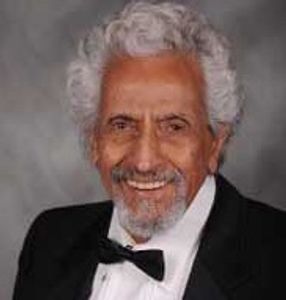
In Cairo in 1944, Halim El-Dabh borrowed a wire recorder and took it to a Z?r ceremony, where women used chanting and percussion as part of a ritual practice. He did not treat the recording as a neutral document. Back at the Middle East Radio station, he transformed the captured sound and presented the resulting work, The Expression of Zaar, at a Cairo art gallery.
The piece has circulated under several related names, including Ta’abir al-Zaar, The Elements of Zaar and Wire Recorder Piece. That unstable naming is a reminder of how easily early electronic work can sit outside the history written around later studios and institutions. The recording existed, but the language used to place it within electronic music was still being formed.
The date unsettles the familiar European timeline of musique concrète. More interesting, though, is the artistic decision already present in El-Dabh’s experiment: a recording could be material rather than evidence. A voice could be filtered, reshaped and removed from ordinary duration without losing all connection to the body that produced it.
Electronic music histories often begin with a studio, an institution or a newly invented machine. This one begins with listening outside the studio, then returning with a sound whose cultural meaning could not be reduced to technique. The wire recorder did not create the idea. It made another way of handling the idea possible.

https://brahms.ircam.fr/en/composer/halim-el-dabh/biography

#HalimElDabh #ElectronicMusicHistory #Cairo #WireRecorder #MusiqueConcrete
Before Tape Music Had a Name Before Tape Music Had a Name Ressources IRCAM Biographie - Halim El-Dabh La biographie du compositeur Halim El-Dabh
Facebook LinkedIn WhatsApp Threads
More sharing options
X Reddit Pinterest Telegram Email
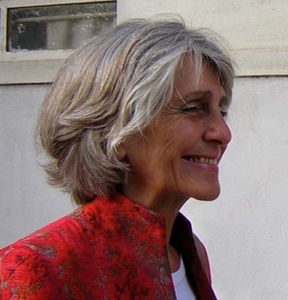
Beatriz Ferreyra

She Composed With Her Ears First

Beatriz Ferreyra entered the Groupe de Recherches Musicales in Paris in 1963 after hearing musique concrète for the first time.

She later worked with Pierre Schaeffer on the Solfège de l’Objet Sonore, but her own description of those early years is refreshingly different from the mythology surrounding institutional electronic music.

Ferreyra has said she arrived without an academic composition background and had to learn tape editing, filtering and recording directly through practice. She was fascinated less by traditional notes than by the physical character of sound itself. She has described hearing sounds as forms and colours, almost as though composing were another kind of painting.

That feels important because electronic music is often taught backwards.

First understand the technology.

Then make something.

Ferreyra’s story begins with fascination.

A sound was interesting enough that she needed to discover how to work with it.

The technical knowledge followed the desire to listen more closely.

That may be why early musique concrète still has something useful to teach producers surrounded by sophisticated software.

A new plug-in does not automatically produce a new way of hearing.

Sometimes the more difficult skill is noticing that an ordinary sound was already interesting before anyone processed it.

https://brahms.ircam.fr/en/composer/beatriz-ferreyra/biography

#BeatrizFerreyra #MusiqueConcrete #ElectroacousticMusic #SoundArt

She Composed With Her Ears First She Composed With Her Ears First Ressources IRCAM Biographie - Béatriz Ferreyra La biographie du compositeur Béatriz Ferreyra
Facebook LinkedIn WhatsApp Threads
More sharing options
X Reddit Pinterest Telegram Email