Skip to content

Electroacoustic Music

Art Stream
Beatriz Ferreyra

She Composed With Her Ears First

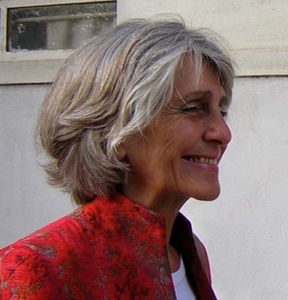
Beatriz Ferreyra entered the Groupe de Recherches Musicales in Paris in 1963 after hearing musique concrète for the first time.

She later worked with Pierre Schaeffer on the Solfège de l’Objet Sonore, but her own description of those early years is refreshingly different from the mythology surrounding institutional electronic music.

Ferreyra has said she arrived without an academic composition background and had to learn tape editing, filtering and recording directly through practice. She was fascinated less by traditional notes than by the physical character of sound itself. She has described hearing sounds as forms and colours, almost as though composing were another kind of painting.

That feels important because electronic music is often taught backwards.

First understand the technology.

Then make something.

Ferreyra’s story begins with fascination.

A sound was interesting enough that she needed to discover how to work with it.

The technical knowledge followed the desire to listen more closely.

That may be why early musique concrète still has something useful to teach producers surrounded by sophisticated software.

A new plug-in does not automatically produce a new way of hearing.

Sometimes the more difficult skill is noticing that an ordinary sound was already interesting before anyone processed it.

https://brahms.ircam.fr/en/composer/beatriz-ferreyra/biography

#BeatrizFerreyra #MusiqueConcrete #ElectroacousticMusic #SoundArt
She Composed With Her Ears First She Composed With Her Ears First Ressources IRCAM Biographie - Béatriz Ferreyra La biographie du compositeur Béatriz Ferreyra
Facebook LinkedIn WhatsApp Threads
More sharing options
X Reddit Pinterest Telegram Email
Brazilian Music

Electronic Music by Correspondence

Brazilian composer Jocy de Oliveira was already combining electronic sound with theatre and multimedia in the early 1960s. For Apague Meu Spotlight, presented in 1961, technological limitations in Brazil led to an extraordinary working method: electronic material connected with Luciano Berio had to travel between Brazil and the Studio di Fonologia in Milan on tape.

That detail stays with me.

Today two musicians on different continents can exchange an Ableton project in seconds. In 1961, collaboration with an electronic studio could mean physically transporting recorded sound across an ocean.

The delay must have changed the creative process. You could not endlessly adjust something in real time. Decisions had weight because communication itself required time and material.

De Oliveira continued combining electronic music with theatre, video and multimedia for decades. In 2026 her work received renewed attention through the documentary Universo Circular.

Electronic music history is often reduced to a few European and North American studios. Jocy de Oliveira makes that map considerably larger, and more complicated.

Home

#JocyDeOliveira #ElectroacousticMusic #BrazilianMusic #Multimedia

Electronic Music by Correspondence Electronic Music by Correspondence jocydeoliveira.com Jocy de Oliveira Site da Jocy de Oliveira
Facebook LinkedIn WhatsApp Threads
More sharing options
X Reddit Pinterest Telegram Email