Skip to content

Electronic Music Without the Screen

Land Art

Architecture for the Sun

Nancy Holt’s Sun Tunnels places four enormous concrete cylinders in Utah’s Great Basin Desert. The work turns sunlight, landscape and the movement of the earth into part of its structure. I like that the tunnels are massive yet their real material may be something untouchable: where light lands at a particular moment. Architecture usually gives us shelter from nature. Here it is built to notice nature more precisely.

https://www.diaart.org/media/_file/brochures/holt-tri-fold-brochure-for-website.pdf
#NancyHolt #LandArt #SunTunnels #LightArt

Earth Art

A Sculpture the Lake Can Edit

Robert Smithson built Spiral Jetty in 1970 from thousands of tons of black basalt and earth extending into Utah’s Great Salt Lake. Unlike sculpture protected inside a museum, it lives with changing water levels, salt, weather and time. That seems essential rather than accidental. The environment is not merely around the artwork. It keeps participating in what the artwork becomes.

https://diaart.org/media/_file/brochures/spiral-jetty-7-18-for-website-3.pdf

#RobertSmithson #LandArt #SpiralJetty #EarthArt

Contemporary Art

Infinity Needs a Small Room

Yayoi Kusama’s mirrored rooms create the impression of endless space using surprisingly limited ingredients: mirrors, light and repetition. Dancing Lights That Flew Up to the Universe is currently part of Guggenheim Pop: 1960 to Now. What stays with me is the contradiction. Infinity is experienced inside a carefully bounded room. Perhaps scale has less to do with physical size than with what an image convinces the mind to continue.

https://www.guggenheim.org/exhibition/guggenheim-pop

#YayoiKusama #InstallationArt #InfinityRoom #ContemporaryArt

The Guggenheim Museums and Foundation Guggenheim Pop: 1960 to Now | The Guggenheim Museums and Foundation From Andy Warhol to Maurizio Cattelan, this exhibition features Pop art from the collection and its enduring influence on contemporary artists.
Anni Albers

Thread as Modernism

Anni Albers treated weaving as more than decoration. At the Bauhaus and later Black Mountain College, textile became a way to think through structure, repetition, colour and material itself. What interests me is how modern the work still feels without needing a screen or machine. A grid made from thread can carry the same precision we now associate with pixels.

https://shop.tate.org.uk/anni-albers-exhibition-book-paperback/20189.html

#AnniAlbers #TextileArt #Bauhaus #Modernism

Animation

When Drawing Starts Moving

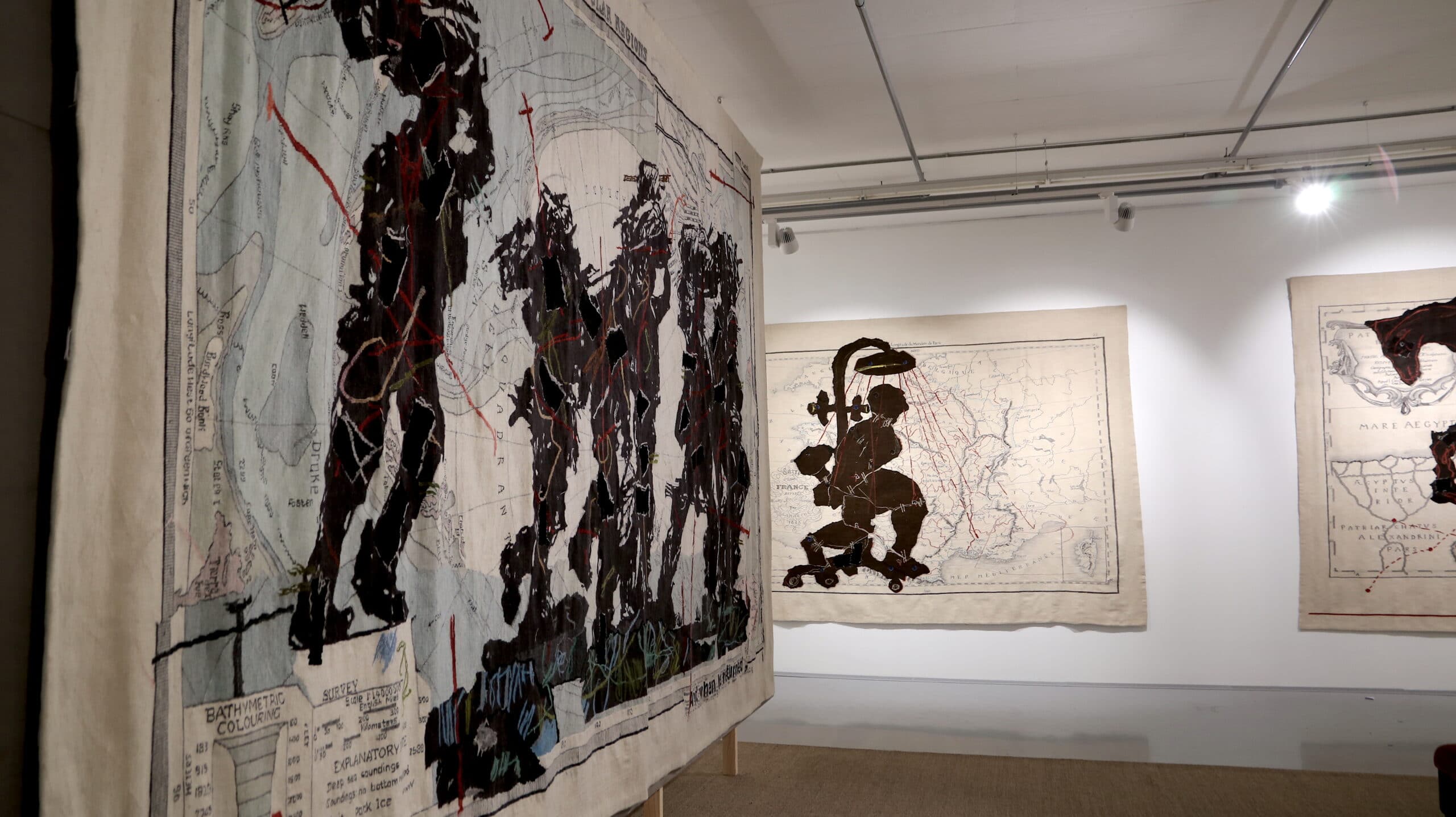
William Kentridge’s Shadow Procession turns simple silhouetted figures and objects into a moving procession. Some shapes transform almost absurdly: ordinary objects begin behaving like animals or vehicles. The means are deliberately visible and uncomplicated. That is what I like about it. Animation does not need realism to create life. Sometimes a cut-out shape moving across a wall can suggest more history, weight and emotion than a perfectly rendered digital figure.

‘Why Should I Hesitate: Putting drawings to work’ – Zeitz MOCAA hosts William Kentridge survey

#WilliamKentridge #Animation #ShadowArt #ContemporaryArt

Zeitz MOCAA 'Why Should I Hesitate: Putting drawings to work' - Zeitz MOCAA hosts William Kentridge survey - Zeitz MOCAA Cape Town, 25 August 2019: The largest ever survey exhibition by internationally acclaimed artist William Kentridge opens in Cape Town in August. This major exhibition will be hosted simultaneously in two parts by the Zeitz Museum of Contemporary Art Africa (Zeitz MOCAA), which will host his multi-media works; and at Norval Foundation, which will present […]
Contemporary Music

Electronic Music Without the Screen

Ryoji Ikeda is strongly associated with precise audiovisual work and data-driven visual environments, yet the Barbican’s 2026 Portrait weekend focused on music for acoustic ensembles across strings, percussion and voice. I like that shift. An artist closely identified with digital precision can move the same thinking into physical performers and acoustic space. Artistic identity becomes more interesting when the method survives after the familiar tools disappear.

https://www.barbican.org.uk/our-story/press-room/from-colombia-to-iceland-artisan-craft-to-unexpected-pop-ups-barbican-reveals

#RyojiIkeda #ExperimentalMusic #SoundArt #ContemporaryMusic

barbican.org.uk From Colombia to Iceland, artisan craft to unexpected pop-ups: Barbican reveals its Spring 2026 highlights | Barbican
Contemporary Art

When Everyday Objects Become a Cosmos

Sarah Sze builds installations from ordinary objects, images, videos and fragments that can shift in scale from something almost microscopic to something architectural. Her work makes me think about how easily attention moves between those extremes now. We zoom into a screen, step back into a room, then return to a tiny detail. Perhaps scale is no longer only a property of objects. It has become a habit of looking.

https://www.fondationcartier.com/en/collection/artists/sarah-sze

#SarahSze #InstallationArt #Sculpture #ContemporaryArt

Fondation Cartier Sarah Sze | Collection of the Fondation Cartier pour l'art contemporain — Fondation Cartier pour l’art contemporain Welcome to the new premises of the Fondation Cartier pour l’art contemporain at 2 Place du Palais-Royal, Paris.
Brazilian Art

The Image Cannot Hold Still

Lygia Clark’s Sundial can be folded into different configurations or flattened into a plane. Despite its geometric precision, there is no final position that reveals the “correct” sculpture. I like that instability. Museums usually train us to believe an artwork possesses a fixed form that must be protected. Clark instead makes change part of the object’s identity. The sculpture survives precisely because it refuses to remain the same.

https://www.moma.org/collection/works/91764

#LygiaClark #Sculpture #BrazilianArt #ParticipatoryArt

Computer Game After the

A Computer Game After the Game

Super Mario Clouds is more than nostalgia for an old Nintendo cartridge. Cory Arcangel exposes the hardware, altered cartridge, cables and projection instead of hiding the mechanism. That matters. Digital images often pretend they have no physical body, yet every cloud on a screen depends on machines, code and electricity. Showing the apparatus makes the apparently weightless image heavy again.

https://whitney.org/media/39041

#CoryArcangel #CreativeCoding #DigitalArt #GameCulture

Christian Marclay

Twenty-Four Hours Inside Cinema

Christian Marclay’s The Clock is built from film fragments showing clocks, watches and references to time, edited so the work follows the actual time of day for twenty-four hours. The clever mechanism is obvious. What interests me more is what happens to thousands of unrelated films when one rule connects them. Narrative disappears, but another structure appears. Editing can create relationships between images that were never meant to meet.

https://www.centrepompidou.fr/fileadmin/user_upload/Les_visites_du_Centre_Pompidou_-_Christian_Marclay_-_transcription_du_podcast.pdf

#ChristianMarclay #VideoArt #FilmArt #Editing

Experimental Music

Silencing Part of an Orchestra

Samson Young’s Muted Situation began with a deceptively simple idea: what happens if one layer of an event is deliberately removed from what we hear? In an orchestra, muting pitched sound can reveal breathing, movement and physical effort that music normally hides. I like the thought that silence does not necessarily mean absence. Sometimes removing the thing we expect to hear exposes an entirely different composition underneath it.

https://www.mplus.org.hk/en/magazine/samson-young-unheard-sounds/

#SamsonYoung #SoundArt #ExperimentalMusic #Listening

mplus.org.hk Samson Young: Unheard Sounds | M+ Museum Artist Samson Young explains the origins of his Muted Sounds series, in which musicians are instructed to perform without creating music