Skip to content

Amon Tobin Turned Recordings Into Instruments

Impossible Tasks Remedios Varo's

Remedios Varo Built Machines for Impossible Tasks

Remedios Varo’s paintings are filled with devices that almost look functional.

Wheels turn. Pipes connect rooms. Figures operate strange apparatus. Architecture behaves like machinery. Scientific instruments seem to have been designed for purposes that remain just outside ordinary logic.

A 2026 exhibition at Mexico City’s Museo de Arte Moderno brought together paintings, drawings, photographs, books and notebooks from the museum’s Remedios Varo collection. The material showed how carefully constructed this apparently dreamlike world actually was. The exhibition emphasised characters engaged in activities somewhere between scientific discovery and mystical ritual.

That combination is what keeps the paintings from becoming simple fantasy for me.

The impossible is presented with technical seriousness.

A machine may perform an absurd task, but somebody has still designed the gears.

Varo understood something that science fiction and experimental design repeatedly rediscover: an invented world becomes convincing when its objects obey internal rules.

You do not need to explain what the machine does completely.

You need to make it look as though somebody could.

That small difference gives imagination engineering.

https://www.gob.mx/cultura/articulos/remedios-varo-habitantes-de-lo-insolito

#RemediosVaro #Surrealism #MexicanArt #Painting

Remedios Varo Built Machines for Impossible Tasks Remedios Varo Built Machines for Impossible Tasks gob.mx Remedios Varo: Habitantes de lo insólito La exposición dedicada a Remedios Varo llega al Museo de Arte Moderno con un recorrido por su universo creativo, del 19 de marzo al 5 de julio de 2026.
Drawing the Soundtrack With

Drawing the Soundtrack With a Pen

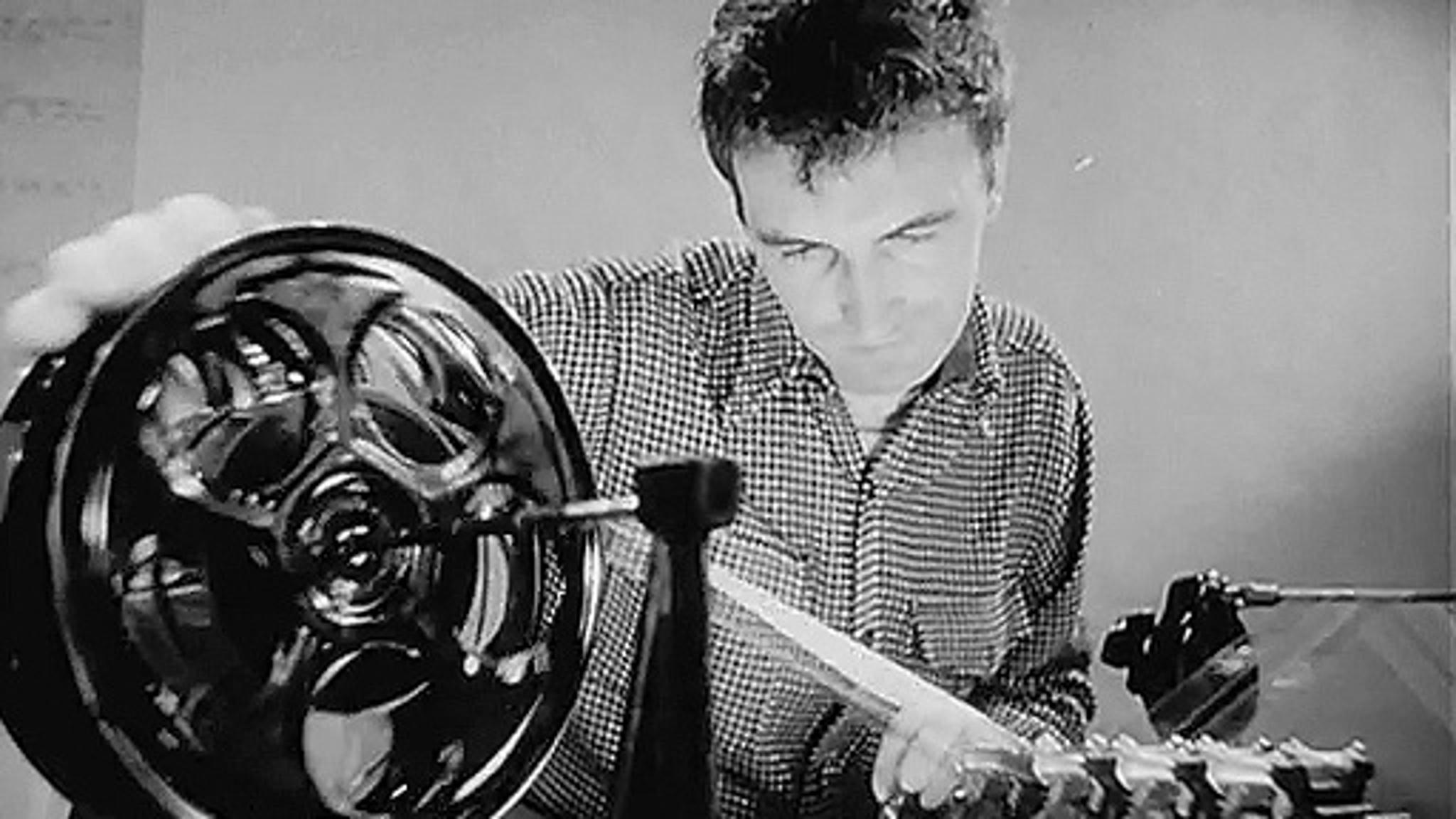
Norman McLaren discovered that sound on film did not necessarily have to be recorded with a microphone.

Optical film sound converts visual information on the soundtrack area of a film strip into audio. McLaren realised that if the system was reading shapes, he could create those shapes himself. He drew and scratched patterns directly into the optical soundtrack area and produced synthetic sounds without first generating them acoustically. The National Film Board’s Pen Point Percussion demonstrates exactly how the process works.

I love the directness of this.

Normally sound becomes an image only after software analyses it as a waveform or spectrum.

McLaren could move in the opposite direction.

Draw the image.

Hear what it sounds like.

That collapses animation and electronic composition into the same physical material.

A mark can simultaneously belong to cinema and music.

For contemporary audiovisual artists this remains a surprisingly useful idea. We often synchronise completed audio and completed visuals afterwards.

McLaren’s process suggests something deeper.

Design one system capable of generating both.

When sound and image share a source, synchronisation stops being an effect.

It becomes part of their anatomy.

https://www.nfb.ca/film/pen_point_percussion/

#NormanMcLaren #VisualMusic #ExperimentalFilm #OpticalSound

Drawing the Soundtrack With a Pen Drawing the Soundtrack With a Pen National Film Board of Canada Pen Point Percussion Norman McLaren explains how he makes synthetic sound on film. With an oscilloscope he first demonstrates what familiar sounds look like on the screen; next, how sound shapes …
Abstract Art

Alma Thomas Painted While Music Played

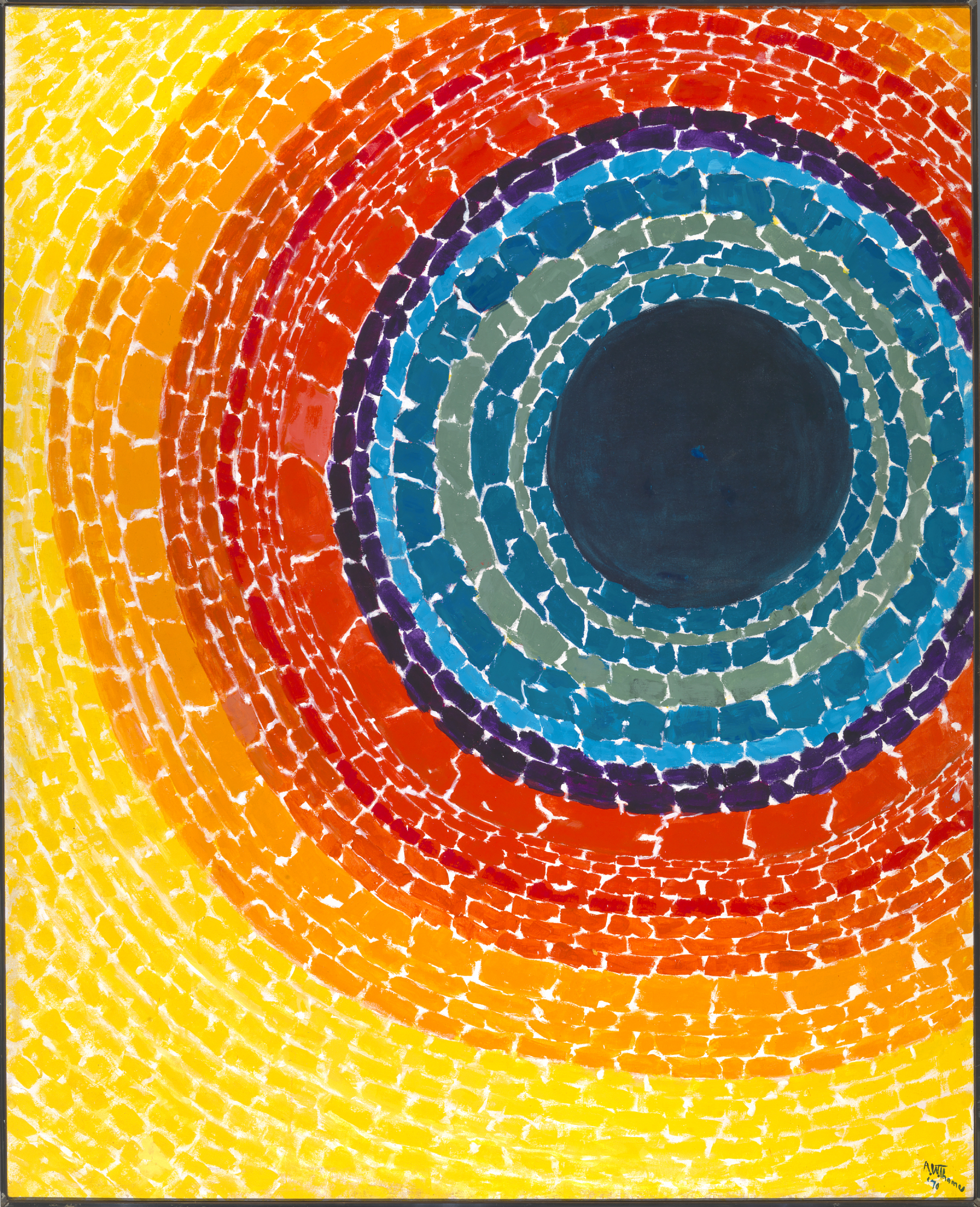
Alma Thomas spent decades teaching art before her most recognisable abstract paintings emerged after retirement. By then she was already in her seventies.

Her mature paintings use repeated blocks and strokes of colour separated by narrow areas of exposed canvas. The Smithsonian has documented another detail that makes those rhythms more interesting: Thomas frequently listened to music while she worked, and she thought carefully about relationships between visual composition and musical ideas such as sequence, contrast, harmony and rhythm. Her titles repeatedly connect colour, nature, space and music.

Look at the paintings with that in mind and the gaps become important.

The coloured marks do not form one continuous surface.

They arrive in pulses.

White canvas interrupts them like tiny rests between notes.

I do not think the paintings need to be translated literally into music. That would make them less interesting.

What matters is that rhythm is not owned by sound.

Repetition, interruption, tempo and variation can all exist visually.

Thomas also complicates one of art history’s favourite myths: the important artist revealed as a young genius.

Some of her strongest work came in her eighth decade.

Creative development does not always peak early.

Sometimes decades of looking are preparation.

https://americanart.si.edu/exhibitions/alma-thomas

#AlmaThomas #ColorPainting #AbstractArt #VisualRhythm

Alma Thomas Painted While Music Played Alma Thomas Painted While Music Played Smithsonian American Art Museum Composing Color: Paintings by Alma Thomas Alma Thomas spent decades teaching art before her most recognisable abstract paintings emerged after retirement. By then she was already in her seventies.…
Electronic Music

The Nigerian Synth Records Nobody Could Explain

William Onyeabor self-released a series of records in Nigeria between 1977 and 1985, then largely abandoned music and refused for years to explain much about how those recordings had been made.

That silence contributed to the mythology, but the music itself is more interesting than the mystery.

Onyeabor’s records combine long-form funk grooves, electronic keyboards, drum machines, repetition and synthesizer lines that can sound surprisingly close to later synth-pop and electro. Luaka Bop eventually spent years licensing and reintroducing his catalogue internationally. The label itself notes that many biographical claims surrounding Onyeabor were difficult to verify, which is a useful warning against allowing the legend to replace what can actually be heard.

What fascinates me is how awkwardly the music fits familiar histories of electronic pop.

We are often given a tidy geographical story: experimental electronics in Europe, disco in the United States, synth-pop emerging from particular Western cities.

Then a record from Enugu appears and the map becomes less convenient.

The synthesizer was never owned by one musical culture.

Once electronic instruments began travelling, musicians everywhere could discover uses their manufacturers had never imagined.

Music history becomes much more interesting when the lines stop moving only from the usual centres outward.

https://www.luakabop.com/products/william-onyeabor-who-is-william-onyeabor-1

#WilliamOnyeabor #NigerianMusic #SynthFunk #ElectronicMusic

The Nigerian Synth Records Nobody Could Explain The Nigerian Synth Records Nobody Could Explain luakabop.com Who is William Onyeabor? by William Onyeabor - Luaka Bop Little is known about William Onyeabor, and that’s the way he likes it. Sure, you might hear something about him if you go to Enugu, a rural and isolated town in Eastern Nigeria, where he lives in a hidden palace in the woods. As a crowned High Chief of his Igbo village, he is arbiter of his community. He also rejoices in expanding Nigeria’s energetic Christian music scene. The man is not in hiding. But he has turned his back on the music that made him a star to Enugu youth in the turbulent 1980s. What makes a man turn his back on his past? William Onyeabor is a powerful man and yet he chooses to remain a mystery. It is as if Onyeabor, in the prime of his force, has chosen to forget the work of his youth…the stinging Afro-funk; tickly wah-wah; searing jazz synth keyboard; runs suggesting spaceships leading into helium-voiced choruses singing in a jingle-jangle; tuning from the faraway stars; and that particular nostalgic sound found when the first electronic drum machines arrived to tantalize drummers everywhere. While most artists whose music has been obscured feel validated to have their work re-issued, Onyeabor imposed an obstacle to surmount for this anthology to exist. Even money – usually an effective persuader—initially failed to move him. It took time and serious wooing to persuade Onyeabor to let new listeners, from a non-African perspective, appreciate this work. The slim Onyeabor creation myth (of which there is no known corroboration by Onyeabor himself) claims that he was plucked from the ranks of his ravaged province and sent to study in Russia. In the 1970’s it was not unknown for the brightest African youth to get scholarships in Moscow. Onyeabor’s intention, apparently, was to be a filmmaker. Back in Nigeria he founded an eponymous company called Wilfilms, an outlet through which he released his musical recordings. It may or may not have released any films. He began investing in banks of synthesizers to create, as he sings “My kind of sound… for your Body and Soul.” The bloody Biafran/Nigerian Civil War had ended ten years before the release of Onyeabor’s second disc, 1979’s bubbly “Fantastic Man.” Biafra had attempted to make an independent nation of the eastern region where Onyeabor lived, and create a safe space for the Igbo tribe, often treated as second-class citizens, even massacred. But with Nigeria backed by Britain, its former colonial power, Biafra stood little chance. Instead of freedom, famine followed, and the strike for independence made Biafra synonymous with emaciated babies. The gap between rich and poor was broadening abruptly into a deep, virtually unbridgeable crevasse. The surge in the price of oil that was bringing London to its knees (and producing the bereft climate that spawned punk) was fattening Lagos — at least the city’s rich. Meanwhile, in that same city, it was common for taxpaying civilians to be hauled from their cars and horsewhipped in the street in front of their children for some phony infraction of authoritarian rules. Onyeabor’s politics, dancing on their bubbly synthesized beat, bit deep and permanently. Laconically crooning “You want another guy to stop a bullet for you?” in 1979’s “Why Go to War,” Onyeabor still sounds all too relevant, right now. “Atomic Bomb,” Onyeabor’s dance anthem, played on fears that were very real at the time – and still are. Temitope Kogbe, a Nigerian DJ who grew up dancing to his father’s copy of Onyeabor’s “Atomic Bomb” L.P., reminds us, “Though the Cold War…had petered off in the West, Africa was the new theater for this confrontation—in Angola, Mozambique, and most tragically in the Congo, where in 1961, the U.S.-backed Mobutu to kill Patrice Lumumba, who was feared to be a communist. So the Cold War and its threat of Atomic Bomb was still very much in the spirit of the times when the record was released in 1978.” But Onyeabor’s specifically political music did not dominate his output, unlike, say, Fela Kuti, whose songs were a running commentary on the military dictatorships. Onyeabor’s looks and sounds are both oceans away from the bleak perception of his struggling, starving territory. In the few extant photographs of Onyeabor, he sometimes embodies the “Fantastic Man,” in white flares and a gold-buttoned navy jacket, looking like a contented capitalist on his yacht. Elsewhere, he wears a white disco suit, as if he was a Philly soul man. His musical and sartorial choices place him as an outernational artist, not defined or confined by accidents of birth. The music, too, is a cosmopolitan brew—these are charming, imaginative, infectious dance tracks. Onyeabor’s biography is full of missing links. He, too, is a kind of missing link—Nigeria’s answer to synth-pop and New Wave. Within the African canon, he is a progressive adventurer who wielded the brand-new synthesizer like a musical passport. Now you can hear the uncharted, outer-space places his musical journey took him. -Vivien Goldman
Herbie Hancock

When the Turntable Became the Soloist

Herbie Hancock’s “Rockit” is often remembered as an early meeting between jazz, electro and hip-hop, but one detail still feels radical: Grandmixer D.ST’s turntables were not hiding behind the production. Scratching became one of the record’s most recognisable musical voices.

Hancock’s own account of the production describes multiple synthesizers, a vocoder and D.ST’s contribution. The Fairlight CMI used by Hancock to compose “Rockit” is now preserved by the Smithsonian. When the track reached the 1984 Grammy stage, D.ST stood visibly behind turntables while Hancock performed with electronic keyboards and a clavitar.

That visibility matters.

A record player had spent decades being the machine that reproduced finished music.

Hip-hop reversed its role.

The playback device became the instrument.

Move the record manually and recorded time moves with your hand. A fragment can be stopped, repeated, pushed forward or pulled backward.

“Rockit” helped place that idea in front of a huge mainstream audience.

There is a broader lesson here about creative technology.

An instrument does not always have to be invented.

Sometimes an existing machine becomes an instrument the moment somebody uses it incorrectly enough.

Feature: The Making of ‘Rockit’

#HerbieHancock #Rockit #Turntablism #HipHopHistory

When the Turntable Became the Soloist When the Turntable Became the Soloist Herbie Hancock Feature: The Making of 'Rockit' - Herbie Hancock In February of 1984, most of the world had never seen anything like it. As the camera panned across a thundering standing ovation at the 26th Grammy Awards in Los Angeles, the thoroughly mind-blown expressions on the faces of Julio Iglesias, Latoya Jackson, and Brooke Shields said it all. Jazz heavyweight Herbie Hancock and his ...
Amon Tobin

Amon Tobin Turned Recordings Into Instruments

Amon Tobin’s relationship with sampling changed dramatically over time.

His earlier work often began with fragments taken from existing records. By Foley Room, he had moved toward recording his own material, gathering sounds from environments that included animals, machines and factories. With ISAM in 2011, he pushed that process further. Field recordings became raw material for synthesis, and those transformed sounds were built into playable instruments from which the music could then be composed.

That distinction is important.

Sampling usually begins with the identity of a recorded sound.

A door closes.

A bee buzzes.

A machine rattles.

Process the recording far enough and that identity can disappear. What remains may be only a grain, envelope, texture or spectral character.

At that point the recording stops behaving like documentation.

It becomes synthesis material.

I find this more interesting than the endless argument about whether a synthesizer sounds “realistic.” Tobin’s method travels in the opposite direction.

Start with reality.

Destroy enough information that it becomes something imaginary.

Then make the imaginary sound playable again.

A microphone can therefore be the first oscillator in a synthesizer that has not yet been built.

https://ninjatune.net/release/amon-tobin/isam

#AmonTobin #ISAM #FieldRecording #SoundDesign

Amon Tobin Turned Recordings Into Instruments Amon Tobin Turned Recordings Into Instruments Ninja Tune ISAM by Amon Tobin Amon Tobin's relationship with sampling changed dramatically over time. His earlier work often began with fragments taken from existing records. By Foley R…
Clara Rockmore

Playing Without Touching Anything

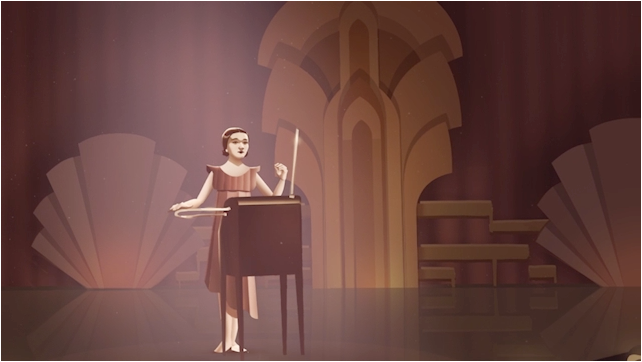
The theremin already looks impossible before anyone plays it.

There are no keys, strings, pads or valves. The performer moves two hands through electromagnetic fields around two antennas. One hand controls pitch, the other volume.

That absence of physical contact is precisely what makes the instrument so difficult. Clara Rockmore, originally trained as a violinist, transformed it from an electronic novelty into an instrument capable of remarkably controlled classical performance. She developed precise hand positions for pitch control and worked with Léon Theremin on improvements to the instrument, including an expanded range.

What interests me is the missing resistance.

A pianist feels the key.

A guitarist feels the fret.

A violinist feels the string.

The theremin gives almost no physical confirmation that the correct note has been reached.

The player has to construct an invisible geography in the air.

Move a finger slightly and pitch moves with it.

Rockmore therefore demonstrated something important about electronic instruments very early in their history.

Electronic performance does not have to mean pushing a button and allowing a machine to take over.

Sometimes technology removes the mechanical assistance musicians normally rely on and demands even more control from the body.

https://www.smithsonianmag.com/smart-news/todays-google-doodle-celebrates-electronic-music-pioneer-clara-rockmores-180958368/

#ClaraRockmore #Theremin #ElectronicInstrument #MusicHistory

Playing Without Touching Anything Playing Without Touching Anything Smithsonian Magazine Today’s Google Doodle Celebrates Electronic Music Pioneer Clara Rockmore The theremin virtuosa would have been 105 years old today
Bebe Barron

The Circuit Died After Performing

Louis and Bebe Barron did not use conventional synthesizers for Forbidden Planet in 1956. They constructed electronic circuits specifically for the film and recorded the unpredictable sounds those circuits produced.

Influenced by ideas from cybernetics, the Barrons treated circuits almost as primitive organisms. Individual systems behaved differently, changed as components heated up and could eventually fail completely. Bebe Barron recalled that some sounds could never be recreated after a circuit died. Tape speed, loops, reverberation and repeated re-recording were then used to transform this raw electronic activity into the film’s strange sonic world.

That is almost the opposite of a modern preset.

Load the same software tomorrow and the patch should sound exactly the same.

The Barrons worked with electronic instruments that could have a lifespan.

There is something fascinating about an electronic sound source becoming unrepeatable. We normally associate that quality with acoustic performance: one voice, one room, one particular take.

Here the machine itself becomes the unstable performer.

The Forbidden Planet score sounds futuristic, but the method behind it now feels strangely organic.

A circuit is constructed.

It behaves.

It is recorded.

Then it dies.

https://www.effectrode.com/knowledge-base/the-first-electronic-filmscore-forbidden-planet-a-conversation-with-bebe-barron/

#BebeBarron #LouisBarron #ForbiddenPlanet #ElectronicMusic

The Circuit Died After Performing The Circuit Died After Performing effectrode.com One moment, please... Louis and Bebe Barron did not use conventional synthesizers for Forbidden Planet in 1956. They constructed electronic circuits specifically for...
Fairlight CMI

Kate Bush Found a Song Inside One Sound

“Running Up That Hill” began not with a lyric or chord progression but with a sound Kate Bush found in the Fairlight CMI.

Bush later explained that she immediately liked the Fairlight sound that became the central riff and wanted a military, drone-like atmosphere around it. A Linn drum pattern was programmed, the Fairlight repeated its figure, and she developed the vocal over that foundation. The familiar sustained atmosphere also involved freezing Fairlight material through a Quantec processor.

I like this because it is an unusually clear example of sound design becoming composition.

A preset is normally treated as something that comes after the musical idea. Choose the notes first, then search for an appropriate sound.

Here the relationship is reversed.

The timbre suggested the music.

That is one reason synthesizers and samplers changed songwriting so profoundly. They did not merely provide electronic replacements for piano, strings or drums. A strange sound could suggest a rhythm, a register, an atmosphere and eventually an entire song.

There is another useful detail. The Fairlight sample was noisy.

Today that might send us searching immediately for a cleaner library.

Bush built one of her most recognisable recordings around it.

The imperfect sound was not a problem waiting to be fixed.

It was the reason to begin.

Hounds of Love

#KateBush #FairlightCMI #RunningUpThatHill #SoundDesign

Kate Bush Found a Song Inside One Sound Kate Bush Found a Song Inside One Sound Kate Bush Hounds of Love - Kate Bush “Running Up That Hill” began not with a lyric or chord progression but with a sound Kate Bush found in the Fairlight CMI. Bush later explained that she imm…
Analog Recording

Daft Punk Went Back to Tape

For Random Access Memories, Daft Punk made a strange decision for one of the world’s best-known electronic acts: instead of letting the computer solve everything, they deliberately brought musicians, analogue tape and large recording studios back into the centre of the process.

Engineer Peter Franco has described experiments in which material was recorded directly to tape, transferred between tape and Pro Tools, and compared to purely digital versions. The point was not nostalgia. They were listening to what tape physically did to the shape of a sound. Live musicians were recorded in studios including Henson in Los Angeles, while synthesizers such as the Prophet-5, Jupiter-6, Juno-106 and Yamaha CS-80 remained part of the electronic side of the record.

That makes Random Access Memories interesting beyond its songs.

Daft Punk had spent years helping normalise computer-based electronic production, then used their biggest album to question some of the efficiencies that computers had introduced.

A performance had to be good enough to keep. Tape imposed decisions. Musicians contributed tiny variations that would be unnecessarily difficult to program.

The record does not argue that analogue is better than digital. Pro Tools was still part of the process.

What it demonstrates is more useful: a production method has an aesthetic.

The easiest workflow is not always the one that produces the most interesting music.

https://www.soundonsound.com/people/recording-random-access-memories-daft-punk

#DaftPunk #RandomAccessMemories #AnalogRecording #MusicProduction

Daft Punk Went Back to Tape Daft Punk Went Back to Tape soundonsound.com Recording Random Access Memories | Daft Punk Daft Punk spent four years and over a million dollars on their quest to revisit the golden age of record production. Mick Guzauski and Peter Franco were with them all the way.
Brazilian Art

When Geometry Became Something You Could Enter

Brazilian artist Lygia Pape began within geometric abstraction, but eventually moved away from the idea that geometry should remain fixed on a surface.

That shift produced works in which bodies, movement and space became part of the structure.

Her Ttéia installations use almost impossibly thin threads stretched through architectural space. From certain viewpoints the threads form luminous geometric planes. Move slightly and the geometry changes or nearly disappears.

There is no single image.

The viewer has to construct it by moving.

That interests me because it turns perspective into an active medium.

Painting normally assumes that the viewer changes position while the artwork remains stable.

Ttéia makes the work itself seem unstable because your position determines which relationships become visible.

A few strands can create something that appears much larger than the amount of material suggests.

Almost everything is empty space.

The thread merely gives that emptiness edges.

Pape’s work belongs to the broader Brazilian experiments that questioned whether an artwork should remain a distant object. Geometry could become tactile, spatial and temporary.

It no longer had to describe space.

It could organise the space your body was already standing inside.

https://www.metmuseum.org/exhibitions/listings/2017/lygia-pape

#LygiaPape #Tteia #BrazilianArt #InstallationArt

When Geometry Became Something You Could Enter When Geometry Became Something You Could Enter metmuseum.org Brazilian artist Lygia Pape began within geometric abstraction, but eventually moved away from the idea that geometry should remain fixed on a...