Skip to content

Drawing the Synthesizer

Buchla

Space Was Part of the Patch

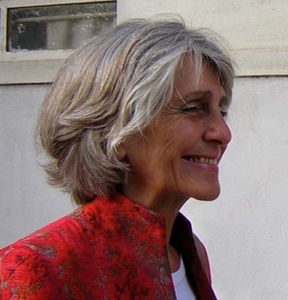
Suzanne Ciani did not treat quadraphonic sound as a larger stereo image. In her account of working with Don Buchla’s instruments, the four speakers were equal, and the position of a sound could be controlled with voltage. The Buchla 227 output module even included a function called Swirl, which could send sound continuously around the listening space at a controllable speed.

That distinction matters. Spatial audio is often added after a piece has been composed, as though location were another finishing effect beside reverb or compression. In Ciani’s setup, movement through the room could be linked to the same voltages shaping pitch, rhythm and timbre. A sound did not have to exist first and acquire a position later. Its trajectory could belong to its musical behaviour from the beginning.

This also changes what performance means. Turning a knob is not merely balancing loudspeakers. It is deciding how quickly a tone travels, whether it circles or remains fixed, and how one electronic gesture approaches the listener while another recedes. The room becomes part of the patch.

Today, immersive audio is often described by counting channels. Ciani’s work suggests a more useful measure: whether spatial movement has been composed with the same care as the sound itself.


https://www.womeninsound.com/issue-6/suzanne-ciani

#SuzanneCiani #Buchla #QuadraphonicSound #SpatialAudio

Space Was Part of the Patch Space Was Part of the Patch Women in Sound Zine Suzanne Ciani - Issue 6 — Women in Sound Zine Electronic music pioneer and composer Suzanne Ciani reflects on her 45 year relationship with Don Buchla and his instruments: “These machines are responsive. They communicate. They’re warm. They talk back.”
Facebook LinkedIn WhatsApp Threads
More sharing options
X Reddit Pinterest Telegram Email
Daphne Oram

Drawing the Synthesizer

In Daphne Oram’s Oramics system, electronic sound began as marks on transparent film. Waveforms and control shapes were drawn across 35mm strips, then read by photoelectric cells inside a machine that occupied much of a room. Ten strips could run at once, turning lines into instructions for pitch, rhythm, timbre and volume.

The fascinating part is not simply that Oram anticipated the graphic interfaces of later music software. Her machine kept the physical gesture visible. A curve was not decoration added after the sound; it participated in producing the sound. Composition, synthesis and drawing briefly became the same act.

https://collection.sciencemuseumgroup.org.uk/objects/co8242581/waveform-slide-for-oramics-machine

#DaphneOram #Oramics #ElectronicMusic #SoundDrawing

Drawing the Synthesizer Drawing the Synthesizer collection.sciencemuseumgroup.org.uk In Daphne Oram's Oramics system, electronic sound began as marks on transparent film. Waveforms and control shapes were drawn across 35mm strips...
Facebook LinkedIn WhatsApp Threads
More sharing options
X Reddit Pinterest Telegram Email
Album Composed Between Train

An Album Composed Between Train Stations

Brussels producer Le Motel made much of Pozo de Agua outdoors or while travelling, especially on trains. The album, due on 15 September 2026 through Constellation Tatsu, treats environmental recordings such as water, movement and air with the same compositional weight as more conventional instruments. Those materials drift through ambient electronics and overlapping rhythmic structures rather than sitting behind the music as documentary decoration.

That approach interests me because portable production has changed what a studio means. A laptop and headphones make it possible to compose almost anywhere, but most mobile production still tries to recreate the controlled conditions of a room. Noise is something to isolate yourself from. Le Motel allows the place he is moving through to enter the work.

A train is an especially good studio if you stop expecting silence. It supplies periodic impacts, vibration, changing landscapes and a rhythm that belongs to the journey rather than to the sequencer. Even concentration changes when the physical location keeps moving.

Field recording is sometimes treated as a separate discipline, as though one first collects the world and later turns it into music. Pozo de Agua suggests a softer boundary. Composition can happen while the world is already passing through the microphone.

https://ctatsu.com/

#LeMotel #PozoDeAgua #FieldRecording #AmbientMusic

An Album Composed Between Train Stations An Album Composed Between Train Stations ctatsu.com Constellation Tatsu Home page of Constellation Tatsu, a label from Oakland. adventurous with spiritual artistic sensibilities
Facebook LinkedIn WhatsApp Threads
More sharing options
X Reddit Pinterest Telegram Email
Audiovisual Art

The Album Belongs to a Video Artist Too

Solari, arriving on 25 September 2026, is the first release under the Courant Zéro name by Montréal sound and video artist Maxime Corbeil-Perron. His background in electroacoustic composition remains audible, but the album moves between ambient passages, rhythmic electronic music and dense digital structures rather than presenting itself as academic electroacoustics. It was recorded and mixed across Montréal, Morelia, Mexico City and Stockholm.

Corbeil-Perron is interesting for LumLux Art because the separation between music and moving image is already unstable in his practice. Sound does not simply accompany visuals, nor does video function as packaging added once the music is finished. Both come from a way of thinking about structure, texture, digital processing and time.

That matters in electronic work because the tools themselves increasingly overlap. A modulation curve can control brightness as easily as frequency. A rhythmic event can trigger a sound, a cut or a change in geometry. The difference between an audiovisual artist and an electronic musician can sometimes come down to which output cable is being watched.

Solari can be heard entirely as an album, but knowing that its maker also thinks through moving images changes the way its rapid transitions and spatial textures read. Some music feels composed not only across time but across an imagined screen.

CST194 Courant Zéro | Solari

#CourantZero #Electroacoustic #ElectronicMusic #AudiovisualArt

The Album Belongs to a Video Artist Too The Album Belongs to a Video Artist Too Constellation CST194 Courant Zéro | Solari Courant Zéro is the new moniker of Montréal multi-media installation artist and Kohlenstoff label co-founder Maxime Corbeil-Perron, signalling his return to purely recording-based electronic music production following several years focused on award-winning experimental film and audio-visual works. Solari channels his c
Facebook LinkedIn WhatsApp Threads
More sharing options
X Reddit Pinterest Telegram Email
Beatriz Ferreyra

She Composed With Her Ears First

Beatriz Ferreyra entered the Groupe de Recherches Musicales in Paris in 1963 after hearing musique concrète for the first time.

She later worked with Pierre Schaeffer on the Solfège de l’Objet Sonore, but her own description of those early years is refreshingly different from the mythology surrounding institutional electronic music.

Ferreyra has said she arrived without an academic composition background and had to learn tape editing, filtering and recording directly through practice. She was fascinated less by traditional notes than by the physical character of sound itself. She has described hearing sounds as forms and colours, almost as though composing were another kind of painting.

That feels important because electronic music is often taught backwards.

First understand the technology.

Then make something.

Ferreyra’s story begins with fascination.

A sound was interesting enough that she needed to discover how to work with it.

The technical knowledge followed the desire to listen more closely.

That may be why early musique concrète still has something useful to teach producers surrounded by sophisticated software.

A new plug-in does not automatically produce a new way of hearing.

Sometimes the more difficult skill is noticing that an ordinary sound was already interesting before anyone processed it.

https://brahms.ircam.fr/en/composer/beatriz-ferreyra/biography

#BeatrizFerreyra #MusiqueConcrete #ElectroacousticMusic #SoundArt

She Composed With Her Ears First She Composed With Her Ears First Ressources IRCAM Biographie - Béatriz Ferreyra La biographie du compositeur Béatriz Ferreyra
Facebook LinkedIn WhatsApp Threads
More sharing options
X Reddit Pinterest Telegram Email
Bruce Haack

Bruce Haack Wired People Into Synthesizers

Bruce Haack spent much of his career building electronic instruments rather than waiting for manufacturers to invent the ones he wanted.

One of the strangest was the Dermatron, an instrument that used the electrical conductivity of human skin as part of its control system. Haack demonstrated versions of it on American television during the 1960s, at one point using performers’ bodies as part of the circuit.

At the same time, he was producing electronic music for children, theatre, advertising and his own increasingly unusual records. The Electric Lucifer appeared on Columbia in 1970.

What I like about the Dermatron is that it makes the word “interface” very literal.

Modern electronic instruments usually place something between the body and electricity.

A key.

A pad.

A touchscreen.

Haack wondered whether the body itself could become part of the control voltage.

That idea no longer seems entirely eccentric. Sensors, conductive materials and biofeedback now appear regularly in interactive art.

Haack reached similar territory using homemade electronics at a time when the commercial synthesizer industry had barely begun.

Sometimes technological history looks cleaner than it really was because we remember the products that survived.

The homemade machines are easier to forget.

https://www.brucehaack.com/biography

#BruceHaack #ElectronicMusic #InventedInstruments #MusicTechnology

Bruce Haack Wired People Into Synthesizers Bruce Haack Wired People Into Synthesizers Bruce Haack Biography — Bruce Haack Bruce Haack spent much of his career building electronic instruments rather than waiting for manufacturers to invent the ones he wanted. One of...
Facebook LinkedIn WhatsApp Threads
More sharing options
X Reddit Pinterest Telegram Email