Skip to content

Art Stream

Experimental Film

Visual Music Before Computers

Mary Ellen Bute wanted abstract images to possess something painting could not give her: actual duration. She turned to film and, between the 1930s and 1950s, created abstract animations in which shapes, light and movement were organised in close relationship with music. Her work also included technological experiments involving oscilloscopes and electronic imagery. Several of her films reached audiences at places such as Radio City Music Hall, an unusual level of public exposure for experimental abstraction.

What interests me from a VJ perspective is how familiar the ambition feels.

We now open Resolume, TouchDesigner or After Effects and assume that sound can be translated into movement almost automatically.

Bute was asking similar questions before digital graphics existed.

What does a musical phrase look like?

Should a visual form follow rhythm literally?

Can colour behave like orchestration?

How can movement produce something equivalent to musical tension?

The technology changes dramatically, but those questions hardly change at all.

That is why early experimental film can be more useful to a contemporary VJ than another software tutorial.

Software teaches us how to make an effect.

Bute reminds us to ask why an image should move in the first place.

https://www.eastman.org/mary-ellen-bute-rhythms-light

#MaryEllenBute #VisualMusic #ExperimentalFilm #VJHistory

Visual Music Before Computers Visual Music Before Computers eastman.org Mary Ellen Bute wanted abstract images to possess something painting could not give her: actual duration. She turned to film and, between the...
Facebook LinkedIn WhatsApp Threads
More sharing options
X Reddit Pinterest Telegram Email
Electronic Pioneer

The Blind Synthesist Building Other Worlds

Pauline Anna Strom recorded a remarkable series of electronic albums during the 1980s, much of it released independently in tiny vinyl and cassette editions. Her work later disappeared into collector culture before being gathered in Trans-Millenia Music, an archival collection drawn from music made between 1982 and 1988.

Strom was blind from birth.

I mention that carefully because it is tempting to turn disability into a simple explanation for an artist’s work. Her music does not need that story in order to be interesting.

What fascinates me instead is the scale of the worlds she created inside a home-produced synthesizer practice that received little mainstream attention at the time.

The titles alone suggest imagined geography: “Virgin Ice,” “Spatial Spectre,” “Rain on Ancient Quays,” “Cruising Altitude 36,000 Feet.”

There is something very modern about this kind of independent world-building.

One person, synthesizers, recording equipment and no requirement for a large institution.

Today Bandcamp and digital distribution make that model ordinary. In the early 1980s, self-releasing cassettes could mean almost disappearing.

The strange thing is that obscurity preserved the music from being fixed to one fashionable moment.

When listeners rediscovered Strom decades later, the future she had imagined was still waiting there.

Pauline Anna Strom – Trans-Millenia Music

#PaulineAnnaStrom #SynthMusic #ElectronicPioneer #MusicRediscovery

The Blind Synthesist Building Other Worlds The Blind Synthesist Building Other Worlds RVNG Intl. Pauline Anna Strom - Trans-Millenia Music (RVNG Intl.) Otherworldly and anomalous, hushed and hallucinatory, Pauline Anna Strom’s unique style of inner space music reaches across time to futures and pasts far from our own. Trans-Millenia Music compiles eighty minutes of Strom’s most evocative work, composed and recorded between 1982 and 1988, for the first authorized overview of the enigmatic Bay Area composer.
Facebook LinkedIn WhatsApp Threads
More sharing options
X Reddit Pinterest Telegram Email
Environmental Music

Tokyo Ambient Without Escaping Tokyo

Hiroshi Yoshimura’s GREEN was recorded during the winter of 1985–86 in his home studio. The music uses Yamaha FM synthesizers, machines often associated with the bright and precise digital sound of the 1980s, but Yoshimura uses them to create something restrained, spacious and remarkably soft. He explained that “green” referred not simply to a colour but to the comfortable scenery of a natural cycle.

Yoshimura is interesting because ambient music for him was often connected to actual environments. He made music for museums, galleries, public spaces, television, fashion and other commissioned situations.

That makes ambient less like a genre and more like environmental design.

The composer is not only asking what sounds should occur.

He is asking what sound should do to a place.

I also like the contradiction inside GREEN: digital FM synthesis producing something that feels organic.

There is no attempt to disguise the synthesizer as birds, wind or water. Instead Yoshimura creates an electronic environment gentle enough that the listener begins making those associations independently.

Perhaps natural sound does not require imitation.

Sometimes it requires leaving enough room for the imagination to finish the landscape.

GREEN

#HiroshiYoshimura #JapaneseAmbient #FMSynthesis #EnvironmentalMusic

Tokyo Ambient Without Escaping Tokyo Tokyo Ambient Without Escaping Tokyo Light in the Attic GREEN Barely known outside of his home country during his lifetime, the late Japanese ambient music pioneer Hiroshi Yoshimura has seen his global stature rise steadily in the past few years. This edition marks a reissue of the highly sought-after and impossible-to-find album. It features the original mix preferred by Yoshimura himself, previously available only on the initial Japanese vinyl release (a limited edition remixed version of the album, with added sound effects, was released on CD in the US).
Facebook LinkedIn WhatsApp Threads
More sharing options
X Reddit Pinterest Telegram Email
ARP2500

One Synthesizer for Three Hours

Éliane Radigue spent years working with the ARP 2500 synthesizer, often producing changes so gradual that they can initially seem almost motionless. Her Trilogie de la Mort consists of three extended works: Kyema, Kailasha and Koumé. Kyema, premiered in 1988, lasts more than an hour and was produced with the ARP 2500 onto magnetic tape. The trilogy developed through Radigue’s engagement with Tibetan Buddhism and the states of consciousness described around death and rebirth.

What interests me technically is the patience.

Synthesizers are often demonstrated through change. New patch. New modulation. New sequence. Another oscillator.

Radigue discovered how much can happen when almost nothing appears to happen.

A sustained electronic tone is never completely still. Frequencies interfere. Small changes alter beating patterns. Harmonics emerge and disappear according to listening position, volume and the acoustics of the room.

The listener begins doing part of the work.

After enough time, attention becomes more sensitive.

That makes Radigue’s music almost the reverse of contemporary digital culture. It does not compete for attention by introducing another event.

It removes events until attention itself becomes audible.

https://elianeradigue.bandcamp.com/album/trilogie-de-la-mort

#ElianeRadigue #ARP2500 #DroneMusic #Electroacoustic

One Synthesizer for Three Hours One Synthesizer for Three Hours Éliane Radigue Trilogie de la Mort, by Éliane Radigue 3 track album
Facebook LinkedIn WhatsApp Threads
More sharing options
X Reddit Pinterest Telegram Email
Black Ark

Four Tracks Were Enough for Black Ark

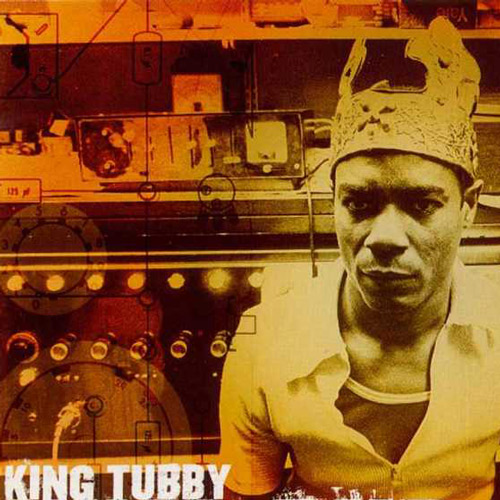
Lee “Scratch” Perry’s Black Ark studio in Kingston became one of the most influential recording environments in reggae despite being technically modest. The studio, built behind Perry’s home in 1973, worked with relatively limited equipment, including four-track recording, yet Perry produced extraordinarily dense records through layering, saturation, echo, re-recording and unconventional studio manipulation.

That feels almost absurd when compared with contemporary production.

Ableton can give me practically unlimited tracks. Perry had four.

Yet Black Ark recordings rarely sound small.

This is where track count becomes misleading. A recorded track is not necessarily one musical event. Something can be recorded, processed, bounced together with something else and returned to tape as new material. The studio becomes recursive.

Dub made the mixing desk creative rather than administrative.

Mute something.

Send a fragment into echo.

Bring it back unexpectedly.

Let saturation accumulate instead of cleaning it away.

The Black Ark is a reminder that a studio does not become powerful because it preserves every option.

Sometimes the opposite happens.

When options are scarce, every destructive decision matters more, and destruction itself can become part of composition.

https://jamaicanmusicatlas.com/entity/studio/black-ark

#LeeScratchPerry #BlackArk #Dub #StudioAsInstrument

Four Tracks Were Enough for Black Ark Four Tracks Were Enough for Black Ark jamaicanmusicatlas.com Black Ark Lee "Scratch" Perry's studio behind his home at Washington Gardens, Kingston, built in 1973 and running until its destruction by fire in 1979. Working with modest four-track equipment, Perry produced a sound nobody has convincingly reproduced — layered, saturated, drenched in echo and unexpected noise — on records for Max Romeo, Junior Murvin, the Congos and The Heptones, and on his own productions. The Black Ark years are the strongest argument that the studio itself, and not only the players, is an instrument in Jamaican music. The studio's 1979-80 destruction followed a period of personal crisis for Perry: his wife Pauline left him, taking their children, and he began covering the walls with dense, handwritten graffiti before eventually trashing and burning the building. People who knew him at the time attributed the breakdown to accumulating strain, extortion, drink and drug excess, and an open-door policy that let hangers-on take over the yard. Twenty years later, Perry gave Bradley a different, more deliberate explanation directly: that he had come to believe everyone around him, family, friends, peers, his record company, was stealing his music, and that destroying the means of making it was the only way to stop them.
Facebook LinkedIn WhatsApp Threads
More sharing options
X Reddit Pinterest Telegram Email
Bach Had

Bach Had to Be Built Note by Note

When Switched-On Bach appeared in 1968, the Moog synthesizer was still far from the convenient polyphonic instrument we now associate with keyboards. Wendy Carlos worked closely with Robert Moog and used multitrack recording to construct Bach’s polyphonic music from an electronic instrument that could produce only limited musical information at once. Carlos even built her own eight-track recording machine.

That means a piece that a pianist can perform with ten fingers became something closer to architectural construction.

Voice after voice had to be recorded and fitted together.

Today we can place an orchestral sample library on one MIDI track and play an entire arrangement immediately. Carlos faced almost the reverse situation: extraordinary control over timbre but painfully limited simultaneous performance.

The limitation forced listening at another level.

If every line has to be built separately, orchestration stops being an abstract concept. You have to decide what every note actually is.

Switched-On Bach is often remembered because it helped bring the Moog into popular consciousness. I find the production process more interesting.

Carlos was not using technology to make music easier.

She was using an impossibly cumbersome machine because it allowed music to sound like something that had barely existed before.

https://www.wendycarlos.com/biog.html

#WendyCarlos #Moog #SwitchedOnBach #ElectronicMusic

Bach Had to Be Built Note by Note Bach Had to Be Built Note by Note wendycarlos.com Wendy Carlos Biography A biography of the composer and electronic synthesizer pioneer.
Facebook LinkedIn WhatsApp Threads
More sharing options
X Reddit Pinterest Telegram Email
Beatmaking

The Drum Machine That Became a Signature

J Dilla’s Akai MPC3000 now sits in the Smithsonian National Museum of African American History and Culture. It is an extraordinary fate for what was once simply a production machine: sixteen pads, a sampler, MIDI sequencing and a small display. The museum also preserves his Minimoog Voyager.

What interests me is that Dilla became famous partly for doing something machines are normally designed to prevent.

He made programmed rhythm feel unstable.

His beats could place kick, snare and hi-hat in relationships that seem slightly wrong if judged against a perfectly divided grid, yet completely convincing when heard as groove. The result influenced generations of hip-hop, neo-soul and electronic producers who began questioning whether quantisation was actually improving their rhythm.

There is a useful contradiction here.

The MPC is an instrument built around numerical time. Its sequencer knows exactly where every event is.

Dilla made listeners forget that.

That may be one definition of mastering technology: not demonstrating what a machine can do, but making the machine behave as though it has forgotten its own rules.

The Smithsonian has preserved the hardware.

The more important inheritance is probably the permission Dilla gave producers to stop correcting everything.

https://nmaahc.si.edu/object/nmaahc_2014.139.1

#JDilla #MPC3000 #HipHopProduction #Beatmaking

The Drum Machine That Became a Signature The Drum Machine That Became a Signature nmaahc.si.edu J Dilla’s Akai MPC3000 now sits in the Smithsonian National Museum of African American History and Culture. It is an extraordinary fate for what...
Facebook LinkedIn WhatsApp Threads
More sharing options
X Reddit Pinterest Telegram Email
Burial

Burial Made Rhythm Without a Grid

One of the strangest details behind Burial’s Untrue is that its unstable rhythms were not the result of an elaborate generative system or some secret piece of sequencing software. Burial said he deliberately made the album without a sequencer. He assembled sounds directly in an audio editor, forcing pieces together by ear rather than arranging them against a conventional beat grid.

That explains something I have always liked about Untrue. The drums often seem to be remembering a rhythm rather than executing one perfectly. Hits arrive slightly early or late, voices float across bar lines and the whole structure seems capable of falling apart without ever actually doing so.

In a modern DAW it takes almost no effort to make time perfect. Turn on the grid, quantise the drums and duplicate eight bars. Burial’s method removed that convenience.

The limitation became part of the music.

It makes me wonder how much of an artist’s sound is produced not by the equipment they own, but by the functions they choose not to use.

A perfectly capable computer can become an experimental instrument simply by refusing to let it behave efficiently.

Burial, Untrue

#Burial #Untrue #UKBass #ElectronicProduction

Burial Made Rhythm Without a Grid Burial Made Rhythm Without a Grid Hyperdub Burial, Untrue Redesigned for Hyperdub's 20th Anniversary by Burial and Optigram, Untrue gets a new look, stripped down artwork and new labels and inners on clear vinyl, which is available to buy exclusively from us, The CD and Digital remain the same .
Facebook LinkedIn WhatsApp Threads
More sharing options
X Reddit Pinterest Telegram Email
Culture Before Video Oskar

VJ Culture Before Video

Oskar Fischinger was experimenting with multiple projected images before electronic video existed.

During the 1920s, his Raumlichtmusik performances used several film and slide projectors simultaneously to create abstract moving environments. Elsewhere he explored single-frame animation, scratching directly onto film and even experiments in drawn optical sound.

This is where experimental-film history begins to overlap surprisingly well with modern VJ culture.

A contemporary VJ can run several video layers, blend them, map them onto architecture and synchronise them with music in realtime. Fischinger had none of that digital flexibility. Every additional projector was another physical machine, another film path and another alignment problem.

Yet the artistic question was already there.

Why should cinema consist of one rectangular image directly in front of a seated audience?

Once several projections begin occupying space, the screen stops being only a window. Light itself becomes material.

Fischinger later became famous for tightly synchronised abstract animation, but I find these earlier multiple-projection experiments even more interesting today.

The technology is obsolete.

The idea is not.

A century later, Resolume, projection mapping and immersive audiovisual performances are still exploring what happens when moving images escape from a single screen.

https://centerforvisualmusic.org/Fischinger/

#OskarFischinger #VisualMusic #ExpandedCinema #VJCulture

VJ Culture Before Video VJ Culture Before Video centerforvisualmusic.org Fischinger - CVM pages Oskar Fischinger was experimenting with multiple projected images before electronic video existed. During the 1920s, his Raumlichtmusik...
Facebook LinkedIn WhatsApp Threads
More sharing options
X Reddit Pinterest Telegram Email
Arthur Russell

The Cellist Who Walked Into Disco

Arthur Russell arrived in New York as an experimental cellist and composer. Then, in 1977, an unexpected visit to a disco changed the direction of his work.

Instead of treating club music as intellectually inferior to experimental composition, Russell became fascinated by repetition and by what happened socially when people shared it on a dancefloor. He went on to make influential disco recordings while continuing to work with cello, voice, improvisation and the downtown avant-garde.

By World of Echo, the borders had almost disappeared. Cello and voice pass through echo and feedback until the processing feels inseparable from the composition itself.

What I like about Russell is that he makes our genre categories look unnecessarily rigid.

Disco and experimental music are often placed on opposite sides of an imaginary wall. One supposedly belongs to bodies and clubs, the other to listening rooms and ideas.

Russell seems to have heard repetition in both.

A cello phrase repeating through delay can become as hypnotic as a dance groove. A disco record can be as formally strange as an avant-garde composition.

His career is a useful reminder that experimental music does not need to sound difficult.

Sometimes the experiment is simply refusing to respect the border everybody else has agreed to keep.

https://www.laphil.com/people/arthur-russell

#ArthurRussell #WorldOfEcho #ExperimentalMusic #Disco

The Cellist Who Walked Into Disco The Cellist Who Walked Into Disco laphil.com Arthur Russell Arthur Russell arrived in New York as an experimental cellist and composer. Then, in 1977, an unexpected visit to a disco changed the direction of his work…
Facebook LinkedIn WhatsApp Threads
More sharing options
X Reddit Pinterest Telegram Email
Daphne Oram

Drawing Automation Before the DAW

Daphne Oram imagined something remarkably close to visual music sequencing decades before a modern DAW existed.

Her Oramics system allowed a composer to draw information onto strips of 35mm film. Optical sensors translated those markings into control signals governing properties such as pitch, dynamics and timbre. Waveforms could also be drawn and scanned. Instead of turning knobs while tape rolled, Oram wanted musical behaviour to become something the composer could see and shape directly.

Look at a modern automation lane.

A line rises and the filter opens. Another curve changes volume. A timeline moves from left to right while parameters evolve.

The resemblance is difficult to ignore.

But Oram was developing these ideas in an era when electronic composition often meant physically cutting magnetic tape. She left the BBC in 1959 and pursued the system largely outside a major institutional studio, eventually producing a working prototype that remained an evolving experimental machine rather than a commercial product.

That may be why Daphne Oram still feels strangely absent from the popular history of synthesizers.

We remember products that reached shops.

We are less good at remembering machines that demonstrated what the future might look like before the market was ready to manufacture it.

https://www.daphneoram.org/oramicsmachine/

#DaphneOram #Oramics #ElectronicMusic #SynthHistory

Drawing Automation Before the DAW Drawing Automation Before the DAW Daphne Oram The Oramics Machine Daphne Oram imagined something remarkably close to visual music sequencing decades before a modern DAW existed. Her Oramics system allowed a...
Facebook LinkedIn WhatsApp Threads
More sharing options
X Reddit Pinterest Telegram Email