Skip to content

Dub

Art Stream
Dub

The Repairman Who Reinvented the Mix

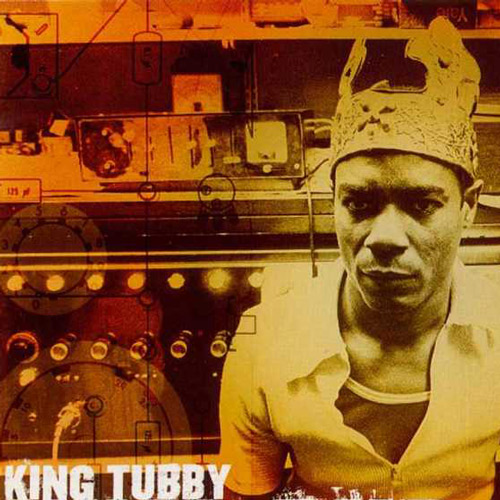
Osbourne Ruddock, better known as King Tubby, began as an electronics and radio repairman in Kingston. His technical knowledge made him valuable to Jamaica’s growing sound-system culture, and by 1964 he was operating Tubby’s Hometown Hi-Fi. His later studio work helped push the mixing console itself toward becoming a musical instrument.

That shift remains one of the most important ideas in modern production.

Normally a mixer is supposed to balance what musicians have already recorded.

Dub asks a different question.

What happens if the mix is the performance?

Vocals disappear. Drums suddenly remain alone. Echo throws a fragment several seconds into the future. A mistake can become a feature if it sounds good enough to repeat. Scientist later described dub precisely in those terms: engineers reorganising existing recordings into new ones.

The producer no longer stands outside the music making it tidy.

The studio becomes playable.

Much of contemporary electronic production still works inside the space Tubby helped open.

https://www.reggaeville.com/artist-details/king-tubby/about/
#KingTubby #Dub #JamaicanMusic #StudioAsInstrument

The Repairman Who Reinvented the Mix The Repairman Who Reinvented the Mix www.reggaeville.com Biography: King Tubby Reggaeville.com - World of Reggae in One Village
Facebook LinkedIn WhatsApp Threads
More sharing options
X Reddit Pinterest Telegram Email
Black Ark

Four Tracks Were Enough for Black Ark

Lee “Scratch” Perry’s Black Ark studio in Kingston became one of the most influential recording environments in reggae despite being technically modest. The studio, built behind Perry’s home in 1973, worked with relatively limited equipment, including four-track recording, yet Perry produced extraordinarily dense records through layering, saturation, echo, re-recording and unconventional studio manipulation.

That feels almost absurd when compared with contemporary production.

Ableton can give me practically unlimited tracks. Perry had four.

Yet Black Ark recordings rarely sound small.

This is where track count becomes misleading. A recorded track is not necessarily one musical event. Something can be recorded, processed, bounced together with something else and returned to tape as new material. The studio becomes recursive.

Dub made the mixing desk creative rather than administrative.

Mute something.

Send a fragment into echo.

Bring it back unexpectedly.

Let saturation accumulate instead of cleaning it away.

The Black Ark is a reminder that a studio does not become powerful because it preserves every option.

Sometimes the opposite happens.

When options are scarce, every destructive decision matters more, and destruction itself can become part of composition.

https://jamaicanmusicatlas.com/entity/studio/black-ark

#LeeScratchPerry #BlackArk #Dub #StudioAsInstrument

Four Tracks Were Enough for Black Ark Four Tracks Were Enough for Black Ark jamaicanmusicatlas.com Black Ark Lee "Scratch" Perry's studio behind his home at Washington Gardens, Kingston, built in 1973 and running until its destruction by fire in 1979. Working with modest four-track equipment, Perry produced a sound nobody has convincingly reproduced — layered, saturated, drenched in echo and unexpected noise — on records for Max Romeo, Junior Murvin, the Congos and The Heptones, and on his own productions. The Black Ark years are the strongest argument that the studio itself, and not only the players, is an instrument in Jamaican music. The studio's 1979-80 destruction followed a period of personal crisis for Perry: his wife Pauline left him, taking their children, and he began covering the walls with dense, handwritten graffiti before eventually trashing and burning the building. People who knew him at the time attributed the breakdown to accumulating strain, extortion, drink and drug excess, and an open-door policy that let hangers-on take over the yard. Twenty years later, Perry gave Bradley a different, more deliberate explanation directly: that he had come to believe everyone around him, family, friends, peers, his record company, was stealing his music, and that destroying the means of making it was the only way to stop them.
Facebook LinkedIn WhatsApp Threads
More sharing options
X Reddit Pinterest Telegram Email
Dub

Dub as the Glue

New Zealand duo Pitch Black, Michael Hodgson and Paddy Free, have been performing together since 1996. Their music moves between ambient electronics, acid lines, heavy rhythmic structures and dub. Their own description of the project is revealing: dub is the glue holding those different musical directions together.

I like that way of thinking about genre.

Usually we describe a track by deciding which genre it belongs to. “Glue” suggests another use. A genre can become a method that allows unrelated materials to coexist.

Dub is particularly suited to that role because so much of its identity lies in production decisions: space, delay, bass, subtraction, echoes and changing relationships between elements. You can apply those ideas without copying a traditional reggae arrangement.

Pitch Black’s live performances also combine electronic sound with an important visual component, making the project feel closer to an audiovisual environment than simply two people reproducing studio tracks.

Sometimes influence is strongest when you stop copying its surface and start using its logic.

https://www.pitchblacknz.com/about.html

#PitchBlack #NewZealandMusic #Dub #ElectronicMusic

Dub as the Glue Dub as the Glue pitchblacknz.com Pitch Black New Zealand duo Pitch Black, Michael Hodgson and Paddy Free, have been performing together since 1996. Their music moves between ambient electronics, acid…
Facebook LinkedIn WhatsApp Threads
More sharing options
X Reddit Pinterest Telegram Email