Skip to content

Antarctica Without Documentary Images

Algorithmic Music

The Piano Shares Control

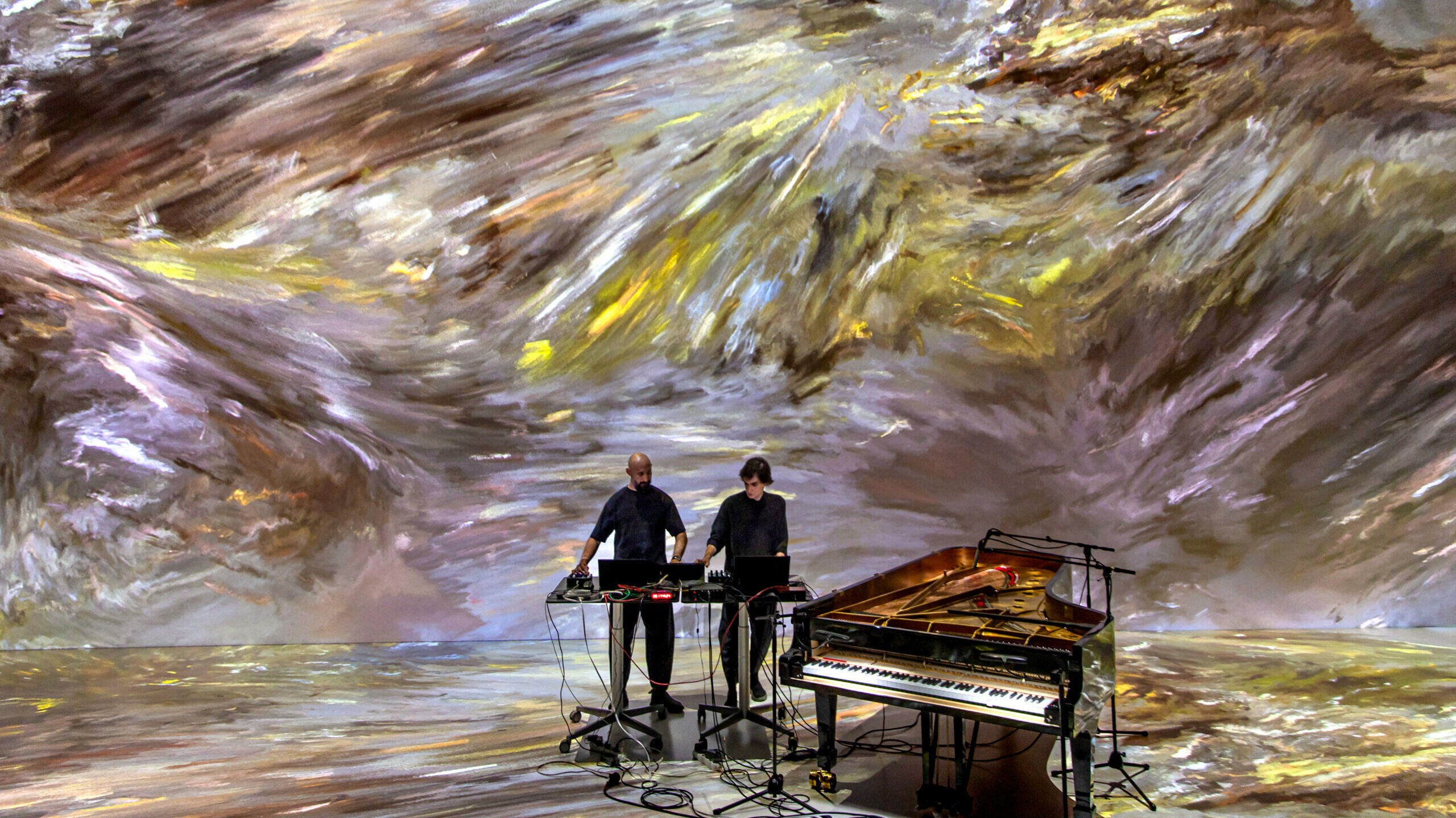
Quayola and Seta’s Transient is an audiovisual concert for two motorized pianos and video projection. The performers improvise with complex algorithms that generate musical and visual structures in real time. The piano is recognizably acoustic, but it no longer represents a protected human tradition standing opposite the machine.
Because the instruments are motorized, the boundary between performance and automation remains visible. Keys move, hammers strike and acoustic bodies resonate, even when algorithmic processes participate in the decisions. The mechanism becomes part of the image. Unlike a software piano hidden inside a computer, these instruments displace air in the same room as the audience.
The word transient is especially precise here. In audio, a transient is the brief attack that gives a sound its definition. In the concert, every generated event is also temporary, one outcome selected from many possibilities. The projection makes those decisions perceptible as changing structures rather than translating each note into a decorative flash.
For audiovisual work, this offers a stronger model than synchronization alone. Sound and image can share a rule without displaying the same event. A rhythmic density might influence the fragmentation of the image while pitch shapes spatial position. The relationship remains legible, but neither medium becomes a subtitle for the other.
The credits reveal how collective such an apparently self-generating work actually is. Software developers, sound-tool designers, an orchestrator and production collaborators all contributed to the system. The algorithms perform, but they do so inside an instrument assembled through many human decisions.

Transient

#Quayola #Transient #AlgorithmicMusic #GenerativeVisuals #MechanicalPiano
The Piano Shares Control The Piano Shares Control QUAYOLA Transient - QUAYOLA Artist - Algorithmic Poetics / Robotic Sculpting / New Landscape Paintings
Facebook LinkedIn WhatsApp Threads
More sharing options
X Reddit Pinterest Telegram Email
Antarctic Takt

Antarctica Without Documentary Images

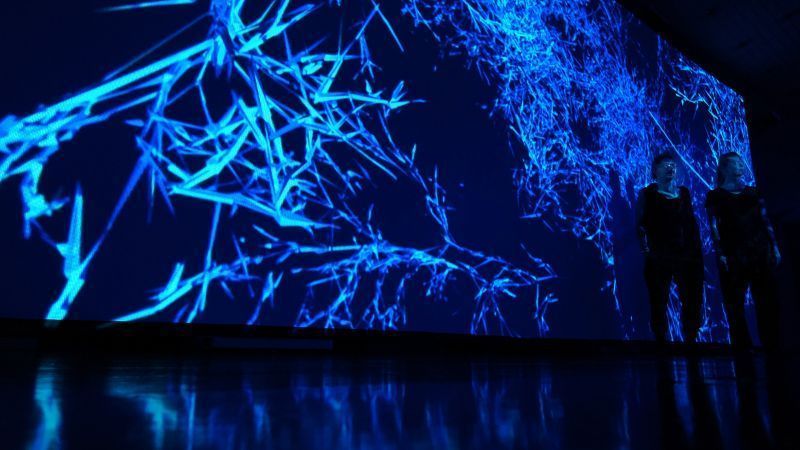
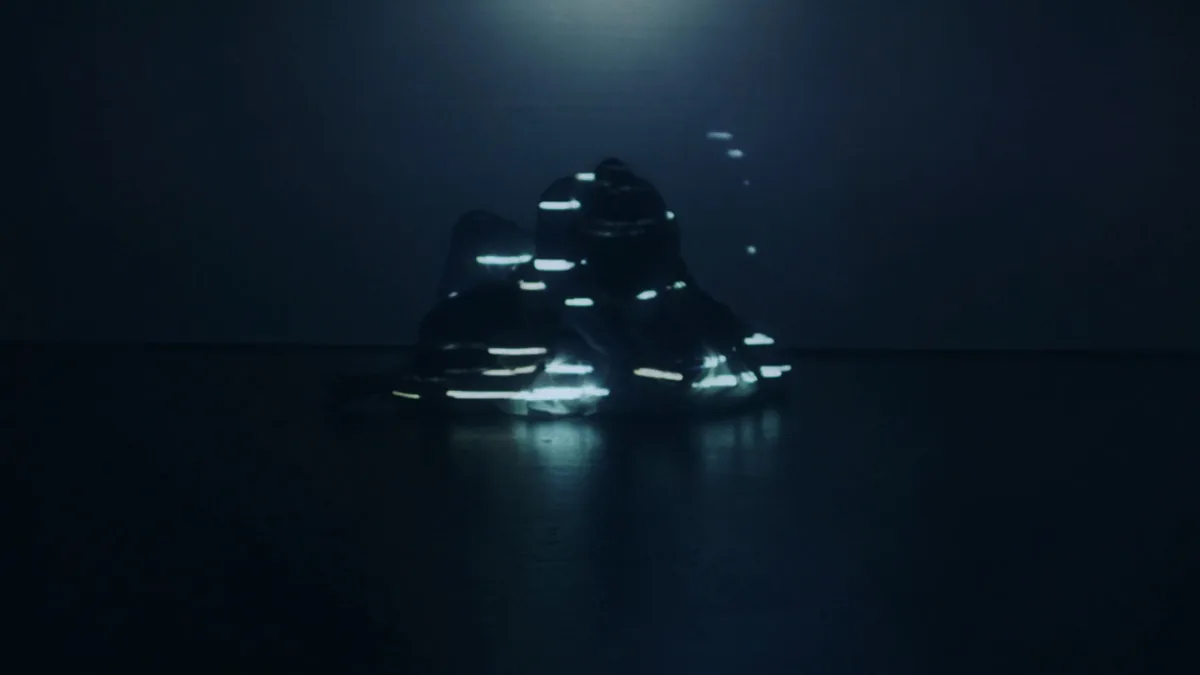
Antarctic Takt sends the audience toward an imagined Antarctica without depending on a conventional film of ice, animals or landscape. Dasha Rush performs the electronic score live while Stanislav Glazov constructs the visual world. The project began as a special performance for Berlin Atonal and later travelled through audiovisual festivals and art spaces.
The word takt can suggest pulse, measure or tact. All three are present. The work moves through glacial scale and techno intensity, but its force comes from controlled pacing. Abstract forms leave enough uncertainty for the listener to construct a place mentally. Literal footage can close that interpretation too quickly. An image of ice says where the sound is. A slowly fracturing field of light can describe temperature, pressure and distance without fixing the scene.
When sound already carries a strong atmosphere, visuals do not need to repeat its subject. They can reveal its physical conditions.

MÚSICA ABIERTA. MOMENTOS ALHAMBRA: DASHA RUSH presenta “ANTARCTIC TAKT A/V”


#DashaRush #StanislavGlazov #AntarcticTakt #LiveVisuals #ExperimentalTechno

Antarctica Without Documentary Images Antarctica Without Documentary Images Centro Botin MÚSICA ABIERTA. MOMENTOS ALHAMBRA: DASHA RUSH presenta “ANTARCTIC TAKT A/V” - Centro Botin Dasha Rush estrenan en exclusiva en Cantabria su show audiovisual “Antarctic Takt A/V” en colaboración con el artista visual Stanislav Glazov.
Facebook LinkedIn WhatsApp Threads
More sharing options
X Reddit Pinterest Telegram Email
Aisha Devi

A Voice Beyond Identity

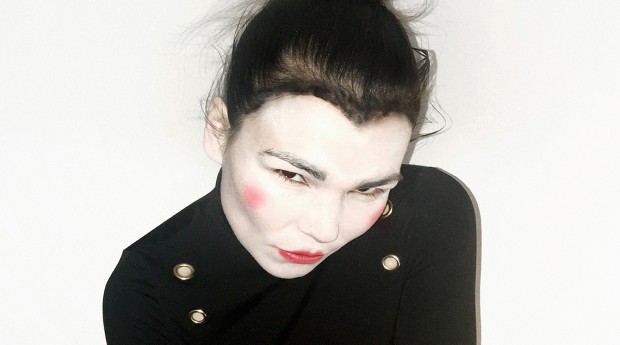
Aïsha Devi uses her trained voice as material that can be stretched, filtered and detached from an immediately recognizable body. On DNA Feelings, high cries, guttural tones and spoken fragments move through severe electronic spaces. The vocal is not placed above the production as a stable narrator. It becomes part of the architecture.
Her meditation practice and study of overtone and guttural chanting inform both recording and performance. That matters because the transformation does not begin with a plug-in. It begins with breath, resonance and the physical production of overtones. Electronic processing then extends an already complex source.
Producers can borrow the method without copying the sound. Record one sustained phrase several times at different distances from the microphone. Keep a dry take for physical presence. Pitch another layer upward, stretch a third and filter a fourth until consonants become rhythm. Automate the layers so the identity of the voice shifts during the piece instead of settling into one effect.
The result can remain intimate even when it no longer sounds conventionally human. Transformation does not have to erase the performer. It can reveal how many possible bodies were already contained in one voice.

https://www.houndstoothlabel.com/artist/aisha-devi

#AishaDevi #VoiceProcessing #ElectronicMusic #SoundDesign #DNAFeelings

A Voice Beyond Identity A Voice Beyond Identity houndstoothlabel.com Houndstooth ~ Aïsha Devi Aïsha Devi uses her trained voice as material that can be stretched, filtered and detached from an immediately recognizable body. On DNA Feelings, high cri…
Facebook LinkedIn WhatsApp Threads
More sharing options
X Reddit Pinterest Telegram Email
Aether

One Projector, Three Dimensions

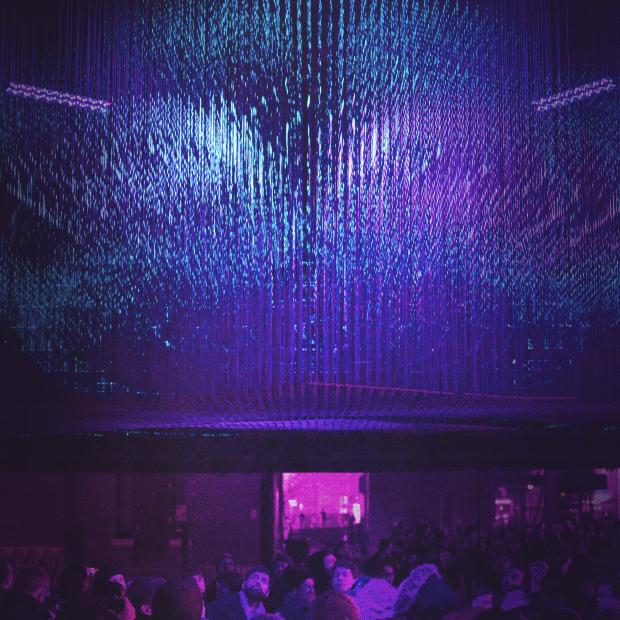
Max Cooper and Architecture Social Club built Aether from an unexpectedly economical illusion. Thousands of lines of string hang in space while a single projector sends light through them. From a distance, the illuminated intersections resemble a three-dimensional matrix of LEDs. Up close, the material construction becomes visible.
The installation turns projection into an object that can be entered and viewed from different positions. Visitors walk below and around a changing lattice while Cooper’s music is mapped to waves, surfaces and symmetrical forms. Image and sound share spatial behaviour rather than matching through a sequence of obvious beat triggers.
Its strongest lesson may be material rather than digital. Projection mapping is often discussed as a software problem, but the receiving surface determines what the software can achieve. String catches only fragments of the projected image. The empty space between the threads does as much work as the illuminated material.
For small installations, this suggests testing cheap physical structures before adding more projectors. Mesh, translucent fabric, fishing line or layers of scrim can divide one beam into several apparent depths. The projector remains flat. The material teaches the light to occupy space.

https://maxcooper.net/aether

#MaxCooper #Aether #LightInstallation #ProjectionArt #ElectronicMusic

One Projector, Three Dimensions One Projector, Three Dimensions Max Cooper Max Cooper – Aether light installation The light installation created in collaboration with Architecture Social Club
Facebook LinkedIn WhatsApp Threads
More sharing options
X Reddit Pinterest Telegram Email
Audiovisual Installation

Light Without a Screen

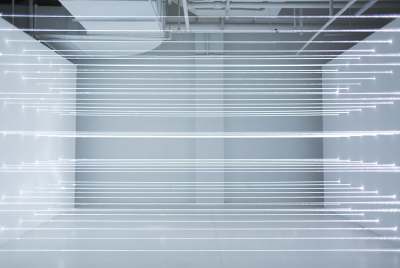
NONOTAK’s ZERO POINT TWO V.2 uses a sparse arrangement of horizontal light lines. There is no image in the conventional sense and no screen carrying a rectangular composition. Light appears to float in the room, moving quickly enough to suggest a volume that is present for a moment and then gone.
For a VJ, the work separates visual density from intensity. A nearly empty field can feel charged when position, brightness, speed and sound are tightly controlled. Test the principle with one thin line on black. Let its width, position and luminance respond differently to sound rather than connecting every parameter to the same amplitude value. The aim is not to imitate NONOTAK, but to discover how little visual information a room actually needs.

https://nonotak.com/_ZERO-POINT-TWO-V-2

#NONOTAK #LightArt #SoundAndLight #MinimalVisuals #AudiovisualInstallation

Light Without a Screen Light Without a Screen nonotak.com _ZERO POINT TWO V.2 - NONOTAK studio ZERO POINT TWO V.2, light & Sound installation, 2017 In ZERO POINT TWO, the abstract matter that is light is precisely sculptured to take shape in the most delicate and slender lines imaginable. Using a minimal sparse arrangement of horizontal...
Facebook LinkedIn WhatsApp Threads
More sharing options
X Reddit Pinterest Telegram Email
Audiovisual Art

Bodies Inside the Projection

For Nosaj Thing’s “Eclipse/Blue,” Daito Manabe did not treat projected graphics as a backdrop added after choreography. Working with choreographer MIKIKO and two dancers, he built a visual environment in which bodies, shadows and geometric light appear to exchange control. A movement seems to pull an image into place. Moments later, the projection hides or multiplies the body that initiated it.
The effect depends on restraint. Large areas remain dark, so a narrow blue line or a white silhouette can alter the whole stage. The dancers do not compete with a permanently busy screen. Their movement determines when the image needs detail and when an empty field carries more tension.
This is a valuable principle for live visuals. Audio reactivity alone does not create a relationship between performance and image. A stronger system identifies a small number of meaningful events: a hand reaching a position, a body crossing a boundary, a vocal entrance or a sudden pause. Visual response then becomes choreography rather than decoration.
The exact boundary between live projection and post-production is intentionally difficult to read in the finished work. That uncertainty is part of its force. The screen does not illustrate the dancers. It makes their physical space unstable.

https://daito.ws/en/archive/nosaj_thing_eclipse_blue/

#DaitoManabe #NosajThing #EclipseBlue #ProjectionMapping #AudiovisualArt

Bodies Inside the Projection Bodies Inside the Projection daito.ws Nosaj Thing “Eclipse Blue” | Archive | Daito Manabe "Eclipse Blue" Nosaj Thing feat. kazu makino youtube: article: http://www.fastcodesign.com/1671348/a-stunning-music-video-inspired-by-a-solar-eclipse#1 http://www.theverge.com/2012/11/27/3698842/watch-this-nosaj-thing-e…
Facebook LinkedIn WhatsApp Threads
More sharing options
X Reddit Pinterest Telegram Email
BYOB

BYOB Opens the Walls

BYOB began from a practical observation. Rafaël Rozendaal was living in Berlin and noticed that many artists around him owned projectors. Instead of waiting for a museum to supply equipment, walls and a finished curatorial structure, he and Anne de Vries invited artists to bring their own beamers to a one-night exhibition in 2010. The instruction was deliberately simple: find a space, invite many artists, ask them to bring a projector.
That simplicity changed the social structure of the exhibition. Each projector created a temporary territory, but light could overlap, spill across architecture or collide with another work. Installation happened quickly and remained visible as a process. Cables, tables and improvised surfaces were not backstage problems. They became part of an event assembled by the participants themselves.
Rozendaal kept BYOB as an open format rather than a protected franchise. It travelled to other cities because the idea could be repeated without reproducing the original exhibition exactly. The projector was both display device and admission ticket.
For a contemporary VJ, BYOB still offers a useful correction to the pressure for ever larger screens. A strong projection does not begin with scale. It begins with a clear relationship between image, surface, neighbouring light and the people moving through the room.

Austin Lee interviews Rafaël Rozendaal for SFAQ magazine

#BYOB #RafaelRozendaal #ProjectionArt #DigitalArt #VJCulture

BYOB Opens the Walls BYOB Opens the Walls Rafaël Rozendaal Austin Lee interviews Rafaël Rozendaal for SFAQ magazine - Rafaël Rozendaal Austin Lee interviews Rafaël Rozendaal for SFAQ magazine. New York, February 2014. AL: Your artwork has strong ties to both painting and animation. How do you think about time in both mediums and how does it function in your work? RR: I’m interested in movement, and I’m interested in staring. That means I want to […]
Facebook LinkedIn WhatsApp Threads
More sharing options
X Reddit Pinterest Telegram Email