Skip to content

A Mountain Reduced to Color

Annette Peacock

Putting the Voice Through a Moog

Around 1970, Annette Peacock was doing something with synthesizers that still feels surprisingly modern: using a Moog modular system to process her voice in real time.

The Bob Moog Foundation documents how Peacock and pianist Paul Bley toured Europe with an ARP synthesizer and Moog modules, with Peacock using the Moog specifically for vocal modification.

That is quite different from simply singing alongside a synthesizer.

Her voice itself entered the electronic system.

By the time I’m the One appeared in 1972, Peacock had developed a music in which jazz, electronics, rock, improvisation and manipulated vocals refused to settle into a comfortable category.

What interests me is how early this was.

Today a vocalist can open a laptop and choose from pitch correction, spectral processors, vocoders, formant shifting, granular effects and hundreds of plug-ins designed specifically for the voice.

Peacock was experimenting when electronic processing still meant understanding patch cables, oscillators and signal paths well enough to make the equipment cooperate.

The voice is usually treated as the most human element in a recording.

Peacock seems to have realised very early that this made it the perfect thing to make strange.

Electronic music history remembers many synthesizer players.

It should remember more clearly the people who asked what would happen if the synthesizer started playing the singer.

https://www.universalmusic.fr/artistes/20000043831

#AnnettePeacock #Moog #VoiceProcessing #ExperimentalMusic

Putting the Voice Through a Moog Putting the Voice Through a Moog universalmusic.fr Annette Peacock - Universal Music France Tout sur Annette Peacock : news, biographie, discographie, photos, clips, vidéos, paroles, boutique...
Crime Nine Inch Nails

Recording Inside the Scene of a Crime

Nine Inch Nails recorded much of The Downward Spiral at 10050 Cielo Drive in Los Angeles, the house where Sharon Tate and four others had been murdered by members of the Manson Family in 1969. Trent Reznor installed a studio there and called it Le Pig.

It is the kind of fact that can overwhelm discussion of the actual recording, so the more interesting detail for me is what happened inside that temporary studio.

The album moves constantly between programmed electronics, guitars, sampled material, processed drums and sounds that are difficult to identify at all. Adrian Belew is credited with “texture generating guitars” on “Mr. Self Destruct” and ring-modulated guitar on “The Becoming.” Flood contributed programming and production, while Alan Moulder handled much of the mixing.

The boundaries between instrument and treatment become deliberately unclear.

A guitar does not necessarily need to sound like a guitar.

A drum can become an impact.

Noise can become rhythm.

This is where industrial music becomes more than distorted rock. The studio is not reproducing a band standing in a room. It is constructing a psychological space from pieces that may have been performed, sampled, processed or destroyed.

The building eventually disappeared from the album’s identity.

The sound did not.

https://www.nin.com/music/the-downward-spiral/

#NineInchNails #TheDownwardSpiral #IndustrialMusic #StudioProduction

Recording Inside the Scene of a Crime Recording Inside the Scene of a Crime nin.com Nine Inch Nails recorded much of The Downward Spiral at 10050 Cielo Drive in Los Angeles, the house where Sharon Tate and four others had been...
Electronic Music

Radiohead Used an Instrument From 1928

When Radiohead moved away from guitar-centred rock on Kid A, Jonny Greenwood became fascinated by the Ondes Martenot, an electronic instrument invented by Maurice Martenot at the end of the 1920s.

Its eerie continuous tones are usually associated with early electronic composition and composers such as Olivier Messiaen. Radiohead placed that sound inside a completely different musical environment.

One of the stranger examples appears on the title track.

In a BBC interview, Colin and Jonny Greenwood explained that Thom Yorke sang through a vocoder while the notes controlling that vocoder were triggered from the Ondes Martenot.

Think about that signal chain.

A human voice enters a vocoder.

An electronic instrument designed almost seventy years earlier determines the pitches through which that voice is reconstructed.

The result sounds futuristic.

That reversal interests me. New music does not always come from new technology.

Sometimes an old instrument becomes radical again simply because nobody expected to find it in that context.

Electronic instruments age differently from acoustic ones. A violin rarely becomes obsolete. A synthesizer often does, at least commercially. Then enough time passes and its limitations become interesting again.

The future occasionally needs equipment that everyone else has already left behind.

https://citizeninsane.eu/media/uk/bbc/04/i11a_2001-01-20_bbcrad3.html

#Radiohead #KidA #OndesMartenot #ElectronicMusic

Radiohead Used an Instrument From 1928 Radiohead Used an Instrument From 1928 citizeninsane.eu BBC Radio 3 'Mixing It' When Radiohead moved away from guitar-centred rock on Kid A, Jonny Greenwood became fascinated by the Ondes Martenot, an electronic instrument...
Bowie Put the Drums

Bowie Put the Drums Through Time

One of the defining sounds on David Bowie’s Low came from a piece of technology Tony Visconti had only recently acquired: the Eventide H910 Harmonizer.

Visconti used the processor on Dennis Davis’s drums while recording the album in 1976. The H910 could alter pitch and timing digitally, still an exotic possibility at the time. Instead of using it gently, Visconti pushed the device hard enough to transform the drums into something sharp, compressed and strangely mechanical.

That choice matters because Low sits at an interesting point between rock performance and electronic thinking. Davis was still physically playing a drum kit, but the recorded result no longer had to behave like an acoustic kit.

The studio could redesign the performance afterwards.

We now take this freedom almost completely for granted. A snare can be stretched, pitched, gated, distorted or replaced without anyone considering the process unusual.

In 1976 the distinction between recording a sound and designing it was much less settled.

What I like about the Low drums is that the technology does not disappear politely behind the musician. You can hear the processing becoming part of the identity of the performance.

The drummer plays the instrument.

Visconti plays what happens to the instrument.

Somewhere between them, a third instrument appears: the recording studio itself.

https://www.davidbowie.com/blog/2017/8/23/anciant-album-focus-low

#DavidBowie #Low #TonyVisconti #Eventide

Bowie Put the Drums Through Time Bowie Put the Drums Through Time David Bowie ANCIANT Album Focus: Low — David Bowie “Don’t you wonder sometimes...” Ahead of the release of the David Bowie: A New Career In A New Town (1977–1982) box set (ANCIANT) next month, here’s the second instalment of our album focus on Low. This is Tony Visconti’s introduction from his superbly informative notes (from the ANCIANT book), re
MIA

A Pop Song Built From a Political Sample

M.I.A.’s “Paper Planes” takes its central instrumental loop from “Straight to Hell” by The Clash, but the sample does not behave like a nostalgic quotation.

It is pulled into a completely different musical and political environment. Gunshot sounds and a cash-register effect punctuate the chorus, while the track’s lyrics turn attention toward migration, suspicion, money and the stereotypes attached to outsiders. Diplo later described the Clash sample as successful precisely because its new context changed its flavour so completely.

That is what good sampling can do.

The source remains recognisable, but recognition is not the destination.

Context changes meaning.

A melancholy guitar pattern from a British punk record becomes the foundation of a global pop track by a British-Sri Lankan artist whose work repeatedly dealt with borders and displacement.

Sampling is often discussed as ownership of sound.

Artistically, I find the more interesting question to be ownership of interpretation.

A sample can preserve the original recording while completely changing what that recording now seems to say.

#MIA #PaperPlanes #Sampling #PopProduction

A Pop Song Built From a Political Sample A Pop Song Built From a Political Sample YouTube M.I.A. - Paper Planes Subscribe: https://MIA.lnk.to/Subscribe Watch more: https://MIA.lnk.to/WatchMore Connect with M.I.A. Online:Follow M.I.A. on Instagram: https://MIA.lnk.to/I...
Abstraction

A Mountain Reduced to Color

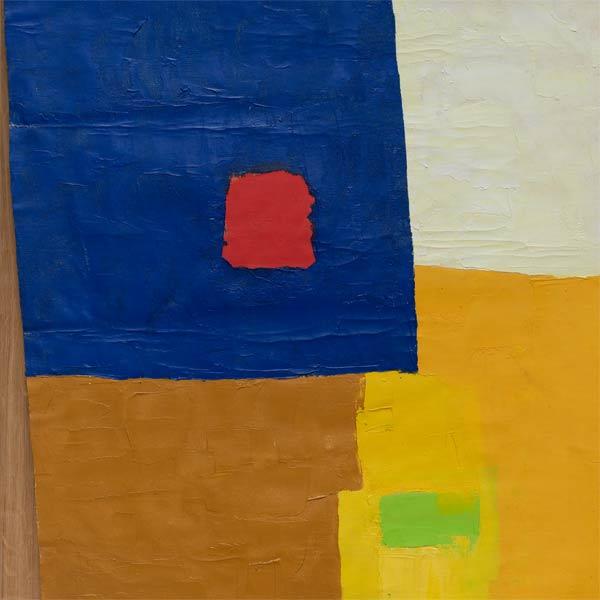
Etel Adnan spent years returning to landscape, especially Mount Tamalpais in California, yet her paintings rarely behave like conventional descriptions of scenery. Colour blocks, simple geometric forms and compressed spaces can reduce a mountain to something almost symbolic.

Adnan once described beginning a painting with one mark, such as a red square, then allowing that first decision to determine what had to happen next. Her work moved between painting, poetry, drawing, tapestry and writing, with colour functioning as something that did not require translation into language.

That last point interests me because Adnan was also a writer.

Someone who spent so much of her life with words found another form precisely where words were unnecessary.

A mountain in a painting does not need to explain itself.

It can become red.

The sky can become green.

Scale can collapse.

Colour can carry the emotional information instead.

Painting then becomes less like describing a place and more like remembering how that place occupied the mind.

https://www.labiennale.org/en/art/2024/abstraction/etel-adnan

#EtelAdnan #LebaneseArt #LandscapePainting #Abstraction

A Mountain Reduced to Color A Mountain Reduced to Color La Biennale di Venezia Biennale Arte 2024 | Etel Adnan Beirut, Lebanon, 1925 – 2021, Paris, France
Abstract Painting

A Grid That Refuses Perfection

Agnes Martin is famous for grids, but the grids are not mechanically perfect.

In Untitled from 1961, repeated lines form a highly controlled structure, yet they remain visibly hand drawn. The Pinault Collection describes the slight irregularity and vibration of those lines as central to the work.

That imperfection changes everything.

A computer could generate a mathematically exact grid in less than a second.

Martin’s grid contains time.

Every line required a hand to travel across the surface.

Tiny deviations record that movement.

The work therefore sits somewhere between system and body.

I keep thinking about this in relation to electronic music.

Quantisation can create perfect rhythmic structure, but sometimes the interesting part is the difference between the structure and the person trying to follow it.

Martin gives geometry the same possibility.

The rule remains visible.

So does the failure to obey it perfectly.

That is why the painting feels quieter than a machine-made grid but also more alive.

https://lesoeuvres.pinaultcollection.com/en/artwork/untitled-72

#AgnesMartin #Minimalism #AbstractPainting #Grid

A Grid That Refuses Perfection A Grid That Refuses Perfection lesoeuvres.pinaultcollection.com Untitled | Pinault Collection Agnes Martin is famous for grids, but the grids are not mechanically perfect. In Untitled from 1961, repeated lines form a highly controlled...
Expanded Cinema

A Film Screening Became a Light Show

In the late 1950s, Jordan Belson worked with composer Henry Jacobs on the Vortex Concerts at San Francisco’s Morrison Planetarium. Rather than projecting a conventional film onto one rectangular screen, they used the planetarium environment for combinations of abstract imagery, electronic music and spatial projection. The Center for Visual Music considers the Vortex events important precursors to expanded cinema.

This feels remarkably close to contemporary audiovisual performance.

The audience was no longer simply looking forward.

Images could occupy the dome and surround the listener while electronic sound transformed the same space acoustically.

That changes what editing means.

In ordinary film, one image replaces another in time.

Inside an immersive projection environment, several images can coexist in different parts of the viewer’s field of vision.

The audience decides where the cut happens by turning its head.

Modern projection mapping, VJ software and immersive installations have made these techniques technically easier.

Belson’s work is useful because it reminds us that immersive media did not begin with powerful projectors.

It began with the desire to escape the rectangle.

https://www.centerforvisualmusic.org/Belson/

#JordanBelson #ExpandedCinema #VisualMusic #LiveVisuals

A Film Screening Became a Light Show A Film Screening Became a Light Show centerforvisualmusic.org Jordan Belson In the late 1950s, Jordan Belson worked with composer Henry Jacobs on the Vortex Concerts at San Francisco’s Morrison Planetarium. Rather than...
Archive Bülent Arel

Electronic Music Hidden in an Archive

Bülent Arel was one of the composers working at the Columbia-Princeton Electronic Music Center during the formative years of American electronic music. Columbia University’s archive still contains tapes, work materials and fragments connected with his electronic compositions, including material associated with Stereo Electronic Music No. 1 and other experiments from the 1960s.

Arel is exactly the kind of figure who makes electronic music history feel incomplete.

The usual story quickly settles around a few famous studios and names. Yet institutions contain shelves of tapes made by composers whose work helped establish the language everybody else later inherited.

Tape music was laborious.

Sound had to be generated, recorded, cut, copied, filtered and physically organised. A twenty-second passage could represent hours of construction.

An archive changes how I hear that history.

The reel is not simply an old recording.

It is evidence of a process in which editing was literally an action performed on material.

Digital production made those gestures invisible.

The tape still shows where the decisions happened.

https://dlc.library.columbia.edu/catalog/10.7916/d8-z89r-xx75

#BulentArel #TapeMusic #ElectronicMusic #MusicArchive

Electronic Music Hidden in an Archive Electronic Music Hidden in an Archive DLC Catalog Channel V materials : [work material] Bülent Arel was one of the composers working at the Columbia-Princeton Electronic Music Center during the formative years of American electronic...
Ensemble Midori Takada

One Musician Becoming an Ensemble

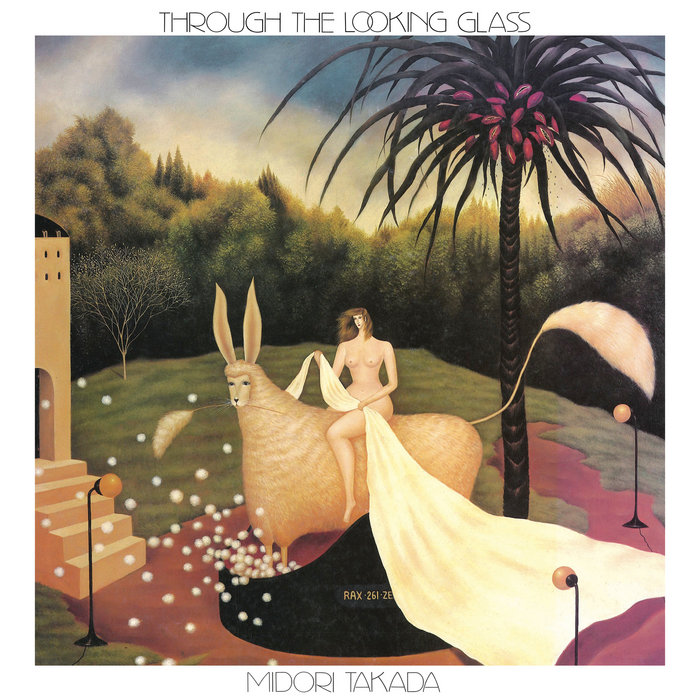
Midori Takada recorded Through the Looking Glass as her first solo album in 1983. The four-piece work centres on percussion and uses instruments including marimba, vibraphone and other acoustic sound sources, building an intricate world from layering and repetition rather than from a conventional band. The album later became a highly sought-after recording before being internationally reissued.

What interests me is how little the music behaves like a demonstration of percussion technique.

Takada uses repeated patterns to create space.

A marimba figure may remain simple while another rhythmic layer slowly alters how we hear it. The ear begins noticing relationships rather than individual hits.

It is almost the acoustic equivalent of sequencing.

Except every repetition has passed through a human body first.

That distinction becomes more audible the longer the music continues.

A loop can repeat perfectly.

A performer can repeat with intention.

Those are not quite the same thing.

https://wereleasewhateverthefuckwewantrecords.bandcamp.com/album/through-the-looking-glass

#MidoriTakada #JapaneseMusic #Minimalism #Percussion

One Musician Becoming an Ensemble One Musician Becoming an Ensemble WRWTFWW Records Through The Looking Glass, by Midori Takada 0 track album
Dub

The Repairman Who Reinvented the Mix

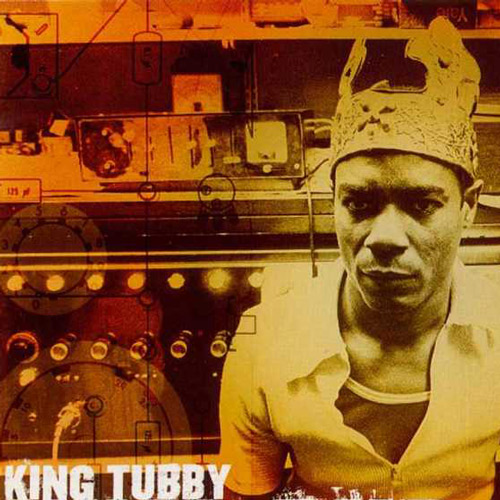
Osbourne Ruddock, better known as King Tubby, began as an electronics and radio repairman in Kingston. His technical knowledge made him valuable to Jamaica’s growing sound-system culture, and by 1964 he was operating Tubby’s Hometown Hi-Fi. His later studio work helped push the mixing console itself toward becoming a musical instrument.

That shift remains one of the most important ideas in modern production.

Normally a mixer is supposed to balance what musicians have already recorded.

Dub asks a different question.

What happens if the mix is the performance?

Vocals disappear. Drums suddenly remain alone. Echo throws a fragment several seconds into the future. A mistake can become a feature if it sounds good enough to repeat. Scientist later described dub precisely in those terms: engineers reorganising existing recordings into new ones.

The producer no longer stands outside the music making it tidy.

The studio becomes playable.

Much of contemporary electronic production still works inside the space Tubby helped open.

https://www.reggaeville.com/artist-details/king-tubby/about/

#KingTubby #Dub #JamaicanMusic #StudioAsInstrument

The Repairman Who Reinvented the Mix The Repairman Who Reinvented the Mix www.reggaeville.com Biography: King Tubby Reggaeville.com - World of Reggae in One Village