Skip to content

The 808 Before It Became Legendary

Frida Kahlo

Two Fridas, One Circulatory System

Frida Kahlo painted The Two Fridas in 1939, the year she divorced Diego Rivera. Two versions of Kahlo sit side by side holding hands. Their exposed hearts are connected by a blood vessel. One wears European-style clothing while the other wears a Tehuana dress associated with Mexican identity.

The painting is famous enough that its symbolism can become almost invisible through familiarity.

What keeps catching my attention is the circulation.

Kahlo does not simply place two identities beside one another. She physically connects them.

Blood moves between the figures.

That turns identity into something less stable than a split portrait suggests. The two selves are separate, but neither is completely independent.

I like this because the composition behaves almost like a diagram while remaining intensely emotional. Clothing gives us cultural information. Anatomy gives us another system of connections underneath it.

A double portrait could simply show contradiction.

Kahlo instead draws the plumbing between contradictions.

The line connecting the hearts may be the most important line in the painting.

https://www.museofridakahlo.org.mx/frida/?lang=en

#FridaKahlo #TheTwoFridas #MexicanArt #Painting

Two Fridas, One Circulatory System Two Fridas, One Circulatory System Museo Frida Kahlo Frida Frida Kahlo painted The Two Fridas in 1939, the year she divorced Diego Rivera. Two versions of Kahlo sit side by side holding hands. Their...
Editing Became the Dance

Editing Became the Dance Partner

Maya Deren’s A Study in Choreography for Camera lasts only a few minutes, but it does something that remains surprisingly modern. Dancer Talley Beatty begins a movement in one location and completes it somewhere completely different. Through precisely matched editing, a gesture can carry him from a forest into a domestic interior or museum space without appearing to stop.

The cut becomes part of the choreography.

That is what interests me from an audiovisual perspective.

Normally a camera records a dancer moving through physical space. Deren realised that cinema could create another kind of space entirely.

The body obeys continuity.

The location does not.

Today we can create far more complicated transitions using digital compositing, realtime graphics and projection systems, but technical complexity does not automatically improve the idea.

Deren needed only movement, framing and a cut.

The result demonstrates something useful for VJ work too: an edit becomes much stronger when it continues an action rather than merely replacing one image with another.

Movement can hide the cut.

The cut can extend the movement.

https://www.moma.org/collection/works/302825

#MayaDeren #ExperimentalFilm #FilmEditing #VisualRhythm

Editing Became the Dance Partner Editing Became the Dance Partner moma.org Maya Deren’s A Study in Choreography for Camera lasts only a few minutes, but it does something that remains surprisingly modern. Dancer Talley...
Nusrat Fateh Ali Khan

When Qawwali Met the Remix

Nusrat Fateh Ali Khan came from a family tradition of qawwali stretching back centuries, yet he was unusually open to placing that tradition inside unfamiliar musical environments. His 1990 collaboration with Canadian guitarist and producer Michael Brook, Mustt Mustt, moved qawwali into contemporary studio production without simply abandoning the voice and improvisational intensity at its centre.

The album even included a Massive Attack remix of the title track.

That interests me because remix culture and devotional music appear, at first, to come from completely different ideas about what music is for.

But both understand repetition.

Qawwali can build emotional intensity through repeated phrases and improvisational expansion. Electronic dance music can build intensity by looping material while gradually changing its context.

The meeting therefore makes more sense structurally than stylistically.

A remix does not necessarily need to reduce a tradition to a fashionable beat.

Sometimes two musical systems discover that they already share a way of building time.

https://realworldrecords.com/releases/mustt-mustt/

#NusratFatehAliKhan #Qawwali #RemixCulture #PakistaniMusic

When Qawwali Met the Remix When Qawwali Met the Remix Real World Records Mustt Mustt - Real World Records The late Nusrat Fateh Ali Khan is today acknowledged as the great master of Qawwali who popularised this beautiful and inspirational music beyond Muslim peoples to a worldwide audience. Mustt Mustt is the first of two albums on which the singer collaborates with Canadian producer Michael Brook to place the music in a contemporary setting.
Afro Peruvian

A Traditional Dance Enters the Club

Peruvian duo Dengue Dengue Dengue named their 2018 EP Son de los Diablos after a traditional Afro-Peruvian dance whose name translates as “Sound of the Devils.” Their broader work has repeatedly connected Peruvian and Latin American rhythmic traditions with bass music, dub, techno and other forms of electronic production.

What interests me is what happens when a traditional form reaches the club without being treated as a museum object.

Electronic producers can easily sample an old recording, place a kick drum beneath it and call the result fusion. The more difficult approach is understanding which rhythmic or cultural characteristics can survive transformation.

Dengue Dengue Dengue work in that less obvious space.

The electronic system does not need to imitate the original instruments exactly. It can carry rhythmic memory through another set of machines.

Tradition then becomes neither untouched nor erased.

It behaves more like a source code that can run in another environment.

https://denguedenguedengue.bandcamp.com/album/son-de-los-diablos

#DengueDengueDengue #PeruvianMusic #BassMusic #AfroPeruvian

A Traditional Dance Enters the Club A Traditional Dance Enters the Club Dengue Dengue Dengue Son de los Diablos, by Dengue Dengue Dengue 4 track album
Deep Listening

Listening Below the Music

Pauline Oliveros developed Deep Listening from a deceptively simple distinction: hearing happens continuously, while listening involves attention. Her practice expanded from experimental composition and electroacoustic music into exercises that asked musicians and non-musicians to listen not only to performed sound but also to environments, thoughts and sounds normally filtered from awareness.

The idea feels increasingly relevant in a culture where almost everything competes for attention.

Music production can encourage the opposite behaviour. We solo tracks, isolate frequencies and decide which sound matters. Deep Listening widens the frame again.

What happens outside the track?

The ventilation system. Traffic through a wall. Someone shifting in a chair. Your own breathing.

None of these sounds needs to become a sample. Sometimes simply noticing them changes how you understand silence.

Oliveros described listening as going beneath the surface while remaining aware of the whole field of sound.

That makes listening itself feel like a compositional tool.

Before deciding what a piece needs, perhaps there is another question:

What is already sounding?

Deep Listening

#PaulineOliveros #DeepListening #ExperimentalMusic #SoundPractice

Listening Below the Music Listening Below the Music deeplistening.rpi.edu Deep Listening – The Center For Deep Listening Pauline Oliveros developed Deep Listening from a deceptively simple distinction: hearing happens continuously, while listening involves...
Became Legendary The Roland

The 808 Before It Became Legendary

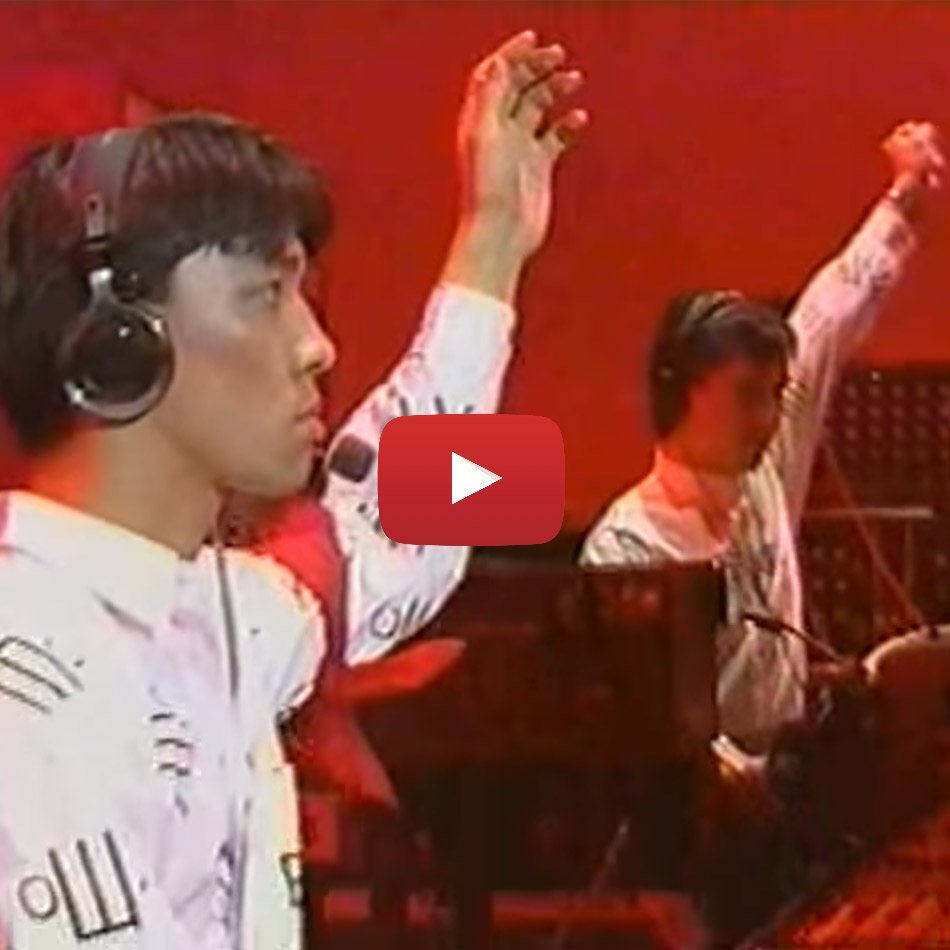
The Roland TR-808 is now so familiar that its kick drum can almost function as a genre marker. But in 1980 it was simply a new rhythm machine, and Yellow Magic Orchestra were among its earliest users.

Roland documents an especially important moment: during YMO’s performance of “1000 Knives” at Tokyo’s Nippon Budokan in 1980, the newly introduced TR-808 made one of its earliest live appearances. The machine became an important part of the group’s 1981 album BGM. YMO also used Roland’s MC-8 Microcomposer, an early microprocessor-based sequencer capable of controlling thousands of notes.

What I like is that YMO did not try to hide the machines.

The 808 was not forced to pretend that a drummer was playing. Its mechanical timing, synthetic clap and artificial kick became part of the aesthetic.

That seems obvious now only because decades of electronic music taught us how to hear those sounds.

Sometimes a new instrument becomes culturally important because the first interesting musicians who encounter it refuse to use it for its intended purpose.

How Yellow Magic Orchestra Launched the 808 Revolution

#YellowMagicOrchestra #TR808 #SynthHistory #JapaneseElectronicMusic

The 808 Before It Became Legendary The 808 Before It Became Legendary Roland Articles How Yellow Magic Orchestra Launched the 808 Revolution It’s not a stretch to say that few bands were as formative in the early evolution of electronic music as Yellow Magic Orchestra.
Afrobeat

Turning Military Commands Into Rhythm

Fela Kuti’s “Zombie” uses the language of military discipline as musical material. Commands such as marching, saluting and falling into line are repeated while female backing singers answer with the word “Zombie.” The song was released in 1976 as a direct attack on the obedience and violence of Nigeria’s military establishment.

The political consequences were brutally real. On 18 February 1977, soldiers attacked Fela’s Kalakuta Republic compound, beating occupants and burning the property. His mother Funmilayo Ransome-Kuti was thrown from an upper floor and later died from her injuries.

But what interests me musically is how satire is embedded in arrangement.

Fela does not stop the groove to deliver a political speech. The repetition itself becomes the argument. Military commands already contain rhythm, uniformity and obedience. Afrobeat takes that structure and turns it against the institution using it.

The musicians repeat, but they do not sound obedient.

That difference is everything.

A rhythm can make bodies move together while still questioning who is giving the orders.

https://felakuti.com/news/zombie-edit

#FelaKuti #Afrobeat #Zombie #NigerianMusic

Turning Military Commands Into Rhythm Turning Military Commands Into Rhythm Fela Kuti Zombie (Edit) out now - Fela Kuti This August marks the 23rd anniversary of Fela’s passing. In remembrance of Fela’s life and legacy t...
Ambient Music

Ambient Music From a Bedroom

Selected Ambient Works Volume II has become one of Aphex Twin’s most recognisable records, yet parts of its history are surprisingly ordinary. The album appeared in 1994, long before ambient music became a permanent streaming category. In notes accompanying the later expanded edition, Richard D. James recalls recording “Blue Calx” in his bedroom studio at his parents’ house in Cornwall after he had moved away to study microelectronic engineering.

That detail changes the scale of the record for me.

The music can feel enormous, almost architectural, but some of it came from a small domestic room. There is no requirement that an expansive sound needs an expansive studio.

Electronic production is particularly good at breaking that relationship between physical and imagined scale. A bedroom can contain a landscape if synthesis, repetition and reverb give the listener enough space to construct one.

Perhaps that is part of why the album has aged so well. It does not sound like expensive technology showing what it can do.

It sounds like someone discovering how large an internal world can become while barely leaving the room.

https://aphextwin.warp.net/release/460388-aphex-twin-selected-ambient-works-volume-ii-expanded-edition

#AphexTwin #AmbientMusic #ElectronicMusic #BedroomStudio

Ambient Music From a Bedroom Ambient Music From a Bedroom aphextwin.warp.net Selected Ambient Works Volume II has become one of Aphex Twin’s most recognisable records, yet parts of its history are surprisingly ordinary...
Ghanaian Art

A Sack That Has Already Travelled

Ibrahim Mahama’s large installations often begin with used jute sacks. The material has a complicated geography. Many sacks are manufactured in Southeast Asia, imported by the Ghana Cocoa Board for cocoa, then reused to carry food, charcoal and other goods. By the time Mahama gathers them, their surfaces already contain stains, markings, repairs and evidence of labour.

He stitches many of them together and uses the resulting textile to cover buildings or create enormous architectural surfaces.

What interests me is that the material arrives with its own history before the artist makes the first decision.

A clean canvas tries to begin at zero.

Mahama’s sacks cannot.

Someone has carried them. Something has leaked onto them. A name or number has been stamped across the fibre.

The artist does not manufacture those traces. He reorganises them.

That makes the surface behave almost like an archive.

Instead of representing global trade through an image, the material has physically participated in it.

Sometimes the strongest documentary material is the thing that survived the journey.

https://www.whitecube.com/artists/ibrahim-mahama

#IbrahimMahama #GhanaianArt #Jute #InstallationArt

A Sack That Has Already Travelled A Sack That Has Already Travelled White Cube Ibrahim Mahama Ibrahim Mahama uses the transformation of materials to explore themes of commodity, migration, globalisation and economic exchange.
Drums Recorded

Drums Recorded in Single Takes

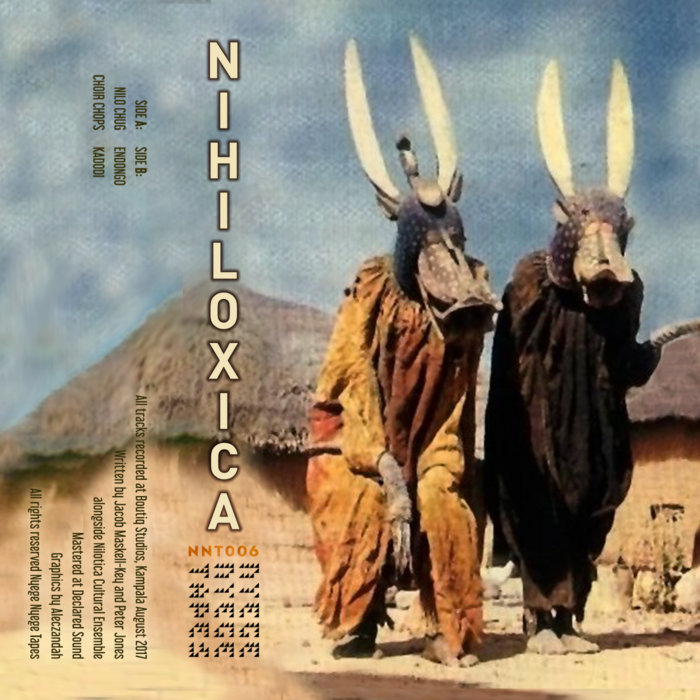
Nihiloxica’s first recordings brought musicians from Uganda’s Nilotika Cultural Ensemble together with electronic musicians Peter Jones and Jacob Maskell-Key. Their 2017 EP was recorded live at Boutiq Studios in Kampala, with each piece captured in a single take. Traditional drums, shakers and long drums sit beside synthesizers and a conventional drum kit.

The single-take detail matters.

Electronic music can be edited almost without limit. Timing can be corrected, sections moved and individual hits replaced.

Recording an ensemble live removes much of that safety net.

The musicians have to build the architecture collectively while the tape is already running.

Nihiloxica later described their work in terms of Bugandan techno, but the interesting part for me is not whether acoustic percussion can sound like techno.

It is that techno’s intensity can emerge without reducing all rhythm to a programmed grid.

Several musicians can create repetition together while every cycle remains slightly different.

A groove does not need mathematical perfection to become hypnotic.

Sometimes the instability is what gives it force.

https://nyegenyegetapes.bandcamp.com/album/nihiloxica

#Nihiloxica #UgandanMusic #Percussion #ElectronicMusic

Drums Recorded in Single Takes Drums Recorded in Single Takes Nyege Nyege Tapes Nihiloxica, by Nihiloxica 4 track album
Bendik Giske

The Saxophone as a Drum Machine

Bendik Giske takes ideas associated with electronic and club music and tries to produce them physically with saxophone, breath and microphones. He has described his approach as playing the building blocks of electronic music live, without layering or looping wherever possible.

That limitation immediately changes the sound.

A sequencer never runs out of breath. A human body does.

Giske uses circular breathing, key noises and contact microphones so that the mechanism of the saxophone becomes audible alongside its conventional tone. Fingers hitting keys can begin to function almost like percussion.

I like how this reverses the normal relationship between acoustic and electronic music.

Instead of processing an instrument until it behaves like a machine, the performer trains his body to approach the repetition and endurance associated with machines.

But the imperfections remain.

Breath changes. Muscles tire. Timing shifts slightly.

Those supposedly unwanted differences may be exactly what keeps repetition alive.

The machine becomes the reference point, but the body refuses to disappear.

https://www.bendikgiske.com/

#BendikGiske #Saxophone #ExperimentalMusic #ClubCulture

The Saxophone as a Drum Machine The Saxophone as a Drum Machine Bendik Giske Bendik Giske Bendik Giske takes ideas associated with electronic and club music and tries to produce them physically with saxophone, breath and microphones...