Skip to content

An Album Waiting Fifty Years

Bamana Art

When Mud Becomes a Language

Bògòlanfini is often translated simply as “mud cloth,” but the description hides how complex the process and visual language can be. In Mali, narrow strips of cotton are woven and joined before plant dyes, mineral-rich mud and resist techniques gradually create contrasting patterns.

A particularly well-documented cloth made by Gneli Traoré in 1969 shows how those patterns can carry much more than decoration. Individual motifs can refer to objects, historical events, social ideas, proverbs or songs. Used together, they can form visual statements whose meaning depends on knowledge passed between generations.

That changes how I look at repetition in pattern.

From a distance, geometry can appear abstract. Once you understand that a zigzag, circle or cross might carry a specific association, abstraction begins behaving almost like writing.

The surface occupies an interesting territory between image and information.

We often think digital culture invented the idea of encoding meaning into patterns. Textile traditions remind us that humans have been doing something similar for a very long time, using cloth instead of pixels.

https://www.metmuseum.org/art/collection/search/642873

#Bogolanfini #MalianArt #TextileArt #BamanaArt

Air Gego’s Reticulárea

A Sculpture Made Mostly of Air

Gego’s Reticulárea, first created in 1969 for the Museo de Bellas Artes in Caracas, is constructed from networks of aluminium and stainless-steel wire suspended through space. Different densities of mesh connect into a structure that viewers could originally walk among rather than simply observe from outside.

That makes it difficult to decide where the sculpture ends.

Traditional sculpture often begins with mass. Stone, bronze or wood occupies a volume and pushes the viewer outside it. Gego works almost in reverse. The lines are physically thin, but they organise enormous amounts of empty space.

What I find interesting is that the air does most of the visual work. Every wire creates relationships with other wires, but also with the gaps between them. Move your head slightly and the geometry reorganises.

It has something surprisingly close to generative art. The system is fixed, yet the image is never completely fixed because your position continually calculates another version.

The sculpture does not need to move. The viewer supplies the animation.

https://fundaciongego.com/catalogo-razonado-old/glosario/

#Gego #Reticularea #VenezuelanArt #Sculpture

Audiovisual Art

Thirty-Five Speakers for One Album

Ryuichi Sakamoto and Shiro Takatani’s async–immersion transforms an album into something closer to an audiovisual environment. The installation was first shown in 2023 inside the basement of the former Kyoto Shimbun newspaper printing plant. Sound engineer ZAK remixed Sakamoto’s async for a 35-speaker system, while Takatani’s imagery occupied a 26.4-metre-wide LED screen.

What interests me from a VJ perspective is the shift from synchronization to space. Sound and image do not merely meet on a timeline. Their physical scale changes the relationship. A sound can arrive from somewhere in the room while the visual field extends far beyond the proportions of a normal cinema screen.

That makes the architecture part of the audiovisual composition.

On a laptop we usually build visuals inside a rectangle and mix audio between left and right. Installations like this expose how arbitrary those boundaries are. Once the room becomes available as material, composition can include direction, distance, movement and the viewer’s own position.

The timeline is no longer the only place where sound and image can meet.

https://www.sitesakamoto.com/artworks/23/

#RyuichiSakamoto #ShiroTakatani #AudiovisualArt #LiveVisuals

Arooj Aftab

Night as a Production Tool

Arooj Aftab has described night as a major source of inspiration for Night Reign. But what catches my attention is how that idea enters the arrangement rather than remaining only a lyrical concept. The album moves among jazz, South Asian musical traditions, electronics and carefully controlled space. Her voice often occupies the centre without needing a dense wall of accompaniment around it.

The record also treats older material as something that can remain alive through rearrangement. “Na Gul” works with poetry by eighteenth-century Urdu poet and musician Mah Laqa Bai Chanda, while “Bolo Na” returns in a form that places an older love song inside a different emotional and political context.

What I like here is the refusal to make tradition sound preserved behind glass. Material can move between centuries because musicians keep changing its surroundings.

The studio becomes part of that process. Space, breath, bass, electronics and silence can alter how an old text reaches us without requiring the text itself to become contemporary.

Sometimes production is interpretation.

About

#AroojAftab #NightReign #MusicProduction #ExperimentalMusic

Arooj Aftab | Home About - Arooj Aftab | Home Official Site
Instrument With Its Own

An Instrument With Its Own Voice

Traditional M?ori musical instruments, collectively known as taonga puoro, resist the idea that instruments should be identical machines producing standardised notes. Te Ara describes how individual instruments may be given personal names and deliberately made slightly differently so each develops its own voice.

Even tuning can begin somewhere unexpected. Finger holes on some instruments were traditionally spaced according to the owner’s knuckles or patterns of stars. Early M?ori music also worked with microtonal intervals rather than the fixed semitone system familiar from Western equal temperament.

The p?t?rino fascinates me particularly. It can produce several distinct voices depending on how it is blown, while other instruments imitate birds, create low booming resonances, spin through the air or carry signals across long distances.

We often describe synthesizers by celebrating how many sounds one identical device can produce. Taonga puoro suggest almost the opposite idea: perhaps an instrument becomes interesting because it cannot be completely separated from the person who made and plays it.

https://teara.govt.nz/en/maori-musical-instruments-taonga-puoro

#TaongaPuoro #MaoriMusic #NewZealandMusic #MicrotonalMusic

Album Waiting Fifty Years

An Album Waiting Fifty Years

Brazilian group Grupo Um formed in the mid-1970s while its members were playing with Hermeto Pascoal. Their music pushed contemporary jazz, improvisation and Afro-Brazilian rhythm into increasingly experimental territory. Their first album, Starting Point, was recorded in 1975 but remained unreleased for almost half a century. Far Out Records later recovered that material, while another archival release, Nineteen Seventy Seven, appeared in January 2026.

There is something strange about hearing experimental music decades after the moment that produced it. We naturally interpret a recording through everything that came afterwards. Ideas that might have sounded radical in 1975 can now resemble techniques we already recognise.

But the recording itself has not changed.

That creates an interesting reversal. Instead of asking whether old music still sounds modern, perhaps we should occasionally ask how much supposedly modern music has been quietly following paths that earlier musicians already discovered.

An archive can change musical history simply by opening a tape box.

https://www.faroutrecordings.com/artist/396914-grupo-um

#GrupoUm #BrazilianJazz #ExperimentalMusic #BrazilianMusic

Detroit Techno

Sixteen Notes That Refuse to Leave

Jeff Mills’ The Bells is built around an idea that seems almost too simple for the amount of energy it produces. A short repeating melodic figure keeps returning while percussion and arrangement continually change our perception of it. Axis Records describes the track as one of techno’s enduring anthems, and its continued appearance in clubs, performances and later arrangements supports that reputation.

What interests me as a producer is how little information a strong loop actually needs. Adding more notes would not necessarily make The Bells more powerful. Repetition allows the ear to stop asking what the melody is and start noticing what is happening around it.

That is one of techno’s strange strengths. Repetition can reduce information while increasing attention.

A loop that survives hundreds of repetitions is almost like a piece of visual design. Its proportions need to be strong enough that you can keep looking at it without requiring another image.

The difficulty is not creating more material. It is finding material capable of surviving less.

The Bells

#JeffMills #DetroitTechno #TheBells #TechnoProduction

Axis Records The Bells | Axis Records [audio mp3="https://www.axisrecords.com/wp-content/uploads/2006/05/PM-020-The_Bells-sample.mp3"][/audio]
Experimental Music

Turning a Plough Into an Instrument

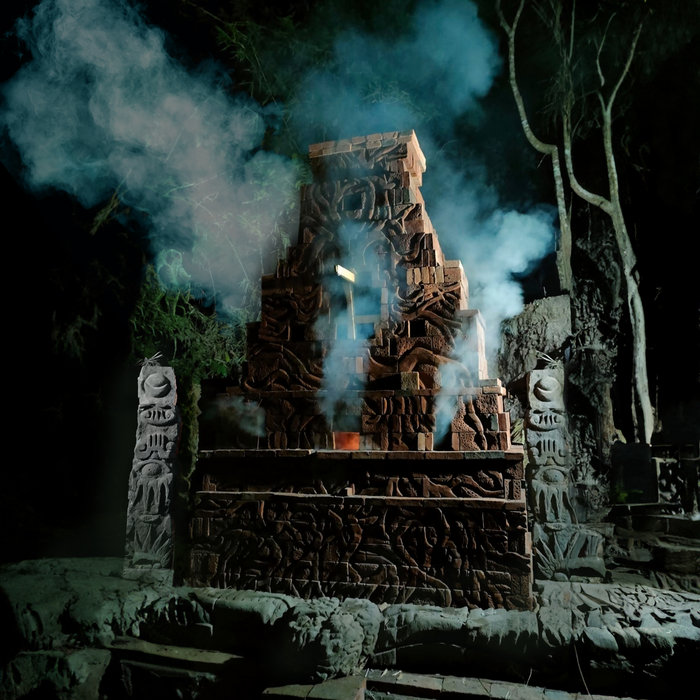
Indonesian experimental duo Senyawa have always blurred the distinction between instrument building and composition. For Vajranala, Wukir Suryadi took the form of a traditional Indonesian plough, the luku, and transformed it into a large bowed instrument. A smaller version was constructed for the recording sessions.

The album connects this instrument with mythology surrounding Pawon Temple in Central Java, natural cycles and ideas about how knowledge becomes power. The project extended beyond recorded sound into a physical monument built from thousands of carved red bricks and andesite stones.

What interests me most is the plough. An agricultural tool already contains rhythm: repetition, resistance, movement through material. Converting its form into an instrument does not simply create an exotic sound source. It shifts an object from producing lines in soil to producing vibrations in air.

That feels close to the best experimental music. The experiment is not merely a strange effect added after composition. It begins by questioning what an instrument can be in the first place.

https://senyawaofficial.bandcamp.com/album/vajranala

#Senyawa #ExperimentalMusic #Indonesia #InstrumentDesign

Senyawa (Official) Vajranala, by Senyawa 6 track album
Ethio Jazz

Jazz With Another Set of Scales

Mulatu Astatke’s Ethio-jazz was not created by simply placing Ethiopian melodies over American jazz. His musical path moved through Ethiopia, Wales, London and New York before returning to Addis Ababa. Strut’s retrospective of his 1965–1975 recordings describes how he gradually searched for a balance in which Ethiopian modes could retain their identity inside arrangements informed by jazz.

That word, balance, seems important. Fusion can easily become a situation where one language dominates and the other becomes decoration. In Mulatu’s music the harmonic and rhythmic centre does not always behave in the way a Western jazz listener expects. Vibraphone, horns, keyboards and percussion can sound familiar individually, yet the relationships between them shift the entire musical perspective.

It reminds me that originality does not necessarily require inventing a new instrument or technology. Sometimes it comes from hearing that two existing musical systems do not have to meet in the obvious place.

The interesting territory is often somewhere between them.

Mulatu Astatke 'New York – Addis – London The Story of Ethio Jazz 1965-1975'

#MulatuAstatke #EthioJazz #EthiopianMusic #Jazz

strutrecords Mulatu Astatke 'New York - Addis - London The Story of Ethio Jazz 1965 Vibraphone and keyboard player, master arranger and bandleader, Mulatu Astatke is one of the all-time greats of Ethiopian music and the creator of his own original music form, Ethio jazz. Through the acclaimed Ethiopiques album series and through featuring on the soundtrack to the Jim Jarmusch film Broken Flowers, his
Breathing Nils Frahm’s Felt

When the Piano Starts Breathing

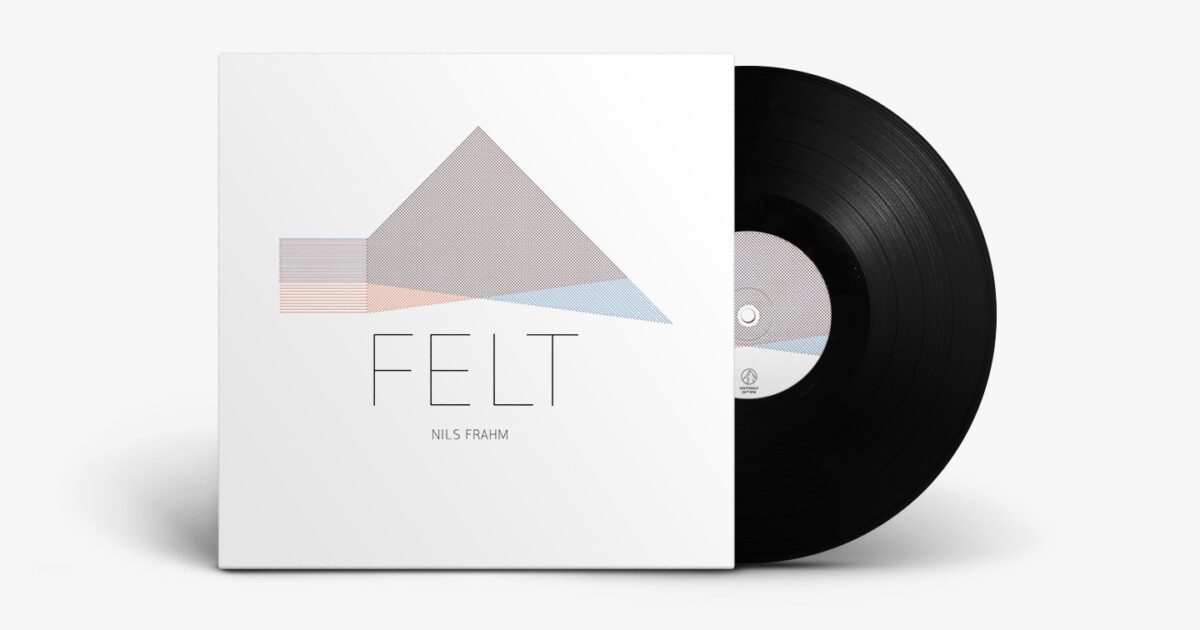
Nils Frahm’s Felt began with a practical problem: how do you play a piano late at night without disturbing your neighbours? He damped the instrument with thick felt and played extremely softly. Then he pushed the microphones deep inside the piano, close enough to capture sounds that recording engineers often try to remove. His breathing, the movement of the piano action and creaking floorboards became almost as audible as the notes.

That accident is what interests me. We spend enormous amounts of time in studios trying to separate the intended sound from everything around it. Felt does almost the reverse. The mechanism, performer and room are allowed into the composition.

It changes the scale of listening. Instead of making the piano larger, Frahm makes us move closer. A key being pressed becomes a physical event. Silence is no longer empty because you begin hearing everything that usually hides between the notes.

Sometimes intimacy in a recording has less to do with reverb or microphone quality than with deciding which imperfections deserve to remain.

https://www.erasedtapes.com/releases/eratp033-nils-frahm-felt

#NilsFrahm #Felt #PianoRecording #MusicProduction

Erased Tapes Felt by Nils Frahm · Releases · Erased Tapes Berlin-based pianist Nils Frahm is already a firebrand in the music world, collaborating with contemporaries such as Peter Broderick, Ólafur Arnalds and…
All the

Eighteen Musicians Breathing as One Machine

Steve Reich completed Music for 18 Musicians in 1976. The ensemble is unusual: four pianos, three marimbas, two xylophones, vibraphone, violin, cello, clarinets and four female voices. Reich noted that although the steady pulse connects the piece to his earlier work, its harmony, instrumentation and structure represented something new. All the sound is acoustic, with microphones used only for amplification.

What fascinates me is how mechanical the music can seem without actually being mechanical. Patterns repeat with extraordinary precision, yet changes are passed through human cues, breath and attention. Voices and clarinets have to breathe. Percussionists physically repeat figures. Small harmonic shifts gradually alter what the listener notices inside the pulse.

Minimalism is sometimes described as music where very little happens. Music for 18 Musicians makes me hear the opposite. So much happens that the changes can become almost microscopic. Repetition magnifies difference.

A machine could reproduce a loop perfectly. Eighteen musicians make the loop interesting because perfect repetition is never quite possible.

https://www.boosey.com/cr/music/Steve-Reich-Music-for-18-Musicians/548

#SteveReich #Minimalism #ContemporaryMusic #MusicFor18Musicians

boosey.com Boosey & Hawkes Composers and their Music Welcome to the world’s leading classical music publisher, formed from two historic companies and shaping the music of the future.