Skip to content

An Artwork Behaving Like Data

Album Made Almost Entirely

An Album Made Almost Entirely From Voice

Hatis Noit’s Aura was constructed almost completely from her own voice. She recorded the principal vocals in Berlin in only eight hours. Layers were then looped, edited and eventually re-amplified inside St John of Jerusalem Church in London so the recordings could absorb a real architectural ambience.

The exception is “Inori,” which includes a field recording of the sea made about one kilometre from the Fukushima Daiichi nuclear power plant in 2017.

What interests me is the re-amping process. Digital production makes it possible to create almost any imagined acoustic space through convolution and reverb, yet the team chose to send the recorded voice back into an actual building and record what the room did to it.

The architecture became an effect processor.

There is something beautifully circular about that. A voice enters a microphone, becomes data, leaves a loudspeaker, touches stone and air, and becomes a recording again.

Sometimes the most interesting signal chain includes a building.

https://www.hatisnoit.com/works

#HatisNoit #VoiceArt #ExperimentalMusic #SoundProduction

An Album Made Almost Entirely From Voice An Album Made Almost Entirely From Voice hatisnoit MUSIC | hatisnoit Hatis Noit’s Aura was constructed almost completely from her own voice. She recorded the principal vocals in Berlin in only eight hours. Layers...
Gambian Music

Breaking a Seven-Century Pattern

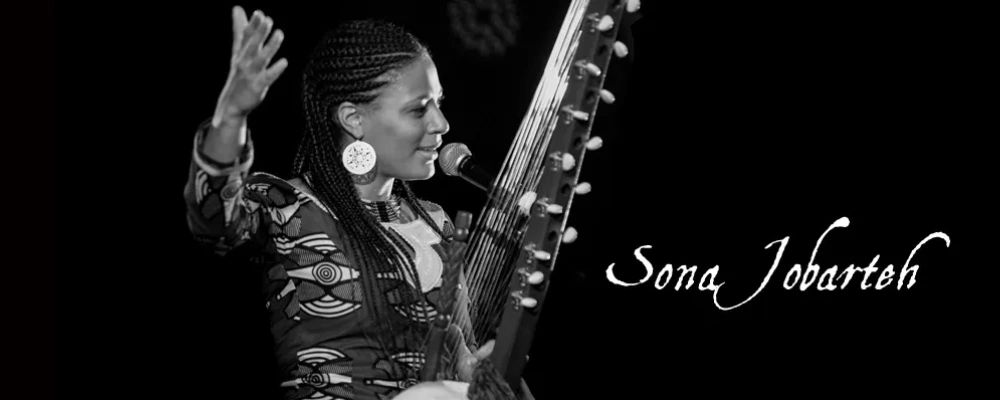
Sona Jobarteh comes from one of the West African griot families in which the kora tradition has been transmitted across generations. Her grandfather Amadu Bansang Jobarteh and cousin Toumani Diabaté belong to that lineage. What makes her position historically unusual is that she became the first woman from such a griot family to establish herself professionally as a kora virtuoso.

Yet I find the instrument itself more interesting than the milestone alone.

A kora combines 21 strings with a calabash resonator and allows melody, bass movement and repeating patterns to exist simultaneously. In the hands of one performer it can sound almost like several musicians negotiating with one another.

Jobarteh also studied Western classical composition, cello, piano and harpsichord. Her work therefore does not fit comfortably inside the idea that preserving tradition means avoiding other musical languages.

Perhaps preservation is strongest when the knowledge is deep enough that change no longer feels like a threat.

https://sonajobarteh.com/biography

#SonaJobarteh #Kora #GambianMusic #WestAfricanMusic

Breaking a Seven-Century Pattern Breaking a Seven-Century Pattern Sona Jobarteh Sona Jobarteh Sona Jobarteh comes from one of the West African griot families in which the kora tradition has been transmitted across generations. Her grandfather Amadu…
Buchla

Teaching a Synthesizer to Breathe

On EARS, Kaitlyn Aurelia Smith built much of the music around the Buchla Music Easel, but the album never feels interested in proving how electronic it is. She composed first with the Buchla, then arranged parts for woodwinds and vocals, using granular processing to further reshape the material. Before composing, she even studied slowed-down recordings of bird calls.

That detail interests me because the synthesizer and acoustic instruments are not placed in opposition. The woodwinds breathe, the voice bends, and the Buchla produces its own unstable movement until all three begin to occupy the same organic space.

Smith has described the Buchla as unusually human-sounding. I hear something slightly different: the instrument becomes convincing precisely because she does not force it to imitate a human instrument.

Electronic sound can have its own biology.

The lesson for me is not that synthesis should sound natural. It is that modulation, timing and small variations can make electronic sound behave as if something inside it is alive.

Into Your Eyes

#KaitlynAureliaSmith #Buchla #ModularSynth #ElectronicMusic

Teaching a Synthesizer to Breathe Teaching a Synthesizer to Breathe Kaitlyn Aurelia Smith Into Your Eyes On EARS, Kaitlyn Aurelia Smith built much of the music around the Buchla Music Easel, but the album never feels interested in proving how...
Artwork Behaving Like Data

An Artwork Behaving Like Data

Peruvian artist Teresa Burga created 4 Mensajes in 1974 as a multimedia environment using drawings, diagrams, 16mm video and 35mm slides. The work belongs to a practice in which information, measurement and systems became artistic material rather than simply tools used to document an artwork.

That feels unexpectedly contemporary.

We now live surrounded by dashboards, diagrams, sensors and interfaces that translate reality into data. Burga was already asking what happens when those forms of organisation become the work itself.

A diagram normally promises clarity. It says: this complicated thing can be reduced to relationships you can understand.

Art can use the same visual language while refusing that promise.

The diagram may look objective while making us more aware of whoever selected the information, chose the categories and decided what should be measured.

That is what interests me most. Data never simply appears.

Someone designs the system that makes it visible.

Once you notice that, a chart can become as subjective as a painting.

https://mali.pe/

#TeresaBurga #PeruvianArt #ConceptualArt #MultimediaArt

An Artwork Behaving Like Data An Artwork Behaving Like Data MALI - Museo de Arte de Lima MALI | Museo de Arte de Lima – Arte, Exposiciones y Cultura Descubre el MALI, el Museo de Arte de Lima. Explora exposiciones, actividades culturales, colecciones y experiencias de arte peruano.
Car Gabriel Orozco’s

Removing the Middle of a Car

Gabriel Orozco’s La DS from 1993 began with a Citroën DS, already an icon of twentieth-century automotive design. Orozco cut the car lengthwise into three sections, removed the central strip and joined the remaining outer parts together. The result still resembles a DS immediately, yet it has become impossibly narrow.

What interests me is how little material had to disappear before the object stopped functioning as a car and started functioning as an idea.

Almost every familiar signal remains: headlights, windows, wheels, aerodynamic curves. Our brain completes the category instantly.

But the proportions are wrong.

That gap between recognition and impossibility makes the sculpture work for me. Orozco did not need to invent a strange futuristic vehicle. He changed one structural rule inside something we already know.

It is close to what happens in experimental music when a familiar rhythm loses one beat or a conventional instrument receives an impossible tuning.

Sometimes transformation does not require adding anything.

Removing the correct part can be enough to make the entire object unfamiliar again.

https://www.kurimanzutto.com/artists/gabriel-orozco

#GabrielOrozco #LaDS #MexicanArt #ConceptualArt

Removing the Middle of a Car Removing the Middle of a Car kurimanzutto.com gabriel orozco - Artists - Kurimanzutto Gabriel Orozco’s La DS from 1993 began with a Citroën DS, already an icon of twentieth-century automotive design. Orozco cut the car lengthwise into three…
Cinema Escaping the Rectangle

Cinema Escaping the Rectangle

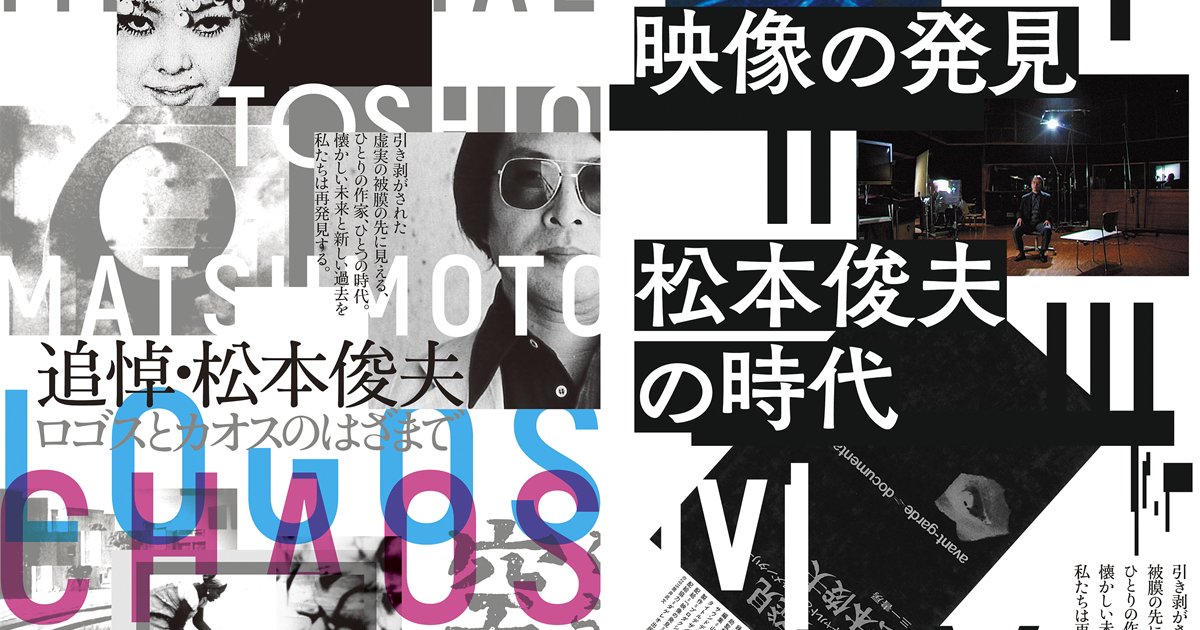
Toshio Matsumoto did not limit experimental film to unusual images inside a conventional cinema screen. During the late 1960s and early 1970s he worked with expanded cinema, questioning what his retrospective material describes as the standard “one projector, one screen” relationship between film and audience. For My Crushed Right Eye from 1968 could be presented with three simultaneous projections, while Space Projection Ako in 1970 pushed the idea further into spatial presentation.

This interests me much more from a VJ perspective than simply synchronising a video to music.

Once several projections occupy a space, editing no longer happens only in time. It happens across walls, screens and the viewer’s field of vision.

The audience effectively performs part of the edit by deciding where to look.

Modern projection mapping and realtime visuals have access to technology Matsumoto could never have imagined, yet the underlying question remains surprisingly current:

Why should a moving image stay inside one rectangle?

The moment that rectangle disappears, cinema begins behaving like architecture.

https://www.imageforum.co.jp/matsumototoshio/

#ToshioMatsumoto #ExpandedCinema #ExperimentalFilm #LiveVisuals

Cinema Escaping the Rectangle Cinema Escaping the Rectangle ??????? ??????????????????-??????? ??????? ??????????????????-??????? ???????? ??????????????????-????????2017?12??????????????????????
Autechre

The Algorithm Is Not the Composer

Autechre’s Confield, released in 2001, became closely associated with generative and algorithmic approaches to rhythm. Sean Booth has repeatedly pushed back against the idea that this means pressing a button and allowing software to compose randomly. Their systems use rules, recursive processes and real-time control, but listening and selection remain central.

That distinction matters.

When a musical system generates results we did not explicitly place note by note, it is easy to imagine that authorship has moved into the computer. But somebody designed the boundaries, chose the relationships, listened to the output and decided what was worth keeping.

Autechre’s work makes me think of generative visual art in exactly the same way. Code can produce thousands of possibilities. The interesting part is rarely that the machine produced something unexpected.

The interesting part is why the artist recognised one unexpected result as meaningful.

Automation can generate variation.

Taste still has to decide what becomes the work.

https://autechre.warp.net/release/356362-autechre-confield

#Autechre #GenerativeMusic #MaxMSP #ElectronicMusic

The Algorithm Is Not the Composer The Algorithm Is Not the Composer Autechre’s Confield, released in 2001, became closely associated with generative and algorithmic approaches to rhythm. Sean Booth has repeatedly pushed bac…
Dub

Dub as the Glue

New Zealand duo Pitch Black, Michael Hodgson and Paddy Free, have been performing together since 1996. Their music moves between ambient electronics, acid lines, heavy rhythmic structures and dub. Their own description of the project is revealing: dub is the glue holding those different musical directions together.

I like that way of thinking about genre.

Usually we describe a track by deciding which genre it belongs to. “Glue” suggests another use. A genre can become a method that allows unrelated materials to coexist.

Dub is particularly suited to that role because so much of its identity lies in production decisions: space, delay, bass, subtraction, echoes and changing relationships between elements. You can apply those ideas without copying a traditional reggae arrangement.

Pitch Black’s live performances also combine electronic sound with an important visual component, making the project feel closer to an audiovisual environment than simply two people reproducing studio tracks.

Sometimes influence is strongest when you stop copying its surface and start using its logic.

https://www.pitchblacknz.com/about.html

#PitchBlack #NewZealandMusic #Dub #ElectronicMusic

Dub as the Glue Dub as the Glue pitchblacknz.com Pitch Black New Zealand duo Pitch Black, Michael Hodgson and Paddy Free, have been performing together since 1996. Their music moves between ambient electronics, acid…
Brazilian Music

Electronic Music by Correspondence

Brazilian composer Jocy de Oliveira was already combining electronic sound with theatre and multimedia in the early 1960s. For Apague Meu Spotlight, presented in 1961, technological limitations in Brazil led to an extraordinary working method: electronic material connected with Luciano Berio had to travel between Brazil and the Studio di Fonologia in Milan on tape.

That detail stays with me.

Today two musicians on different continents can exchange an Ableton project in seconds. In 1961, collaboration with an electronic studio could mean physically transporting recorded sound across an ocean.

The delay must have changed the creative process. You could not endlessly adjust something in real time. Decisions had weight because communication itself required time and material.

De Oliveira continued combining electronic music with theatre, video and multimedia for decades. In 2026 her work received renewed attention through the documentary Universo Circular.

Electronic music history is often reduced to a few European and North American studios. Jocy de Oliveira makes that map considerably larger, and more complicated.

Home

#JocyDeOliveira #ElectroacousticMusic #BrazilianMusic #Multimedia

Electronic Music by Correspondence Electronic Music by Correspondence jocydeoliveira.com Jocy de Oliveira Site da Jocy de Oliveira