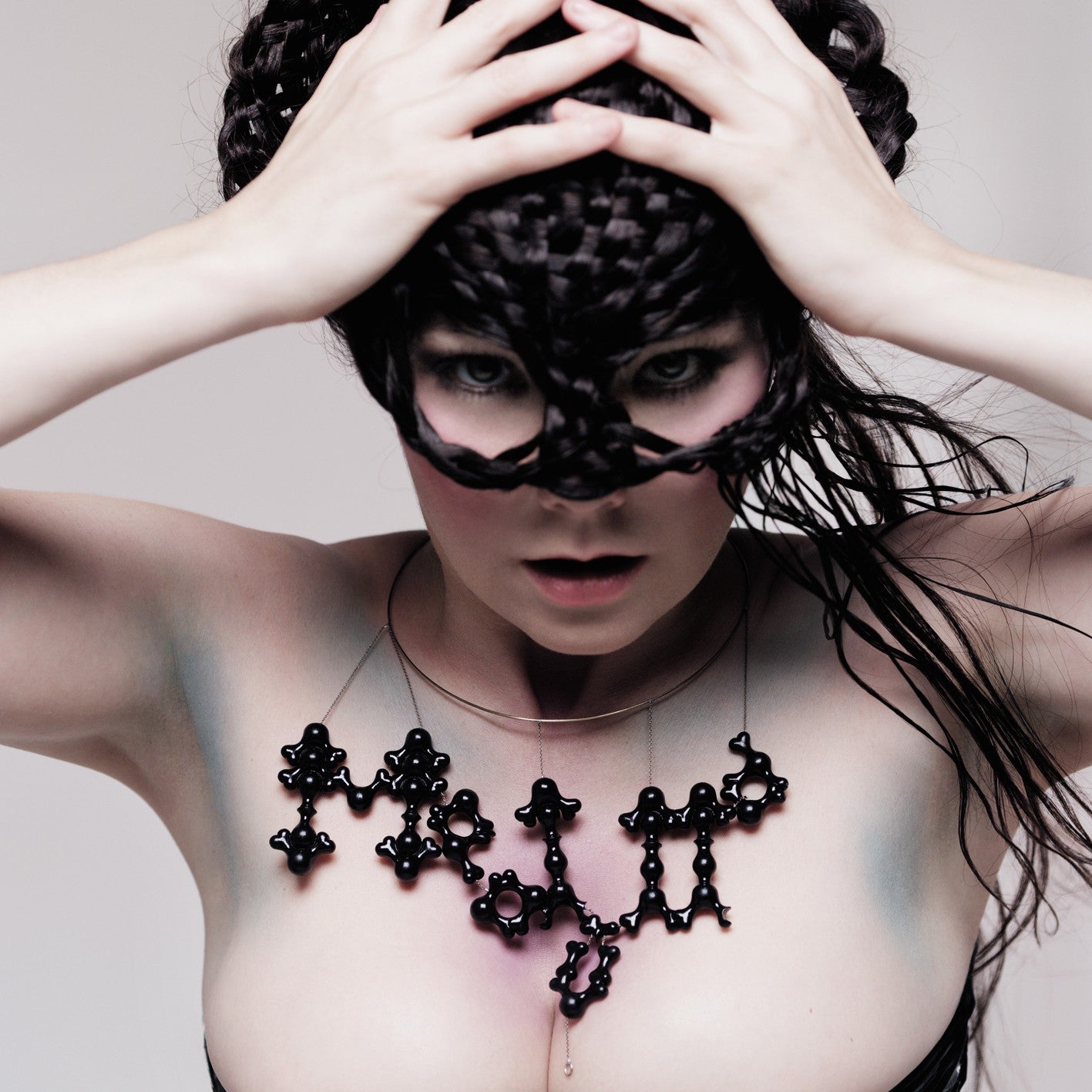
For Medúlla, Björk stripped away most conventional instrumentation and built an album almost entirely from human voices. The recording involved Icelandic and London choirs, throat singing, vocal percussion and beatboxing by Rahzel, alongside layers of Björk’s own voice.
What interests me is that this is not really an a cappella album in the traditional sense.
The voice is treated as raw production material.
A mouth can become percussion.
Breathing becomes texture.
A choir can behave like a synthesizer pad.
Individual syllables can be arranged almost like samples.
That changes the usual hierarchy between singer and accompaniment. Instead of placing a vocal on top of an instrumental track, Medúlla asks what happens when almost the entire track is made from the same physical source.
There is also something quietly radical about choosing the oldest instrument humans possess at a moment when digital production technology was becoming increasingly powerful.
The album does not reject technology. Editing, layering and processing remain essential.
But technology is used to enlarge the body rather than replace it.
The result makes synthesis feel less like inventing an artificial sound and more like discovering how artificial a familiar human sound can become.