Skip to content

Improvisation Inside a Twelve-Piece Machine

Autechre

The Algorithm Is Not the Composer

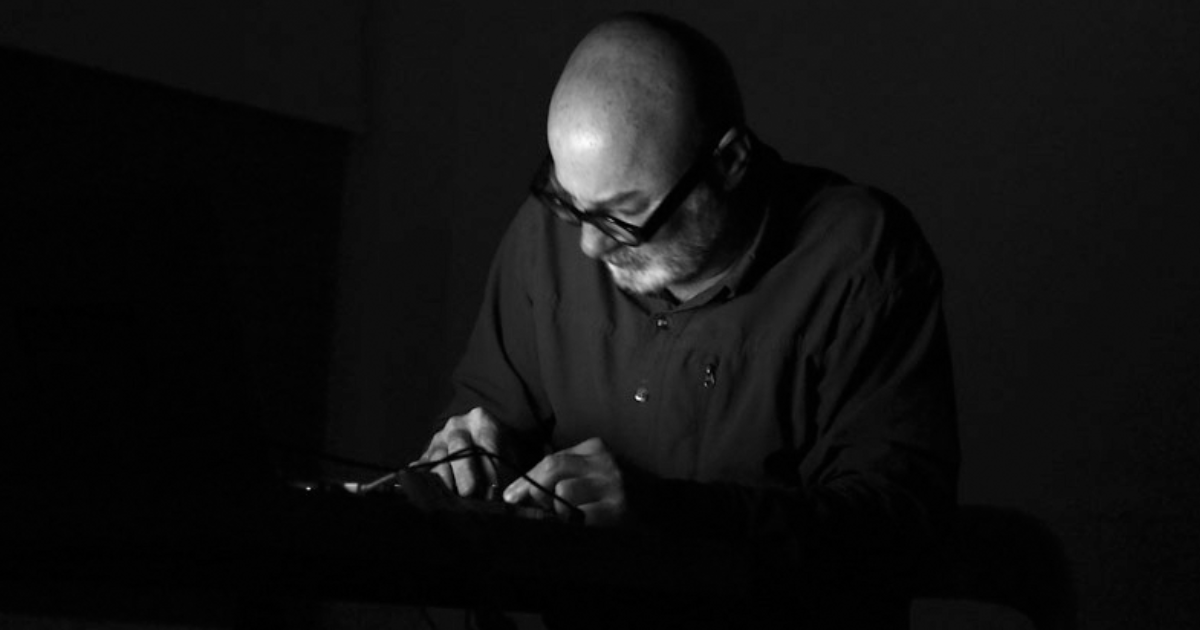
Autechre’s Confield, released in 2001, became closely associated with generative and algorithmic approaches to rhythm. Sean Booth has repeatedly pushed back against the idea that this means pressing a button and allowing software to compose randomly. Their systems use rules, recursive processes and real-time control, but listening and selection remain central.

That distinction matters.

When a musical system generates results we did not explicitly place note by note, it is easy to imagine that authorship has moved into the computer. But somebody designed the boundaries, chose the relationships, listened to the output and decided what was worth keeping.

Autechre’s work makes me think of generative visual art in exactly the same way. Code can produce thousands of possibilities. The interesting part is rarely that the machine produced something unexpected.

The interesting part is why the artist recognised one unexpected result as meaningful.

Automation can generate variation.

Taste still has to decide what becomes the work.
https://autechre.warp.net/release/356362-autechre-confield

#Autechre #GenerativeMusic #MaxMSP #ElectronicMusic

The Algorithm Is Not the Composer The Algorithm Is Not the Composer Autechre’s Confield, released in 2001, became closely associated with generative and algorithmic approaches to rhythm. Sean Booth has repeatedly pushed bac…
Dub

Dub as the Glue

New Zealand duo Pitch Black, Michael Hodgson and Paddy Free, have been performing together since 1996. Their music moves between ambient electronics, acid lines, heavy rhythmic structures and dub. Their own description of the project is revealing: dub is the glue holding those different musical directions together.

I like that way of thinking about genre.

Usually we describe a track by deciding which genre it belongs to. “Glue” suggests another use. A genre can become a method that allows unrelated materials to coexist.

Dub is particularly suited to that role because so much of its identity lies in production decisions: space, delay, bass, subtraction, echoes and changing relationships between elements. You can apply those ideas without copying a traditional reggae arrangement.

Pitch Black’s live performances also combine electronic sound with an important visual component, making the project feel closer to an audiovisual environment than simply two people reproducing studio tracks.

Sometimes influence is strongest when you stop copying its surface and start using its logic.

https://www.pitchblacknz.com/about.html

#PitchBlack #NewZealandMusic #Dub #ElectronicMusic

Dub as the Glue Dub as the Glue pitchblacknz.com Pitch Black New Zealand duo Pitch Black, Michael Hodgson and Paddy Free, have been performing together since 1996. Their music moves between ambient electronics, acid…
Brazilian Music

Electronic Music by Correspondence

Brazilian composer Jocy de Oliveira was already combining electronic sound with theatre and multimedia in the early 1960s. For Apague Meu Spotlight, presented in 1961, technological limitations in Brazil led to an extraordinary working method: electronic material connected with Luciano Berio had to travel between Brazil and the Studio di Fonologia in Milan on tape.

That detail stays with me.

Today two musicians on different continents can exchange an Ableton project in seconds. In 1961, collaboration with an electronic studio could mean physically transporting recorded sound across an ocean.

The delay must have changed the creative process. You could not endlessly adjust something in real time. Decisions had weight because communication itself required time and material.

De Oliveira continued combining electronic music with theatre, video and multimedia for decades. In 2026 her work received renewed attention through the documentary Universo Circular.

Electronic music history is often reduced to a few European and North American studios. Jocy de Oliveira makes that map considerably larger, and more complicated.

Home

#JocyDeOliveira #ElectroacousticMusic #BrazilianMusic #Multimedia

Electronic Music by Correspondence Electronic Music by Correspondence jocydeoliveira.com Jocy de Oliveira Site da Jocy de Oliveira
Album That Waited

An Album That Waited for Its Audience

Beverly Glenn-Copeland recorded Keyboard Fantasies in 1986 while living in Huntsville, Ontario. The album was made entirely with a Yamaha DX7 and Roland TR-707 and self-released on cassette in an edition of only around 200 copies. Very few sold. Almost three decades later, a Japanese record collector contacted Glenn-Copeland, and the recording gradually found the international audience it had never reached in the 1980s.

What interests me is how completely an audience can change without the recording changing at all.

In 1986, the mixture of digital synthesis, meditative songwriting, programmed rhythm and spacious production apparently had no obvious market. Later listeners heard connections with ambient, new age and early electronic dance music.

We often talk about records being “ahead of their time,” but perhaps that gives time too much intelligence.

The music was already there.

What had to change was the network around it: collectors, reissues, listeners and musical reference points.

Sometimes an unsuccessful record is not rejected by history. History simply arrives late.

https://beverlyglenncopeland.com/

#BeverlyGlennCopeland #KeyboardFantasies #DX7 #CanadianMusic

An Album That Waited for Its Audience An Album That Waited for Its Audience BEVERLY GLENN-COPELAND BEVERLY GLENN-COPELAND Beverly Glenn-Copeland recorded Keyboard Fantasies in 1986 while living in Huntsville, Ontario. The album was made entirely with a Yamaha DX7 and Roland TR…
Acid Before Acid Had

Acid Before Acid Had a Name

In 1982, Indian musician Charanjit Singh recorded Synthesizing: Ten Ragas to a Disco Beat. The idea was straightforward but unusual: translate Indian classical ragas into electronic disco. Singh used a Roland TB-303 bass synthesizer, TR-808 drum machine and Jupiter-8 synthesizer, equipment that would later become deeply associated with acid house and electronic dance music.

The record originally attracted little attention. Decades later, its combination of bubbling 303 sequences and machine rhythm sounded uncannily close to musical developments normally associated with Chicago several years afterwards.

The tempting story is that Singh “invented acid house.” I think the more interesting point is that similar technological possibilities can appear in completely different musical cultures before anyone agrees on a genre name.

A machine does not arrive with its future already decided.

The TB-303 was designed as a bass accompaniment device. Singh heard it through Indian ragas. Chicago producers later heard something else.

Musical history becomes much richer once technology stops travelling along a single supposedly inevitable path.

https://minimalwave.com/releases/release/synthesizing-10-ragas-to-a-disco-beat

#CharanjitSingh #TB303 #IndianElectronicMusic #SynthHistory

Acid Before Acid Had a Name Acid Before Acid Had a Name In 1982, Indian musician Charanjit Singh recorded Synthesizing: Ten Ragas to a Disco Beat. The idea was straightforward but unusual: translate Indian class…
Egyptian Music

Improvisation Inside a Twelve-Piece Machine

Maurice Louca’s Elephantine was recorded in Stockholm with a twelve-piece ensemble containing two percussionists, bass, vibraphone, saxophones, bass flute, tuba, clarinets, voice, oud, violin and Louca himself on guitar and piano. Released in 2019, the record moves between written composition and improvisation while drawing musicians from Egypt, Iraq and several European countries into one ensemble.

That line between composition and improvisation interests me.

With twelve players, complete freedom could easily become chaos. Write everything down, and the individual personalities might disappear. Louca seems interested in the unstable area between those extremes, where enough structure exists for a large ensemble to move together but enough space remains for musicians to change what happens inside it.

Electronic production has a similar problem. A sequencer can organise almost everything with absolute precision, but precision is not automatically life.

Sometimes the most interesting musical system is not the one with the most control. It is the one that controls exactly enough.

https://northernspyrecs.com/product/elephantine/

#MauriceLouca #EgyptianMusic #Improvisation #ExperimentalMusic

Improvisation Inside a Twelve-Piece Machine Improvisation Inside a Twelve-Piece Machine Northern Spy Records Northern Spy Records Northern Spy Records — official site and store. Browse the catalog, artists, news, and tour dates.
Electronic Music

The Subway Became Part of the Synthesizer

When Robert Henke and Gerhard Behles travelled to Hong Kong in 1996 for the International Computer Music Conference, Henke carried a recorder through Hong Kong and Guangzhou. Those field recordings later became part of Monolake’s Hongkong. The closing track, “Mass Transit Railway,” is based on sound captured inside a Hong Kong subway train. The album was produced with instruments including a Prophet VS, Yamaha SY77 and TG77, Ensoniq ASR-10, Waldorf Microwave and an Atari running Notator, alongside a step sequencer Henke wrote in Max.

What interests me is how naturally the city enters the electronic system. The subway recording is not simply atmosphere placed behind a track. It becomes another component in a studio already built from samplers, synthesizers and code.

Sampling a city does something strange to geography. A train journey becomes repeatable. A moment that happened once can be filtered, looped and reorganised twenty years later.

Electronic music can sometimes feel completely synthetic. Hongkong reminds me that a machine-made composition can still contain a very specific street, vehicle and moment in time.

https://www.roberthenke.com/releases/ml-000.html

#Monolake #RobertHenke #FieldRecording #ElectronicMusic

The Subway Became Part of the Synthesizer The Subway Became Part of the Synthesizer roberthenke.com Monolake - Hongkong When Robert Henke and Gerhard Behles travelled to Hong Kong in 1996 for the International Computer Music Conference, Henke carried a recorder through Hong…
But the

A Painting Made for a Ritual

Nepalese paubha paintings can look astonishingly dense to someone encountering them simply as images. Deities, architectural forms, geometric structures and repeated motifs occupy almost every part of the cloth. But the tradition was not developed merely to create something visually impressive.

The Nepal Academy of Fine Arts places paubha among traditional arts closely connected with religion, narrative, ritual and everyday cultural life. The Nepal Art Council continues to present the form as part of a living Himalayan artistic tradition rather than only an archaeological inheritance.

That changes how I think about composition.

In contemporary art we often assume that an artwork exists primarily to be looked at. A ritual painting may also function as an aid to devotion, storytelling or contemplation. Its organisation therefore follows another logic.

The density is not necessarily decorative excess. Information has to be located, recognised and revisited.

A screen interface also organises symbols so that a viewer knows where attention should move next. Paubha painting reminds me that complex visual information systems existed long before we started calling anything an interface.

https://www.nepalartcouncil.org.np/publications/paubha-scroll-paintings/

#Paubha #NepaliArt #HimalayanArt #TraditionalPainting

A Painting Made for a Ritual A Painting Made for a Ritual nepalartcouncil.org.np One moment, please... Nepalese paubha paintings can look astonishingly dense to someone encountering them simply as images. Deities, architectural forms, geometric structures an…
Cabaret Crusades

History Performed by Clay

For Cabaret Crusades: The Path to Cairo, Egyptian artist Wael Shawky reconstructed episodes from the medieval Crusades using approximately 120 handmade clay puppets. The larger trilogy draws on Amin Maalouf’s The Crusades Through Arab Eyes, shifting attention toward historical narratives recorded from an Arab perspective.

The choice of puppets makes the work stranger than a conventional historical reconstruction.

A puppet cannot pretend that we are watching reality. We constantly see the mechanism of representation. The figures are obviously artificial, yet they perform events whose consequences were violently real.

That distance interests me.

Film normally tries to make historical reconstruction convincing through costumes, locations and actors. Shawky removes that illusion almost completely. History becomes theatre, and because the manipulation is visible, we start thinking about who is moving the characters.

Perhaps that is appropriate. Historical narratives are also constructed. Events happened, but every retelling involves selection, framing and perspective.

The puppet strings are simply more visible than the ones inside a history book.

https://www.lissongallery.com/artists/wael-shawky

#WaelShawky #EgyptianArt #CabaretCrusades #ContemporaryArt

History Performed by Clay History Performed by Clay Lisson Gallery Lisson Gallery Wael Shawky tackles notions of national, religious and artistic identity in contemporary art through film, performance, and storytelling.
Audiovisual Art

Visuals From Particle Physics

Herman Kolgen’s ISOTOPP grew from a residency at GANIL, the French heavy-ion research facility. Rather than using particle physics simply as futuristic decoration, the Montréal multimedia artist developed an audiovisual work around molecular abstraction and energy transfer. The project eventually became a black-and-white audiovisual performance.

That starting point interests me from a VJ perspective.

Visual performance often begins with images that already look interesting. Film fragments, generated geometry, typography or textures are then synchronised to music. Kolgen’s approach suggests another possibility: begin with a process that is normally invisible and ask how it might acquire both image and sound.

The scientific phenomenon is not automatically the artwork. Transformation is still required.

But it gives the audiovisual system a shared conceptual source. Sound and image do not have to be connected only because a visual event happens on the beat. They can behave like two different outputs generated from the same underlying idea.

That feels much closer to composing audiovisual work than simply decorating music with moving pictures.

https://montreal.mutek.org/en/artists/herman-kolgen

#HermanKolgen #AudiovisualArt #LiveVisuals #VJCulture

Visuals From Particle Physics Visuals From Particle Physics MUTEK Montréal Herman Kolgen | MUTEK Montréal MUTEK is a Montréal-based festival dedicated to the promotion of electronic music and the digital arts.Edition 27, from August 25 to 30, 2026.MUTEK…
Experimental Music

Fifty-Two Strings Becoming Noise

Krzysztof Penderecki’s Threnody to the Victims of Hiroshima was composed in 1960 for 52 string instruments. Instead of treating those instruments primarily as carriers of melody and harmony, Penderecki pushed them toward clusters, glissandi, extreme registers and unconventional methods of producing sound. Players strike or bow unusual parts of their instruments, while blocks of sound expand and contract almost like physical objects.

The piece was originally titled 8’37” before receiving the name by which it became famous.

What interests me is how radically the identity of the string orchestra changes.

We know what a violin is supposed to sound like. Penderecki uses fifty-two familiar instruments to construct something that can initially seem electronic, industrial or impossible to locate.

No synthesizer is required.

That is useful to remember when thinking about experimental sound design. New timbre does not always require new technology. Sometimes it comes from asking an old instrument to perform an unfamiliar physical action.

The instrument has not changed.

Our definition of what counts as its sound has.

https://penderecki-center.pl/en/krzysztof-penderecki

#KrzysztofPenderecki #Threnody #Sonorism #ExperimentalMusic

Fifty-Two Strings Becoming Noise penderecki-center.pl ?ycie i twórczo?? - Europejskie Centrum Muzyki Krzysztofa Pendereckiego (en) Krzysztof Penderecki’s Threnody to the Victims of Hiroshima was composed in 1960 for 52 string instruments. Instead of treating those instruments primarily…