Skip to content

Four Voices Inside One Circle

Album With Almost

An Album With Almost No Ground

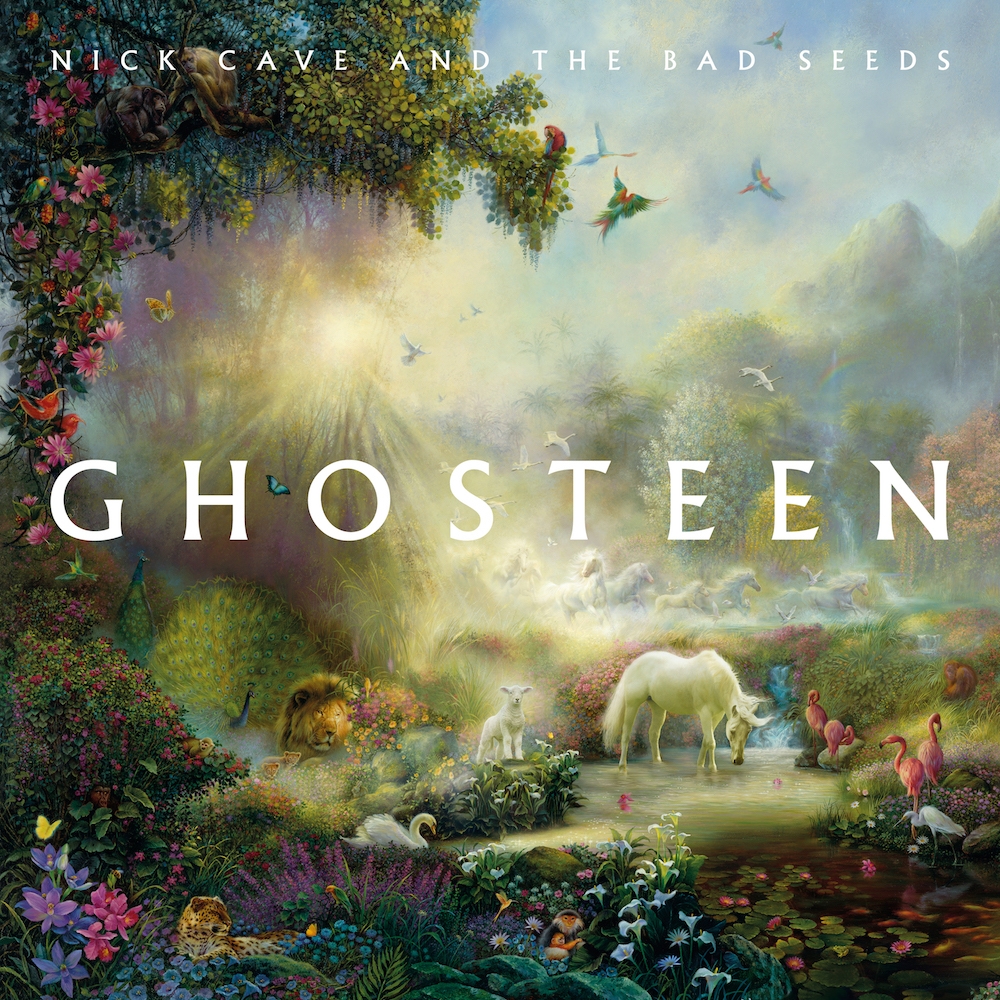
Nick Cave & The Bad Seeds recorded Ghosteen during 2018 and early 2019 across studios in Malibu, Los Angeles, Brighton and Berlin. Its instrumentation includes piano, synthesizers, loops, flute, violin, bass, percussion, vibraphone and guitar, yet much of the album feels unusually weightless. Cave divided it into two parts, describing the first group of songs as “the children” and the second as “their parents.” The record arrived in 2019 after a period in which grief had become inseparable from his writing.

What I keep noticing is how the arrangements often avoid giving the songs a firm floor. Synthesizers and sustained textures can float around the voice rather than locking everything into a conventional rock structure. Even with drums and bass available, space becomes one of the dominant musical materials. That makes Ghosteen interesting from a production perspective as well as an emotional one. Removing weight can sometimes make music feel larger. The arrangement does not need to tell us what grief sounds like. It creates a space where certainty itself seems difficult to hold.
Ghosteen

#NickCave #Ghosteen #MusicProduction #AustralianMusic

Nick Cave Ghosteen - Digital | Nick Cave Buy from the Official Website. A transcendent double album from Nick Cave & The Bad Seeds, exploring loss and hope.
Afro Uruguayan Culture

Three Drums, One Moving City

Candombe is inseparable from the sound of drums moving through Montevideo. The Uruguayan tradition combines music and dance and carries a strong African heritage. Three historic neighbourhoods, Barrio Sur, Palermo and Cordón, developed their own approaches to the drum rhythm, and the annual Desfile de las Llamadas brings comparsas into the streets. Yet candombe does not exist only during the parade. Rehearsals and neighbourhood gatherings continue throughout the year.

What interests me is what happens when rhythm is not confined to a stage. A procession changes acoustics constantly. Buildings reflect the drums differently, spectators move alongside the players, distance alters which parts of the pattern become dominant. The city itself becomes part of the mix. That makes candombe difficult to reduce to an audio recording alone. The recording preserves rhythm, but not the experience of hearing it approach from another street, grow physically larger and then disappear again. Music can occupy architecture without ever needing a concert hall.

CANDOMBE

#Candombe #UruguayanMusic #Montevideo #AfroUruguayanCulture

Drawing With Empty Space

Drawing With Empty Space

Ruth Asawa described her looped-wire sculptures as a way of taking a two-dimensional line into three-dimensional space. Her technique grew from seeing basket makers work with wire during a 1947 trip to Mexico. Back in the United States she developed that looping process into suspended forms built from ordinary industrial materials such as iron, copper and brass wire. In a work from around 1958 now in SFMOMA’s collection, a continuous mesh expands and contracts into nested lobes while remaining transparent enough for the room to pass visually through it.

That transparency may be the most interesting material in the sculpture. Traditional sculpture often defines a solid mass against surrounding emptiness. Asawa gives the emptiness a shape of its own. Light and shadow complicate it further: the wire produces another changing drawing on nearby surfaces. A sculpture can therefore occupy space without filling it. The object and the air inside it become equally necessary.

Untitled (S.114, Hanging Six-Lobed Continuous Form within a Form with an Open Collar and Spheres in the Second, Third, and Fifth Lobes)

#RuthAsawa #WireSculpture #SanFranciscoArt #Sculpture

SFMOMA Untitled (S.114, Hanging Six-Lobed Continuous Form within a Form with an Open Collar and Spheres in the Second, Third, and Fifth Lobes) Explore the artists and artworks of our time at the San Francisco Museum of Modern Art.
Fiddle That Remembers the

A Fiddle That Remembers the Horse

The Mongolian morin khuur has only two strings, but the horse is present throughout the instrument. Its long fretless neck ends in a carved horse head, while traditional strings and bow hair are made from horsehair. The instrument can be played alone or accompany long song, dance, stories, ceremonies and activities connected with horses. UNESCO even records tunes known as tatlaga that were traditionally played in relation to taming animals.

What fascinates me is how thoroughly an environment can enter an instrument. The horse is not simply decoration added to the top of the neck. It appears in the material, symbolism, repertoire and cultural world surrounding the sound. Musical instruments are often discussed mainly through pitch range or playing technique, but they can also function as compact archives of a way of life. Change the materials, social setting and daily relationship with animals, and something larger than the timbre may change. The morin khuur reminds me that an instrument can carry a landscape even when it is played indoors.

https://www.unesco.org/archives/multimedia/document-3754

#MorinKhuur #MongolianMusic #TraditionalInstrument #HorseFiddle

UNESCO Multimedia Archives Morin Khuur - Horse Fiddle: Mongolian traditional musical instrument The design of the Morin Khuur is closely linked to the all-important cult of the horse. The instrument's hollow trapezoid-shaped body is attached to a long fretless neck bearing a carved horse head at its extremity. Just below the head, two tuning pegs jut out like ears from either side of the neck. The soundboard is covered with animal skin, and the strings and bow are made of horsehair. The instrument's characteristic sound is produced by sliding or stroking the bow against the two strings. Common techniques include multiple stroking by the right hand and a variety of left-hand fingering. It is mainly played in solo fashion but sometimes accompanies dances, long songs (urtiin duu), mythical tales, ceremonies and everyday tasks related to horses. To this day, the morin khuur repertory has retained some tunes (tatlaga) specifically intended to tame animals. Owing to the simultaneous presence of a main tone and overtones, morin khuur music has always been difficult to transcribe using standard notation. It has been transmitted orally from master to apprentice for many generations.
Bruce Onobrakpeya

Inventing a Script for Images

Bruce Onobrakpeya’s Ibiebe works contain a writing system that looks ancient but was actually invented by the Nigerian artist himself. He developed and refined the script between 1978 and 1986, creating geometric and curving signs informed by Urhobo symbols and the proverbs connected to them, while also responding to Chinese and Japanese calligraphy. In Ibiebe ABC III from 2000, the glyphs sit inside a checkerboard structure, functioning simultaneously as marks that suggest communication and as visual forms.

I like the uncertainty this creates. We instinctively try to read anything arranged like writing, even when we do not possess the key. Onobrakpeya makes that desire to decode part of the experience. The symbols connect to cultural knowledge, yet they also belong to an individual artistic language he deliberately constructed. Writing normally tries to stabilise meaning. Here it opens another possibility: a sign can communicate through rhythm, shape and association before we know exactly what it says.

https://africa.si.edu/collection/object/nmafa_2005-7-1

#BruceOnobrakpeya #NigerianArt #Printmaking #VisualLanguage

Canto ATenore

Four Voices Inside One Circle

Sardinia’s canto a tenore is built from four male voices: bassu, contra, boche and mesu boche. The singers stand close together, while one voice carries poetry or prose and the others construct the surrounding harmony. The deep, guttural sound of bassu and contra gives the music a physical weight that feels very different from conventional choral singing. The tradition developed within Sardinia’s pastoral culture, particularly around Barbagia, and could be heard not only at weddings, religious festivities and carnival but spontaneously in local bars. Its repertoire includes old poetry as well as texts about contemporary subjects such as unemployment, migration and politics.

What interests me is how much the music depends on proximity. Four separate voices have to become one acoustic object, yet each retains a precise role. UNESCO also notes a tension that many living traditions face: taking the music onto stages for visitors can help it survive while changing the intimate context that shaped it. Preservation is rarely as simple as keeping the notes unchanged. Sometimes the room, the people standing around you and the reason for singing are part of the composition too.

https://unesco.cultura.gov.it/en/projects/canto-a-tenore-sardinian-pastoral-songs/

#CantoATenore #SardinianMusic #PolyphonicSinging #ItalianMusic

Afro Cuban Culture

When Percussion Becomes Conversation

Cuban rumba grew in urban neighbourhoods, port areas and communities with strong African cultural roots, particularly in places such as Havana and Matanzas. UNESCO describes it not simply as music or dance but as a combination of chants, gestures, handclapping, percussion and body language. Instruments can include dedicated percussion as well as ordinary objects from domestic or working life. Performers and audiences interact rather than remaining strictly separated, and the practice has traditionally been transmitted through families and neighbourhoods by imitation and participation.

That last part interests me most. In recorded music we are used to thinking of a finished performance travelling toward a passive listener. Rumba works differently. The boundary between performing and responding can become porous. Rhythm is social information. A clap, gesture or sung phrase can invite another action, and the music keeps being reconstructed through that exchange. Maybe some traditions survive precisely because nobody owns the complete performance alone.

https://ich.unesco.org/en/RL/rumba-in-cuba-a-festive-combination-of-music-and-dances-and-all-the-practices-associated-01185

#CubanRumba #CubanMusic #Percussion #AfroCubanCulture

ich.unesco.org Rumba in Cuba, a festive combination of music and dances and all the practices associated - UNESCO Intangible Cultural Heritage The music and movements of rumba in Cuba are mainly associated with African culture but also feature elements from Antillean culture and Spanish flamenco. Historically, rumba in Cuba developed in marginal neighbourhoods of cities in Cuba like Havana and Matanzas, near other ports and shanty towns and grew especially popular in rural areas where communities of African slaves lived. Spreading from t...
Clock Maria Taniguchi’s

Painting Time Without Painting a Clock

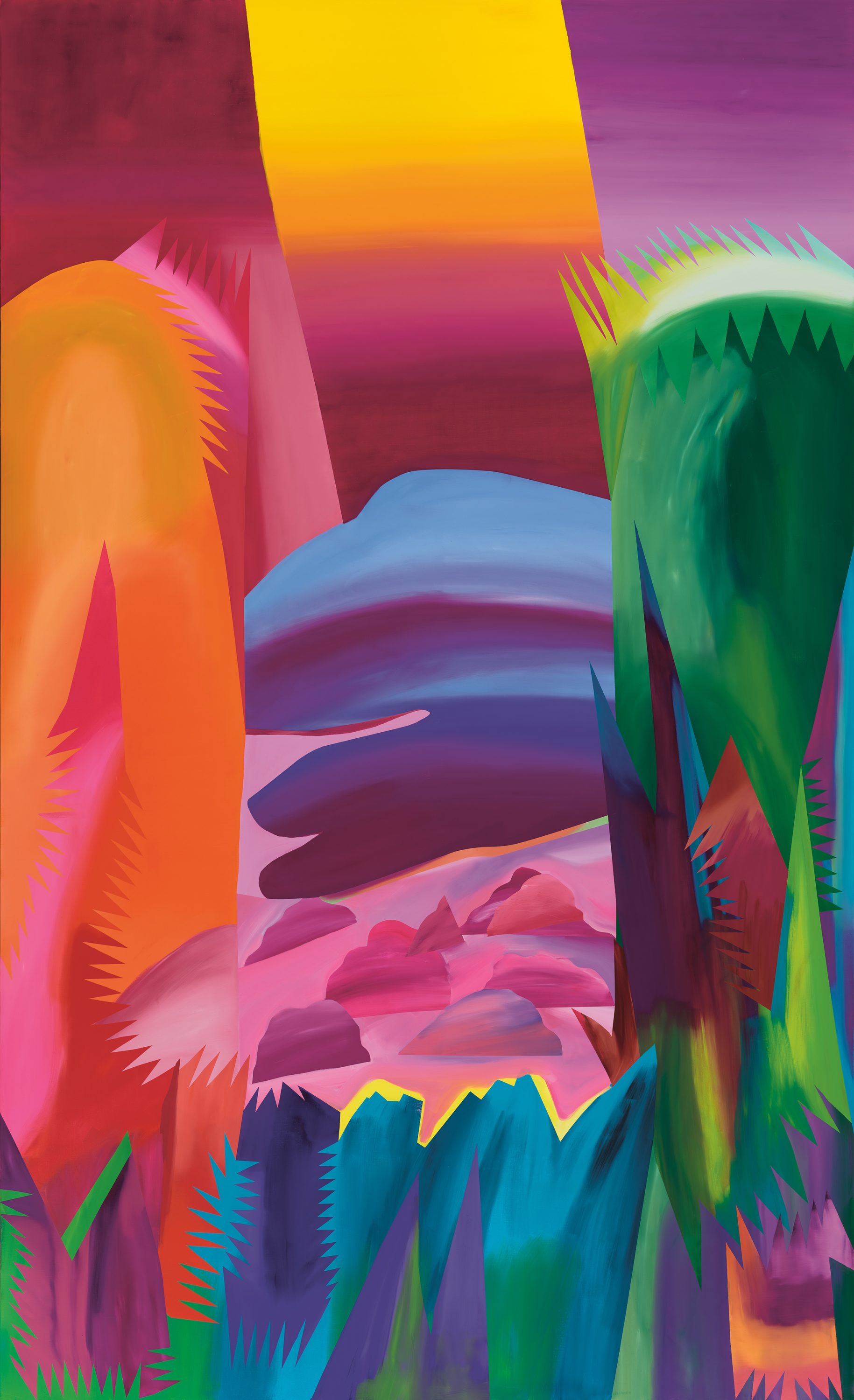
Maria Taniguchi’s “brick paintings” are made from thousands of hand-drawn rectangular cells, each individually filled. She began the ongoing body of work in 2008, and individual canvases can require days, weeks or months of repetitive labour. At Singapore Art Museum’s 2026 exhibition Afterimage, these paintings appear alongside sculpture and video, making repetition, material and duration visible across several media. Taniguchi considers the paintings less as isolated objects than as parts of one continuing artwork.

I find that idea more interesting than the apparent grid itself. From a distance the paintings can look systematic, even machine-like. Close attention reveals slight changes created by a human hand repeating a task for an extraordinary amount of time. Nothing in the image represents time directly, yet time is everywhere in it. The surface is almost an accumulation of hours. Instead of depicting duration, Taniguchi makes duration become material.

https://www.singaporeartmuseum.sg/en/art-events/exhibitions/maria-taniguchi-afterimage

#MariaTaniguchi #PhilippineArt #ContemporaryPainting #SingaporeArt

singaporeartmuseum.sg Maria Taniguchi: Afterimage | Singapore Art Museum Maria Taniguchi: Afterimage is the first monographic exhibition of the acclaimed artist presented by a Singaporean institution.
Afrobeat

Afrobeat Was Built as a System

Fela Kuti did not arrive at Afrobeat as a fixed genre waiting to be named. His musical path moved through jazz, highlife and soul, with musicians from West African and Caribbean backgrounds entering his early groups. His official archive places an important turning point in 1968, when he began publicly using the term “Afro Beat” as his music absorbed stronger soul influences. By the early 1970s, long grooves, horns, percussion, call-and-response vocals and political lyrics had become part of a musical language inseparable from his confrontation with Nigerian military power.

What fascinates me is that Afrobeat is difficult to reduce to one signature sound. It works more like a system. Bass, drums, guitars and horns repeat patterns for long periods, allowing tiny changes to become significant. The groove can feel almost immovable while the music remains intensely alive. Political force and dance are not competing functions here. The body is part of how the message travels.

https://felakuti.com/about

#FelaKuti #Afrobeat #NigerianMusic #MusicHistory

Fela Kuti About - Fela Kuti The official website for Fela Kuti: his legacy, catalog, and shop.
Colour

Colour Escapes the Canvas

Estonian painter Kristi Kongi’s Chromatic Drift at Kumu Art Museum refuses to keep colour neatly inside rectangular paintings. Created partly for the museum’s large exhibition hall, the project extends motifs and colour onto floors, walls, windows and outdoor space. Kumu describes colour as central to Kongi’s way of mapping and preserving memories and states of mind. The 2026 exhibition is also significant institutionally: it is the first solo exhibition by an Estonian woman artist in Kumu’s Great Hall.

What interests me is what happens when painting begins treating architecture as part of its surface. A canvas normally ends at its edge. Once colour crosses that boundary, the viewer enters the composition rather than simply standing in front of it. Colour stops behaving like decoration applied to objects and starts organising distance, movement and atmosphere. Perhaps painting becomes spatial not when it imitates three dimensions, but when it changes how we physically move through a room.

https://kumu.ekm.ee/en/syndmus/kristi-kongi-chromatic-drift/

#KristiKongi #EstonianArt #Painting #Colour

Kumu kunstimuuseum Kristi Kongi: Chromatic Drift - Kumu kunstimuuseum The large-scale solo exhibition of the painter Kristi Kongi (1985) offers an immersive spatial experience. In the new works created for this exhibition, colour emerges as the central element, with its fields of meaning unfolding in physical, emotional, and semantic ways.
Contemporary Art

A Nation Drawn While It Was Changing

The National Gallery of Australia’s Bilong Papua New Guinea looked at fifty years of independence through art rather than through a conventional political timeline. Papua New Guinea became independent on 16 September 1975 after periods of British, German and Australian colonial rule. The exhibition placed contemporary works beside cultural forms and showed how artists have addressed independence, ancestral knowledge, Christianity, technology and rapid social change. Figures such as Mathias Kauage and Timothy Akis helped shape a modern visual language that could absorb new materials without abandoning local cultural references.

Papua New Guinea contains extraordinary linguistic and cultural diversity. That makes the idea of a single national image complicated from the beginning. What interests me is how artists can participate in creating national identity without making everyone look the same. Art can connect different histories while allowing their differences to remain visible. Perhaps a nation becomes more convincing when its image is allowed to stay unfinished.

https://nga.gov.au/stories-ideas/bilong-papua-new-guinea/

#PapuaNewGuineaArt #PacificArt #ContemporaryArt #CulturalIdentity